
Add ₹999 more to unlock FREE SHIPPING!
Your sacred cart is currently empty.
Shop Photo FramesSituated on the border of Pen and Roha talukas in Raigad district, at Zhotirpada in the Nagothane region, lies the extremely ancient temple of Karkarani Devi. This is a Swayambhu (self-manifested) site of the Goddess, and she is considered the Gramadevata (village deity) of this region. According to legends prevalent among the local villagers, Karkarani Devi is the chief protector of the Nagothane division and is a highly awakened (Jagrut) deity. It is believed that many years ago, the Goddess appeared in a vision to a devotee to reveal her presence, and worship has been conducted here ever since.
The legend of the temple states that in ancient times, this area was covered by a dense forest. The Goddess appeared in a vision to a devotee living in this forest and revealed that she resided on a specific rock formation. When the villagers searched, they found the Swayambhu stone of the Goddess there. Since then, a temple has been established at this site. The name ‘Karkarani’ is interpreted as ‘one who immediately fulfills what is requested.’ According to historical information, the Goddess is associated with ancient defensive fortifications or the history of specific clans. Locals believe that the Goddess protected the village during natural disasters.
The origin of the Goddess’s name is found in a mythological tale. It is said that a demon named Karkas once wreaked havoc in this region. Using his powers, this demon tormented the local populace and the sages. To gain liberation from his atrocities, the Adi Shakti (Primordial Power) took an avatar. A great battle ensued between the Goddess and the demon Karkas, and finally, the Goddess vanquished him. It is believed that because she killed the demon named Karkas, she came to be known as ‘Karkarani’.
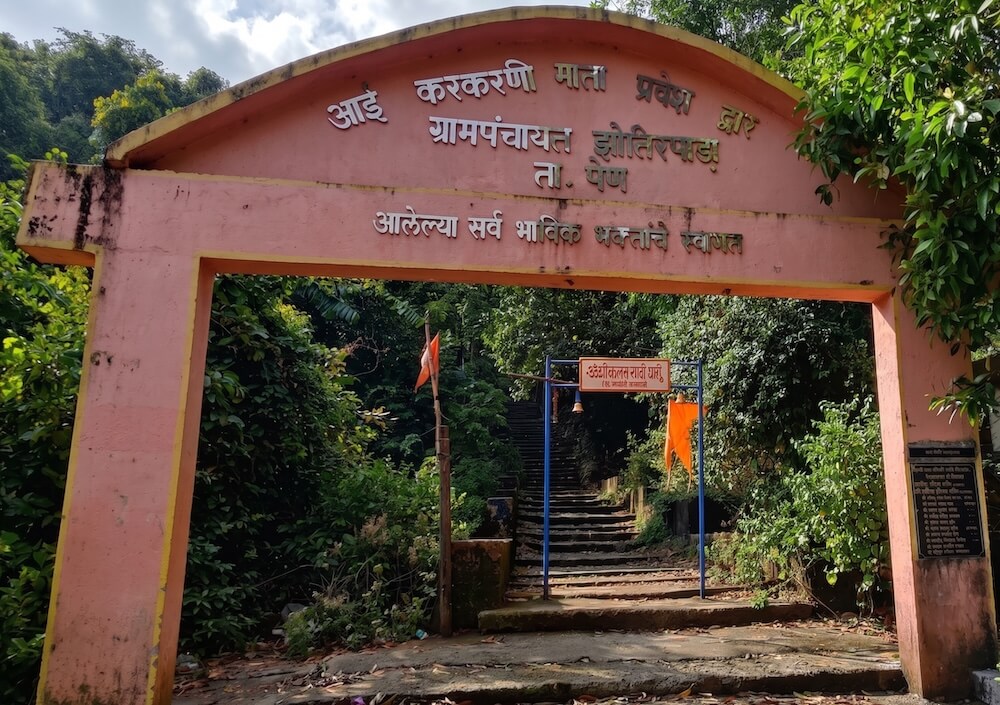
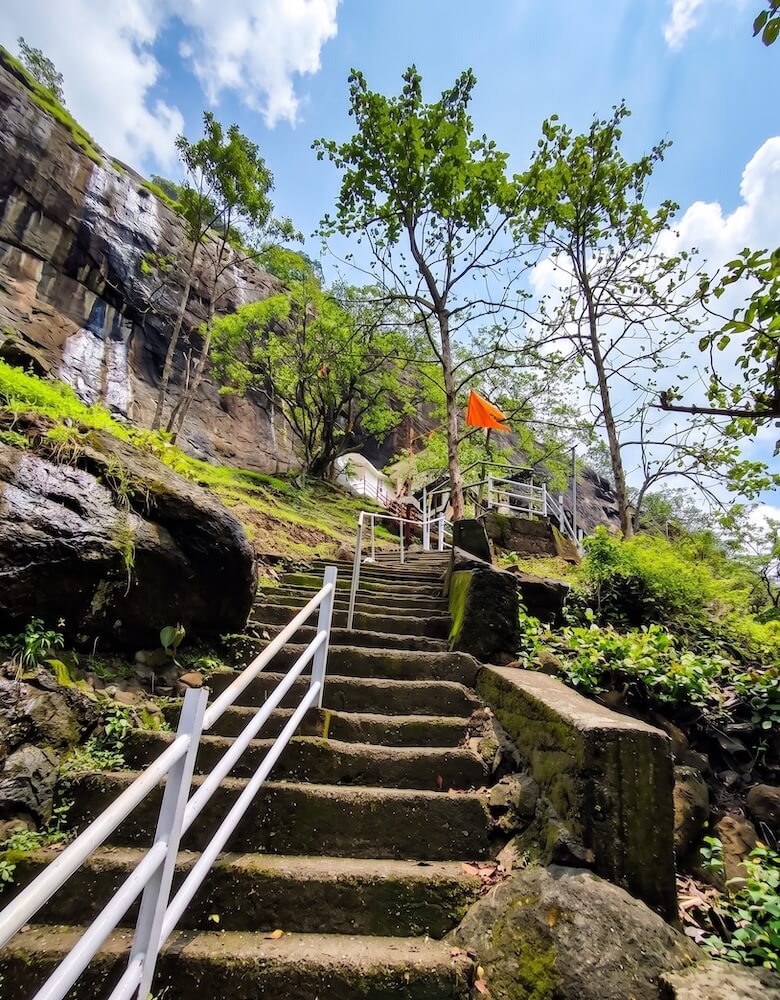
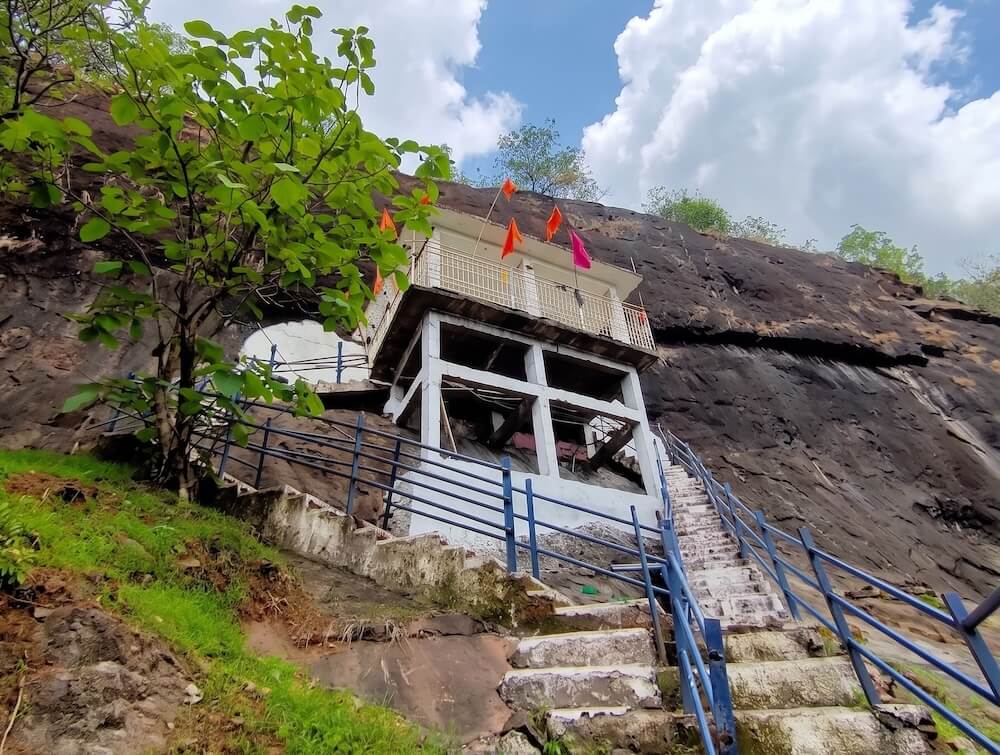
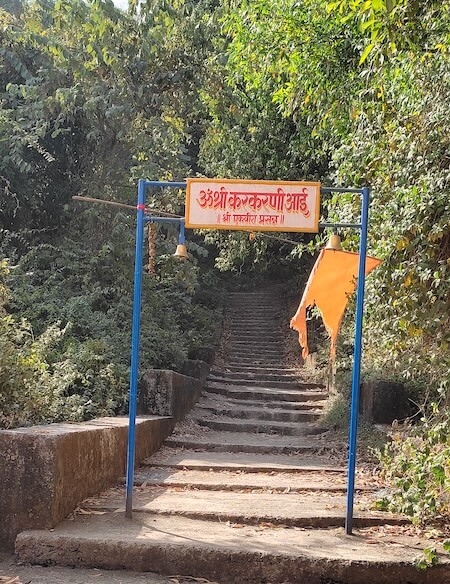
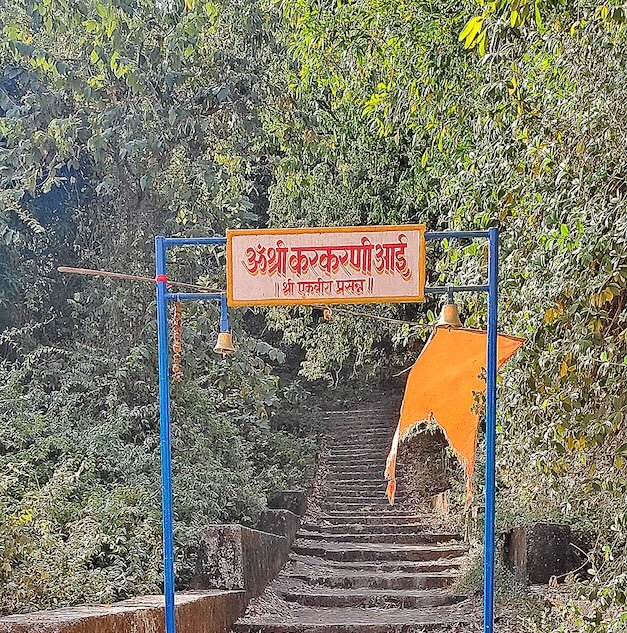
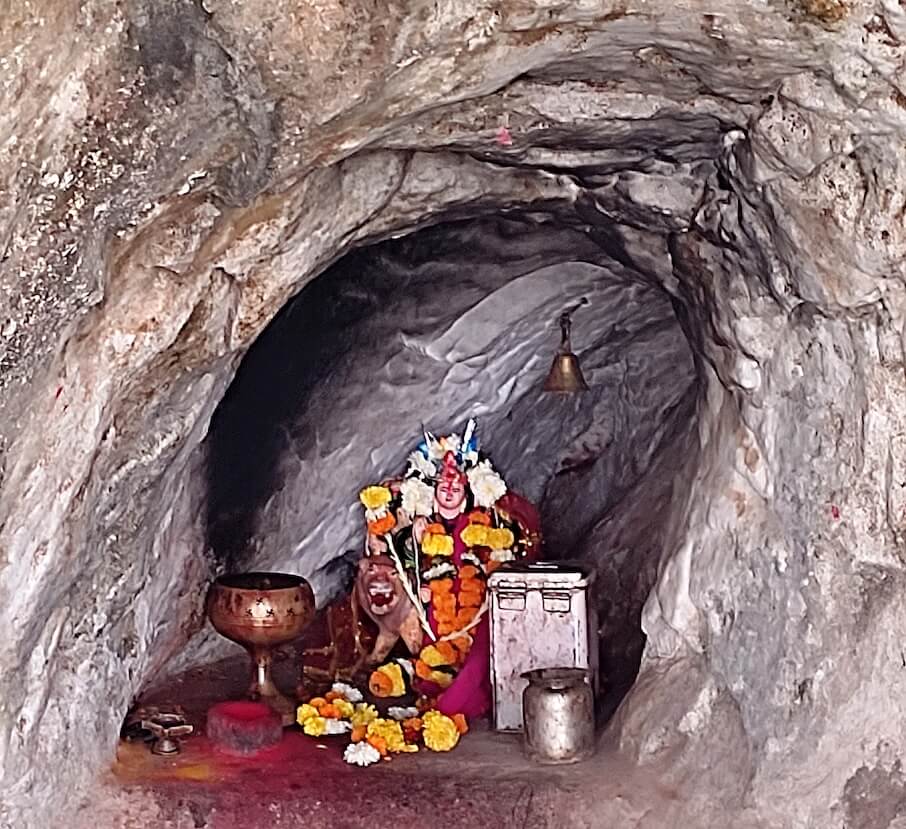
This temple of Karkarani Devi is located six kilometers from Nagothane town at an altitude of 100 meters above sea level. On the Nagothane-Alibaug road, there is a path leading to the temple via a mountain trail, starting from in front of the main entrance of the Reliance Petrochemical Company township. After entering from the main road, one encounters an archway. From there, one can reach the temple by climbing about 100 steps. A shed has been built on this stepped path, which passes through dense foliage, for the devotees to have picnics and receive Prasad. The original temple was in a natural cave formed in the rock. In this area, one can see old steps carved into the rocks. Where the Goddess is situated, there are rocky cliffs and several small and large caves. The temple, originally in the traditional Konkani style, has been renovated through the efforts of villagers and public contributions. Currently, a Sabha Mandap (assembly hall) has been built in front of the cave. The idol of the Goddess is installed in the cave within the rock, in front of the sanctum sanctorum. From this Sabha Mandap, one can clearly see the Mumbai-Goa highway, the Mahalmeera mountain range, the Amba River, and the Reliance Petrochemical township area.
A grand fair is held here every year on Chaitra Shuddha Dwitiya. On this day, the Goddess is adorned with various garments and gold ornaments. After the early morning Abhishek and Mahapuja, a Mahaprasad is organized in the afternoon. The main attraction of this fair is the Palkhi (palanquin) of the Goddess. In the evening, the Palkhi is taken out through Zhotirpada village amidst the sound of musical instruments. At this time, youths perform Lezim and Bhajan programs. During the Sharadiya Navratri festival, the temple is filled with a devotional atmosphere for nine days. The festival begins with Ghatasthapana on Ashwin Shuddha Pratipada. An Akhand Nandadeep (eternal lamp) is kept lit for nine days. Every morning and evening, Aarti and Bhajans of the Goddess are performed. On Ashtami, a special Homa-Havan and Purnahuti program is conducted. On Vijayadashami, i.e., Dussehra, the Goddess is specially worshipped, and Simollanghan (crossing the border) is performed. During this period, the temple is decorated with electric lights. Apart from the main festivals, special religious programs are also held here on Kojagiri Purnima. Devotees are present in large numbers every Thursday and Tuesday of the Margashirsha month. As this Goddess is known as ‘Navsala Pavnari’ (one who fulfills vows), devotees from the entire district come here to fulfill their vows. Devotees can have Darshan of the Goddess from early morning until late at night.
This sacred temple stands as a testament to deep spiritual devotion, ancient architectural grandeur, and rich local cultural traditions.
The sanctum sanctorum houses the divine idol consecrated according to ancient Vedic traditions, surrounded by serene courtyards and traditional temple architecture.
Navratri, Maha Shivratri, Annual Temple Jatra & Deepotsav
Compare and book flights, secure top-rated local hotels near the temple, hire reliable guides, and rent cars instantly.
Extend your pilgrimage by visiting other highly sacred temples located nearby.


Add ₹999 more to unlock FREE SHIPPING!
Your sacred cart is currently empty.
Shop Photo FramesFill in your delivery details below to place your order.
Add comment