
Add ₹999 more to unlock FREE SHIPPING!
Your sacred cart is currently empty.
Shop Photo FramesAmong the various philosophical traditions in Hinduism, the Nath Sampradaya holds a distinct and sacred importance. Temples dedicated to the Navnaths and the Eighty-Four Siddhas are found in numerous places across the country. Chauranginath, revered as a disciple of Matsyendranath and one of the Eighty-Four Siddhas, has legendary stories popular across states like Maharashtra, Karnataka, Bengal, Gujarat, Punjab, Andhra Pradesh, and Telangana. One of his primary temples is situated at Sialkot in Pakistan. Belonging to the same sacred tradition, a famous temple in Maharashtra is located atop a hill near Sonsal. This ancient pilgrimage site is considered highly divine and spiritually active (Jagrut), and devotees firmly believe that Chauranginath swiftly rushes to the aid of those who call upon him.
Chauranginath is also known by names such as ‘Sarangdhar’, ‘Puran Bhagat’, ‘Chaurangipa’, and ‘Gabhur’. His spiritual brother (gurubandhu) Gorakhnath’s period is considered to be between 1050 and 1150 AD. Therefore, scholars believe that Chauranginath’s period must also date prior to the twelfth century. According to records in the ‘Marathi Dnyankosh’, the earliest mention of Chauranginath’s name is found in the list of the Eighty-Four Siddhas dating from the 11th to 13th centuries. He is also mentioned in the 18th chapter of Dnyaneshwari: “To Matsyendra Saptashringi | Bhagnavayava Chaurangi | Bhetala kee to sarvangi | Sampurna jaala ||” (When Chaurangi, with severed limbs, met Matsyendranath at Saptashringi, his entire body was restored and made whole). His name also appears in the list of Navnaths in Changdev’s 14th-century work ‘Tattvasar’, as well as in texts like ‘Navnath Charitram’ and ‘Kadalimanjunath Mahatmya’. He authored a treatise titled ‘Pranasankali’, wherein he referred to himself as the son of King Shalivahana.
There are various biographical legends associated with Chauranginath. Based on Gorakhnath’s text ‘Kimayagar’, the poet Dhundisut Malu composed the sacred text ‘Navnath Bhaktisar’. In the 30th chapter of this sectarian text, Chauranginath is mentioned as the miraculously born (Ayonisambhava) son of King Shashangar of the Vaidarbha region. According to that legend, his original name was Krishnagar. His stepmother falsely accused him of moral misconduct, whereupon King Shashangar ordered his hands and feet to be severed and left him at a public crossroads. While passing by, Matsyendranath and Gorakhnath saw him and took him with them. Subsequently, Chauranginath accepted discipleship under Matsyendranath and, following the yogic initiation (Yoga Deeksha) imparted to him, performed intense penance for twelve years in a closed cave. As a result, his severed limbs were fully restored. It is believed that Chauranginath attained Yogic perfection (Yogasiddhi) in this very cave situated in the hills of Sonsal village. Hence, this temple holds immense spiritual significance.
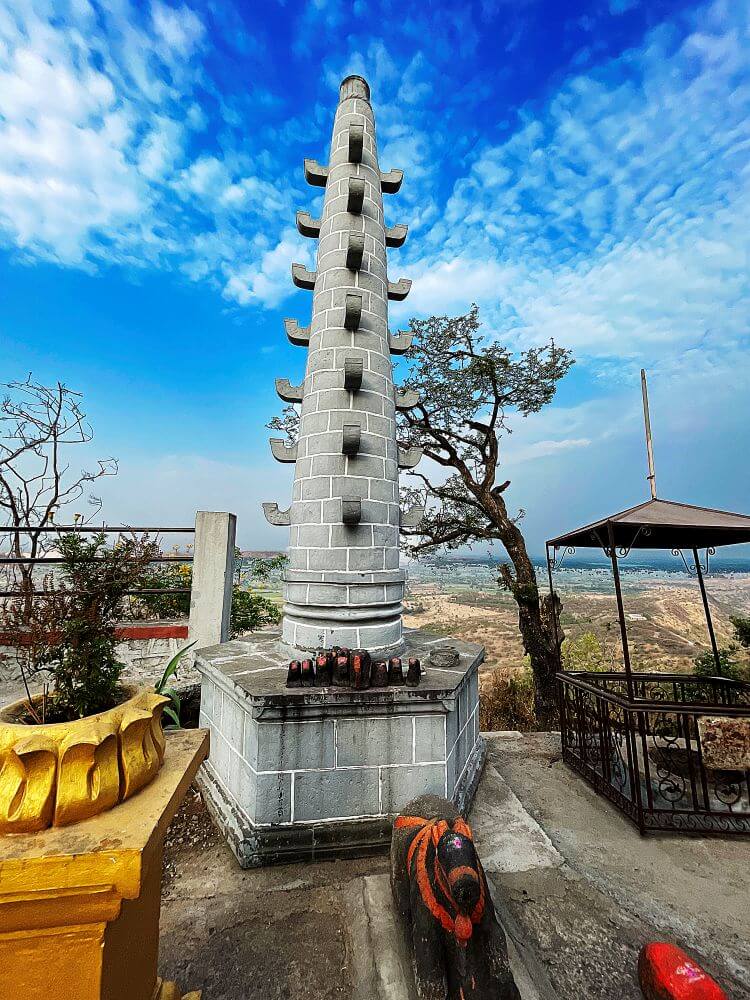
To reach the temple situated on the hilltop, there are two routes from the base: a flight of steps and a motorable road. One can reach the temple either by walking up the 380-step pathway starting from a welcome arch at the base, or by vehicle along the road. In the temple courtyard, on a raised platform in front of the shrine, stands a circular three-tiered Deepmal (lamp tower). The layers of this Deepmal are divided by circular rings. On the platform of the Deepmal, there are eight to ten small idols of Nandi, and a larger idol rests on the ground. These ancient idols show significant signs of natural wear over time. Beside the platform stands a sacred Tulsi Vrindavan.
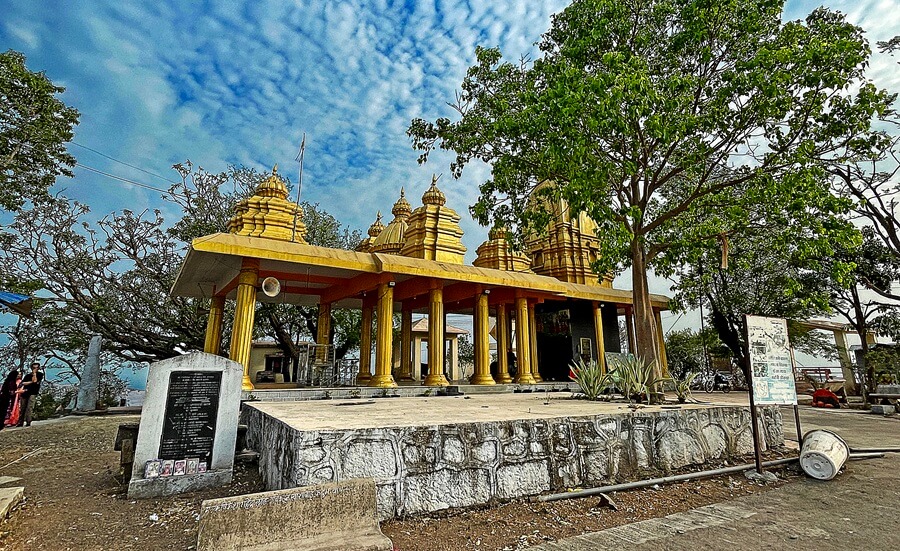
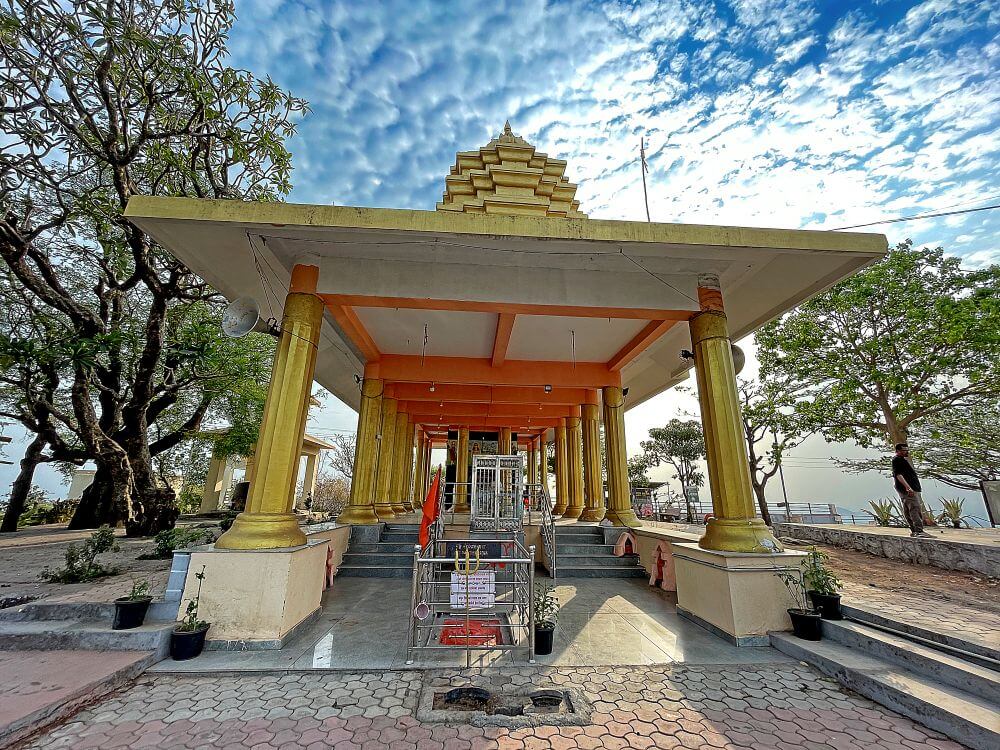
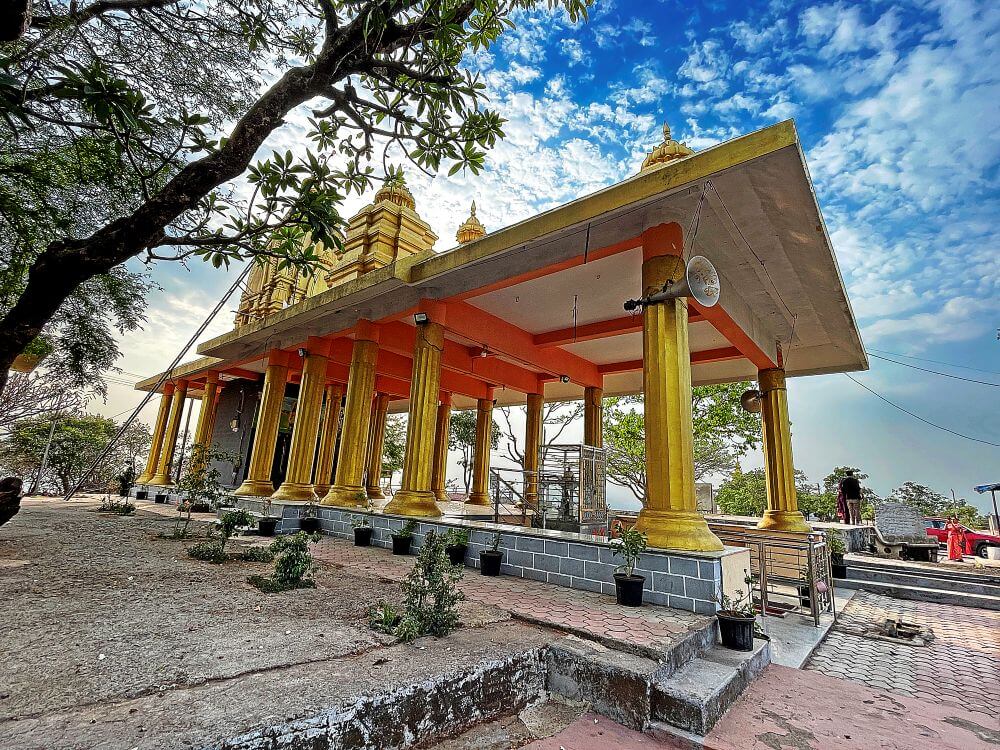
Near the entrance of the semi-open Sabhamandap (assembly hall) of the temple, a square stone coated with vermillion (shendur) rests on the floor. A protective railing made of stainless steel pipes surrounds this stone. According to the villagers, Chauranginath performed his intense penance in the cave located directly beneath this stone. In the Sabhamandap, there are four carved circular pillars at the four corners. The pillars feature vertical fluting designs, and their bases are circular and wide. Built-in stone benches (Kakshasanas) line the side balustrades of the Sabhamandap. In a niche on the left balustrade sits an idol of Lord Ganesha, and in the niche opposite it on the right side is an idol of Lord Hanuman (Maruti). On the front side of the Sabhamandap, inside a glass shrine supported by marble pillars , stands a serene marble idol of Lord Dattatreya.
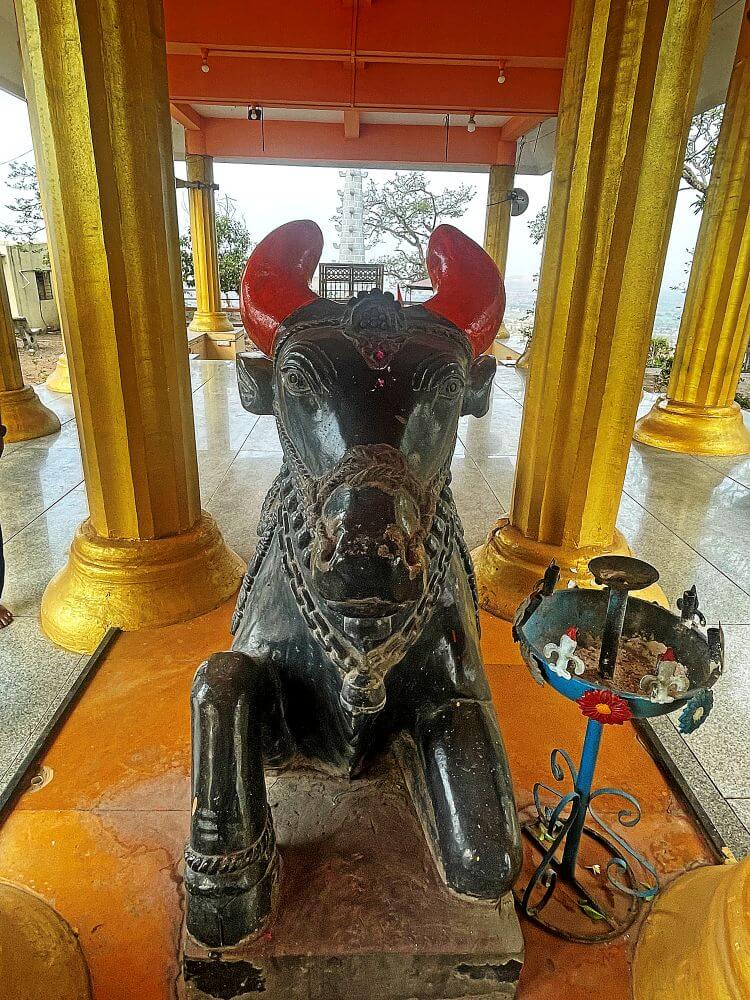
Further ahead, on either side of Lord Dattatreya’s shrine, there are four steps leading up to the Antarala (vestibule), which is situated at an elevated level above the Sabhamandap. In this open Antarala, there are five beautifully carved circular pillars on each side and four in the center. In front of the entrance to the Garbhagriha (sanctum sanctorum), between the central pillars, stands an exquisite black stone idol of Nandi on a raised platform. The craftsmanship on this idol is remarkably unique.
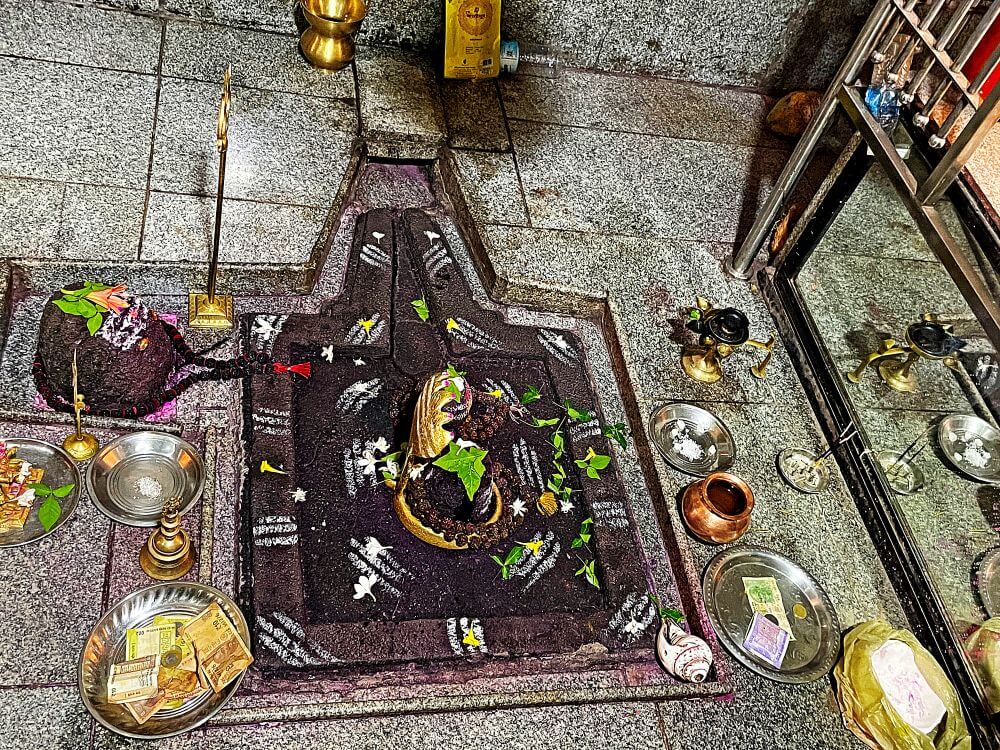
Ahead lies the entrance to the Garbhagriha. On the front wall of the Garbhagriha, niche lamp holders (Deepkoshtakas) are carved on both sides of the doorway. The doorframes feature beautiful floral and leaf motifs, with an idol of Lord Ganesha adorning the lintel (Lalatabimba). At the center of the sanctum floor rests a sacred Shivlinga (Shivpindi). Suspended directly above the Shivlinga is an Abhishek Patra for offering continuous streams of holy water. The temple features a total of six spires (Shikharas) — four over the Sabhamandap, one over the Antarala, and the main spire over the Garbhagriha. Except for the main spire, all spires are dome-shaped and intricately carved. The main spire is square and constructed in the Urushringa architectural style, adorned with 53 miniature spires (Upashikharas). At the top of the main spire, two Amalakas rest one above the other, crowned with a sacred Kalash (finial). At the Chauranginath Temple, the festivals of Datta Jayanti and Guru Purnima are celebrated with great devotion and enthusiasm. Daily Aarti takes place every morning at 7:00 AM and evening at 7:00 PM. Devotees regularly visit this hilltop shrine, while tourists are drawn to the surrounding lush natural beauty.
This sacred temple stands as a testament to deep spiritual devotion, ancient architectural grandeur, and rich local cultural traditions.
The sanctum sanctorum houses the divine idol consecrated according to ancient Vedic traditions, surrounded by serene courtyards and traditional temple architecture.
Navratri, Maha Shivratri, Annual Temple Jatra & Deepotsav
Compare and book flights, secure top-rated local hotels near the temple, hire reliable guides, and rent cars instantly.
Extend your pilgrimage by visiting other highly sacred temples located nearby.


Add ₹999 more to unlock FREE SHIPPING!
Your sacred cart is currently empty.
Shop Photo FramesFill in your delivery details below to place your order.
Add comment