
Add ₹999 more to unlock FREE SHIPPING!
Your sacred cart is currently empty.
Shop Photo FramesA unique confluence of Maratha Empire history and spirituality has taken place at Machindragad in Walwa. This fort was established by Chhatrapati Shivaji Maharaj himself in the name of Machindranath. Even today, one can observe all the characteristics of Shivraya’s forts in the ruins of this site. Before the fort was constructed, this hill was the abode of the Nath tradition’s primordial master, Matsyendranath (also known as Machindranath), as well as Gorakshanath and Gahininath. Sanctified by the touch of these great beings, this fort is today considered an important pilgrimage site of the Nath tradition.
Matsyendranath is considered the first historical figure in the history of the Nath tradition. In his commentary on the text ‘Hathayogapradipika’, Brahmananda provides the story of Matsyendranath’s incarnation. The legend goes that once, on a riverbank, Lord Adinath was imparting the teachings of Yoga to Parvati. A fish in the water heard the discourse, attained concentration of mind, and remained motionless. Upon noticing this, Adinath realized that the fish had listened to the teachings. Adinath then bestowed his grace upon it and sprinkled holy water, and with that, the fish became Matsyendranath. Saint Dnyaneshwar was also a follower of the Nath tradition, and at the end of the ‘Dnyaneshwari’, while recounting the lineage of gurus, he refers to this story. Dnyaneshwar stated, “Adinath is the guru of all Siddhas, and Machindra is his chief disciple.”
Various names and forms of Matsyendranath, such as Machindranath, Machendrapada, Machghnapada, and Minapada, are found in different texts. The origin of Matsyendranath is unknown. According to the great researcher Dr. Ra. Chin. Dhere, the period of Matsyendranath is before the year 1015 AD. Works attributed to him include ‘Kaulajnananirnaya’, ‘Akulaviratantram’, ‘Kulanandatantram’, ‘Jnanakarika’, as well as ‘Yogavishaya’ and ‘Matsyendrasamhita’. The first four of these are texts of the Kaula school. The Kaula school is a branch of Shakta Tantra. In this, ‘Kula’ means Shakti and ‘Akula’ means Shiva. The Kaula school is a path of harmonization between Shiva and Shakti. In Matsyendranath’s Kaula school, along with the five Makaras—wine (Madya), fish (Matsya), meat (Mamsa), parched grain (Mudra), and sexual union (Maithuna)—the five sacred substances (Panchapavitras) of feces, nectar of the body, semen, blood, and marrow were also considered. Their endeavor was to attain the bliss of Samadhi by consuming Kula substances like wine and meat, and through Tantric processes such as Maithuna. This was called Vamachara. Guru Gorakshanath was a disciple of Matsyendranath. Saint Dnyaneshwar called him ‘Vishayavidhvansaekavira’ (the sole hero in destroying worldly attachments) because Gorakshanath launched a movement against this Vamachari Tantric practice and purified Indian spiritual practice. The story of Gorakshanath rescuing Matsyendranath from the trap of the Yoginis comes from this context. Matsyendranath had become entangled in the Yogini-Kaula school. His disciple, Gorakshanath, liberated him from it.
This guru and disciple resided in this area of Walwa for some time. A legend is told here that during their travels, Matsyendranath and Gorakshanath came to this region. At that time, Matsyendranath had a gold brick in his bag. While going for a bath, he entrusted this bag to Gorakshanath. Finding it heavy, he checked what was inside. Upon seeing the gold brick, he thought, “What use is this brick to ascetics like us?” and threw it into the water. When Matsyendranath learned of this, he became very angry and began to act like a madman. To calm his guru, Gorakshanath used his yogic powers to turn the entire neighboring hill into gold. Once Gorakshanath demonstrated his power, Matsyendranath was satisfied. He clarified that he had acted like a madman only to test his disciple. This area is now known by the village name ‘Yede Machindra’, and the hill mentioned in the legend is said to be Machindragad. In memory of this event, a gathering of Nath-panthi ascetics is held here every 12 years.
The story of turning the hill into gold is described in the 23rd chapter of the book ‘Shri Navnath Bhaktisar’ by the poet Dhundisut Malu. However, in this story, the name of the hill is given as Garbhagiri. In the eighth verse of this chapter, there is a mention of Garbhagiri: “Margi chalita Godasavya. To Valmiksthan vipinmay. Garbhagiri parvatpray. Yeuniyan tethe pochale.” Similarly, Garbhagiri is mentioned in the 68th and 83rd verses. The 83rd and 84th verses describe how he turned this mountain into gold: “To mahanag parvat Garbhagiri. Ubhe chadhale tayavari. Chadhata laghushanka kari. Parvatmatha Goraksha. Siddhiyog mantra japuni. Mantradhar kanakvarni. Sakal parvat dedipyamani. Shuddha hatki miravala.” This mountain of Garbhagiri is in Nagar district. The mountain range between Gorakshanath Gad and Dongarkini there is known as Garbhagiri.
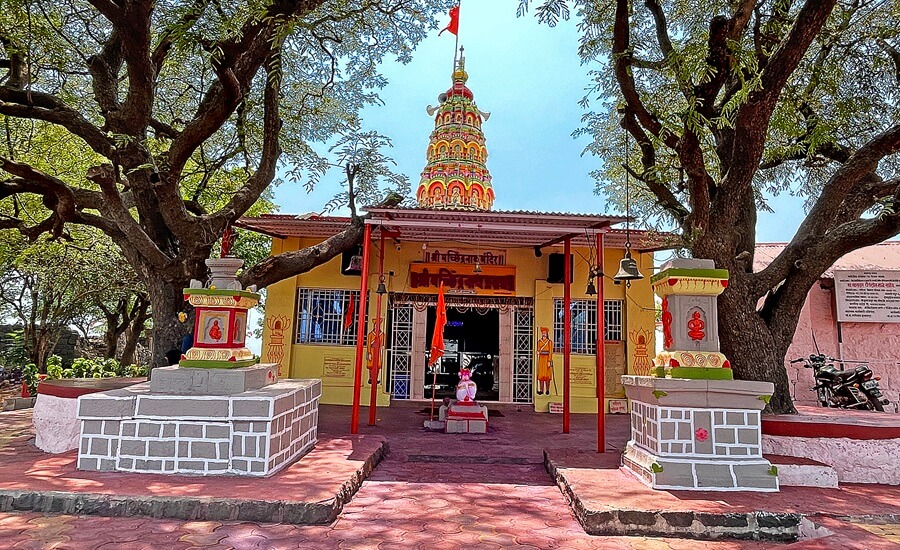
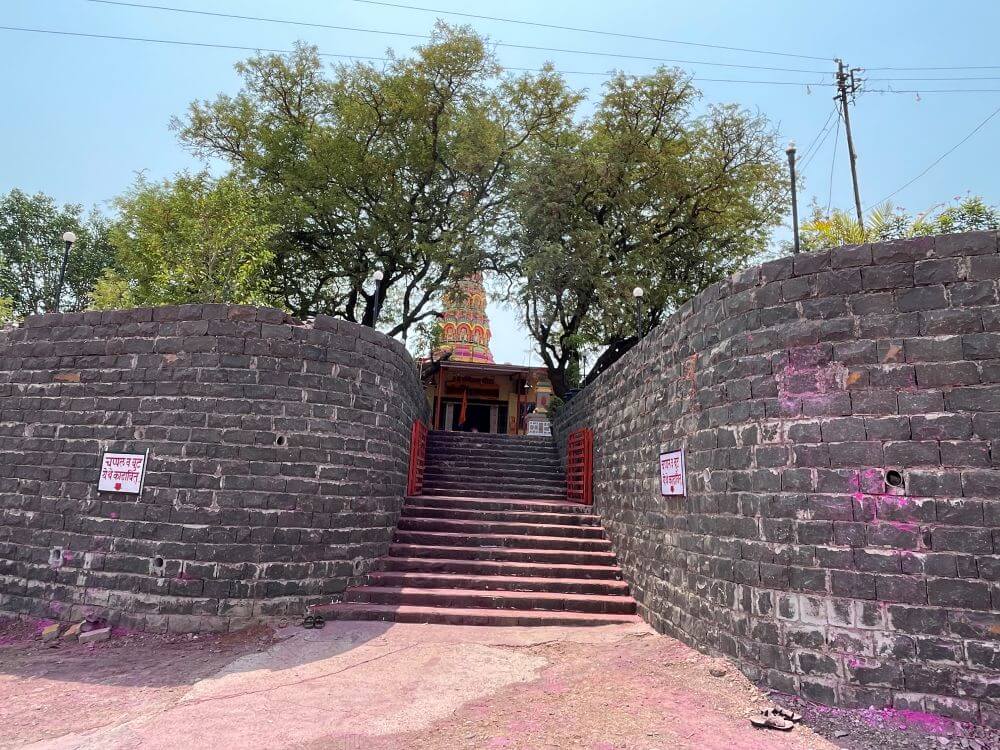
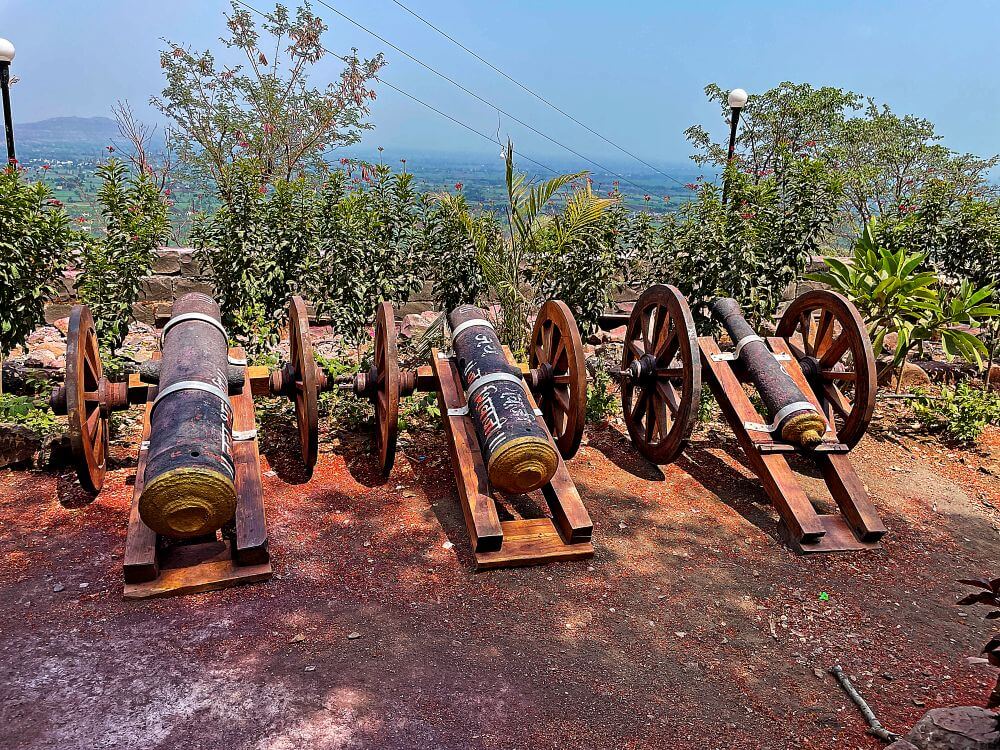
There is a record that Machindragad in Walwa taluka was established by Chhatrapati Shivaji Maharaj. In the list provided in the ‘Sabhasad Bakhar’ under the heading ‘Rajyani nave gad vasavile tyanchi navanishivar sumari gad ras dusri (108)’, this fort is mentioned as ‘Machandragad’. Historians believe it must have been built around the year 1676 AD. In 1693, the fort fell into the hands of Aurangzeb. In 1755, Shahu Raja conquered the fort. After that, its responsibility was with the Pant Pratinidhis of Aundh. In 1763, Raghobadada’s partisan sardars Naro Ganesh and Radho Vitthal took control of the fort. But after power came into the hands of Shrimant Madhavrao Peshwa, the fort went back to the Pant Pratinidhis. In 1810, Bapu Gokhale took it from the Pant Pratinidhis. Finally, in 1818, the British officer Colonel Hewitt conquered this fort. There are two ways to reach this fort. One is from Machindragad village and the other is from Berad Machi village. Nowadays, there is also a motorable road that leads directly to the steps of the temple. At the top, in the center, is the temple of Matsyendranath. There is a fortification wall around the main entrance of the temple. From the bastion-like structure within it, there are about 20 steps leading to the temple. Upon coming up, one notices two large, beautiful Tulsi Vrindavans. These Tulsi Vrindavans were built in Shake 1865 (1943 AD). Nearby, one can see cannons placed on newly prepared wooden carriages. In the construction of a tree platform in front of the temple, a stone with an inscription is visible.
On a marble slab in the temple, there is an inscription recording that this temple was built between the years 1931 and 1936 by the people of Lavanmachi and Beradmachi villages. Of course, the original temple dates back to an earlier period. Beside the temple, one can see some broken sculptures and carved stones. Right next to them are the ruins of a structure. These are signs that a temple has existed here since ancient times.
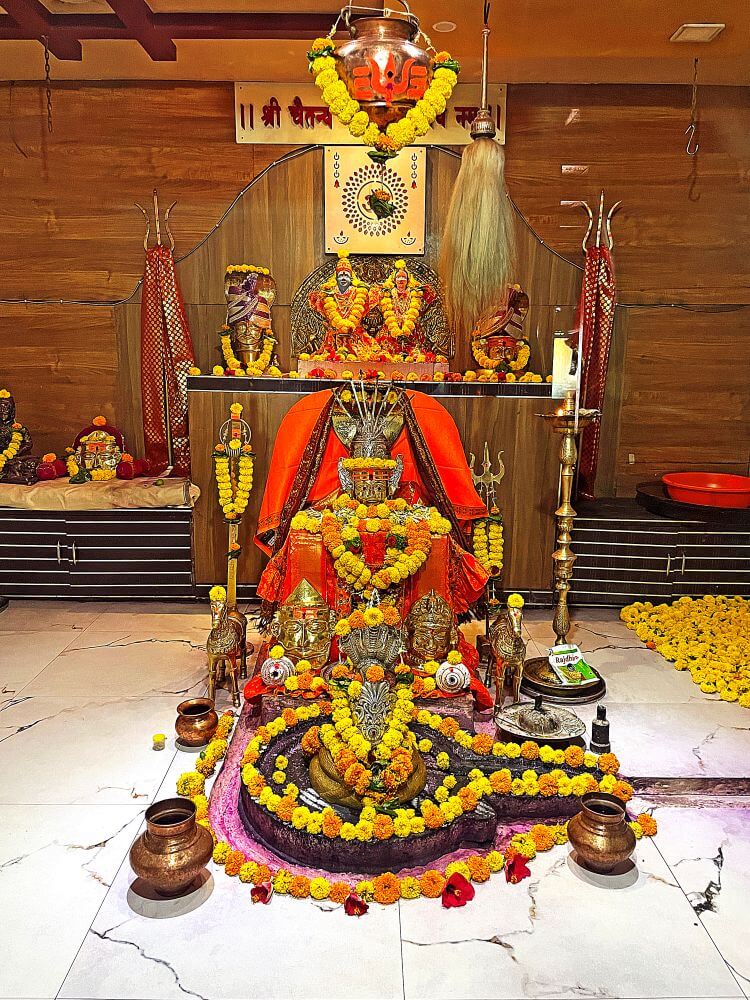
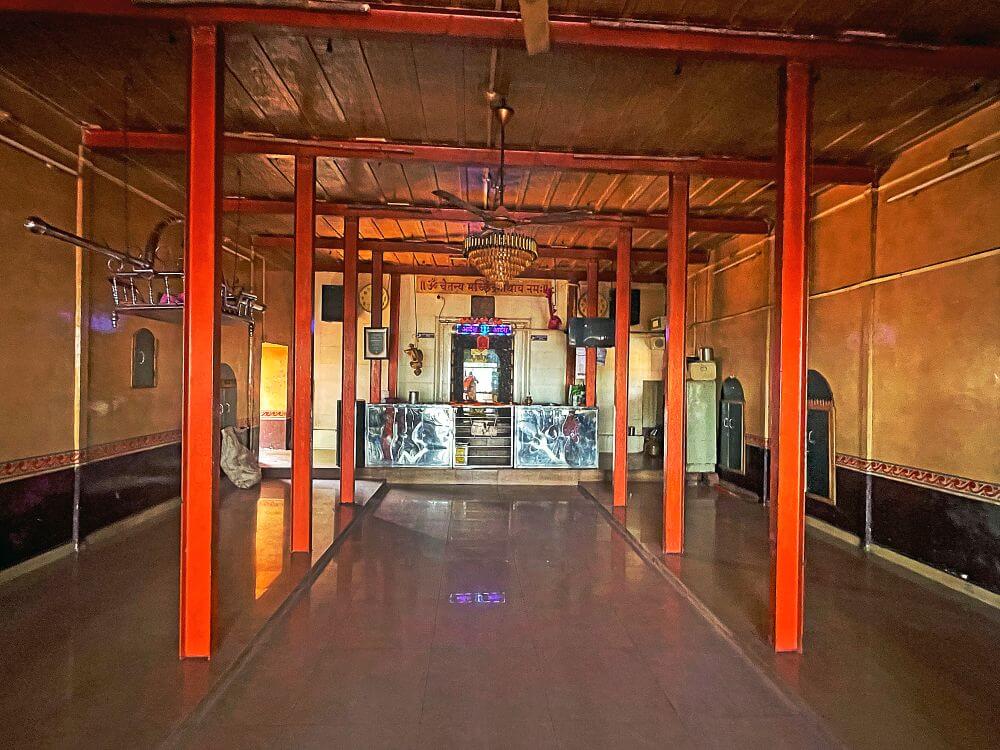
As one walks towards the temple through two Tulsi Vrindavans, one encounters the Nandi platform in front. The black Nandi idol features exquisite carvings. Upon entering the Sabha Mandapa (assembly hall), the Dhuni (sacred fire) of the Naths is visible on the left side. The construction of the temple’s Sabha Mandapa follows an old wooden style, while the outer walls are made of stone. The temple is structured into a Darshan Mandapa, a Sabha Mandapa, and a Garbhagriha (sanctum sanctorum). The roof of the Garbhagriha features a five-tiered circular Shikhara. Each tier contains Devakoshtas (niche shrines), and at the apex, there is an Amalaka with lotus-petal carvings, topped by a Kalasha. An idol of Lord Ganapati is placed on the Lalatabimba (lintel) of the Garbhagriha’s doorway. The carvings on the double door frames have worn away over time. The Garbhagriha is constructed of stone, though modern tiles were used during later renovations. Inside the Garbhagriha, Matsyendranath is installed in both Linga and idol forms. Above this spot, there are two more idols, which are said to be those of the chief disciples of Matsyendranath. There are also separate temples for Gorakshanath and Gahininath on the fort.
Right next to the Matsyendranath temple is a simple yet ancient temple with a tin roof. Inside, three main stones and other smaller stones are arranged. It is said to be the temple of the Navnaths. A little further back is a small temple dedicated to Gahininath. It is said that at this very place, following the instructions of Matsyendranath, Gorakshanath imparted various forms of knowledge to Gahininath. A short distance from here are two Samadhis (tombs). One of these belongs to the Nath devotee Maruti Buva, and the other to his wife. Maruti Buva was blind, yet he would climb the fort every day to worship the Naths. It is said that he was given a place here to honor that great devotee.
A short distance from these Samadhis, at the highest point of the fort, stands the temple of Gorakshanath. Although this temple has also been renovated, the Shivalinga with Nandi inside and the stone-carved idol of Gorakshanath bear witness to its antiquity. There are many objects and structures worth seeing on Machhindragad. These include the bastion at the southern end, the Chhatri (canopy) atop it, an ancient lime mill, water cisterns in the vicinity, a Dattatreya temple, and a stone-carved Rama temple. The Matsyendranath temple here holds a ‘C’ grade status from the government.
This sacred temple stands as a testament to deep spiritual devotion, ancient architectural grandeur, and rich local cultural traditions.
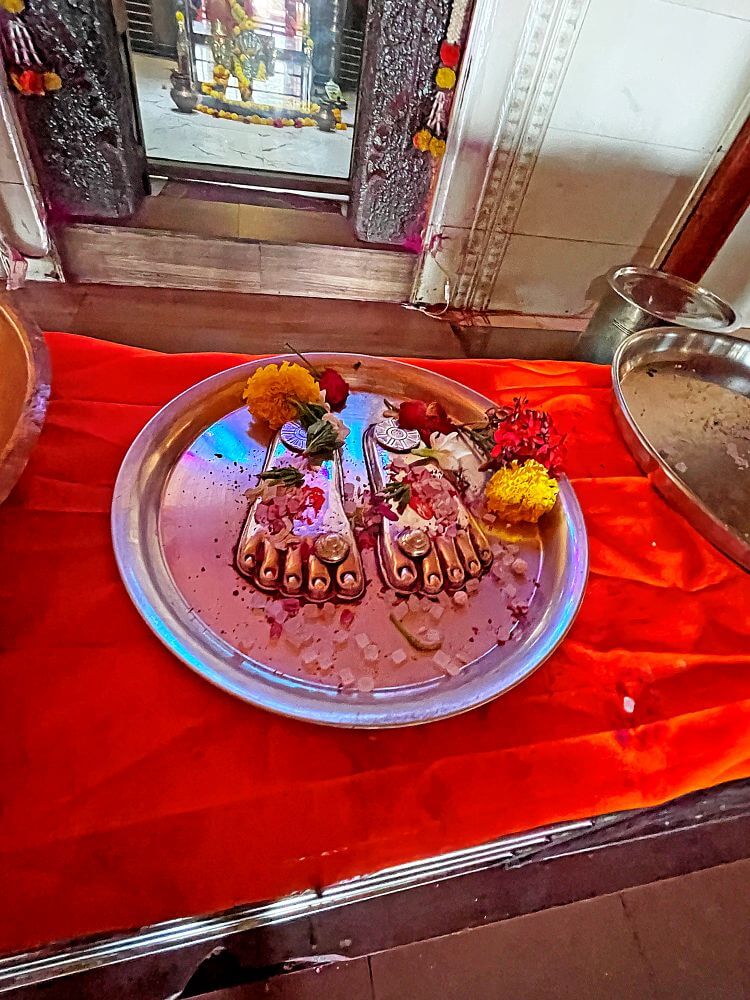
The sanctum sanctorum houses the divine idol consecrated according to ancient Vedic traditions, surrounded by serene courtyards and traditional temple architecture.
Navratri, Maha Shivratri, Annual Temple Jatra & Deepotsav
Compare and book flights, secure top-rated local hotels near the temple, hire reliable guides, and rent cars instantly.
Extend your pilgrimage by visiting other highly sacred temples located nearby.

Add ₹999 more to unlock FREE SHIPPING!
Your sacred cart is currently empty.
Shop Photo FramesFill in your delivery details below to place your order.
Add comment