
Add ₹999 more to unlock FREE SHIPPING!
Your sacred cart is currently empty.
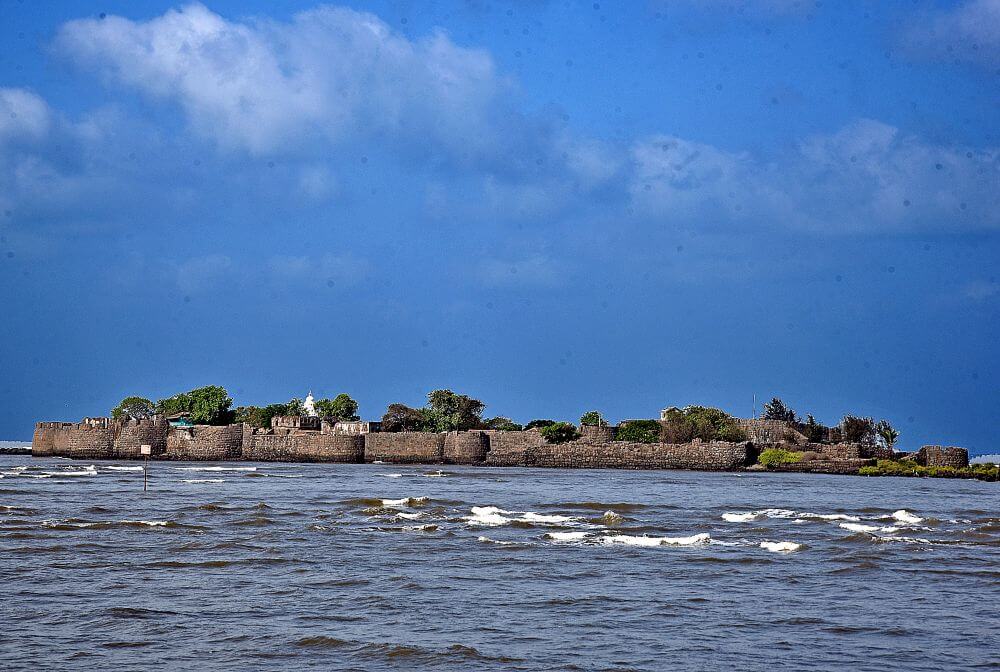
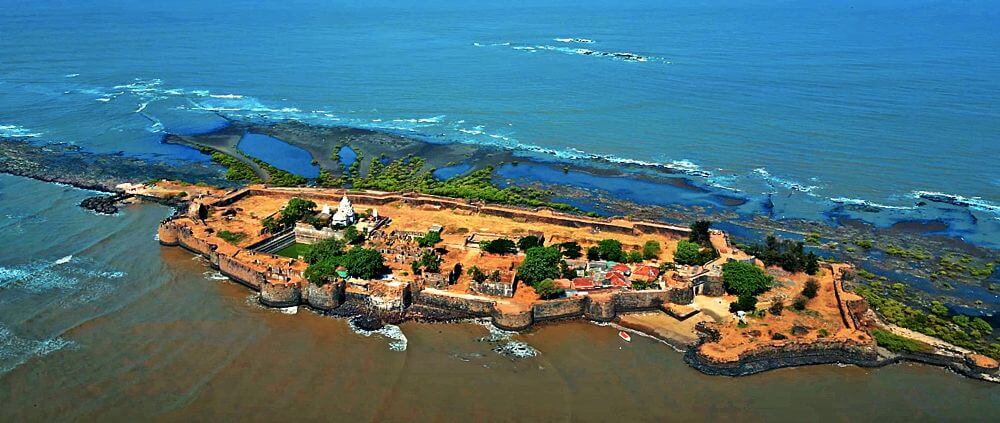
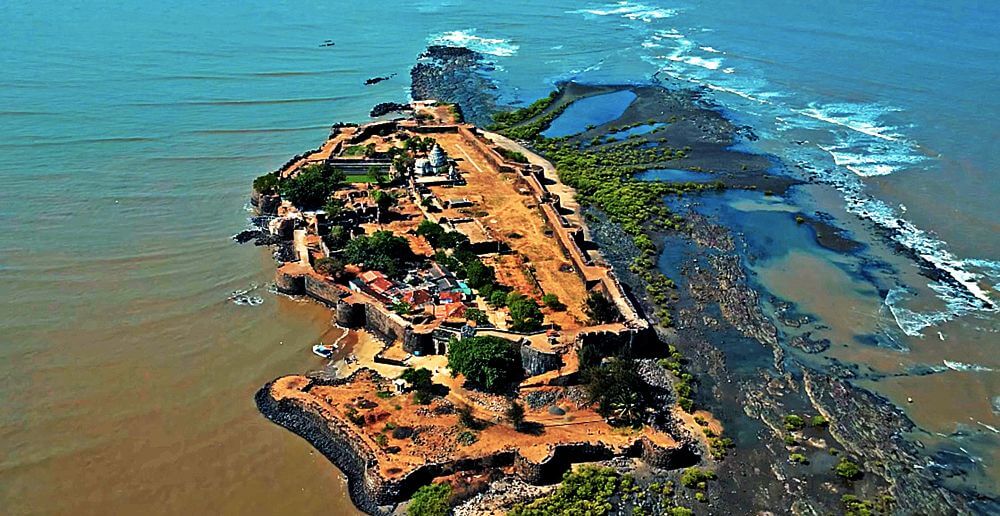
Shop Photo FramesChhatrapati Shivaji Maharaj is revered as the pioneer ruler who foresaw the need for a powerful navy to protect the western sea coast. Recognizing the necessity of strengthening naval forces, Maharaj resolved to build a fort on the rocky island of Navghar in the sea near Alibaug. The construction period of this Kolaba Fort spans from March 1680 to June 1681, commencing during the final phase of Shivaji Maharaj’s life and completed after his sacred passing. Although this fort, a major attraction for tourists and history enthusiasts, currently stands dilapidated due to a lack of maintenance, the Ganesh Temple situated within remains in excellent condition and stands strong.
According to historian Riyasatkar G. S. Sardesai, Shivaji Maharaj built a fort on the rock in the sea near Alibaug and named it Kolaba to keep a check on the Abyssinians (Siddis) of Janjira and the Portuguese. Khafi Khan, a renowned Muslim historian of the 17th-18th centuries, also mentions in his treatise ‘Muntakhab-ul-Lubab’ that Kolaba Fort was built by Shivaji Maharaj. Later, this fort became the primary naval base of the Marathas in North Konkan. During the reign of Chhatrapati Sambhaji Maharaj, Janoji Farjand and Nagoji were appointed as Havaldars, while Antaji Bhaskar was appointed as the Mujumdar of Kolaba Fort.
Towards the end of the 17th century, during the era of the Angres, this fort gained immense importance. Tukoji Sankapal, the patriarch of the Angres, was appointed to a high naval post by Shivaji Maharaj. Kanhoji Angre, of the same illustrious lineage, is renowned as a formidable seafarer and valiant warrior. He made Kolaba, Suvarnadurg, and Vijaydurg the main naval bases of the Marathas, establishing supreme maritime dominance from Mumbai to Goa. Kanhoji Angre made Kolaba his principal headquarters in 1697. Siddi Jauhar attacked Kolaba Fort in 1698 and again in 1701; however, Kanhoji successfully repulsed both assaults. Similarly, on 17 June 1718, the British attacked Kolaba. Later in 1720, they allied with the Portuguese to launch another attack on Kolaba; but in both these naval conflicts, Kanhoji inflicted a crushing defeat on the British and Portuguese forces.
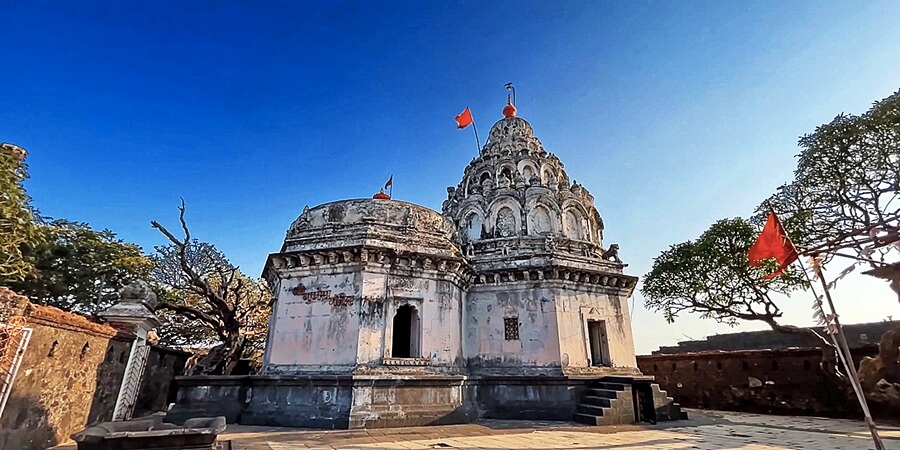
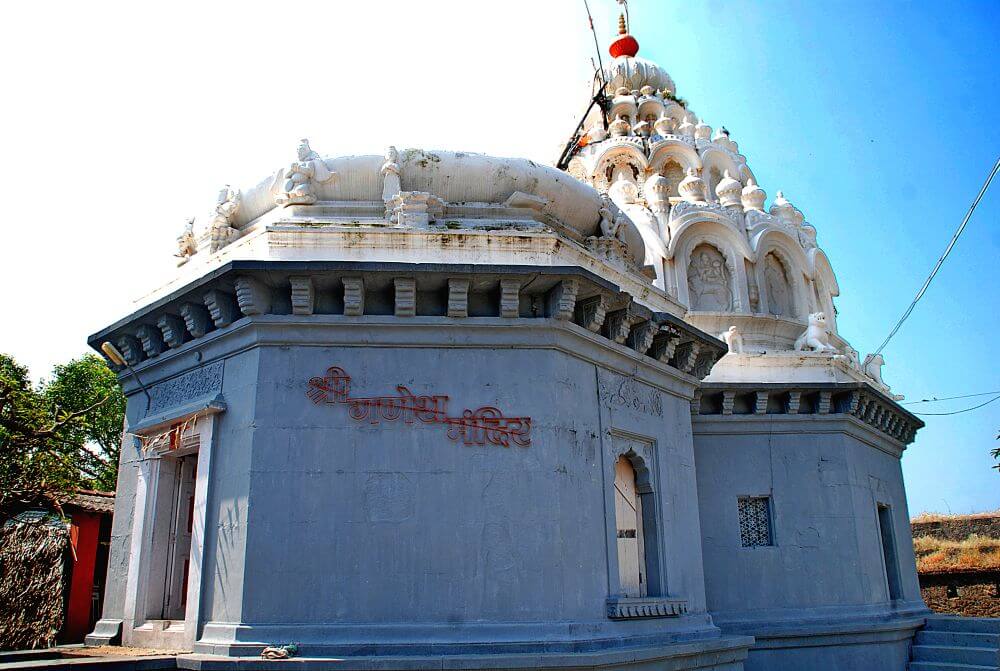
Kolaba Fort is constructed on a rock about one kilometer away from the mainland near Alibaug. The outer ramparts of the fort stand at a height of about nine meters and feature 17 bastions. The main gate of the fort faces northeast, while the smaller gate faces south. For water management, the fort houses a sacred Pushkarani (water tank) measuring 35 by 32 meters. To its west, the Ganesh Temple was established in 1749 CE during the reign of Thorale Raghuji Angre. It is famous as the Ganesh Panchayatan or Siddhivinayak Temple. Located within the stone fortifications, the temple edifice reflects Islamic architectural influence. Constructed using dressed stone blocks, this holy temple stands at an elevated level from the ground.
To enter the temple from the fortified gateway, one must ascend six stone steps. On the walls flanking both sides of these steps, there is an ornate carved stone border. The temple architecture comprises a Sabhamandap (assembly hall) and a Garbhagriha (sanctum sanctorum). The Sabhamandap here is hexagonal, while the Garbhagriha is octagonal. The Sabhamandap features a dome built in Islamic architectural style. In the center of the Sabhamandap is a turtle sculpture, and beyond the Pradakshina Marga (circumambulatory path) lies the sanctum. The entrance door of the sanctum is intricately carved in the Hemadpanti temple style. Below the entrance is a Kirtimukha flanked by tiger faces (Vyaghramukha) on both sides. The doorframes feature an interwoven design. The inner band is carved with floral garlands, while the adjacent central band features images of Lord Kartikeya on the left and Lord Ganesha on the right. Below these are floral motifs, followed by figures of Dwarapalas (gatekeepers). The Lalatabimba (central lintel motif) bears an idol of Lord Ganesha, above which lies fine and unique torana carvings.
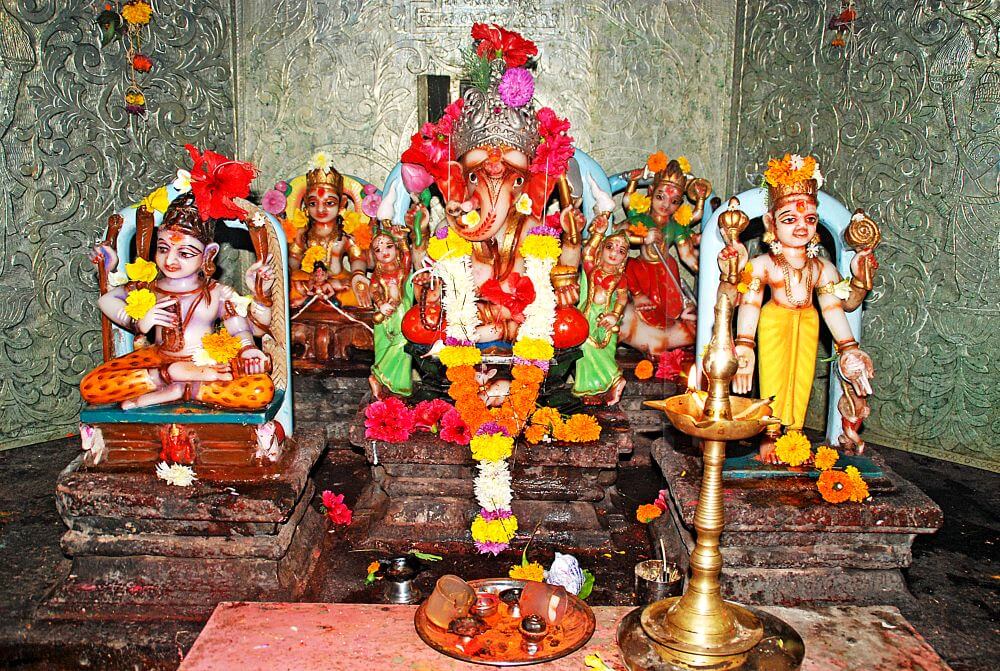
In the octagonal sanctum, upon a Vajrapitha (sacred stone pedestal), Lord Ganesha is enshrined in the center, flanked by idols of Lord Samba (Shiva) and Lord Vishnu. At the back are idols of Surya (the Sun God) and Devi (the Goddess), completing the divine Panchayatan of five deities. The principal marble idol of Lord Ganesha in the sanctum is two feet tall, featuring a right-turned trunk (Siddhivinayak). Seated on a throne in Padmasana with folded legs, the deity wears a brocade cap (Jaritop) on His head and holds a rosary (Akshamala), a lotus, a bowl (Paral), and a modak in His hands. On either side are Goddesses Riddhi and Siddhi, with Mushakaraja (the divine mouse vehicle) near the throne. In front of the idol rest two sacred Padukas. To the front right of the Ganesha idol stands a figure of Lord Shiva holding a rosary, a serpent, and a Damaru, while at the back is a four-armed (Chaturbhuja) idol of Surya holding lotuses. To the left of Lord Ganesha is an eight-armed idol of Goddess Mahishasuramardini. Holding a bowl, trident, bow, sword, shield, serpent, and cup, the Goddess holds the hair of the demon with one hand. Also to the left of the Ganesha idol is an idol of Lord Vishnu.
Figures of holy sages and saints adorn both domes of the temple. The enclosed complex here is spacious and serene. Within the courtyard stand three east-facing shrines: the central one dedicated to Lord Ganesha, the one on the left to Raghaveshwar Mahadev, and the one on the right to Lord Hanuman. The Hanuman idol in this shrine stands 90 cm tall. A grand religious fair (yatra) takes place here on Chaitra Purnima (Hanuman Jayanti). In front of the Ganesha and Mahadev shrines stands a carved stone Tulsi Vrindavan with a Gaumukh (cow-face spout) below. In front of the shrines lies the Pushkarani. This is the largest freshwater reservoir on the fort. Despite being surrounded on all sides by saline sea water, this Pushkarani consistently holds an abundance of sweet, fresh water.
Since Kolaba Fort is situated in the sea, visits to the fort and for taking darshan of Lord Siddhivinayak depend on the low and high tide timings. The timings for darshan at this fort temple vary according to the lunar Tithi, as follows: Pratipada (3:45 PM to 6:45 PM), Dwitiya (4:30 PM to 7:30 PM), Tritiya (5:15 AM to 8:15 AM), Chaturthi (6:00 AM to 9:00 PM), Panchami (6:45 AM to 9:45 AM), Saptami (8:15 AM to 11:15 AM), Ashtami (9:00 AM to 12:00 PM), Navami (9:45 AM to 12:45 PM), Dashami (10:30 AM to 1:30 PM), Ekadashi (11:15 AM to 2:15 PM), Dwadashi (12:00 PM to 3:00 PM), Trayodashi (12:45 PM to 3:45 PM), Chaturdashi (1:30 PM to 4:30 PM), Amavasya / Purnima (2:15 PM to 5:15 PM). During these designated hours, devotees can walk for approximately 15 minutes from the shore to reach this sacred temple inside Kolaba Fort. Every Tuesday and on Angaraki / Sankashti Chaturthi, a large number of devotees gather at this temple to seek the divine blessings of Lord Ganesha.
Apart from this temple, there is a temple of Goddess Padmavati inside the fort. It houses a 40 cm tall idol of Goddess Padmavati. To the south of this temple is the temple of Gulbai, who is Goddess Mahishasuramardini. The idol inside it is about one meter in height. She is also known as Golawati Devi.
This sacred temple stands as a testament to deep spiritual devotion, ancient architectural grandeur, and rich local cultural traditions.
The sanctum sanctorum houses the divine idol consecrated according to ancient Vedic traditions, surrounded by serene courtyards and traditional temple architecture.
Navratri, Maha Shivratri, Annual Temple Jatra & Deepotsav
Compare and book flights, secure top-rated local hotels near the temple, hire reliable guides, and rent cars instantly.
Extend your pilgrimage by visiting other highly sacred temples located nearby.


Add ₹999 more to unlock FREE SHIPPING!
Your sacred cart is currently empty.
Shop Photo FramesFill in your delivery details below to place your order.
Add comment