
Add ₹999 more to unlock FREE SHIPPING!
Your sacred cart is currently empty.
Shop Photo FramesAs the guardian deity and Gram-Daivat (village deity) of Alibaug city, the Shri Kalambadevi Temple is a place of immense faith for devotees. This is the Kuldevi (family deity) of Sarkhel Kanhojiraje Angre, the chief of the Maratha Navy, and the site holds unique significance in the historical and cultural development of Alibaug. Initially, this temple was located within the Hirakot Fort. However, after entry into the fort was restricted during the British era, the beautiful idol found in the sea at Thal and the original stone slab from the fort were installed at Balaji Naka in later times, following a divine vision received by the Goddess.
The history of the Kalambadevi Temple is linked to the glorious era of the Maratha Navy chief, Sarkhel Kanhojiraje Angre. In the 17th century, when Kanhojiraje Angre rebuilt the city of Alibaug, he commissioned the construction of several structures, gardens, and temples. Besides being the Gram-Daivat of Alibaug, Kalambadevi is also the Kuldevi of the Angre family. Kanhojiraje Angre had profound devotion to the Goddess and considered her the protector of the city.
The history of the installation of this deity is told as follows: the original seat of Kalambadevi was inside the ‘Hirakot’ Fort in Alibaug. This fort was built by Kanhojiraje Angre around 1720. Made of grand black basalt stone slabs, the fort shone like a diamond in the sunlight, hence it was named ‘Hirakot’. Later, in 1839, when the British regime took over, they converted the fort into a district prison. Due to the fort becoming a prison, it became difficult for local citizens to enter for worship and festivals. According to British officials, the presence of Maratha soldiers or local citizens in the fort under the pretext of visiting the Goddess posed a security risk. Therefore, they decided to remove the stone slab of the Goddess from the fort. It is said that around the same time, the Goddess appeared in a vision to a Koli fisherman and said, “I am in the sea near Thal.” Following this, when the Koli community of Thal searched the sea, they found a beautifully carved stone idol of Kalambadevi in their fishing net. The descendants of Kanhojiraje Angre later installed that original stone slab from Hirakot Fort and the idol found in the sea at the then-boundary of Alibaug city, which is today’s Balaji Naka. It is said that to determine the site, the descendants of Kanhojiraje Angre shot an arrow from the fort and decided to install the Goddess where the arrow landed. Since the arrow fell at the current temple site, the temple was constructed there.
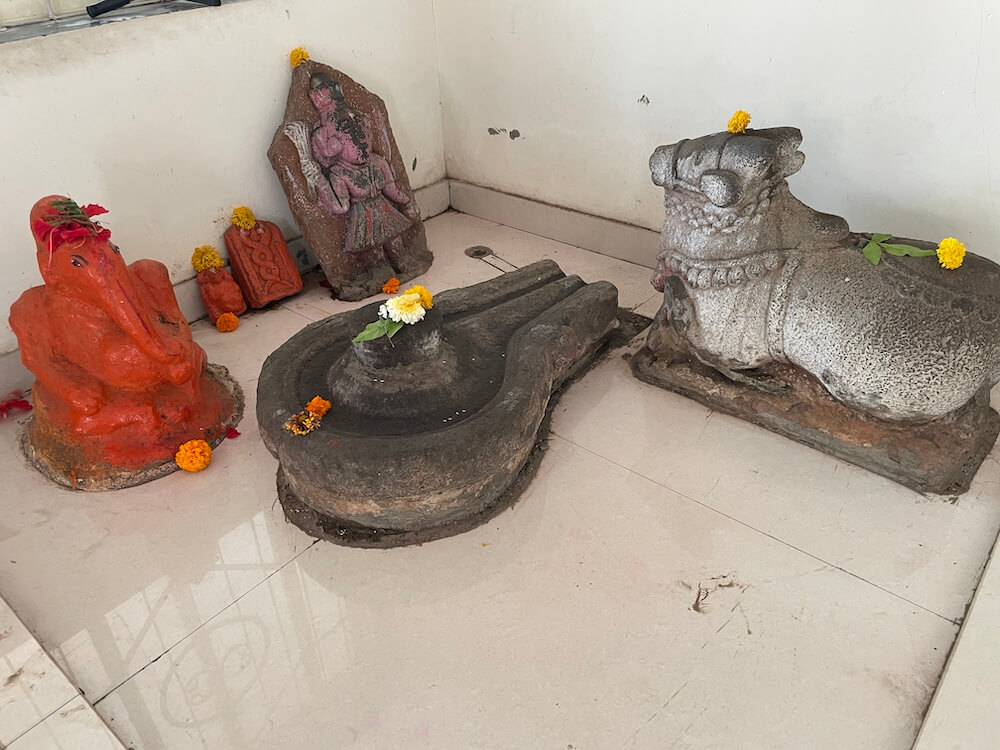
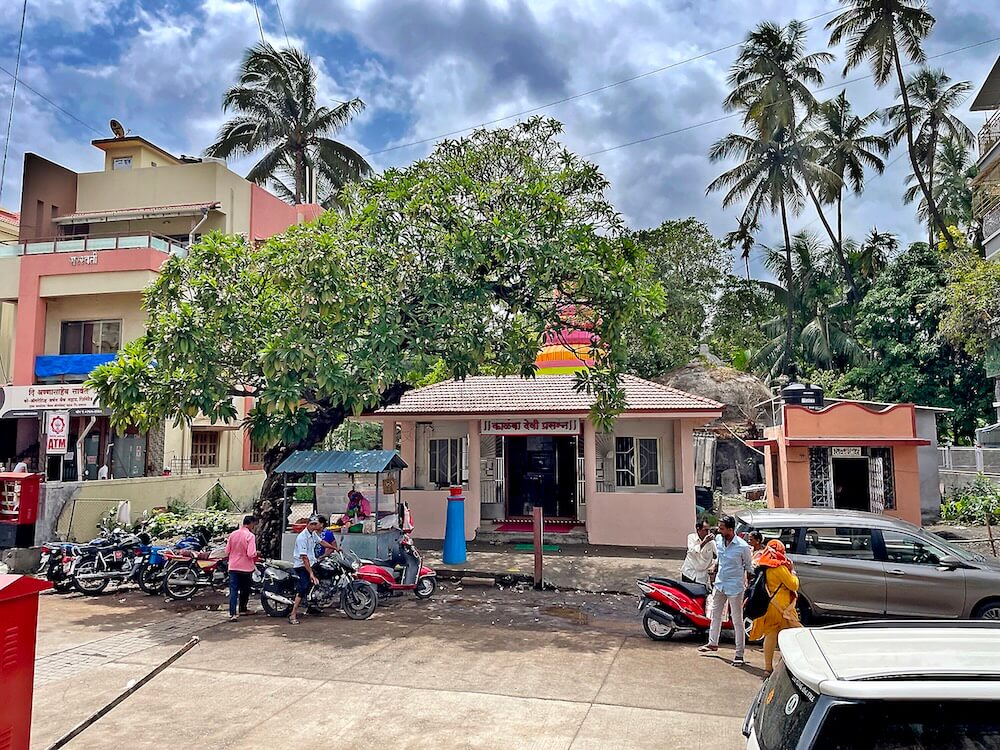
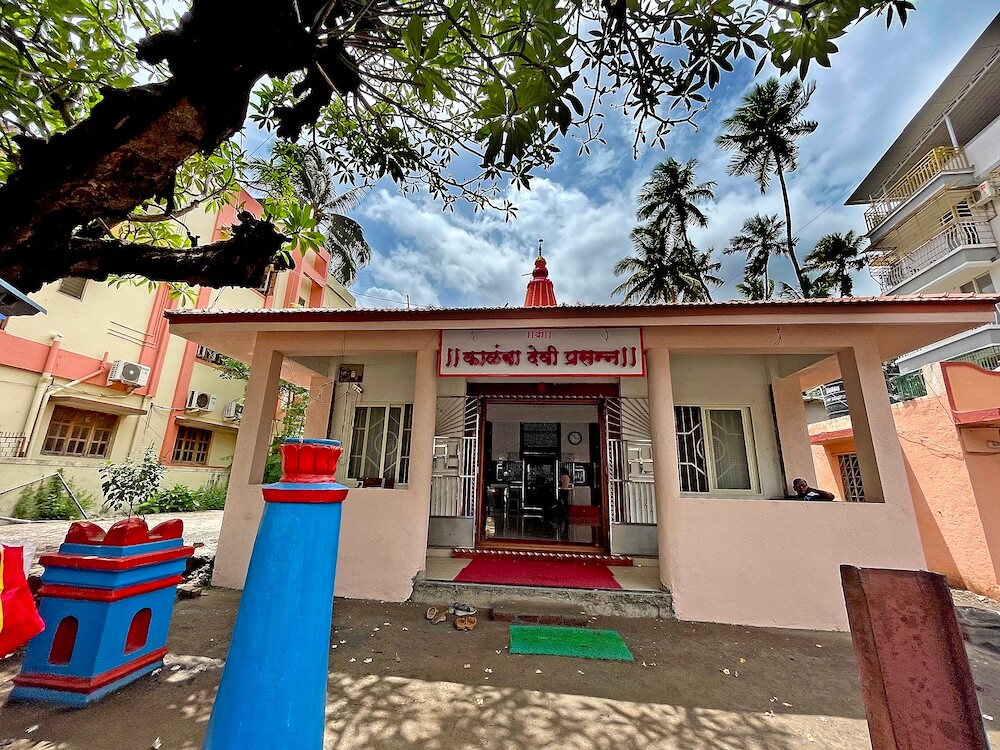
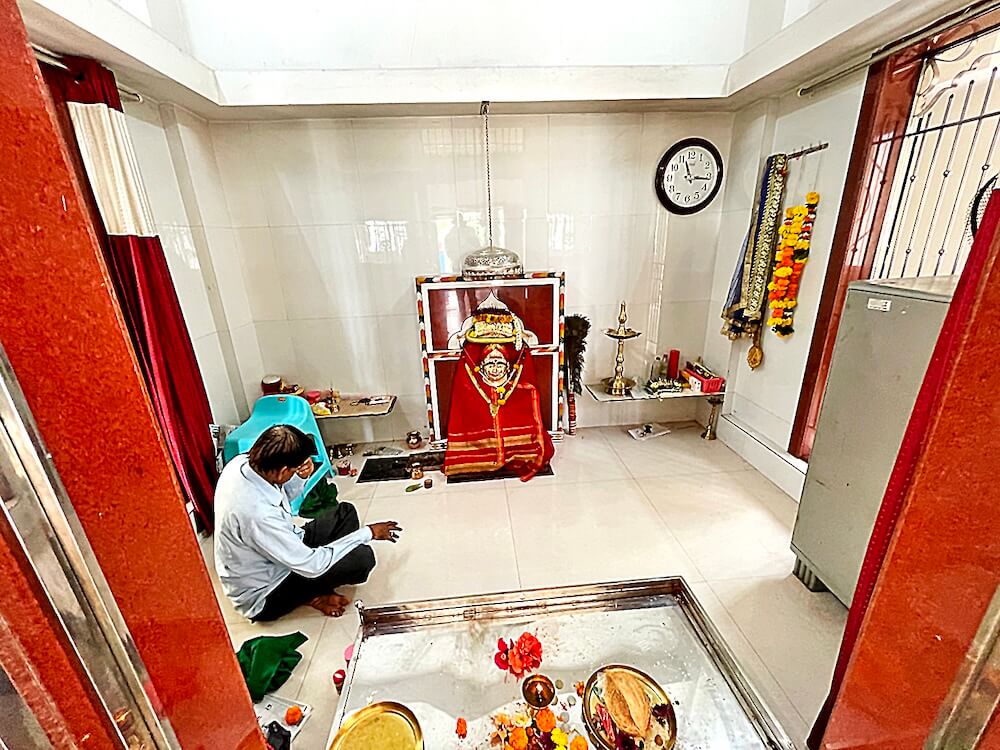
This Kalambadevi Temple expanded over time. In the early days, the temple was built in a very simple Konkani architectural style. This old temple was constructed using mud, wood, and roof tiles. At that time, the sanctum sanctorum (Gabhara) of the Goddess was only one and a half feet high. After the renovation in 2020, the temple attained its current form. During the renovation, no changes were made to the location of the original idol or the temple site. Steel has now been used in place of the old wooden sanctum, and the height of the sanctum has been increased to three feet. A new and magnificent brass pinnacle (Kalash) has been installed on the temple spire. Facilities for devotees to sit have been provided in the temple hall (Sabhamandap). The serene idol of Kalambadevi is enshrined in the sanctum. The idol holds various weapons and appears powerful and protective. An eternal lamp (Nandadeep) remains lit in this sanctum. In the premises of this main temple, idols of Ganpati, a Shivling, and Nandi have also been installed.
The management of the Kalambadevi Temple continues to this day according to the traditions established since the time of Kanhojiraje Angre. The Angre government had granted special ‘Inam’ (endowment) lands for the maintenance and daily expenses of this temple. During the founding of Alibaug city, people from various communities came to reside here. This included a large number of Bene Israel Jewish people, known as ‘Shaniwar Telis’. In this confluence of diverse cultures, Kalambadevi became the main foundational deity of the city. Even today, the place of the Goddess remains unshakable in the lives of the people of Alibaug. The custom of offering the first invitation card of any auspicious work at the feet of the Goddess is observed in every household here.
Many religious rituals are performed in the temple throughout the year. The ‘Sharadiya Navratri Utsav’ in the month of Ashwin is the largest and most important festival here. On the first day of Navratri, the Ghatasthapana is performed with due rituals. For nine days, special worship, Abhishekam, and Aarti of the Goddess are performed. Every day, the Goddess is adorned with a new saree and gold jewelry for a special decoration. During Navratri, thousands of devotees from across the district, including Alibaug, come for Darshan. At this time, the temple premises take on the appearance of a fair. Bhajans and Kirtans are organized here during the festival. After the nine days of the festival, on the day of Dussehra, the Seemollanghan and Palkhi procession are celebrated with great pomp. Devotees can take Darshan here daily from 7:00 AM to 10:00 PM. The Tourism Department of the Government of Maharashtra has included this temple among the major tourist destinations of Alibaug.
This sacred temple stands as a testament to deep spiritual devotion, ancient architectural grandeur, and rich local cultural traditions.
The sanctum sanctorum houses the divine idol consecrated according to ancient Vedic traditions, surrounded by serene courtyards and traditional temple architecture.
Navratri, Maha Shivratri, Annual Temple Jatra & Deepotsav
Compare and book flights, secure top-rated local hotels near the temple, hire reliable guides, and rent cars instantly.
Extend your pilgrimage by visiting other highly sacred temples located nearby.


Add ₹999 more to unlock FREE SHIPPING!
Your sacred cart is currently empty.
Shop Photo FramesFill in your delivery details below to place your order.
Add comment