
Add ₹999 more to unlock FREE SHIPPING!
Your sacred cart is currently empty.
Shop Photo FramesThe small villages in the Kolhapur district, famous for the Mahalakshmi Temple, also possess a rich historical and mythological background. An agricultural culture has flourished for thousands of years on the banks of the Hiranyakeshi River. The temples built during the reign of the Yadavas of Devgiri still stand firm on these riverbanks like sages in deep meditation. One such unique shrine, where Shiva, Parvati, and Ganesha are present together, has been situated in the village of Ainapur since ancient times. A distinctive feature of this place is that the Shiva family is seen together in a single idol, a sight rarely found elsewhere.
In a field in the small village of Ainapur in Gadhinglaj taluka, a 13th-century Yadava-era inscription was discovered. This inscription dates back to Shaka 1192 (1270 CE). It mentions the Yadava King Mahadevraya as well as the Yadava chieftain Ravaldev. The inscription records that this village was granted as an ‘Agrahar’—a gift to Brahmins for the temple’s expenses and religious activities. This inscription underscores the historical significance of Ainapur village. According to scholars, the Ishwar Parvati Temple here also dates back to the same period of Yadava rule, i.e., the 13th century. With a history spanning about eight hundred years, this temple has attained unique importance. The Jain Ancient Architecture Conservation and Research Committee of Kolhapur has preserved the ancient idols and sculptures found here.
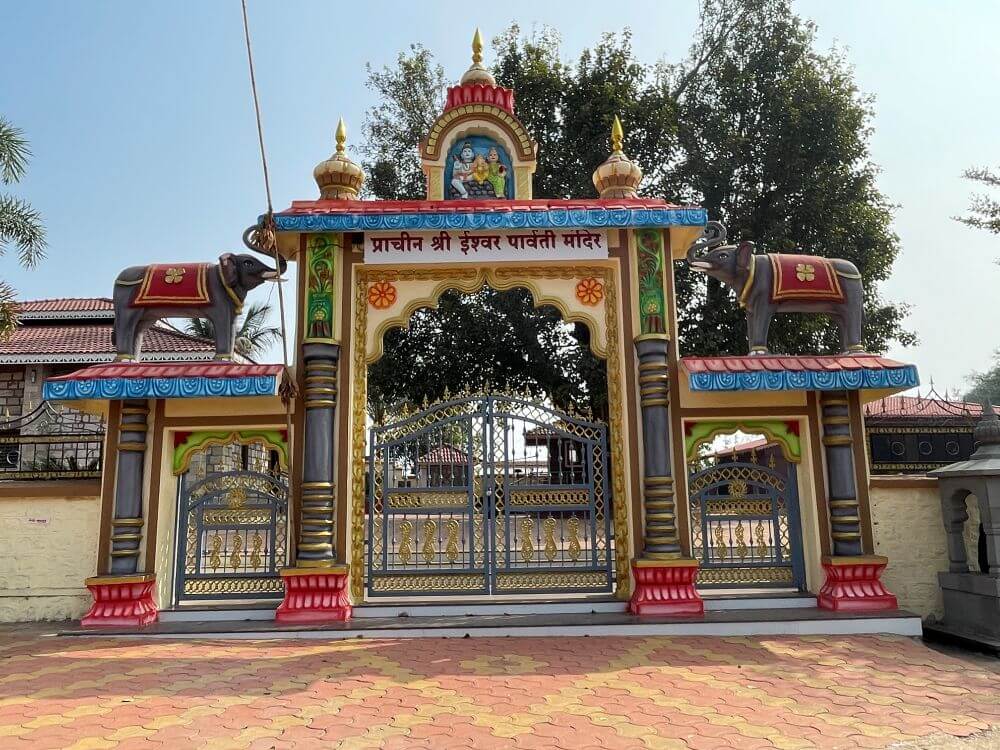
While walking from the road toward the temple, one sees a children’s park adjacent to the temple boundary wall. There are various toys here for children to play with. The entrance gate of the temple complex draws attention due to its distinctive design. There are small doors on both sides of the main entrance. In the upper part of these small doors, there are statues of elephants. On the upper side of the main entrance, in a central niche, are the idols of Shankar, Parvati, and Ganpati. Above this niche and on both sides are ‘Amalakas’ topped with ‘Kalash’ (spires).
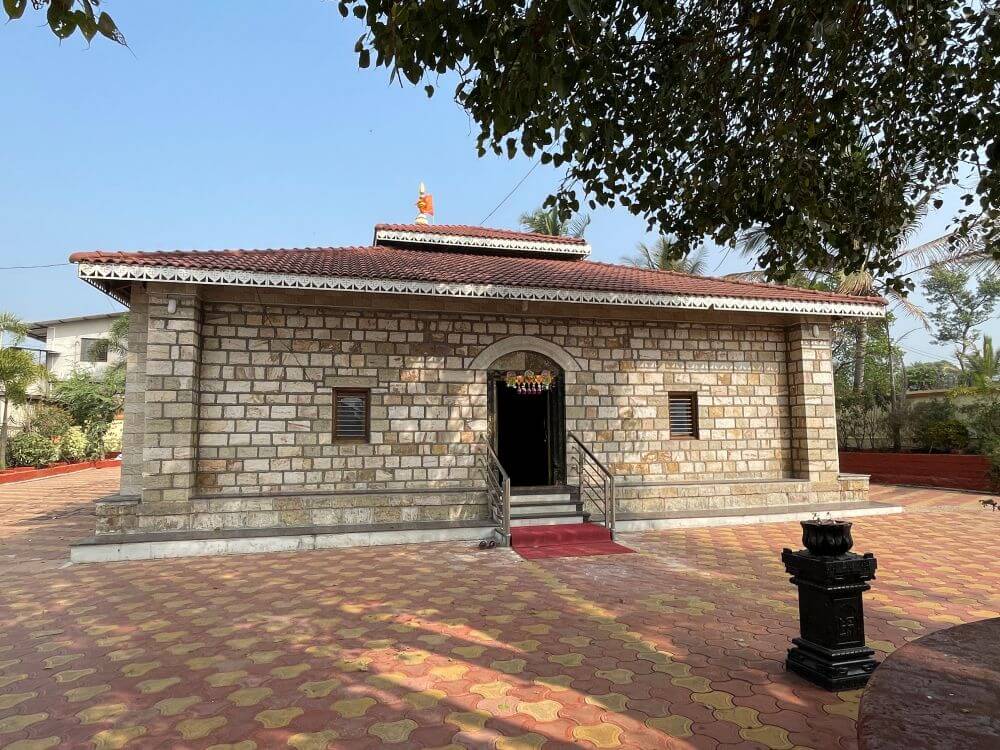
In a niche on the outer side near the entrance, there is an idol of Lord Mahavir. After passing through the entrance, one enters the paved courtyard of the temple. This newly renovated temple stands on a high platform (‘Jagati’). One ascends five steps from the courtyard to enter the temple’s assembly hall (‘Sabhamandap’). The door frames of the temple are carved with floral patterns, and there is a Shiva Linga at the ‘Lalatbimba’ (lintel center). Images of the Sun and Moon are carved in the upper part of the lintel. This wooden entrance is adorned with intricate carvings. The assembly hall is of an enclosed type (‘Gudhamandap’), and the ceiling is divided into two levels, upper and lower. This allows for air circulation, creating a cool atmosphere inside. The floor between the four pillars in the assembly hall is about one and a half feet deep.
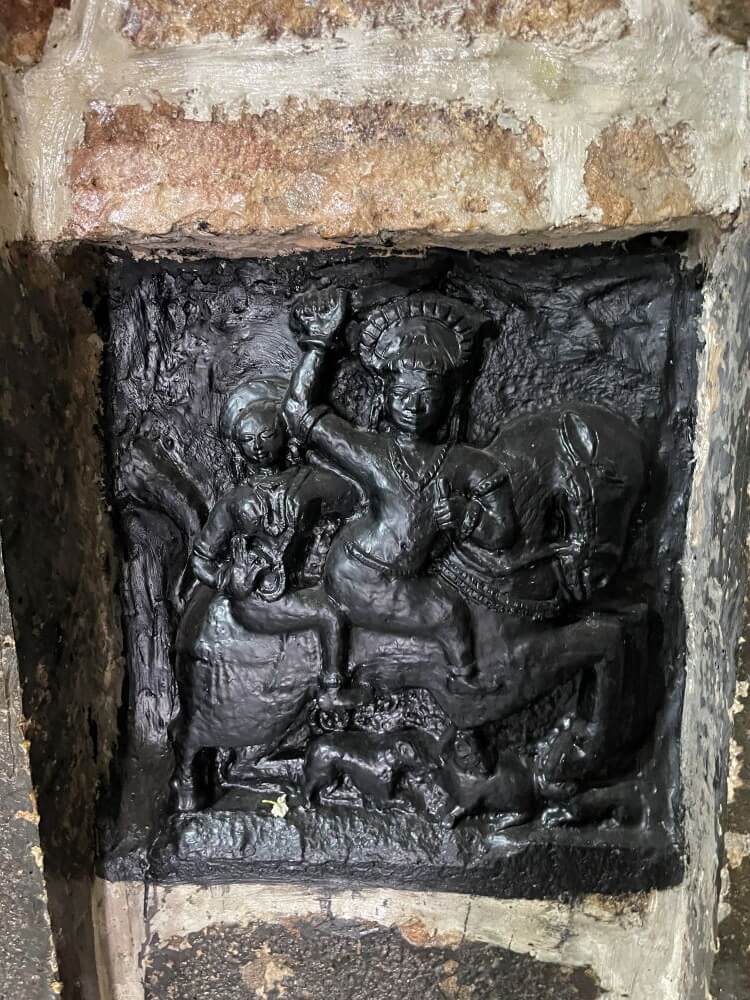
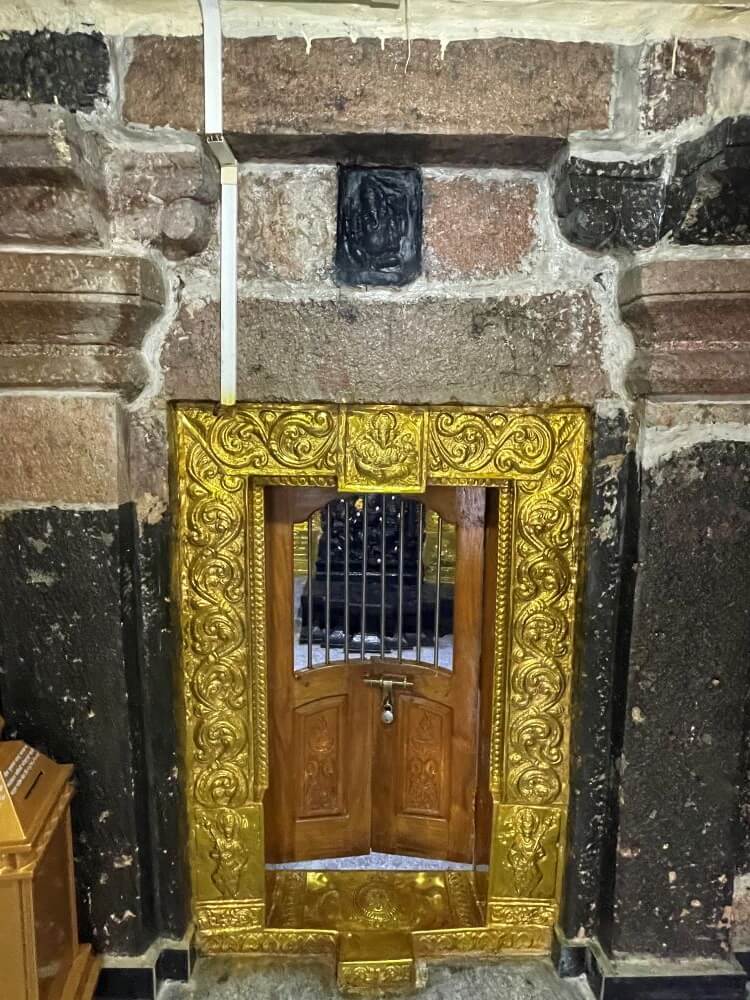
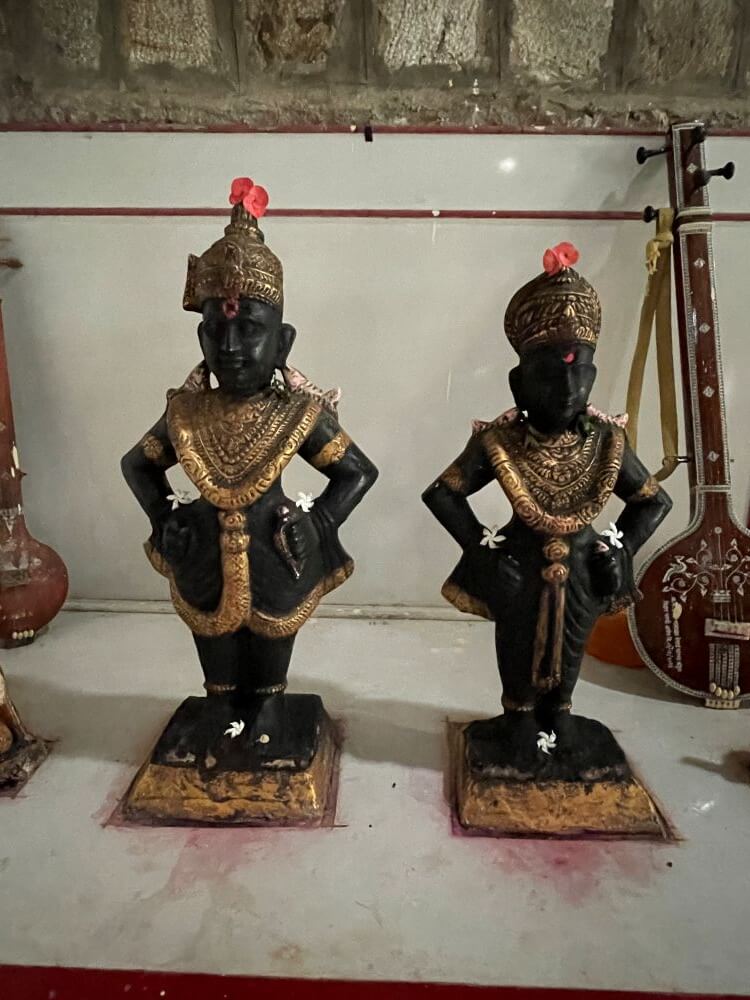
In the assembly hall, near the front wall of the ‘Antarala’ (vestibule), there is a platform on the right side with a Shiva Linga and a five-hooded Naga idol beside it. On the platform to the left are the idols of Vitthal and Rukmai. Near the feet of Vitthal is an idol of Saint Dnyaneshwar, and near the feet of Rukmai is an idol of Saint Tukaram Maharaj. There are ‘Veena’ (musical instruments) on both sides of these idols. From here, one enters the ‘Antarala’. On a platform in the ‘Antarala’ is an idol of Nandi made of black stone. The walls of the ‘Antarala’ contain ancient black stone idols of Ganpati, Lord Mahavir, Khandoba, Mhalasa, and other deities. Further ahead is the sanctum sanctorum (‘Garbhagriha’). On the lintel of the wooden entrance to the sanctum is an idol of Ganesha. In the center of the sanctum, on a ‘Vajrapitha’, is the combined idol of Shiva, Ganesha, and Parvati. One of Shankar’s hands is in the ‘Abhaya Mudra’ (gesture of fearlessness), and the other rests on Parvati’s shoulder. Shankar is dressed in a ‘Dhotar’. He wears a Rudraksha garland, a serpent, and has a trident behind him. Parvati, seated to Shankar’s left, holds a ‘Mangal Kalash’ in one hand, while the other is in the ‘Abhaya Mudra’. Parvati is adorned with a crown, fine garments, and jewelry. Baby Ganesha is seated to Shankar’s right.
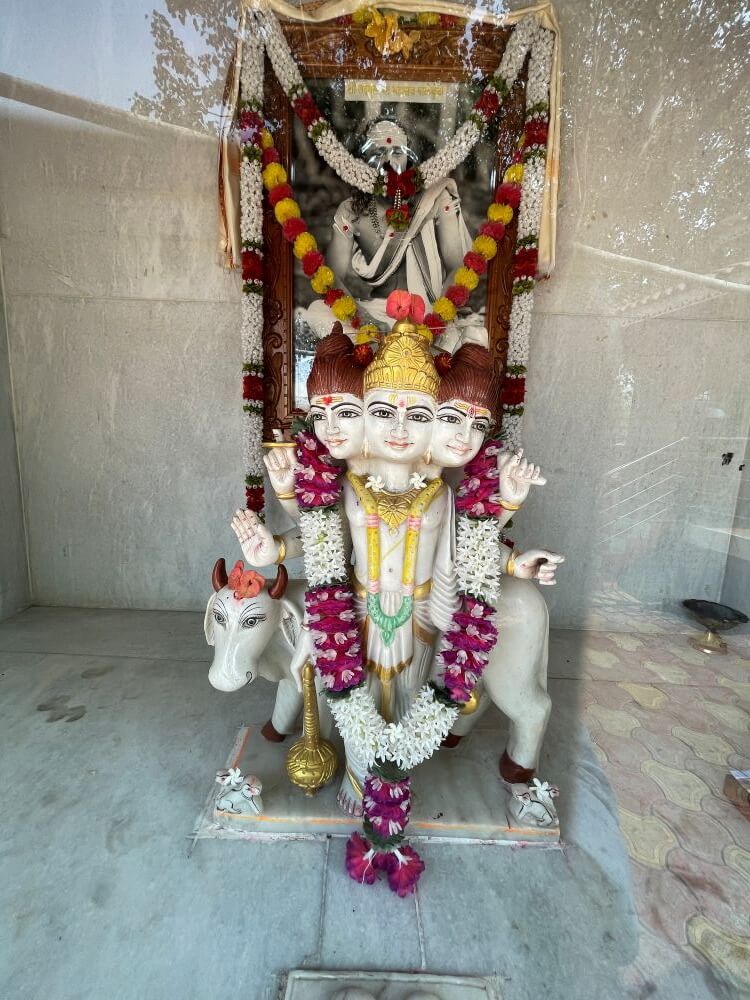
In the temple courtyard, there is a large tree with a stone platform (‘Par’). In the nearby Dattatreya temple, there is a four-armed and three-faced idol of Dattatreya made of white marble. Three of the idol’s hands hold a conch, a discus, and a mace, while one is in the ‘Varada Mudra’ (boon-giving gesture). On the other side of the platform is a temple of Maruti and Ganpati. The temple houses black stone idols of Shri Ganesha and Maruti. In the back of the temple courtyard, there are many ‘Virgals’ (hero stones), ‘Satisheelas’ (sati stones), and Naga images.
Annual festivals such as Mahashivratri, Vaikuntha Chaturdashi, Shravan Purnima, as well as Ganesh Jayanti, Navratri, and Hanuman Jayanti are celebrated in this temple. Many devotees come to visit the deity on Shravani Mondays, Vadya Trayodashi, Sankashti Chaturthi, and other auspicious days.
This sacred temple stands as a testament to deep spiritual devotion, ancient architectural grandeur, and rich local cultural traditions.
The sanctum sanctorum houses the divine idol consecrated according to ancient Vedic traditions, surrounded by serene courtyards and traditional temple architecture.
Navratri, Maha Shivratri, Annual Temple Jatra & Deepotsav
Compare and book flights, secure top-rated local hotels near the temple, hire reliable guides, and rent cars instantly.
Extend your pilgrimage by visiting other highly sacred temples located nearby.


Add ₹999 more to unlock FREE SHIPPING!
Your sacred cart is currently empty.
Shop Photo FramesFill in your delivery details below to place your order.
Add comment