
Add ₹999 more to unlock FREE SHIPPING!
Your sacred cart is currently empty.
Shop Photo FramesThe Hiranyakeshi River, which originates in the Amboli Ghat, is revered as the bestower of fortune upon the Gadhinglaj Taluka. Across the country, human settlements have flourished along the banks of such rivers, with large towns and villages established there. Various temples, revered as sacred sites in folk culture, are also situated on the banks of such rivers. Among these is a renowned and ancient Ganesh temple, located in the village of Inchanal in Gadhinglaj Taluka. In the first week of February, the first rays of the rising sun perform ‘Prakashabhishek’ (anointing with light) upon Lord Ganesha in this temple, which is situated on the banks of the Hiranyakeshi River. Devotees firmly believe that the Ganesha here rushes to the aid of those who call upon Him and grants their vows.
It is said that in the thirteenth or fourteenth century, there was a temple here built in the Hemadpanti architectural style. Records indicate that this temple underwent renovation (Jirnoddhar) in 1707 during the Peshwa era. Two hundred years later, in 1907, the temple was again renovated and expanded. In recent times, after renovations carried out between 1987 and 1992, the temple acquired its present form. In 2019, the Zilla Parishad (District Council) undertook improvement works in the temple premises, spending 20 lakh rupees. It is also said that Samarth Ramdas Swami Himself has penned a description of this Ganesh idol. Thus, the history of this temple extends directly to the Shivkal (Shivaji’s era). This is the twenty-first Ganesha among the twenty-one Ganeshas described in the Puranas. Devotees believe that by having the darshan (sacred sight) of this Deity, one attains the merit of having the darshan of all twenty-one Ganeshas.
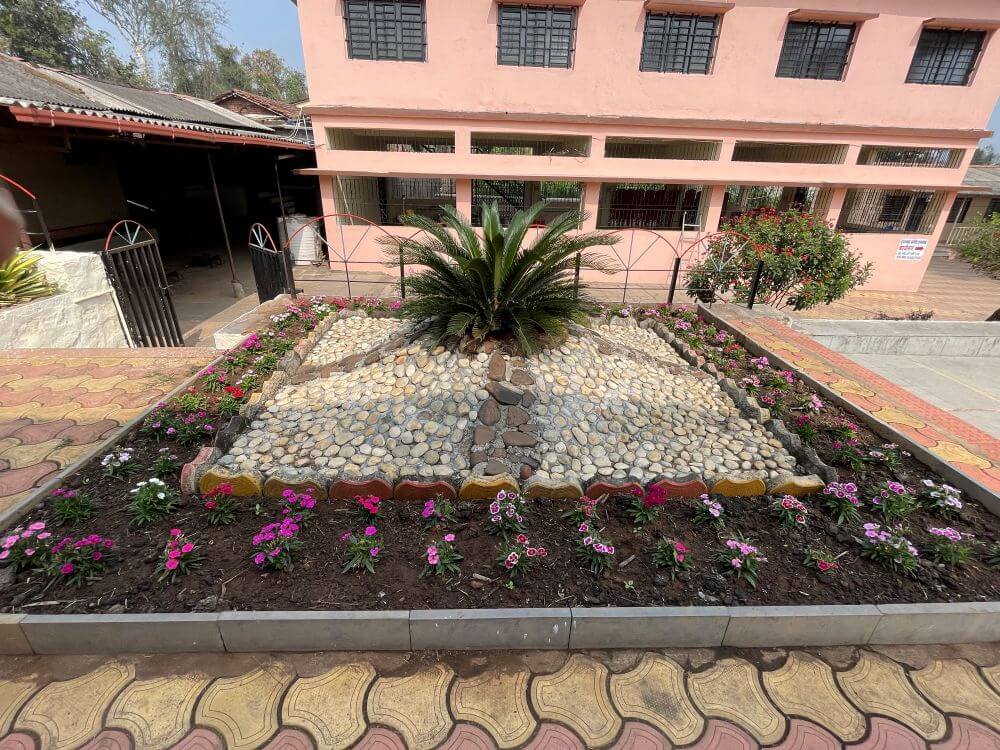
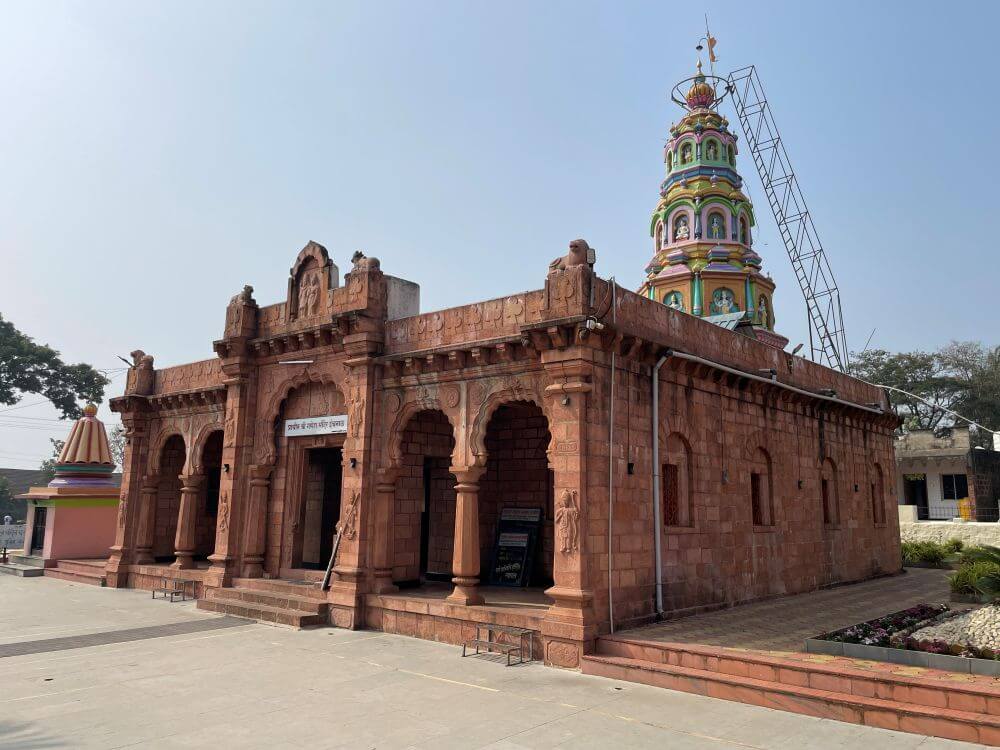
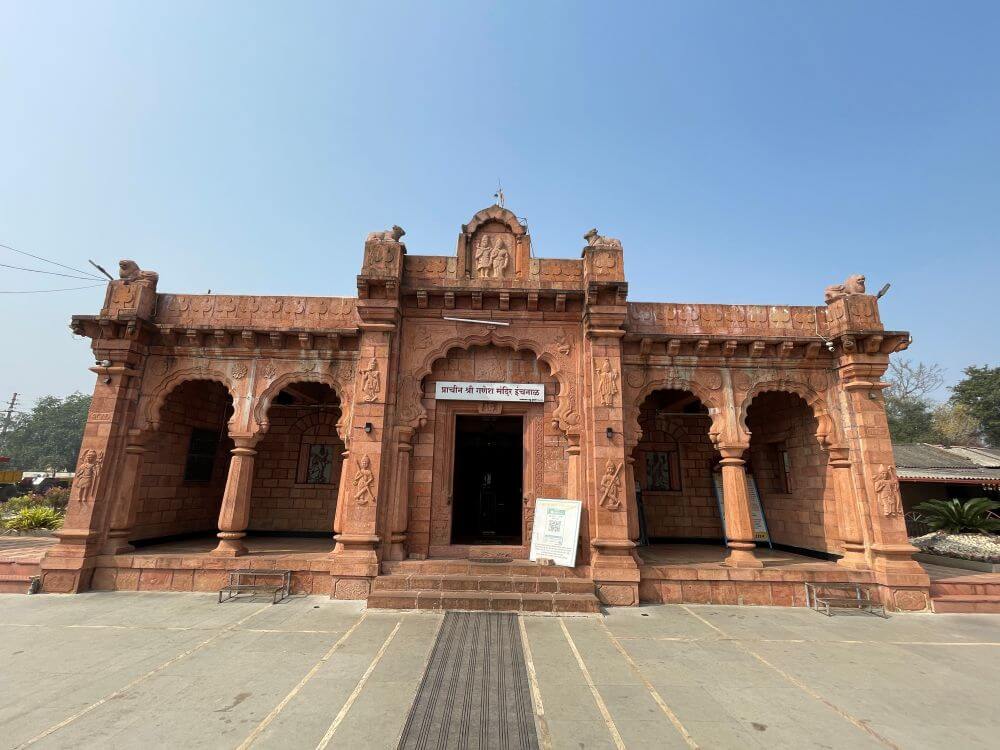
This temple is situated in a spacious area in the central part of Inchanal village, adjacent to the main road. The temple courtyard is surrounded by a boundary wall approximately five feet high. This boundary wall features a distinctive entrance gate. Above the semicircular arch, which rests on a beam supported by two square pillars, there are three shikhara-like structures in total: one in the center and two on the side pillars. From here, one enters the temple courtyard. The temple premises are adorned with coconut trees, ornamental plants, and flowering plants scattered throughout the courtyard. On one side, the temple stands on a large platform (Chauthara). After washing one’s feet in the shallow pond meant for foot-washing, one ascends seven stone steps to enter this platform. The temple itself rests on a raised plinth (Jagati). The temple is constructed using Arabhavi-type stones from Karnataka. The temple’s structure comprises a Sabhamandap (assembly hall) with a flat roof, a Garbhagriha (sanctum sanctorum), and a tall Shikhara (spire) in the Maratha architectural style above it.
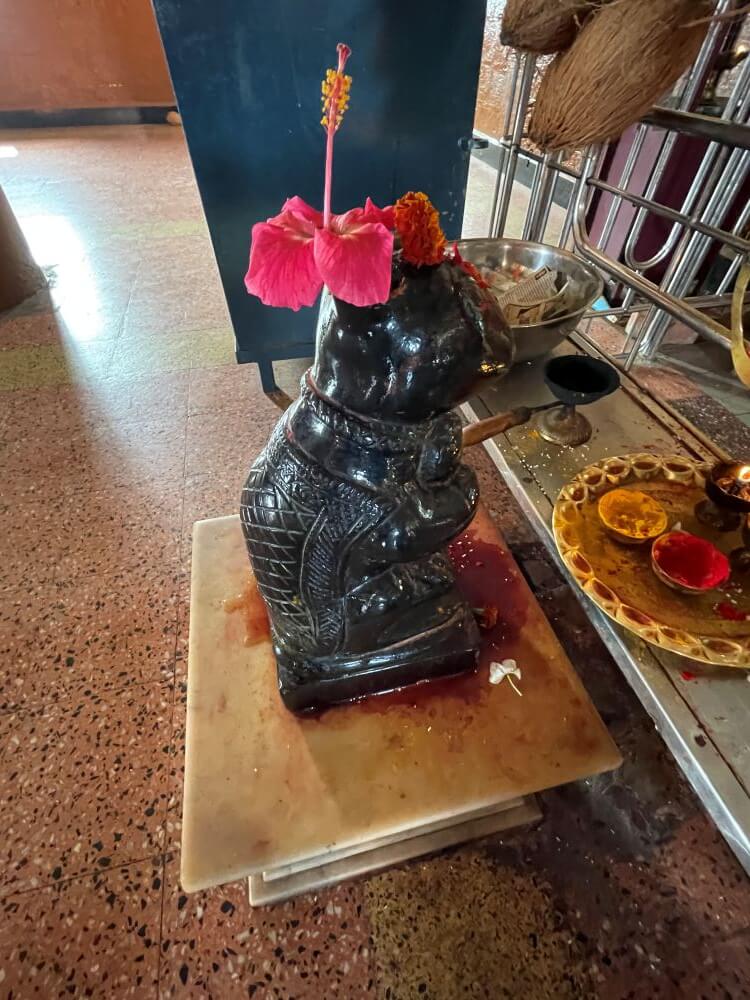
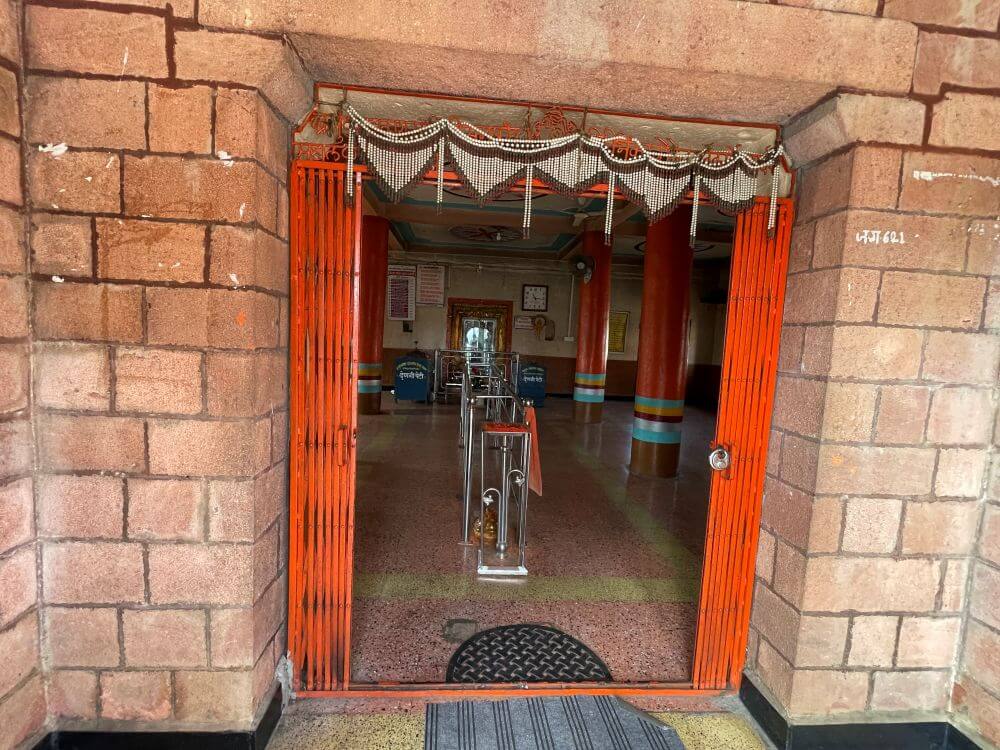
In front of the Sabhamandap is a small veranda (Ovari). On the pillars of its ornate entrance, sculptures of Jaya and Vijaya, the dwarapalas (gatekeepers), are carved at the bottom, and above them, Vishnu on one side and Krishna on the other. On the main arched entrance, there are sculptures of Maruti (Hanuman) on one side and Garuda on the other. High above the entrance, in a niche (Devkoshtak) in the center of the upper gallery (Sajja), there is an idol of Shiva-Parvati. On both sides of this, there are Nandi idols. It is for this reason that this temple is also known as a Ganesh Panchayatana Temple. The doorframes (Dwarashakhas) of the Sabhamandap are adorned with leaf and flower motifs, and on the Lalatbimba (lintel center), there is an idol of Ganesha. Above this, in the Uttaranga (upper part of the doorway), there is an image of Suryanarayana (the Sun God) seated on a chariot drawn by seven horses. On both sides of the entrance, there are four arched gateways supported by two circular pillars, and here stands a Nagarkhana (drum house) measuring 39 feet long and 10 feet wide. Inside the Sabhamandap, there are cylindrical pillars supporting beams. These beams create square patterns on the ceiling. Within these squares, there is circular ornamental carving. The Sabhamandap here is enclosed (Gudhamandap). Arrangements for a darshan queue have been made in this Sabhamandap for the convenience of devotees. Near the entrance of the Garbhagriha, there is an idol of Mushakraj (Lord Ganesha’s mouse mount) holding a modak (laddu) in his hand.
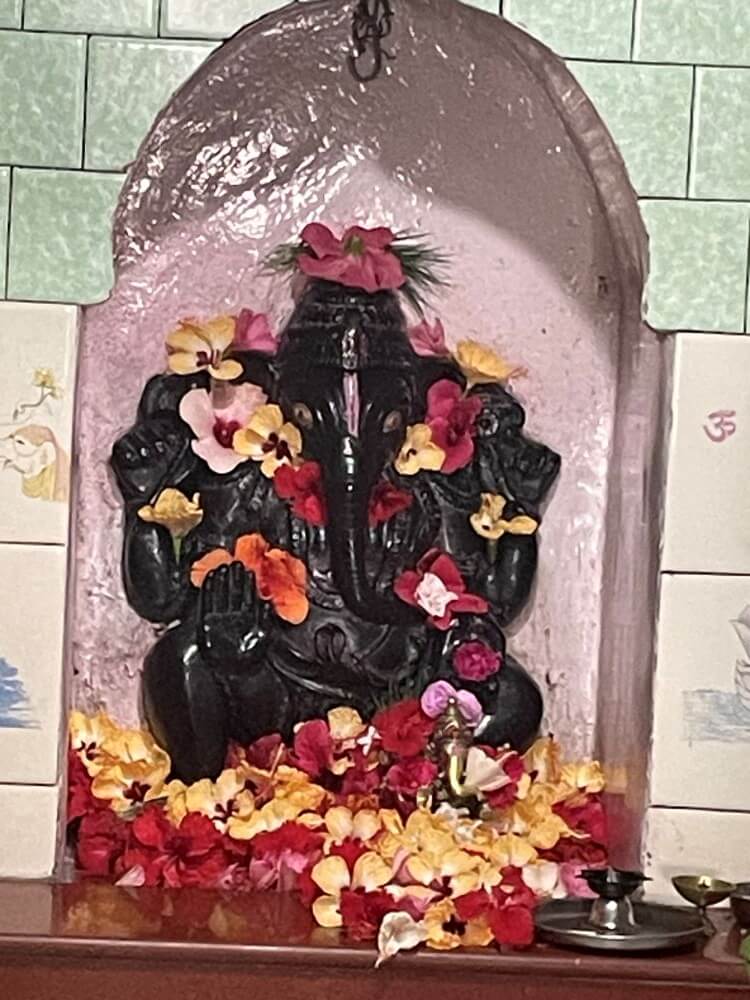
On both sides of the frontal wall of the Garbhagriha, there are niches (Devkoshtakas). The brass doorframes (Dwarashakhas) of the Garbhagriha are adorned with leaf and flower motifs. On the Lalatbimba, there is an idol of Ganesha in the center, a Shivapindi (lingam) on one side, and Nandi on the other. The doorframe bears an inscription of the year 1773, mentioning an expenditure of Rs. 100/-. On the Vajrapitha (pedestal) within the Garbhagriha, there is a two-foot-tall, four-armed idol of Ganesha carved from black stone. In the upper right hand of this idol, there is a pasha (noose), and the lower right hand displays the Varadahasta (boon-bestowing gesture). In the upper left hand, there is an ankusha (goad), and the lower left hand holds an Amritapatra (pot of nectar). Additionally, a serpent encircles His waist. For the darshan of this Ganesha, it is customary to enter the Garbhagriha wearing traditional ritual attire (Sovale). The construction of this temple also incorporates principles of astronomy. Here, for the first seven days of February each year, the sun’s rays fall directly upon the Ganesh idol in the Garbhagriha.
Lion sculptures adorn all sides of the temple roof. The octagonal Shikhara, rising in three tiers, stands 66 feet tall. Each tier features eight niches (Devkoshtakas) containing idols of various deities. The Shikhara is crowned with an Amlaka (finial) adorned with lotus flower motifs, and above it, a Kalasha (pot-like spire). In the temple courtyard, to the right, there is a Mahadev (Shiva) temple, and to the left, a Gomukh (cow’s mouth spout).
Just like Ganeshotsav, annual festivals such as Sharadiya Navratrotsav, Dasara, and Diwali are celebrated in the temple. During Diwali and Dasara, the Deity’s Palkhi Sohala (palanquin procession) is celebrated with great enthusiasm. On the occasion of Ganesh Jayanti, a Harinam Saptah (week-long chanting of divine names) and Mahaprasad (grand feast) are organized. During all annual festivals, thousands of devotees come for the darshan of the Deity. On every Sankashti and Angarki Chaturthi, the temple witnesses a surge of devotees.
This sacred temple stands as a testament to deep spiritual devotion, ancient architectural grandeur, and rich local cultural traditions.
The sanctum sanctorum houses the divine idol consecrated according to ancient Vedic traditions, surrounded by serene courtyards and traditional temple architecture.
Navratri, Maha Shivratri, Annual Temple Jatra & Deepotsav
Compare and book flights, secure top-rated local hotels near the temple, hire reliable guides, and rent cars instantly.
Extend your pilgrimage by visiting other highly sacred temples located nearby.


Add ₹999 more to unlock FREE SHIPPING!
Your sacred cart is currently empty.
Shop Photo FramesFill in your delivery details below to place your order.
Add comment