
Add ₹999 more to unlock FREE SHIPPING!
Your sacred cart is currently empty.
Shop Photo FramesDevotees believe that the seven sister goddesses located along the western coastline near Palghar—Vajreshwari, Jagmata, Jivdani, Anandi Bhavani, Chulnai, Shitalai, and Sakai—along with their brother, Shri Ganoba, are divine protectors. Among these, the Sakai Devi Temple in Umele, Vasai Taluka, is renowned as a powerful, awakened seat of the Primordial Energy (Adishakti). Devotees firmly believe that this Goddess answers prayers and rushes to the aid of those who call upon her. The annual fair held here on Chaitra Vadya Chaturdashi is said to be the largest in the surrounding five-village region.
Worshipped as the village deity, Sakai Devi is a Mother Goddess. The Puranas mention the seven Mother Goddesses (Saptamatrikas) as: Brahmi, Maheshwari, Kaumari, Vaishnavi, Varahi, Mahendri, and Chamunda. However, the names and numbers of these Matrikas vary across different Puranas and Tantra texts. During auspicious ceremonies like weddings, Matrika worship is performed after the Punyahavachana ritual, where the number of Matrikas is considered to be २३. Along with them, Ganpati, Durga, or Kshetrapal are also invoked. In this region of Palghar, there is a place for seven local deities, and Ganoba is considered their brother, confirming them as the local Saptamatrikas. The idol of Sakai Devi depicts her with a child on her hip, making her maternal form clearly visible. Scholars also observe a resemblance to Skandamata among the Navadurga.
The legend of this temple states that many years ago, while some fishermen from the Koli community were fishing in the Sopara creek area near Umele, they discovered a stone idol of a Goddess. They tried to pull the idol out of the mud and water, but it would not budge. That same night, the Goddess appeared in a dream to a devotee from Umele village and said, “I am your village deity, and I have manifested in the waters of the creek here. Take me out, bring me to the village, and install me.” When he told the villagers about the dream, he was able to easily lift the idol from the water at the exact spot where it had been found. The idol was then brought to Umele village. In the year १९३०, a small temple was built, and the idol was consecrated. Since then, it has become a place of deep faith for thousands of devotees in Vasai Taluka.
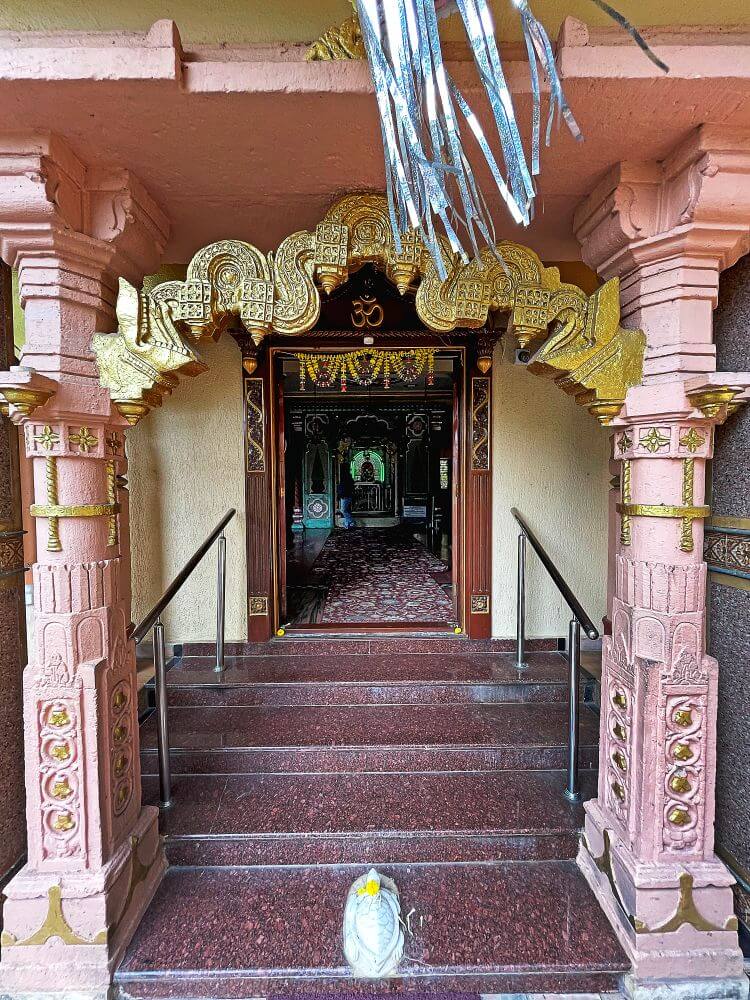
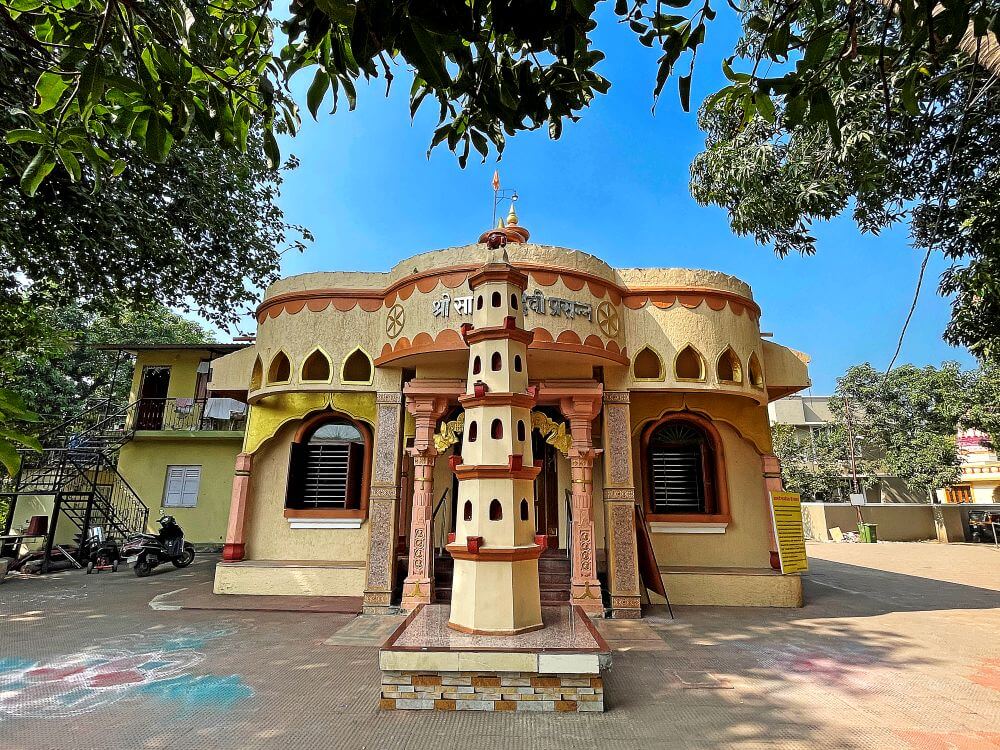
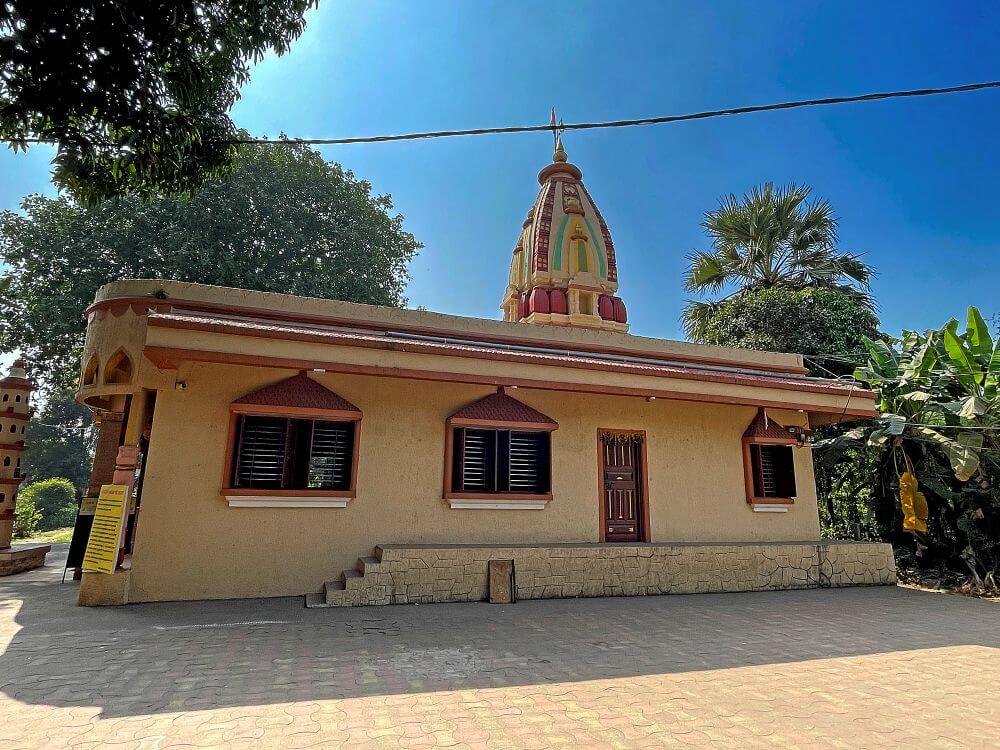
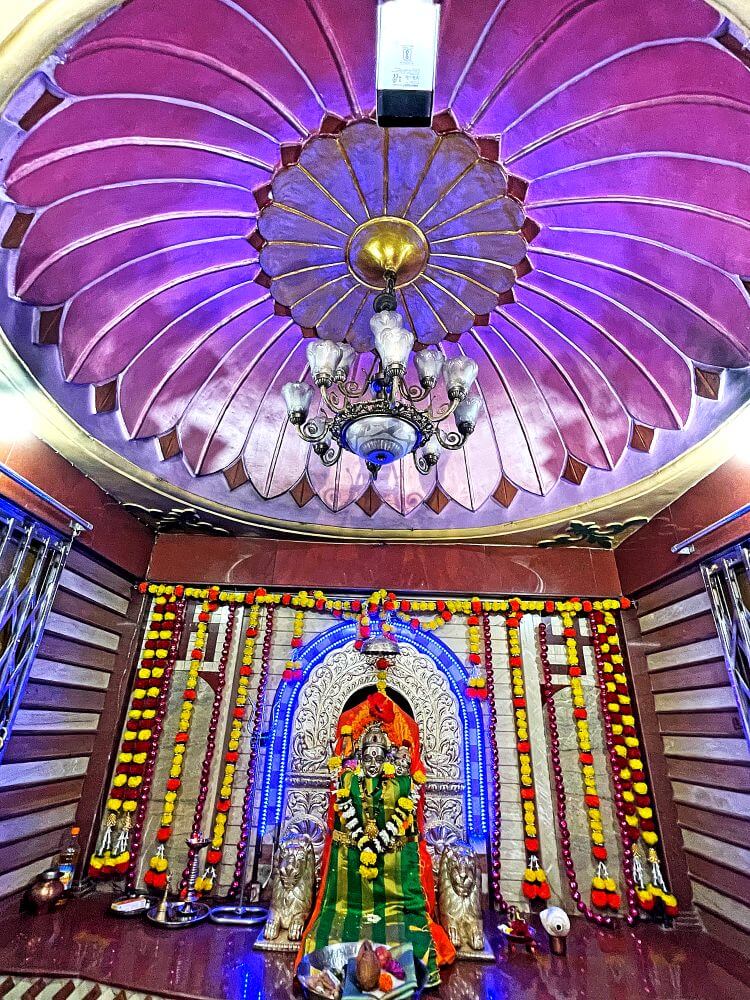
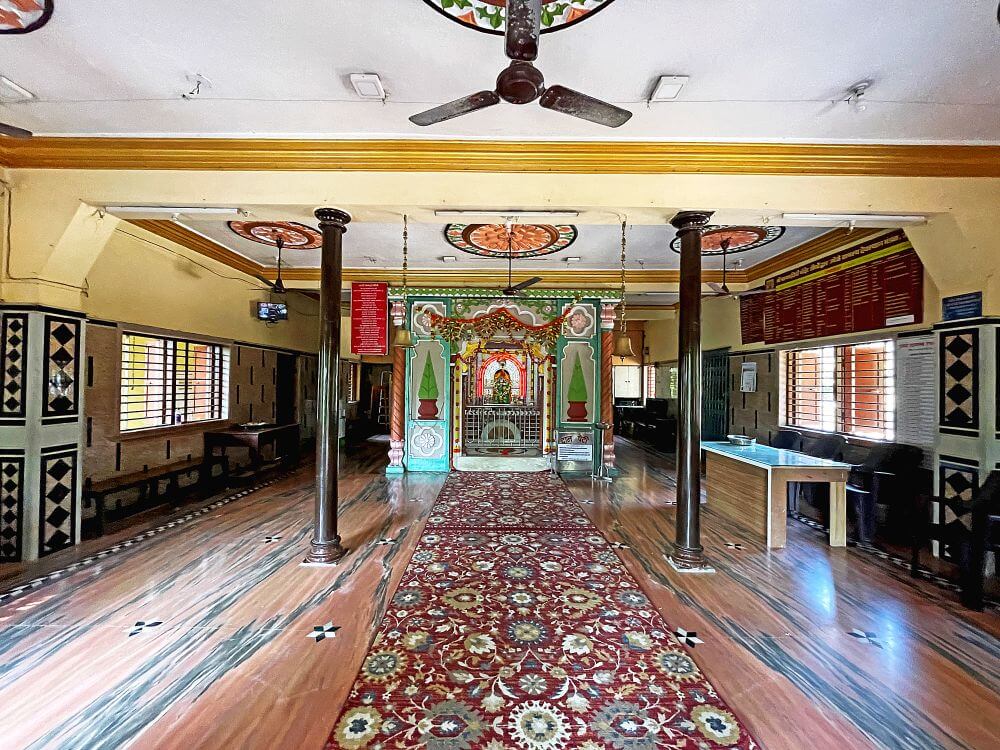
The Sakai Devi temple is located in the heart of Umele village, west of Naigaon. Originally small, the temple was renovated in २००३, giving it its current form. There is a small courtyard in front of the temple, featuring a Tulsi Vrindavan and a lamp pillar (Deepstambh) on a platform facing the entrance. The temple structure consists of a Mukhamandapa (front hall), Sabhamandapa (main hall), and Garbhagriha (sanctum sanctorum). There are four steps leading from the open Mukhamandapa to the Sabhamandapa, with a marble tortoise idol on the first step. The Darshan Mandapa has two pillars connected by an ornate arch, and these pillars feature intricate carvings. The Sabhamandapa is enclosed. Beyond the Sabhamandapa, there is a circumambulation path (Pradakshina Marg) leading to the Garbhagriha. Inside the Garbhagriha, the idol of the Goddess stands on a Vajrapitha (diamond-shaped pedestal) about two and a half to three feet high. The Goddess is depicted with a small child on her hip. On both sides of the idol are silver lions, and the silver sheet behind the back slab is intricately carved. The Goddess and the child wear crowns topped with a silver umbrella. The ceiling of the Garbhagriha is shaped like an inverted lotus flower.
Every year, the Goddess’s fair is celebrated with great enthusiasm on Chaitra Vadya Chaturdashi. During this time, various religious programs, including Bhajans and Kirtans, are organized at the temple. In the early hours of the morning, the Goddess is bathed (Abhishek), followed by Aarti, after which Darshan begins for the devotees. Devotees from Palghar district, as well as Mumbai, Thane, and Gujarat, attend this festival. The awakened Sakai Devi of Umele is the village deity and the family deity (Kulaswamini) for many families in the surrounding region. Along with various festivals, many educational and social activities are also conducted at the Sakai temple. Several folk songs dedicated to this Goddess are also popular.
As mentioned above, the temple of Anandi Bhavani Devi at Sandor, one of the seven sisters, is nearby. Anandi Bhavani is believed to be another form of Ekvira Devi. This temple was established approximately १५० years ago. Renowned for granting wishes, this Goddess is the family deity for many families in the Bhandari and Palmar communities. This temple is also ancient with a tiled roof structure. There is a lamp pillar on the platform in front of the temple. Since the temple is slightly elevated from the ground, one enters the Sabhamandapa by climbing seven steps. This hall has wooden pillars. Beyond it, there is a circumambulation path and an open Garbhagriha. There are two gatekeepers (Dwarpal) at the entrance of the Garbhagriha. Inside, the idol of Goddess Anandi Bhavani is placed on a Vajrapitha.
This sacred temple stands as a testament to deep spiritual devotion, ancient architectural grandeur, and rich local cultural traditions.
The sanctum sanctorum houses the divine idol consecrated according to ancient Vedic traditions, surrounded by serene courtyards and traditional temple architecture.
Navratri, Maha Shivratri, Annual Temple Jatra & Deepotsav
Compare and book flights, secure top-rated local hotels near the temple, hire reliable guides, and rent cars instantly.
Extend your pilgrimage by visiting other highly sacred temples located nearby.


Add ₹999 more to unlock FREE SHIPPING!
Your sacred cart is currently empty.
Shop Photo FramesFill in your delivery details below to place your order.
Add comment