
Add ₹999 more to unlock FREE SHIPPING!
Your sacred cart is currently empty.
Shop Photo FramesThe ancient temple of Kalankadevi, an embodiment of Goddess Renuka of Mahur, is situated in Barshi Takli in the Akola district. Built during the 12th century under the reign of the Yadava dynasty, this temple is a prime example of Hemadpanti architecture in Barshi Takli, a town historically known as Tekalli or Tankavati. The structure, a masterpiece of ancient Indian architecture, features exquisite carvings and numerous intricate sculptures. As the presiding village deity (Matru-Gramadevata) of Barshi Takli, Kalankamata attracts a large number of devotees from various parts of the district.
Carved from black basalt stone, the temple is estimated to have been built in 1177, based on an inscription found on its walls. Much of this inscription, written in Sanskrit and Nagari script, has since been eroded. The inscription records the date and year as “Thursday, Vaishakh Shukla 7, Durmukha Samvatsara, Shaka 1098 (April 7, 1177).” According to this record, the ancient name of the town was “Tekalli,” which later evolved into “Takli.” This town was the capital of Hemadridev, a feudatory king of the Yadavas of Devagiri. The progenitor of Hemadridev’s dynasty was named Danturaj. Hemadridev defeated the Khandesh king Rajal, the son of the Kalachuri king Malugi, who had attacked his capital, Tekalli.
The inscription mentions that through his virtuous deeds, Hemadridev bestowed upon his capital, Tekalli, the sanctity of Kashi. It also records the genealogy of a minister named Bhillam of the Valabhya Gotra, whose family held the ministerial position for generations. It further notes that Gamiyay (Gamayaj) of this lineage built a Vishnu temple in Tekalli and constructed wells and ponds in the area for public welfare. In the ‘Akola District Volume A’ (1910) of the ‘Central Provinces and District Gazetteer’, this Kalankadevi temple is referred to as a Bhavani temple. The 1977 revised edition of the ‘Akola District Gazetteer’ states, “This (Vishnu) temple is now known as the Bhavani temple. However, there is no idol of any deity inside. This temple must have originally been a Vishnu temple.” There is no concrete information available regarding how the idol of Kalanka Devi was established here. However, a popular legend suggests that after a battle with demons, Goddess Renuka chose this place for rest, and has resided here ever since, eventually becoming known as Kalankadevi.
The idol of the Goddess in the temple faces backward. The story behind this is that Mughal soldiers would not allow the villagers to perform worship. One day, when the villagers courageously attempted to offer Naivedya (food offering) to the Goddess, the Mughal soldiers threw pieces of meat into the offering plate. When the plate was brought before the Goddess, she turned her face away. It is said that this is why the idol faces backward even today. Previously, the fiefdom of this area was held by a chieftain named Kazi, under whose jurisdiction the temple was maintained. His descendants still reside in the dilapidated fort in this area today.
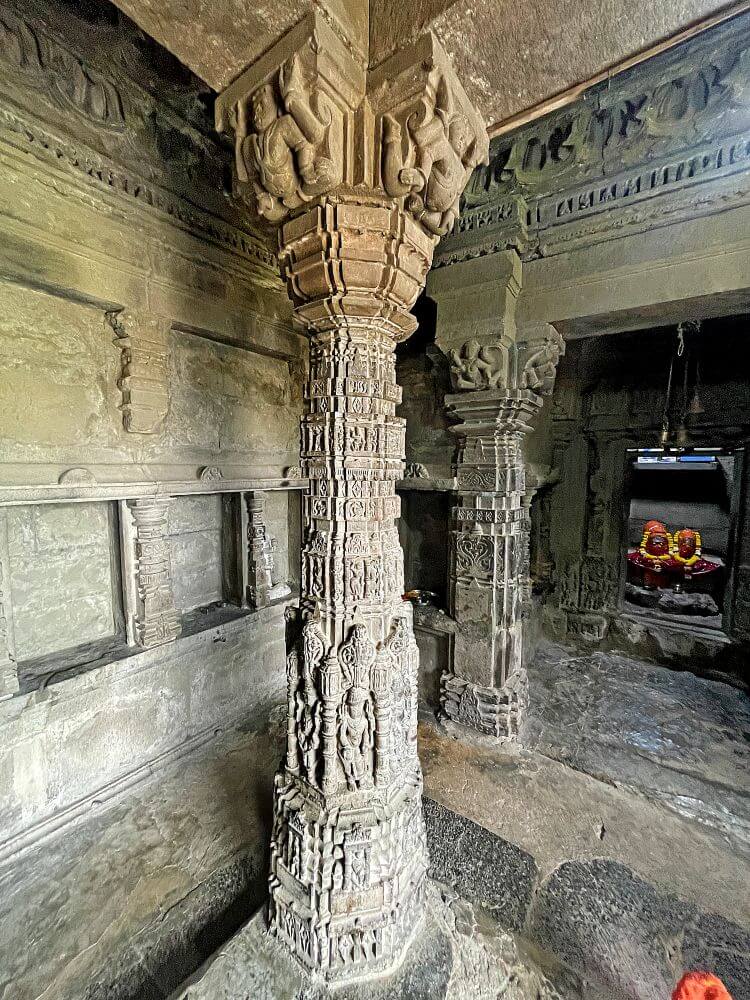
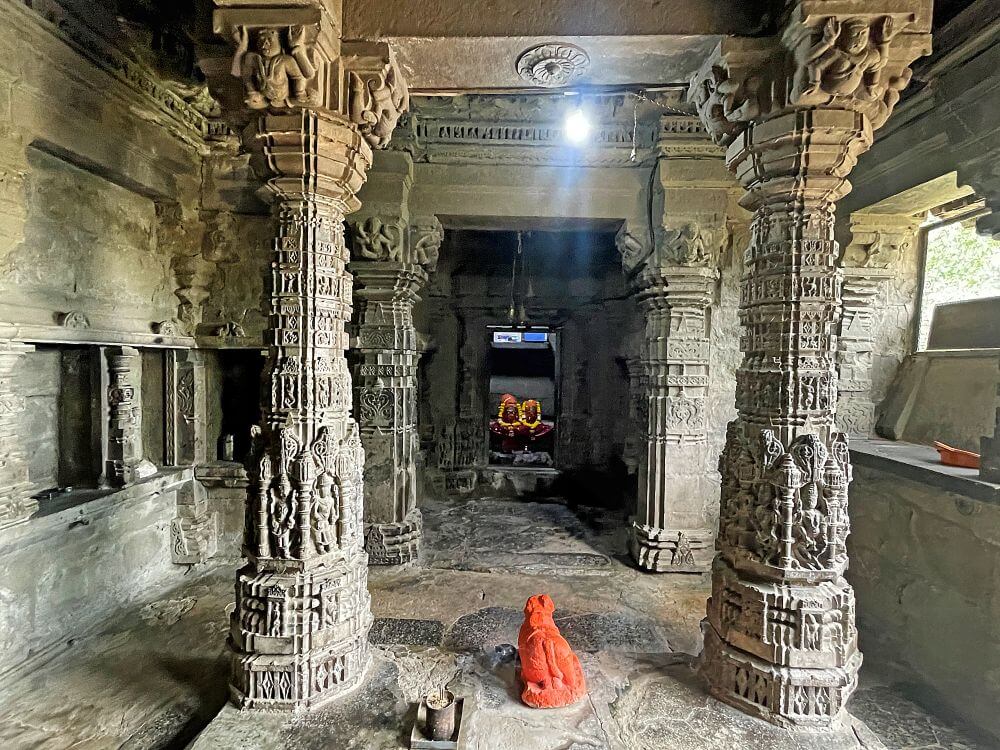
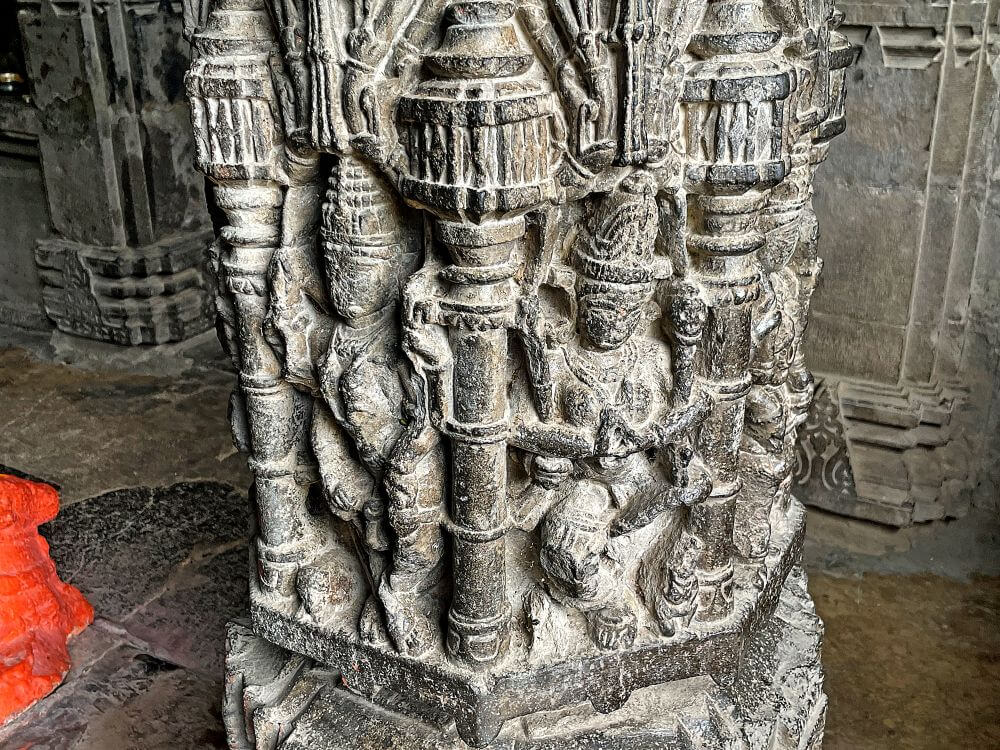
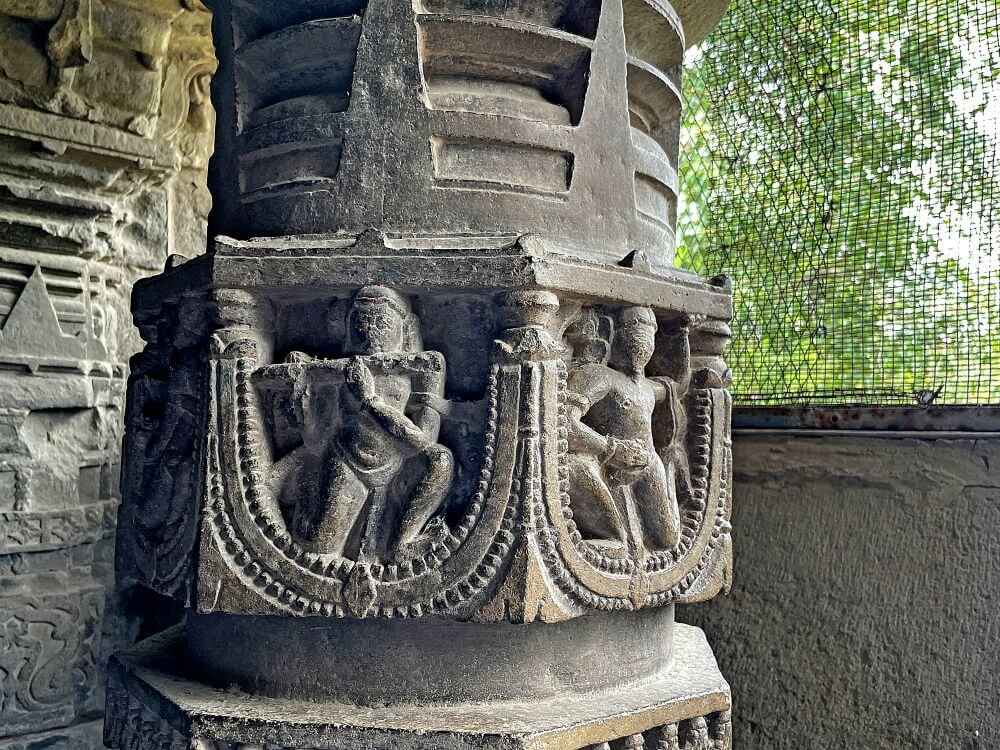
Located on the outskirts of the town, the temple premises are peaceful and serene. The complex is enclosed by a lattice fence, and one enters the courtyard through a gate in this enclosure. A pathway leads from the garden in the courtyard to the temple, flanked by flowering plants on both sides. There is a Yajna-kunda (sacrificial fire pit) in front of the temple. The structure consists of a Sabhamandap (assembly hall), Antarala (vestibule), and Garbhagriha (sanctum sanctorum). One ascends eight steps to reach the high plinth and enters the Sabhamandap. On both sides of the entrance are ancient elephant sculptures. The rectangular Sabhamandap features beautiful pillars adorned with intricate carvings from top to bottom. These pillars depict various deities, including Ganesha, Mahakali, and Mahishasurmardini. Near the ceiling of the pillars, weight-bearing Yaksha figures are carved. The walls near the entrance of the Sabhamandap have stone benches (Kakshasana), and the opposite walls contain niches for idols. In the center of the four pillars in the Sabhamandap stands a vermilion-smeared Nandi idol.
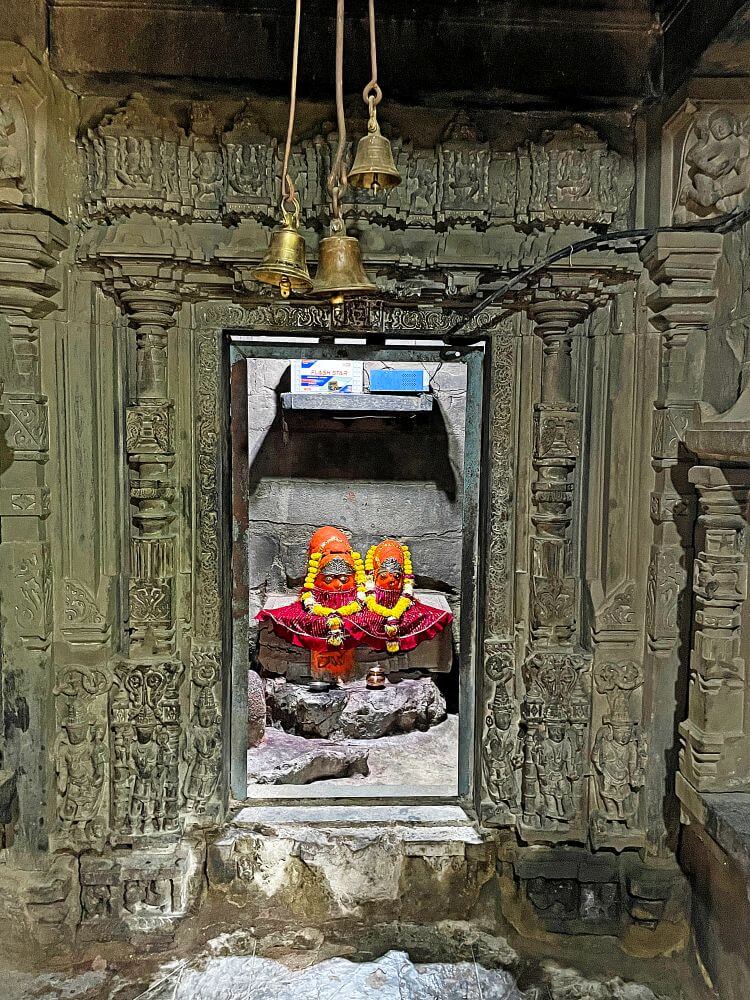
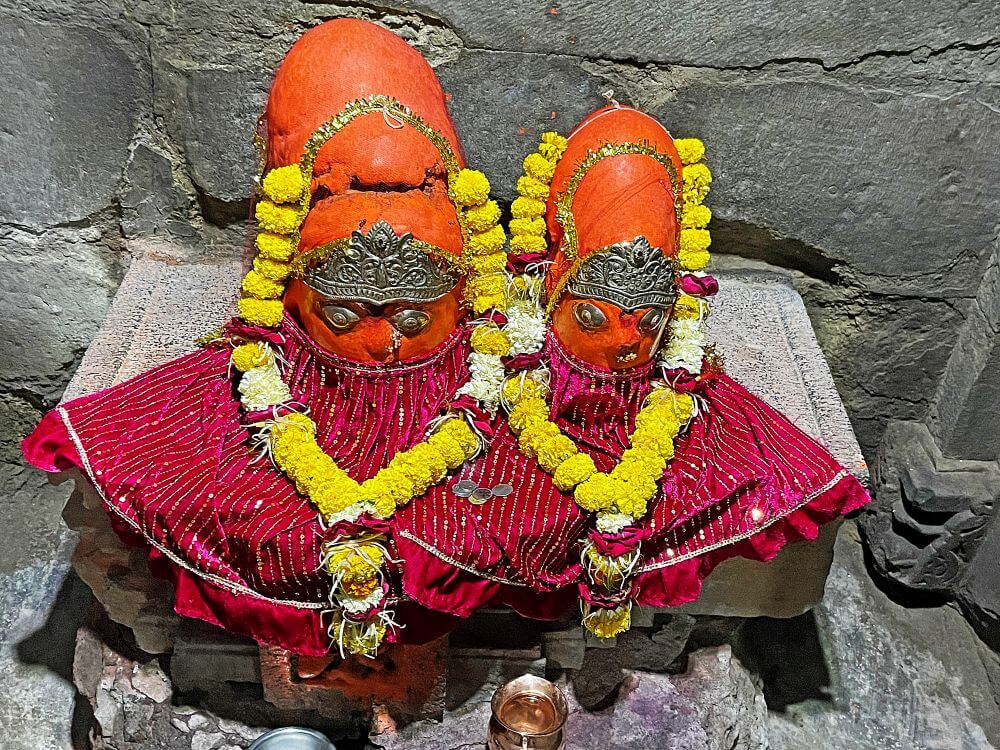
The doorway of the sanctum sanctorum is intricately carved. At the base of the door frames are guardian sculptures, and above the lintel is a decorative arch. Inside the sanctum, on a stone pedestal, are two vermilion-smeared idols of the Goddess in the form of Tandala (natural stone formations). In front of these idols is an ancient Shiva Linga. Through a window in the temple walls, the morning sun rays fall directly into the sanctum. The outer walls of the temple are also adorned with hundreds of sculptures, including some erotic figures.
Devotees from various parts of the Akola district visit this temple for darshan. The number of devotees is higher on Tuesdays and Fridays. The Sharadiya Navratri festival is celebrated here with great enthusiasm. It is believed that the Goddess resides here during this festival, leading to large crowds of devotees for all nine days. As the temple is under the jurisdiction of the Archaeological Department, devotees can visit the Goddess between 10 AM and 5 PM. This structure was declared a protected monument in 1958.
This sacred temple stands as a testament to deep spiritual devotion, ancient architectural grandeur, and rich local cultural traditions.
The sanctum sanctorum houses the divine idol consecrated according to ancient Vedic traditions, surrounded by serene courtyards and traditional temple architecture.
Navratri, Maha Shivratri, Annual Temple Jatra & Deepotsav
Compare and book flights, secure top-rated local hotels near the temple, hire reliable guides, and rent cars instantly.
Extend your pilgrimage by visiting other highly sacred temples located nearby.


Add ₹999 more to unlock FREE SHIPPING!
Your sacred cart is currently empty.
Shop Photo FramesFill in your delivery details below to place your order.
Add comment