
Add ₹999 more to unlock FREE SHIPPING!
Your sacred cart is currently empty.
Shop Photo FramesThe author of the ‘Karveer Mahatmya’ describes Karveer (South Kashi) as, “Beautiful and endowed with all holy waters; ancient, famous, and the destroyer of sins.” The glory of this city is further extolled by the words, “Where every inch of land is graced by the form of Hara (Shiva) as a Linga; therefore, there is no other place on Earth like this.” In such a Kolhapur, to the east of the Gomati Sangam, lies the Kotitirth and the adjacent Koteshwar Temple. Devotees believe that by bathing and performing Pind-daan at this sacred site and worshipping Koteshwar, one’s ancestors attain liberation. This holy site is also known as Pushkareshwar Tirth.
Located about three kilometers from the Mahalakshmi-Ambabai Temple in Kolhapur, the legend of this sacred site states that Sage Agastya and his wife Lopamudra came to Karveer city to seek the blessings of Mahalakshmi. They stayed on the banks of the Panchganga. After bathing at the Manikarnika Tirth here, they had the darshan of Mahalakshmi and other deities such as Kashi Vishweshwar, Rankavaibhav, Kundaleshwar, Kukkuteshwar, and Mahargal. Thereafter, after worshipping Brahmeshwar and bathing in the Malapakarshan Tirth, they discarded their soiled clothes, donned fresh ones, and arrived at Kotitirth. At that time, Lopamudra asked Agastya to explain the significance of Kotitirth. He narrated that a fierce battle took place at this very Kotitirth between the 33 crore Devas and the 66 crore Asuras.
The Devas were on the verge of defeat in this battle, at which point they all prayed to Shri Mahalakshmi. Accompanied by her Ganas, Rankavaibhav, Mahargal, Siddhabatuk, Kala Vetala, Navakoti Sakhyas, as well as Katyayani and Yogini, the Goddess defeated the demons. Seeing that their death at the hands of the Goddess was inevitable, all the demons surrendered to her. They said, “We have no hope for life now. Our only desire is to meet our end at your hands and attain liberation by opening the gates of heaven.” The Asuras prayed, “May you slay us, the 66 crore Asuras, at this very Tirth, and may this place become famous as Kotitirth and be considered the greatest of all holy sites.” The Goddess immediately said, “Tathastu” (So be it), and the demons attained liberation. Thus, it came to be known as Kotitirth. Another legend states that Kotitirth was formerly known as Pushkareshwar, and in ancient times, it was named Kotitirth because King Bhanu was absolved of the sins of a crore births here.
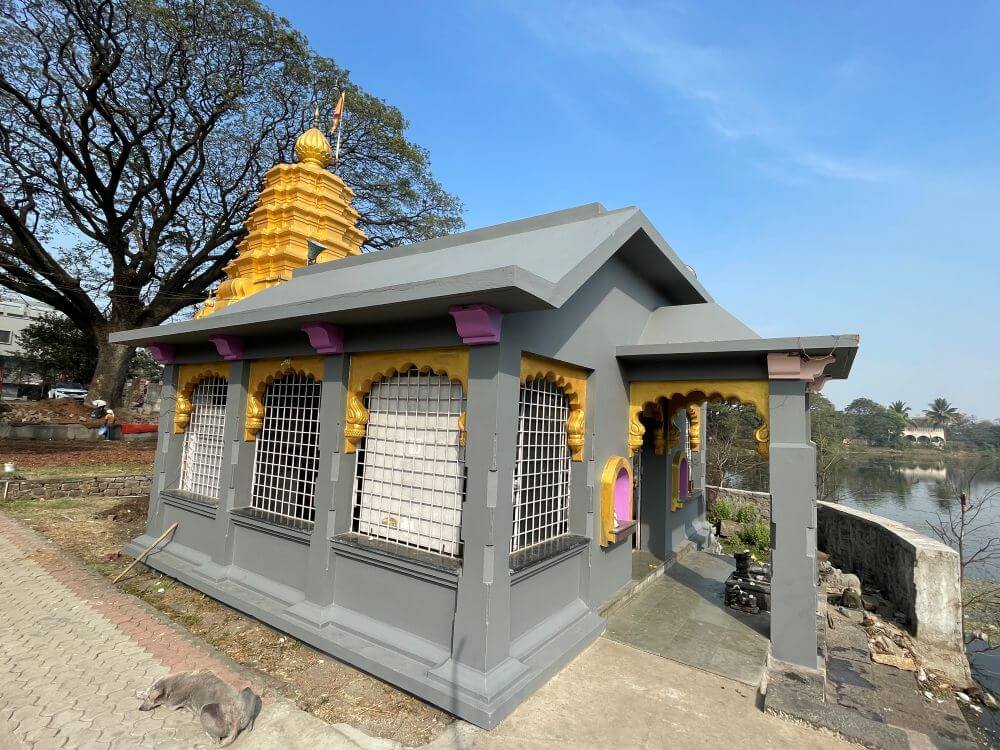
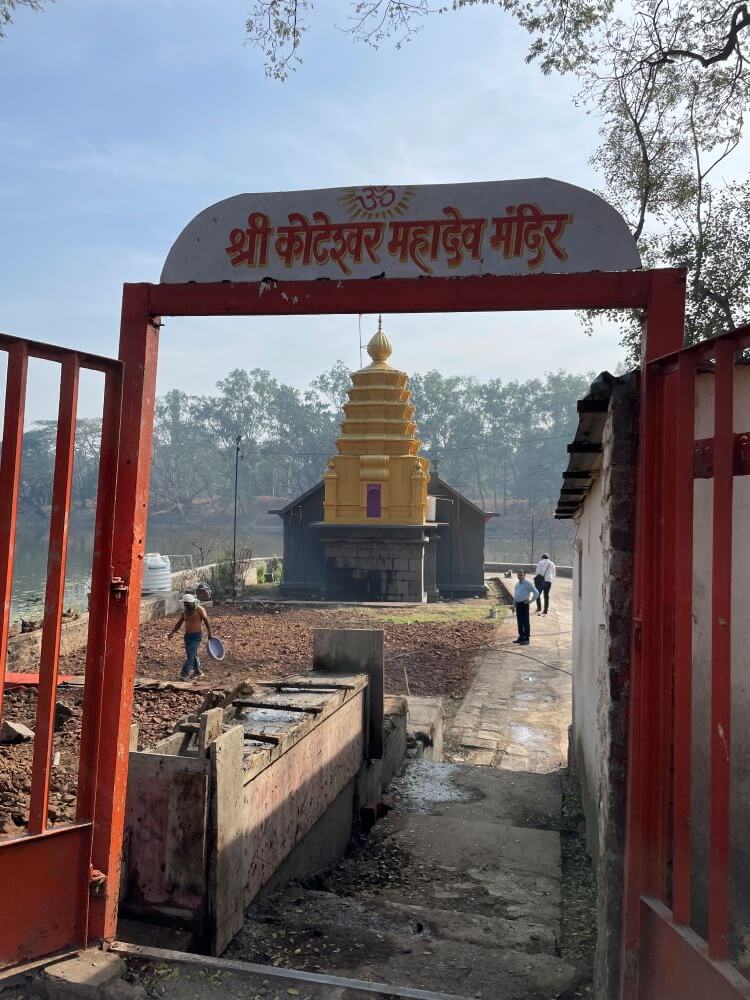
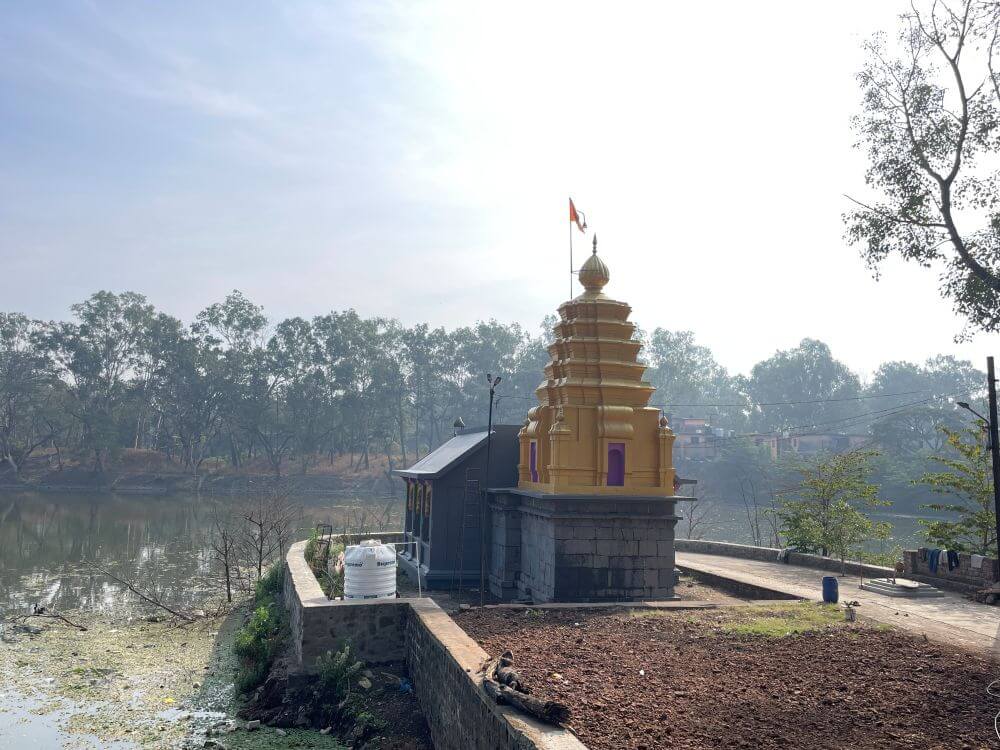
The area around the Kotitirth lake is extremely picturesque, surrounded by dense, large trees. After entering through a small field from the main road, one reaches the iron gate of the Koteshwar Temple. Inside the courtyard, on the bank of the lake, stands the ancient Koteshwar Temple. The temple has been recently renovated, and the surrounding area has been beautified. The Sabha Mandap (assembly hall) of the temple appears to be built in a modern style.
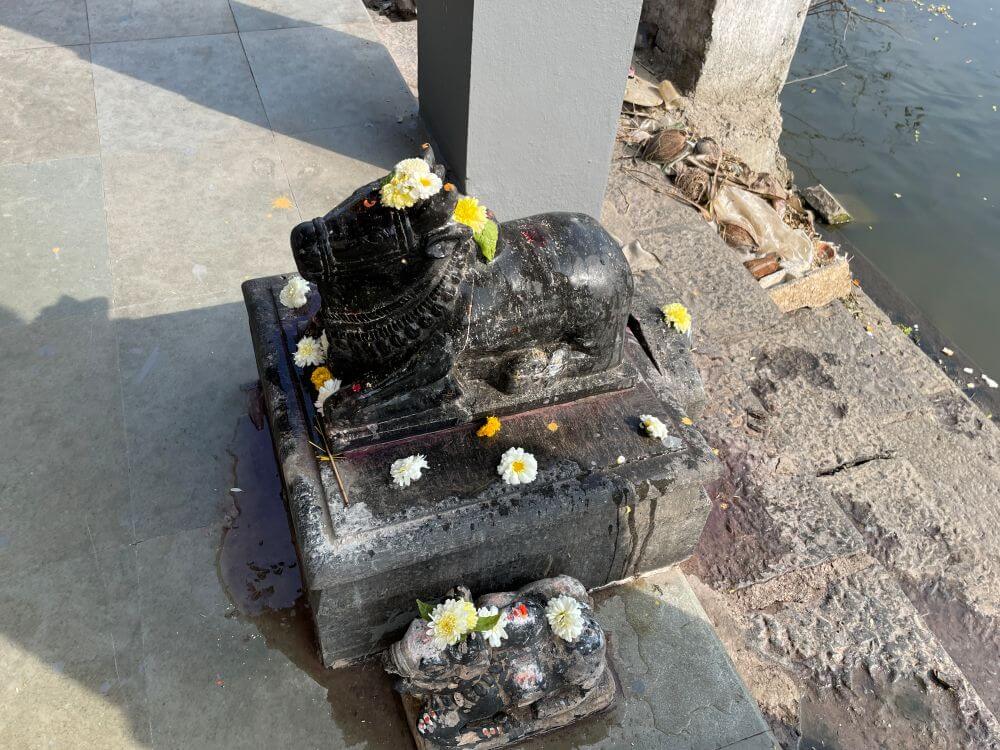
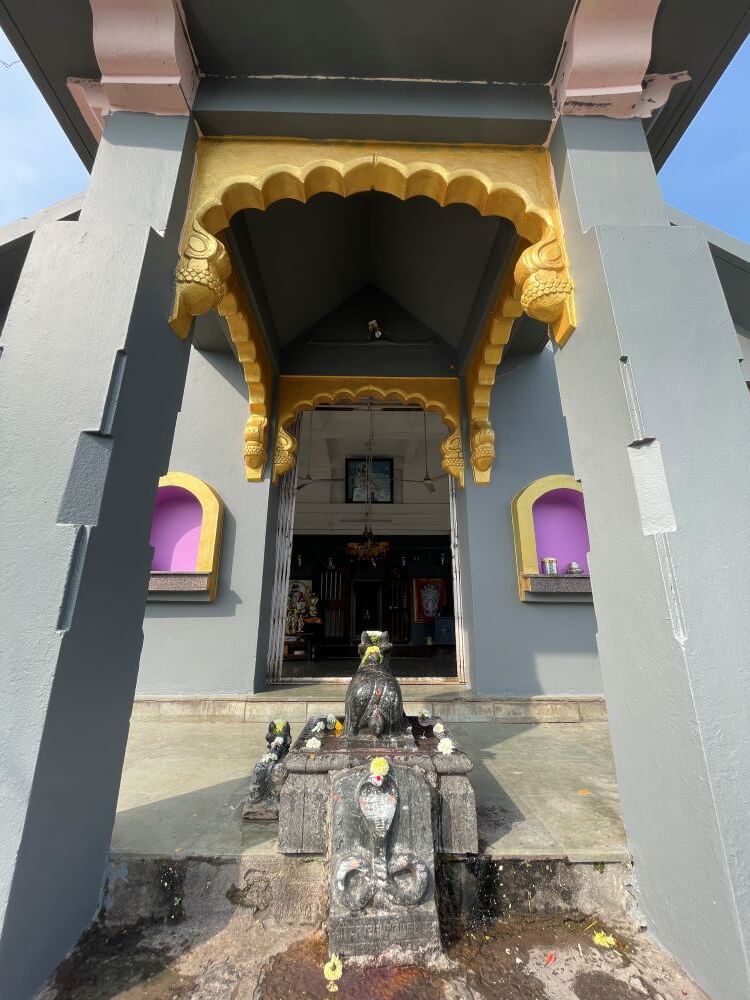
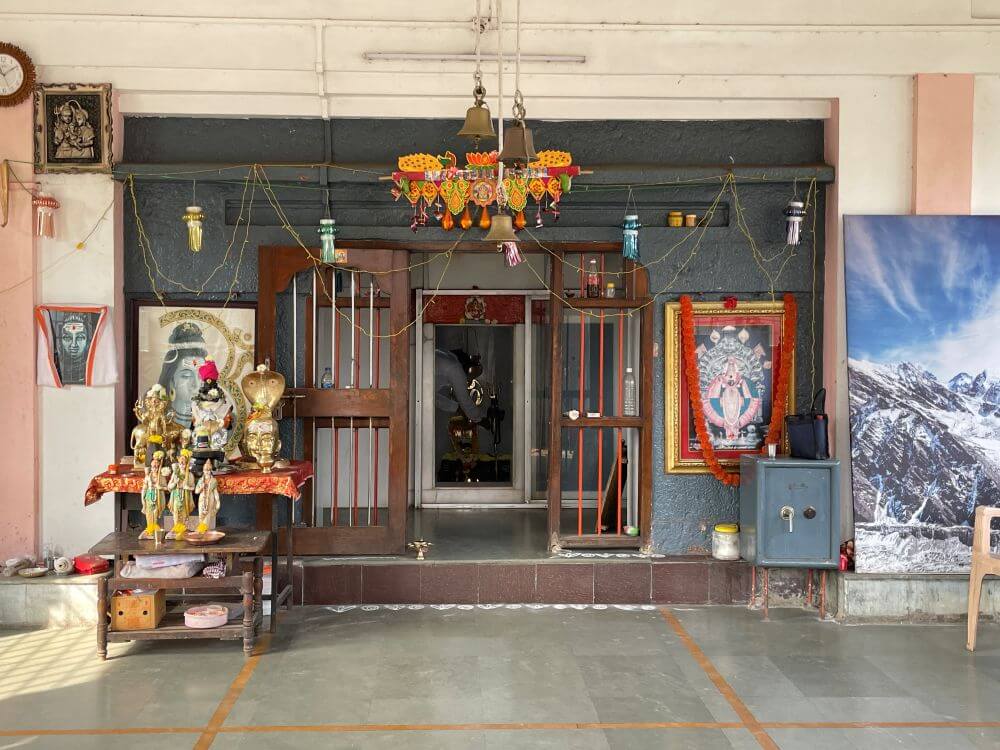
This stone-built temple consists of a Sabha Mandap, Antarala (vestibule), and Garbhagriha (sanctum sanctorum). The temple’s Shikhara (spire) is in the Dravidian style, featuring niches on all four sides, an Amalaka with lotus petal carvings, and a Kalasha on top. The temple faces east, with the entrance from the lake side. In front of the Sabha Mandap, an ancient idol of Nandi is seated on a stone pedestal. Behind it, facing the lake, is a stone sculpture of the Nagadevta (Serpent Deity). Near the Nandi pedestal, there is also an old but small stone Nandi. The entrance to the Sabha Mandap has an arched Torana. Inside, to the left on a high seat, is a metal idol of Trimukhi Dattatreya. Next to it is an idol of Vitthal. Here, one also finds a Shiva Linga and a large brass mask of Shankara with a serpent hood. There are also exquisite marble idols of Rama, Lakshmana, and Sita. The Sabha Mandap also houses portraits of Mahadeva and Mahalakshmi.
The temple’s Antarala is small and has a wooden door with iron bars. The entrance to the Garbhagriha is low. Inside is the black stone Linga of Koteshwar, upon which a continuous water offering (Abhishek) is performed from a vessel above. The significance of this Shiva Linga is mentioned in the 29th chapter of the ‘Karveer Mahatmya’ composed by Dajiba Joshirao. Devotees believe that the darshan of Koteshwar grants salvation to ancestors. The text also mentions that Sage Parashara bathed here. Outside the temple, there are idols of Hanuman, Ganaraya, and Sai Baba. There are also three Veergal (hero stones) in the temple premises. Near the temple is the Swami Samarth Temple and the Samadhi of Narayanadas Maharaj.
A short distance from the Koteshwar Temple at Kotitirth is the Swami Samarth Temple. In the temple courtyard stands a large Audumbar tree. The base of the tree is constructed using hexagonal marble stones, and devotees perform circumambulation (Pradakshina) around it. The main temple is located inside. The Sabha Mandap of this temple is very spacious. In the center of the Sabha Mandap, on a marble pedestal, is an image of Swami Samarth. Swami Samarth is considered a great soul of the Datta tradition and the third avatar of Dattaguru. Facilities for chanting and reading scriptures are provided for devotees in the temple.
To the south, near the Koteshwar Mahadev Temple, is the Samadhi temple of Narayanadas Maharaj. It is said that Narayanadas Maharaj arrived here in 1894 AD and resided in this area. Over time, he built a simple building here. He took Samadhi in 1933. His Samadhi is located in a chamber beneath the main building he constructed. Many devotees visit here daily for darshan.
This sacred temple stands as a testament to deep spiritual devotion, ancient architectural grandeur, and rich local cultural traditions.
The sanctum sanctorum houses the divine idol consecrated according to ancient Vedic traditions, surrounded by serene courtyards and traditional temple architecture.
Navratri, Maha Shivratri, Annual Temple Jatra & Deepotsav
Compare and book flights, secure top-rated local hotels near the temple, hire reliable guides, and rent cars instantly.
Extend your pilgrimage by visiting other highly sacred temples located nearby.


Add ₹999 more to unlock FREE SHIPPING!
Your sacred cart is currently empty.
Shop Photo FramesFill in your delivery details below to place your order.
Add comment