
Add ₹999 more to unlock FREE SHIPPING!
Your sacred cart is currently empty.
Shop Photo FramesThe city of Karveer is home to many ancient temples that are adorned with sculptural beauty and represent exquisite architectural marvels. These temples hold immense historical heritage and mythological significance. Within this city, there is a unique temple that possesses a legacy of both history and modern art. This temple is known by the unique name ‘Kailasgadchi Swari’. Devotees flock here for darshan, as they believe the Shiva Linga here is Swayambhu (self-manifested) and Jagrut (spiritually awakened). Furthermore, the invaluable collection of paintings by the artist-sage Kalayogi G. Kamble is a major attraction for many.
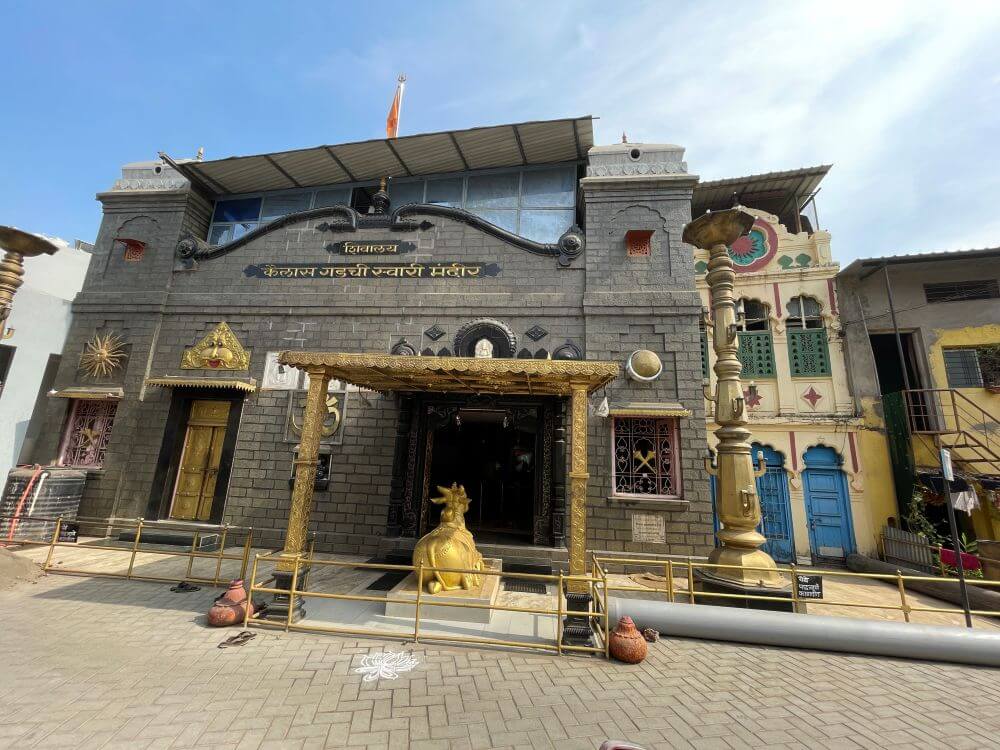
The ‘Kailasgadchi Swari’ temple is located in the heart of Kolhapur at Mangalwar Peth, near the Keshavrao Bhosale Hall. Because the name of this temple is so unusual, many are curious about it. Questions arise in people’s minds: who went on the ‘Swari’ (expedition/procession) to Kailasgad, and when? Although the word ‘Swari’ is commonly used in Marathi to mean an expedition, in the Marathi etymological dictionary, it also refers to a ‘seat on a horse,’ and has been generalized to mean a person riding a horse. In old Marathi, expressions like “the Swari has arrived” were common. The word is used here in that same sense, referring to Lord Shiva of Kailasgad. The site of the Shiva Linga here is ancient, and it is said that the temple was renovated around 1960.
This temple has a very close connection with the pride of Kolhapur, Kalayogi G. Kamble. G. Kamble, or Gopal Balwant Kamble, was a legendary painter from Kolhapur. The numerous portraits he painted remain etched in public memory. He painted excellent oil portraits of many national figures and legendary leaders, including the coronation of Chhatrapati Shivaji Maharaj, Mahatma Jyotiba Phule, Father of the Nation Mahatma Gandhi, Shahu Maharaj, Lokmanya Tilak, Pt. Jawaharlal Nehru, Dr. Babasaheb Ambedkar, Lal Bahadur Shastri, John F. Kennedy, and Vladimir Lenin. One of his most significant works is the oil painting of Chhatrapati Shivaji Maharaj. After five years of continuous study and contemplation, he painted this portrait of the Maharaj on March 2, 1970, which the Government of Maharashtra officially recognized as the authorized portrait of Shivraya. This painting is kept in the Mantralaya in Mumbai. Notably, he did not take a single paisa as royalty from the government for this painting. He told the then Education Minister, Madhukarrao Chaudhari, that one should not take money for painting the image of God. The Government of India published postage stamps of Shivraya and Shahu Maharaj based on the paintings he created. Additionally, many movie posters he painted became famous. He painted a magnificent poster for K. Asif’s film ‘Mughal-e-Azam’. He is also credited with giving poster painting a classical status. Those posters from that era are sold for thousands of rupees today.
Kalayogi G. Kamble lived in Mangalwar Peth, Kolhapur. Under his guidance and collaboration, the temple was renovated in 1972 in a highly artistic manner. At the entrance of the lane where the temple is located, there is a large gateway built of red stone (Jambha stone). On this arch, which is 30 feet high and 20 feet wide, there is a brass idol of Lord Ganesha at the center. As one moves a short distance from here, the first things to catch the eye are the magnificent Samai (traditional lamps). Weighing one and a half tons and standing 22 feet tall, these lamps are designed with a pillar base and a lamp on top. They are illuminated with electric bulbs.
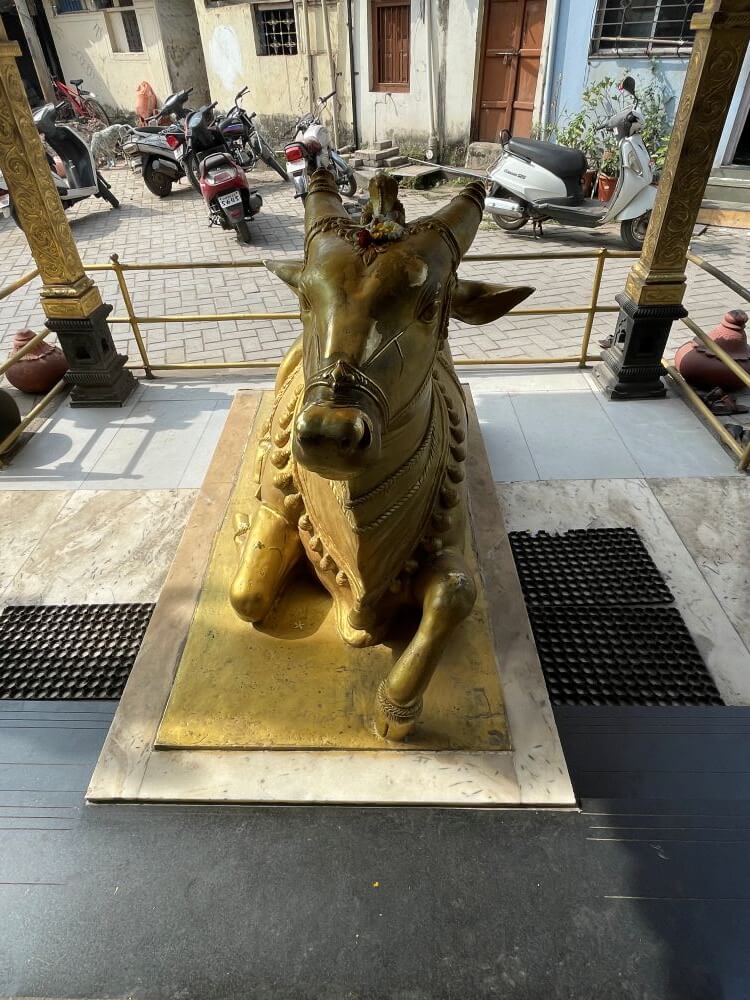
The Kailasgadchi Swari temple is built of black stone. The temple is two stories high. There is a large Nandi Mandap in front of the entrance. It is adorned with a golden sheet featuring intricate carvings. There is a large brass idol of Nandi on a marble pedestal. The arched frames of the temple’s wide entrance feature elegant carvings of conch shells and Bel leaves, with elephant figures at the top. There is a marble idol of Ganesha at the center of the arch. To the left of this main entrance is a smaller doorway, above which is a brass Kirtimukh. On the outer wall of the temple, one can see a bronze image of the Sun on the left and the Moon on the right. On this same wall are stone inscriptions of ‘Satyam, Shivam, Sundaram’, below which are a brass Omkar and a relief sculpture of Nandi in black stone. At the very top of this outer wall, the shape of a bow and arrow has been crafted. The main sanctum has a marble spire with a golden pinnacle. To the right of the temple is the Nagarkhana.
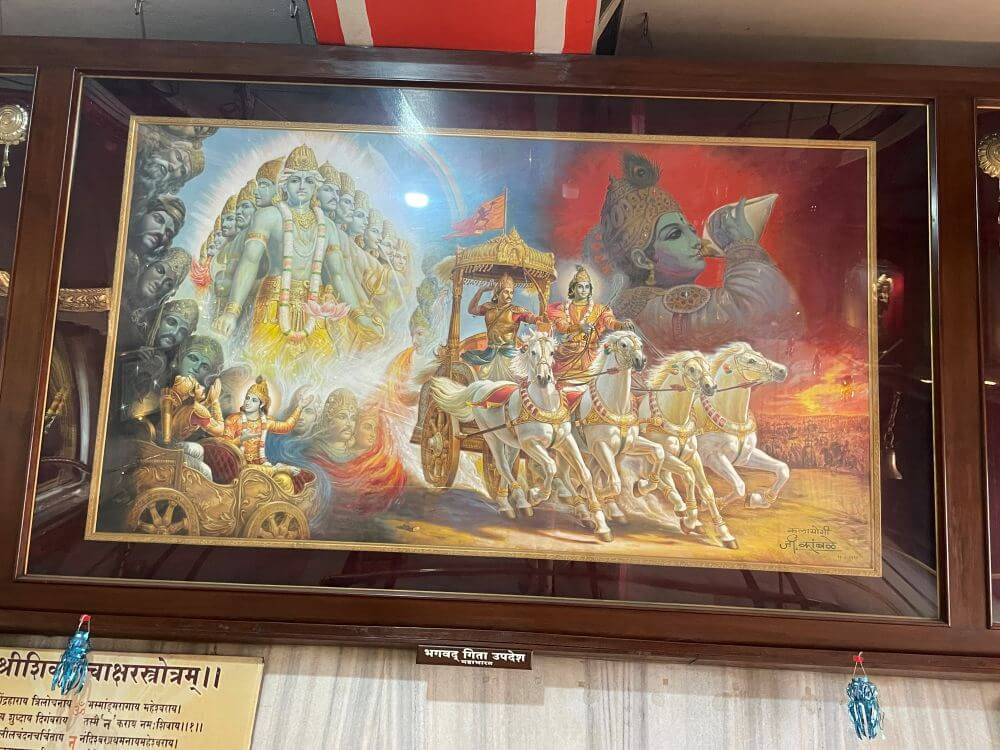
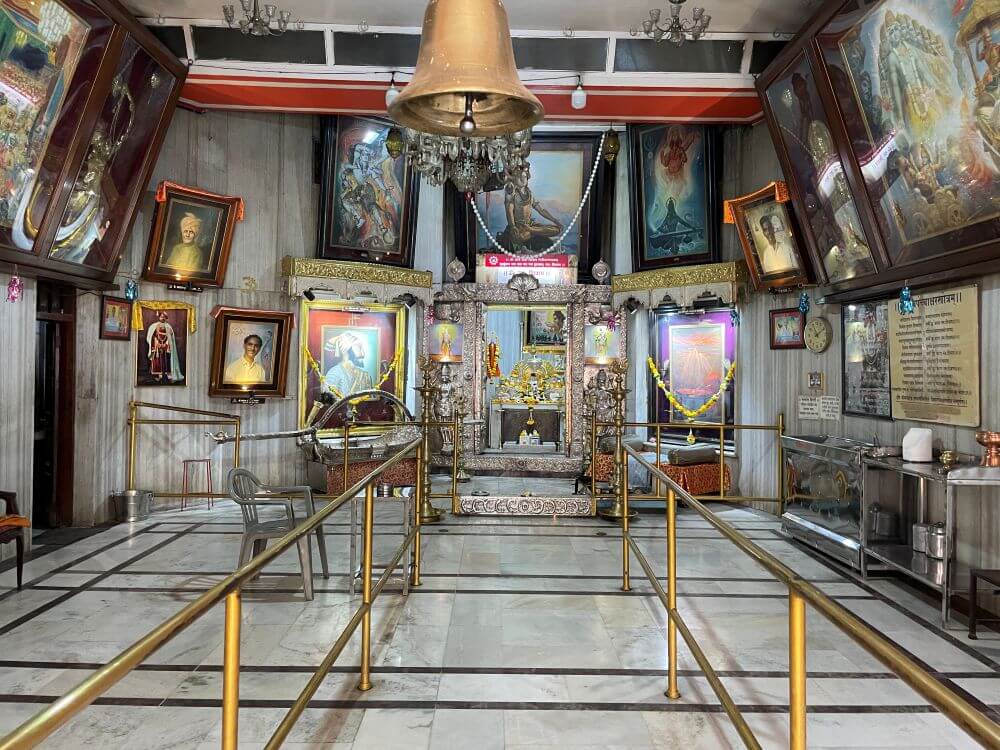
The temple has a spacious assembly hall, known as the Darbar Hall. This hall contains several oil paintings by Kalayogi G. Kamble, including the coronation ceremony of Chhatrapati Shivaji Maharaj, Lord Krishna’s sermon of the Gita to Arjuna, and a portrait of Rajarshi Shahu Maharaj.
The door frame of the temple’s sanctum sanctorum is finely carved. Here, there are large metal relief sculptures of Shaivite gatekeepers (Dwarapalas). Above them are beautiful portraits of Shri Ram and Krishna. At the center of the arch is an idol of Ganesha, with a large cobra hood over Ganesha’s head. To the left of the sanctum entrance is the large, state-recognized oil painting of Chhatrapati Shivaji Maharaj, while to the right is a beautiful painting of Chhatrapati Shivaji Maharaj’s Samadhi site. It is a unique painting showing the rays of the setting sun falling on the Samadhi at Raigad, with a faint image of the Maharaj visible in the background.
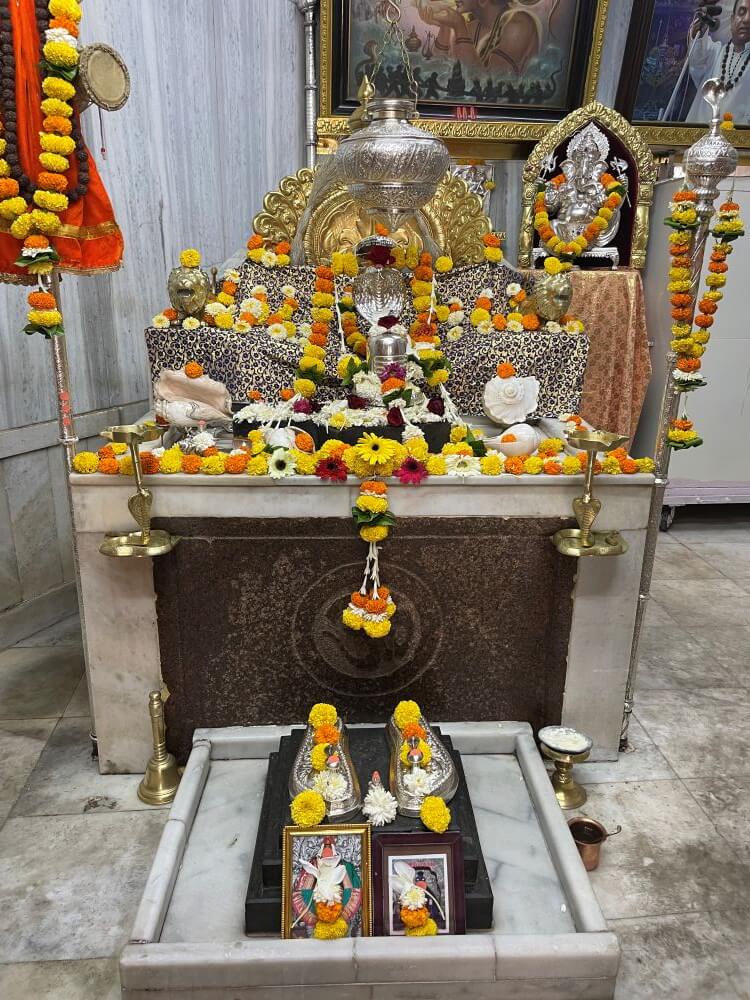
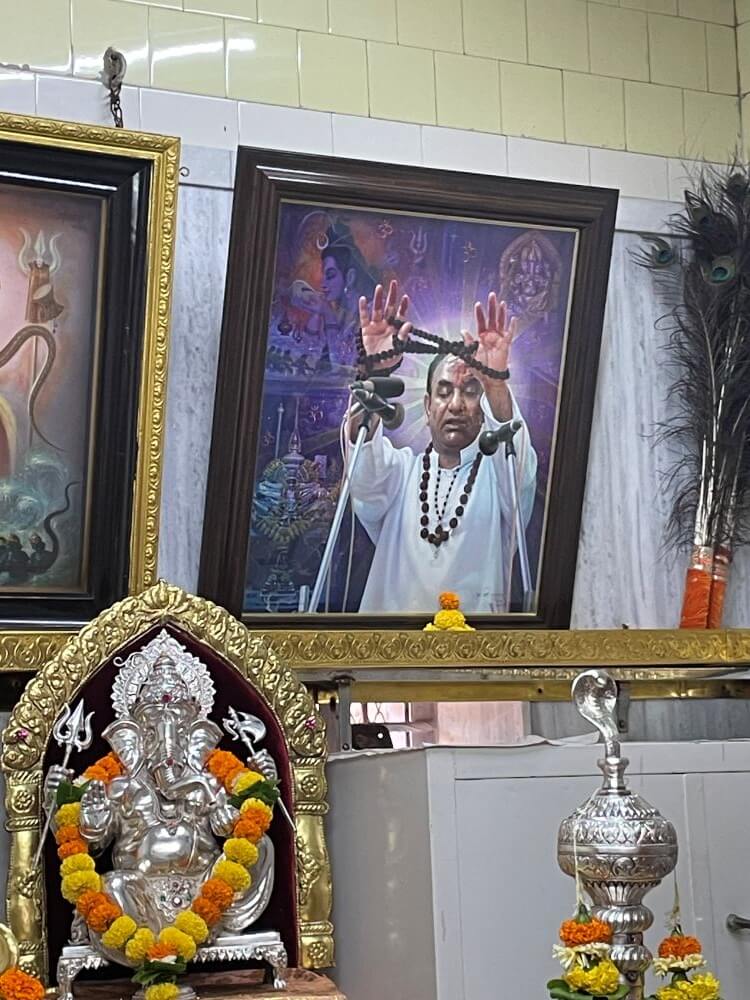
The paintings above the sanctum door frame, depicting a meditative Mahadeva, Ganesha dancing, Goddess Saraswati playing the Veena, and Mahadeva performing the Tandava dance, are captivating. Inside the sanctum are the silver-crafted ‘Swari’ sandals and the Shiva Linga. Nearby are a silver Ganesha idol, a Bhavani idol, the staff of the Swari, a seat, a trident, a Hanuman idol, and a royal scepter. An oil painting depicting the scene where Lord Shiva consumed the Halahal poison during the churning of the ocean is placed on the back wall of the sanctum.
Daily rituals in this temple include the beating of the Nagara at 5:00 AM, followed by Puja, Mangal Aarti, and Dhup-Deep Puja. In the evening at 6:30 PM, there is scripture reading, and at 8:00 PM, Aarti and Mantrapushpanjali are performed. The temple’s anniversary is celebrated on the day of Holi. On this occasion, various religious and cultural programs such as Dnyaneshwari recitation, discourses, and traditional bhajans are organized. Satyanarayan Mahapuja and outdoor sports are also held during this time.
This sacred temple stands as a testament to deep spiritual devotion, ancient architectural grandeur, and rich local cultural traditions.
The sanctum sanctorum houses the divine idol consecrated according to ancient Vedic traditions, surrounded by serene courtyards and traditional temple architecture.
Navratri, Maha Shivratri, Annual Temple Jatra & Deepotsav
Compare and book flights, secure top-rated local hotels near the temple, hire reliable guides, and rent cars instantly.
Extend your pilgrimage by visiting other highly sacred temples located nearby.


Add ₹999 more to unlock FREE SHIPPING!
Your sacred cart is currently empty.
Shop Photo FramesFill in your delivery details below to place your order.
Add comment