
Add ₹999 more to unlock FREE SHIPPING!
Your sacred cart is currently empty.
Shop Photo FramesDevi Mauli of Chendavan-Walawal is the Gramdevata (presiding village deity) of both these villages. A unique feature of this sacred shrine is the firm belief among devotees that the Goddess fulfills every vow (Navas). Many people come here to make vows to the Goddess, and upon their fulfillment, they offer a wooden replica representing the reason for which the vow was made. There is literally a huge heap of such wooden offerings inside the temple. Every year, Devi Mauli’s birthday, known as her Avatarprapti Din (Incarnation Day), is celebrated here with immense enthusiasm and devotion.
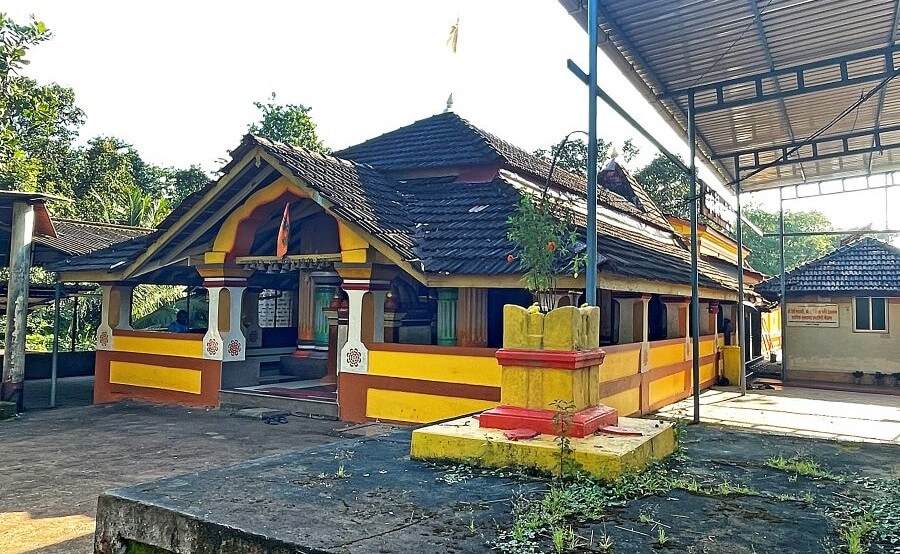
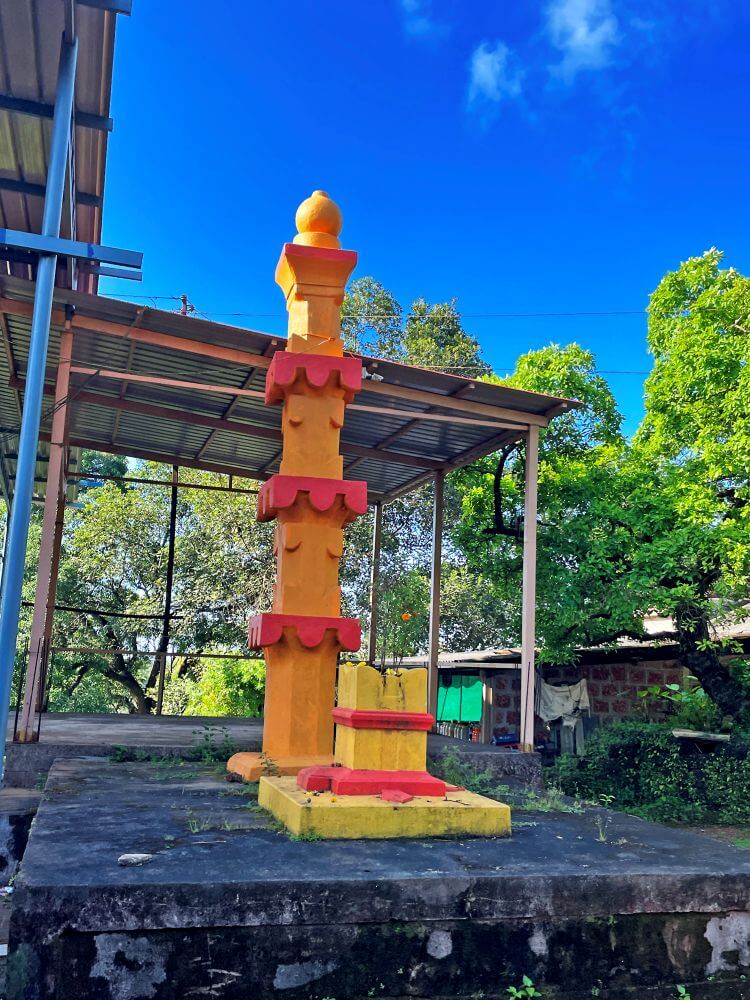
The shrine of Devi Mauli, situated on the mountain plateau (Sadya) here, is said to be ancient. According to local belief, Devi Mauli took her incarnation here in ancient times. This Goddess is venerated as an incarnation of Jagadamba. She is the divine protector of both Chendavan and Walawal villages. Therefore, when constructing the temple, it was designed in such a way that half of it lies within the boundary of one village and half within the boundary of the other. Furthermore, the Deepastambha (lamp tower) in front of Devi Mauli’s temple belongs to the villagers of Chendavan, while the Tulsi Vrindavan belongs to the residents of Walawal. Remarkably, the idol of the Goddess has also been consecrated in such a manner that one foot of the Goddess rests within the boundary of Walawal while the other rests in Chendavan.
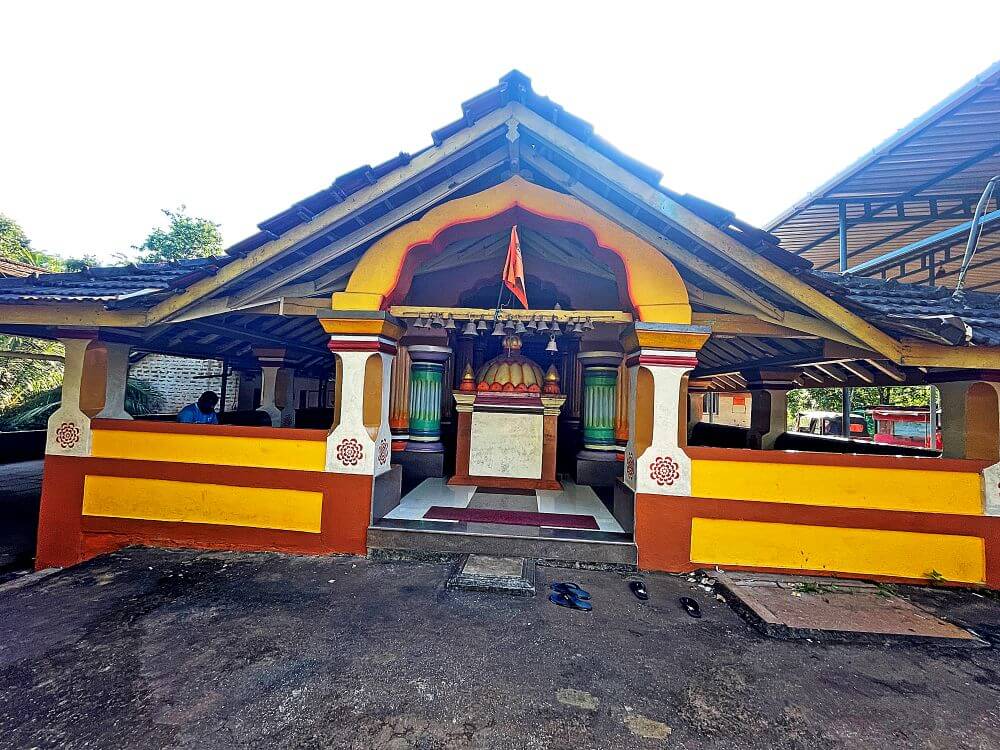
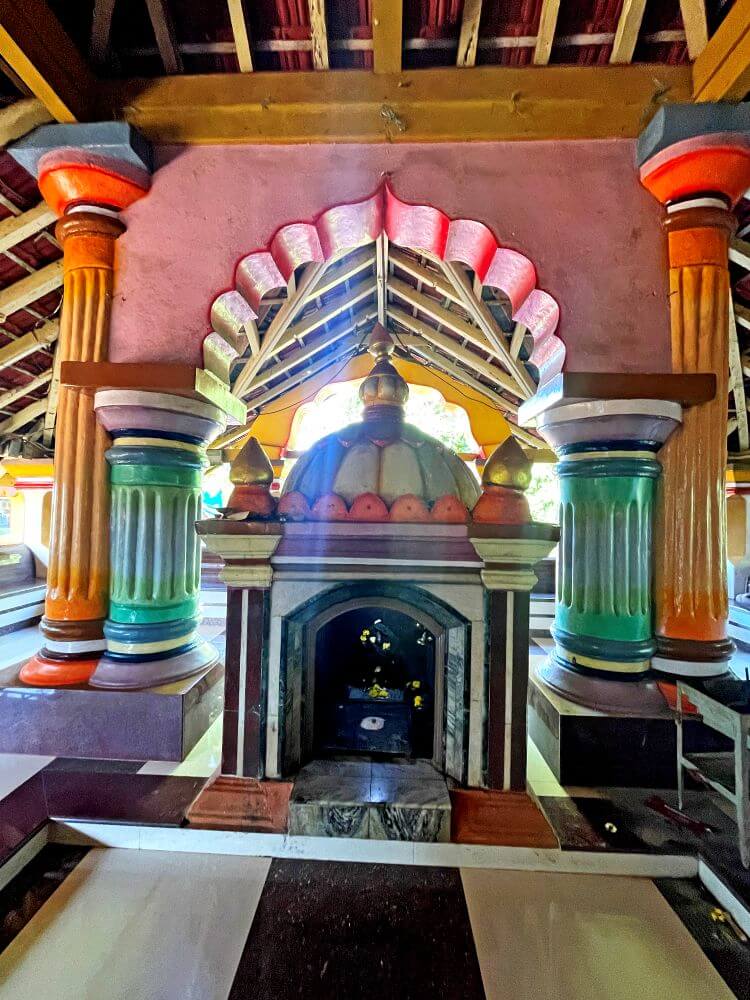
This temple of Devi Mauli is constructed in the traditional Konkani architectural style. The prominent features of this style include a spacious semi-open Sabhamandapa (assembly hall), Antarala (antechamber), Garbhagriha (sanctum sanctorum), a Sandhara Pradakshinapath (a roofed circumambulatory path around the sanctum), and sloping roofs. The temple of Devi Mauli is built in this very tradition. In front of the temple stands a five-tiered Deepastambha and a Tulsi Vrindavan erected jointly by the villagers of Walawal and Chendavan. The temple entrance features an arched gateway supported by two stone pillars. Upon entering the Sabhamandapa through this doorway, right in front is a small shrine constructed in cement. This shrine is said to belong to the Goddess’s obedient elder son. He is depicted seated on horseback, holding a bow and a spear in his hands. Entry into the main Sabhamandapa is gained past this shrine. Like other traditional temples in Konkan, the Sabhamandapa here is semi-open. On both sides of the mandapa are Kakshasanas (stone seating benches) with large stone pillars erected between them. A short distance inward, round stone pillars stand on a small raised platform. Beyond this hall lies an enclosed Sabhamandapa. On one side of it, a stack of small wooden items can be seen. Driven by the deep faith that the Goddess rushes to the aid of her devotees and fulfills their vows, many pilgrims make offerings to her. These vows pertain to various aspects of life such as financial stability, home, vehicles, blessed offspring, and recovery from illness. In the traditional *Garhane* (devotional supplications) offered at this time, the Goddess is lovingly invoked as ‘Maya’. Upon the fulfillment of their vows, devotees visit the temple to offer *Oti* (a blouse piece and coconut) in gratitude. At that time, a wooden replica representing the reason for the vow is also humbly presented to the Goddess. If the vow pertained to a vehicle, a replica of a vehicle is offered; if someone’s broken arm was healed, a replica of an arm is presented here. It is said that no one is permitted to pick up or remove these offered objects from the temple premises.
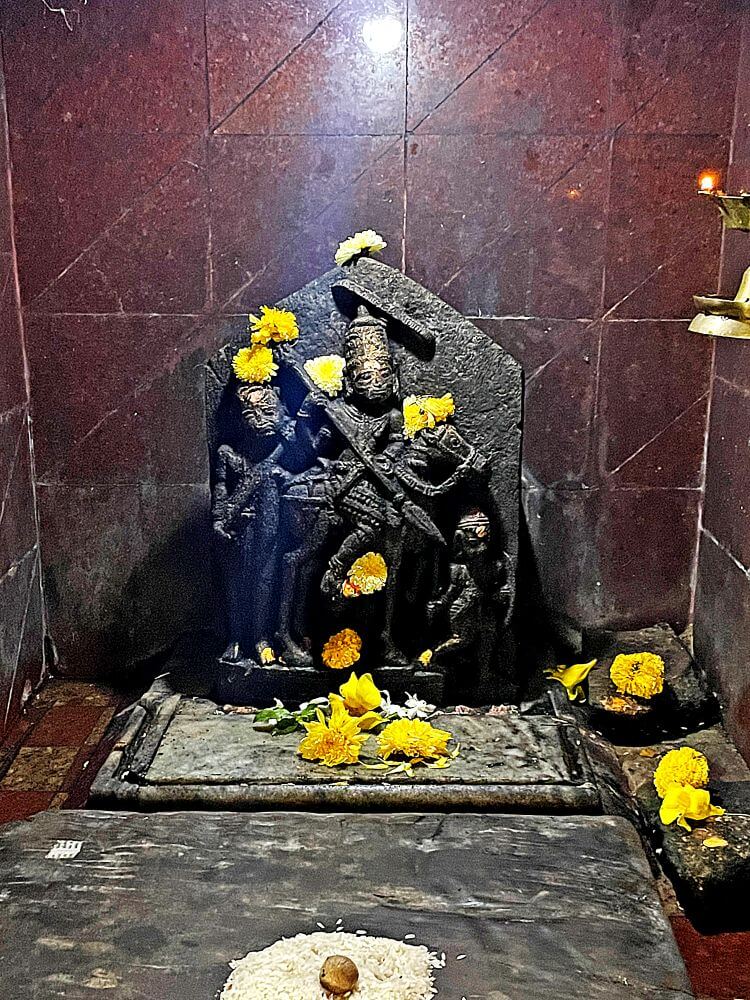
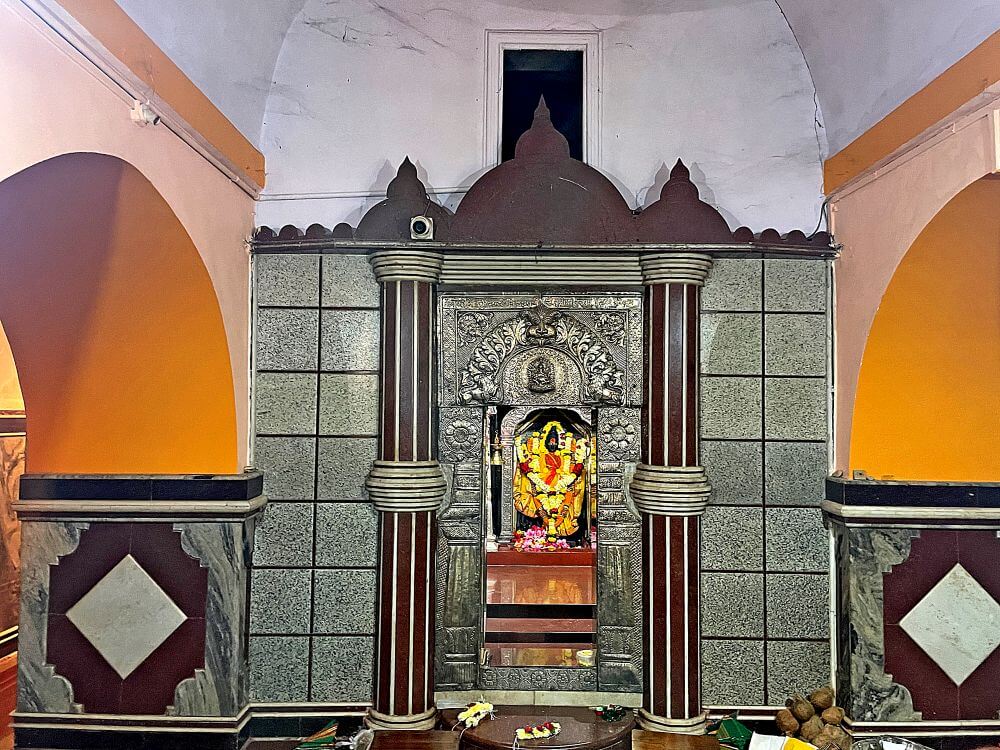
Ascending three steps from the Sabhamandapa, one enters the Antarala of the temple. On the front wall on either side of the entrance are two carved tiger faces (*Vyaghramukha*). The walls of the Garbhagriha are adorned with marble tiles. The doorway of the sanctum sanctorum is plated with silver sheets engraved with delicate floral patterns. On the upper band of the doorframe, lion figures grace both sides, while an idol of Lord Ganesha resides at the *Lalatabimba* (center point). Inside, the divine idol of Devi Mauli is enshrined within a silver shrine (*Devhara*). Carved from a single stone block, this idol is approximately four feet in height. The Goddess is ten-armed (*Dashabhuja*), holding sacred weapons and attributes such as the conch (*Shankha*), discus (*Chakra*), mace (*Gada*), trident (*Trishula*), shield, sword, and fire (*Agni*). The Goddess is also revered as ‘Mool Maya’ or ‘Mayechi Poorvas’ (the supreme ancestral source). The Goddess’s left foot rests upon the demon Mahisha, while she strikes him with the trident held in her right hand. On the left side is the demon Mahishasura emerging from the buffalo form. On the right side stands an idol of a attendant holding a fly-whisk (*Chavari*) and a water vessel (*Jhari*).
The festivals of Navratri and Avatarprapti Din are celebrated with immense joy and spiritual fervor in this temple. As the Goddess is the Gramdaivat of both Chendavan and Walawal, the religious rituals for the first five days of Navratri are performed by the villagers of Walawal, while those for the remaining four days are conducted by the villagers of Chendavan. Vijayadashami is celebrated jointly by the residents of both villages. Every year, the Avatarprapti Din (Incarnation Day) of the Goddess is celebrated on Phalgun Shukla Dwadashi. A grand annual fair (*Yatra*) takes place here for two days on Phalgun Shukla Ekadashi and Dwadashi, drawing thousands of devotees. During these two days, various sacred rituals, the palanquin procession (*Palkhi*) of the Goddess, and *Mahaprasad* are organized. On this occasion, traditional Dashavatari folk drama performances are also staged. Devotees from across Konkan, as well as various parts of Maharashtra and Karnataka, gather here in large numbers to seek the divine darshan of the Goddess.
This sacred temple stands as a testament to deep spiritual devotion, ancient architectural grandeur, and rich local cultural traditions.
The sanctum sanctorum houses the divine idol consecrated according to ancient Vedic traditions, surrounded by serene courtyards and traditional temple architecture.
Navratri, Maha Shivratri, Annual Temple Jatra & Deepotsav
Compare and book flights, secure top-rated local hotels near the temple, hire reliable guides, and rent cars instantly.
Extend your pilgrimage by visiting other highly sacred temples located nearby.


Add ₹999 more to unlock FREE SHIPPING!
Your sacred cart is currently empty.
Shop Photo FramesFill in your delivery details below to place your order.
Add comment