
Add ₹999 more to unlock FREE SHIPPING!
Your sacred cart is currently empty.
Shop Photo FramesIt is said that Valaval is like a beautiful dream dreamt by the nature of Konkan. Valaval village became famous in Maharashtra through the distinct and unconventional Marathi film ‘Chani’. Valaval was the capital of Swami Chandrabhan and Suryabhan Desai of the Kudal province in the twelfth century. The true glory of this historical and nature-blessed Valaval is the sacred Lakshminarayana Temple situated here. It is said that the Shejaarti (night aarati) is never performed in this temple because Lord Lakshminarayana is always vigilant and ever-ready for the welfare of His devotees. Lord Lakshminarayana is the Kuldhaivat (family deity) of the Prabhusardesai family here.
According to historical records, in the year ⭭३५१-⭭३५२ (1351-1352 CE), the Bahamani Sultan Hasan Gangu conquered the Goa province, which was under the control of the Kadamba kings. During the period from ⭭३५२-⭭३८० (1352-1380 CE), the citizens of Goa were forcibly converted by the Bahamani rulers. People were persecuted, and the local temples were desecrated. Saptakoteshwar was the Kuldhaivat of the Kadamba royal family of Goa. Believing that the kings of the Kadamba dynasty might have hidden their wealth within the Saptakoteshwar Temple in Goa, the entire temple was completely destroyed by the Bahamani rulers. During such times, a threat arose to the temple of Lord Narayana in ‘Harmal’ (a village in Goa). It is said that recognizing this danger, a Brahmin priest named Kalyan Purush brought the idol of Lord Narayana from the village of Harmal and consecrated it at Valaval in South Konkan.
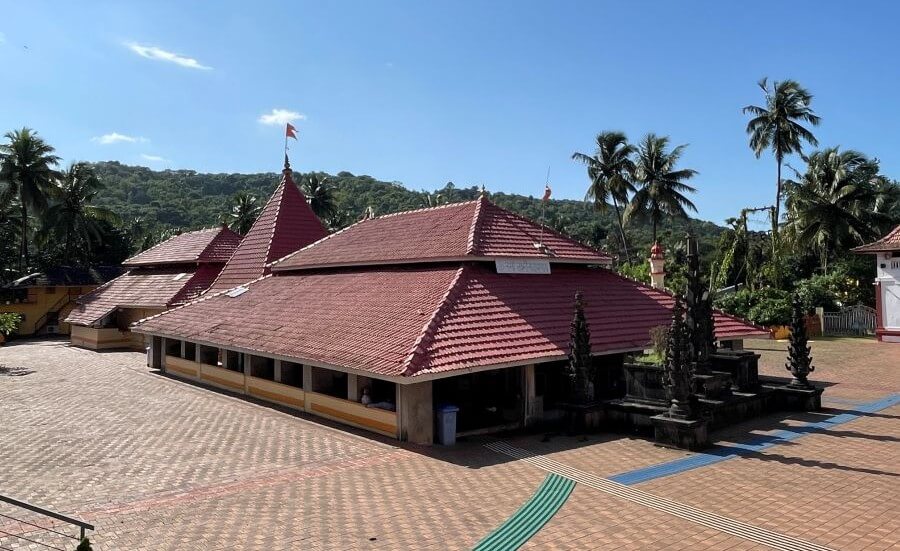
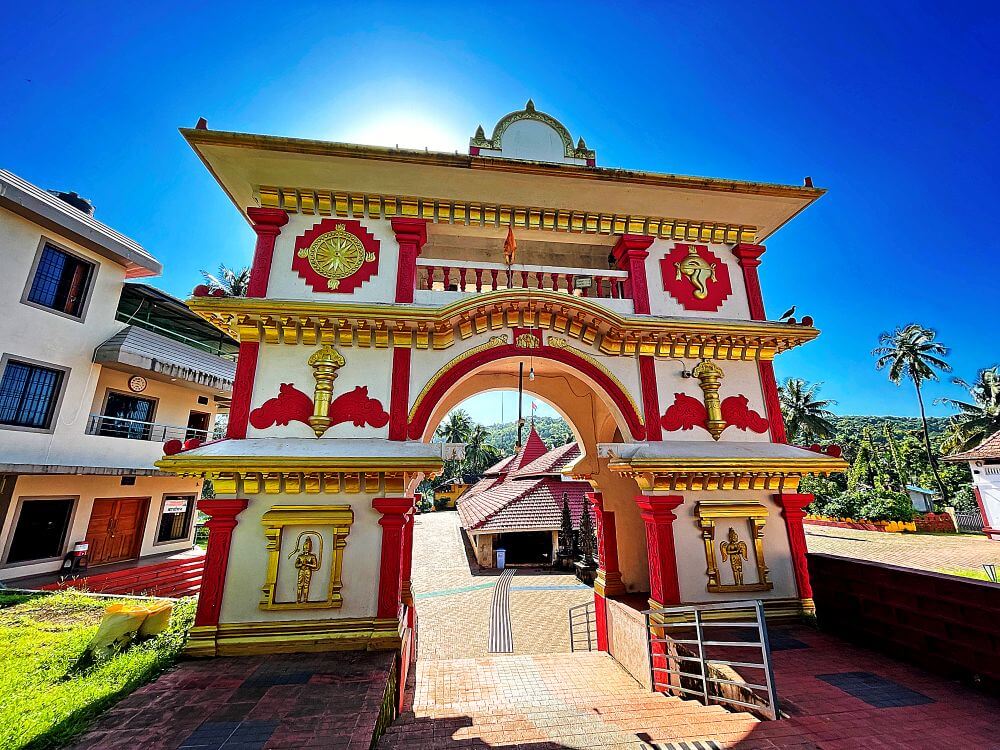
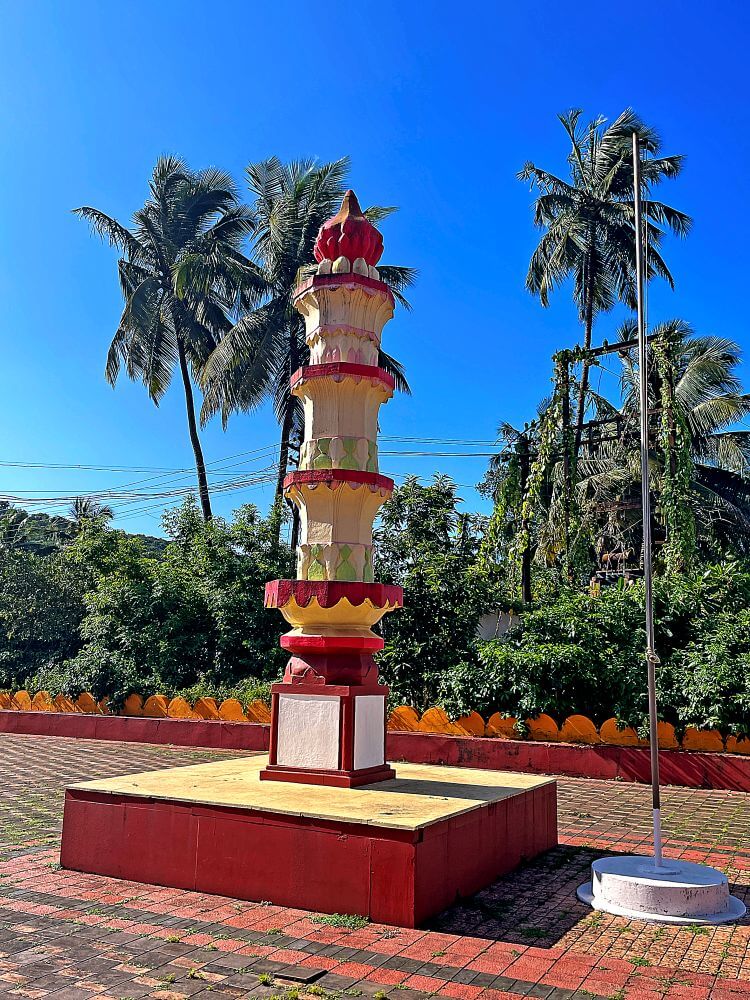
The Lakshminarayana Temple is located at the foot of the Mudyacha Kona valley, on the banks of a vast pond in Valaval village. The construction of this temple is made of laterite stone, while the doorway of the sanctum sanctorum (garbhagriha) and the interior pillars are made of Kalithar stone (a special type of black stone). Descending a few steps through the grand entrance arch, one enters the temple courtyard. The spacious courtyard here, the tiled roof of the temple, five tall lamp towers (deepmalas) on a large platform in front of the temple, and the vast reservoir nearby further enhance the beauty of this nature-rich surroundings. On the platform of the lamp towers lies the small dome-shaped shrine (ghumti) of Kalyan Purush and a Tulsi Vrindavan. The holy footprints (padukas) of the Lord are carved upon this ghumti. It is said that while taking Samadhi, Kalyan Purush expressed a desire that his gaze should constantly remain fixed upon the feet of the Lord, and the holy water from washing the Lord’s padukas should fall upon his head. There is an opening measuring three centimeters in length and width on this ghumti. Looking through it affords a darshan of the idol of Lord Lakshminarayana in the sanctum. In front of the Tulsi Vrindavan stands the idol of Das Maruti.
This temple of Lakshminarayana is said to date back to the fourteenth century. The architecture of the temple is three-tiered, consisting of the main assembly hall (sabhamandap), central assembly hall, anantarala (vestibule), and garbhagriha (sanctum sanctorum). The main sabhamandap is semi-open in nature, with stone seating benches along the sides for devotees. On the upper sides of the square-shaped wooden pillars in this sabhamandap, there are carvings of elephant faces (gajmukhas) holding lamps in their trunks. According to Konkan architectural style, the middle rectangular section of the sabhamandap is depressed by a few inches compared to the surrounding floor. Climbing five steps in front of the sabhamandap leads into the central sabhamandap. In front of this mandap is a sculpture of a lion. Although the layout of the central sabhamandap is similar to the main sabhamandap, the pillars here are larger in size and display extremely intricate craftsmanship. Sturdy and ornate beams rest on the upper parts of the pillars. In the center of this sabhamandap lies a brass tortoise sculpture. It bears the inscription of the year ⭭८८९ (1889 CE) and the name of the founder, ‘Bhanu Bapu Haldankar’.
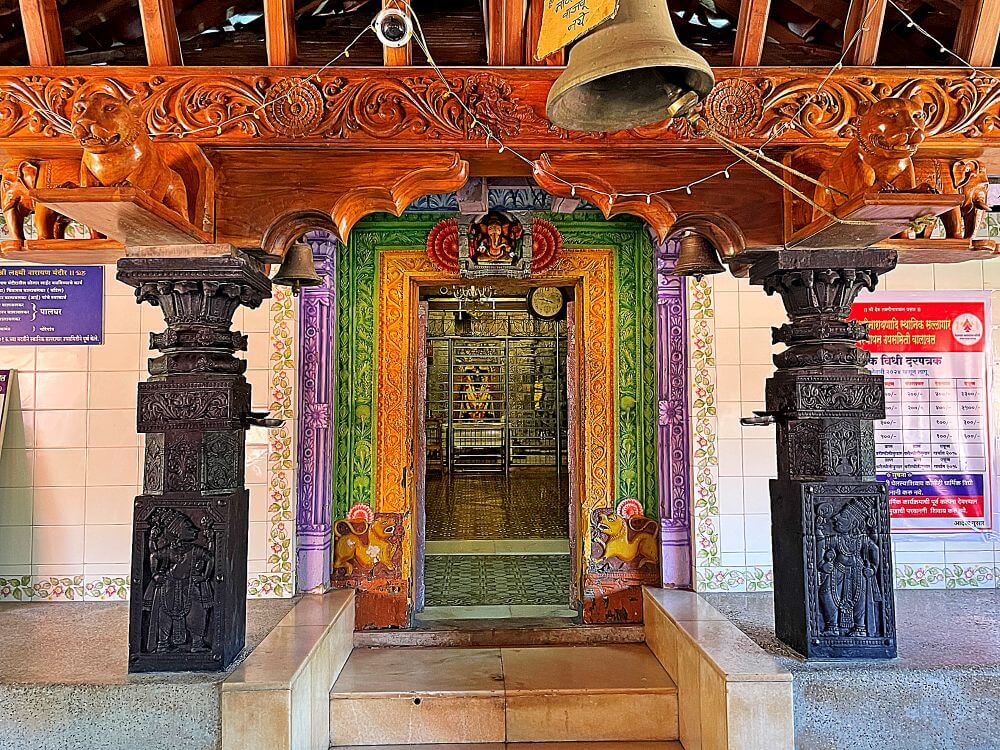
Ascending another three steps from here leads into the anantarala (vestibule) of the temple. On the lalatbimba (central lintel block) of the vestibule entrance is an idol of Lord Ganesha, while vyalas are carved on both lower sides of the ornate door frame. The vestibule contains six pitch-black and smooth carved pillars. These pillars are approximately six and a half feet in height. The carving on these stone pillars is considered an exemplary masterpiece of sculpture. In the middle of each pillar, idols of various deities, about fifteen centimeters in height, are carved. The carvings above and below the idols on these pillars are characteristic and distinct from one another.
The uniqueness of this temple lies in the wooden sculptures carved on the ceiling of its vestibule. In the left portion of this vestibule ceiling are sculptures of Nirriti in the southwest, Yama in the south, Agni in the southeast, and in the right portion are sculptures of Vayu in the northwest, Kubera in the north, and Ishana in the northeast. Additionally, there are wooden sculptures of Lord Brahma, Gandabherunda, Varuna, Indra, serpents (nagas), Narasimha, Matsya, Kurma, Mahishasuramardini, Ganapati, Lord Vishnu in the form of Mohini, Parashurama, Sri Rama, Krishna, and Buddha.
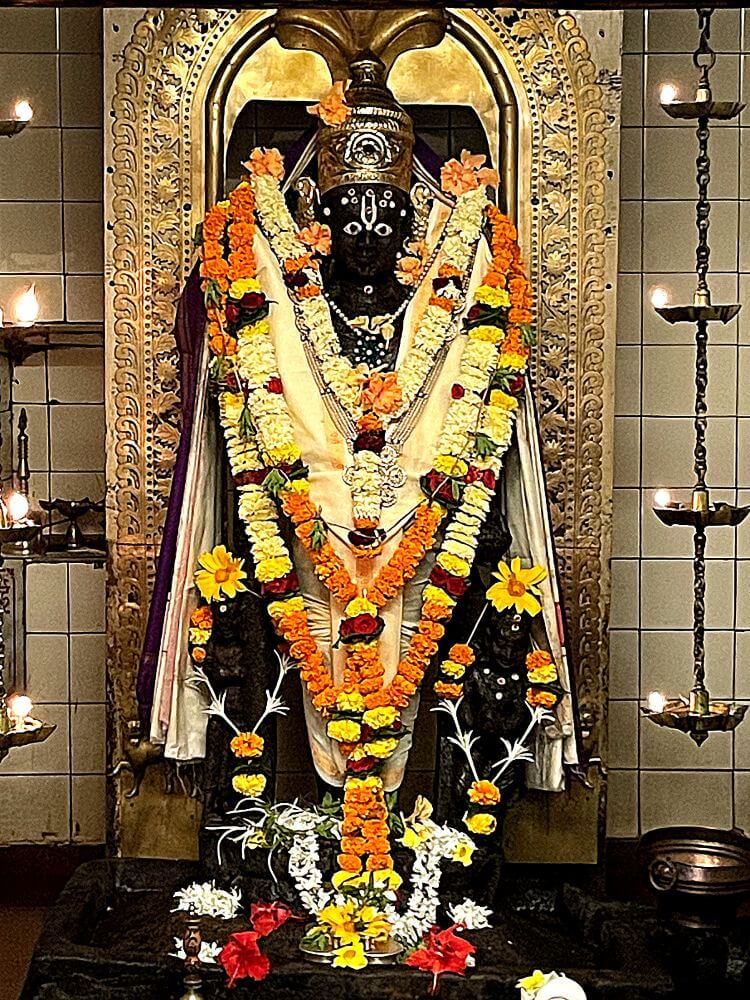
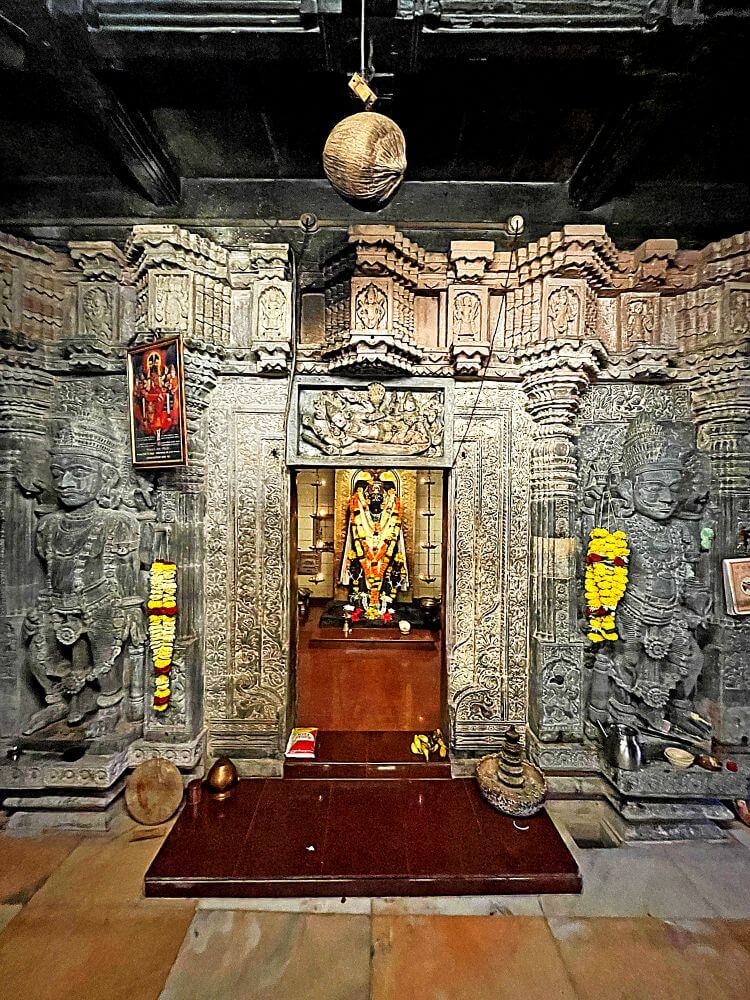
On the lalatbimba above the entrance of the garbhagriha (sanctum sanctorum) is a sculpture of Lord Vishnu reclining on Sheshnaga (Sheshashayi Vishnu). Near that section, on the left, are sculptures of Agni, Kubera, Lord Brahma, and Surya’s wife Chhaya, while on the right are sculptures of Surya’s wife Pratyusha, Bhairava, Kartikeya, and Indra. There are door-guardians (dwarapalas) on both sides of the entrance. Sculptures of various deities are also carved above the dwarapalas. Adjoining the entrance, the idol of Maruti is carved on the right and Garuda on the left. The idol of Lakshminarayana in the garbhagriha, standing about one and a half meters tall and carved in black sandstone, is said to belong either to the Chalukya rule in the eighth century or to the eleventh century. This idol is extremely well-proportioned. It stands in the samabhanga posture (with equal weight on both feet) on a lotus seat with inverted petals below and upright petals above.
On the head of the idol of Laxminarayan is an oblong, casket-like crown, with a Shiva Linga carved on its upper part. Behind the casket-crown is an oblong, circular halo. Silver eyes have been attached to this idol at a later date. In the front right hand of the idol is the discus (Chakra), in the back (upper) right hand is the mace (Gada), while in the upper left hand is the conch shell (Shankha) and in the lower left hand is the lotus (Padma). All four hands adorn bracelets (Kankane), and the upper arms have armlets (Bajuband). A sacred thread (Yajnopavita / Janve) extends from the left shoulder down to the waist, and a necklace adorns the neck. A lower garment is worn around the waist of the idol, secured by a waistband (Katimekhala). Generally, in almost all types of Vishnu idols, Vishnu’s consort Lakshmi is positioned on the left side of the Vishnu idol. However, in this idol, a small-sized idol of Lakshmi holding a lotus flower is placed near Vishnu’s right foot. On the left side stands an anthropomorphic idol of Garuda in a reverential posture with one foot slightly bent behind the other (Dehudapauli), which is said to be the unique feature of this idol. In later times, an artistic metal arch (Mahirap) has been crafted around this idol. Near the crown of the idol, this features intricate craftsmanship resembling a cobra hood.
The unique idol of Laxminarayan at Valaval is considered an invaluable treasure of Konkan. A grand festival is celebrated here on Gudi Padwa. Additionally, devotees can perform rituals such as Laghurudra, Satyanarayan Puja, Abhisheka, Rudrabhisheka, Pavamana Abhisheka, Sahasra Nama Japa, Maharudra, and Tulabhara by giving prior notice and paying a nominal fee.
This sacred temple stands as a testament to deep spiritual devotion, ancient architectural grandeur, and rich local cultural traditions.
The sanctum sanctorum houses the divine idol consecrated according to ancient Vedic traditions, surrounded by serene courtyards and traditional temple architecture.
Navratri, Maha Shivratri, Annual Temple Jatra & Deepotsav
Compare and book flights, secure top-rated local hotels near the temple, hire reliable guides, and rent cars instantly.
Extend your pilgrimage by visiting other highly sacred temples located nearby.


Add ₹999 more to unlock FREE SHIPPING!
Your sacred cart is currently empty.
Shop Photo FramesFill in your delivery details below to place your order.
Add comment