
Add ₹999 more to unlock FREE SHIPPING!
Your sacred cart is currently empty.
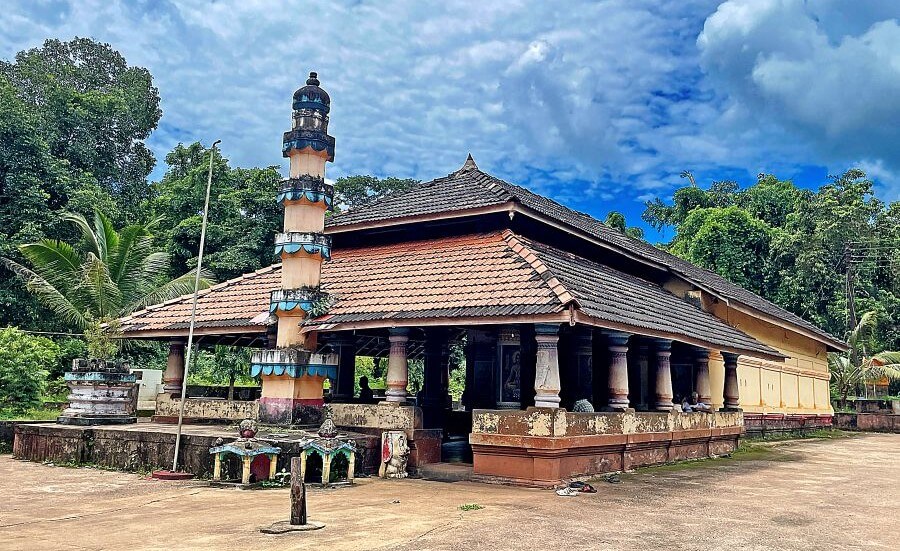
Shop Photo FramesThe Kshetrapaleshwar Temple in the village of Hodavada, Vengurla Taluka, is an ancient shrine approximately one thousand years old and serves as a place of deep faith for many devotees in the surrounding region. Kshetrapal or Kshetrapaleshwar is considered a deity of the Yaksha lineage, similar to Vetal, Bhairav, or Ravalnath. In the Konkan region, these deities are primarily recognized as the protectors of villages and towns. Devotees believe that this deity, who resides in a ‘Rujiv Pashan’ (a stone that has naturally rooted itself into the earth), relieves them of their troubles at the mere call of a devotee. A ‘Rujiv Pashan’ refers to a stone that has grown and merged into the earth as if it were one with the soil.
The legend of the Kshetrapaleshwar Temple states that a devotee from the village used to visit the Sateri Devi temple here every day. After some time, he noticed a stone shaped like a Shiva Linga emerging from the ground in front of the Sateri Mata temple, growing taller day by day. He reported this to the villagers. After observing it for several days, the villagers also noticed the Linga-shaped stone rising from the earth. They then sought the divine guidance of Sateri Devi through a ‘Kaul’ (a traditional ritual of seeking divine consent) to identify the stone. The Goddess revealed through the Kaul that the stone belonged to Kshetrapaleshwar. Following this, the villagers built the Kshetrapaleshwar Temple around the Rujiv Pashan. Kshetrapaleshwar is one of the deities within the Sateri Devi Panchayatana.
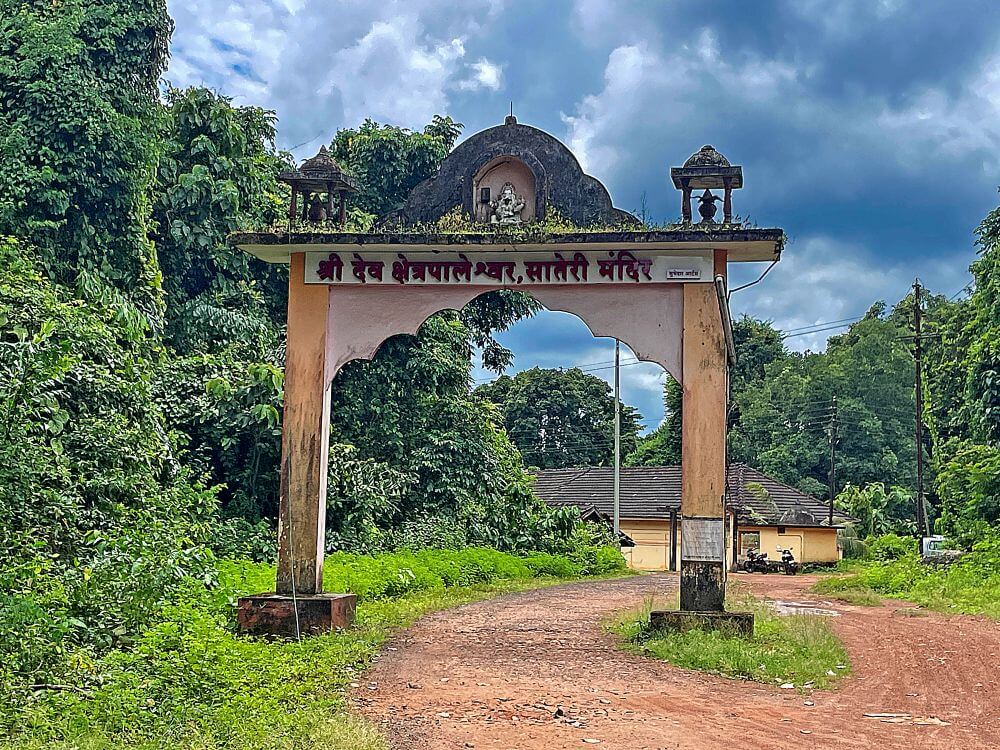
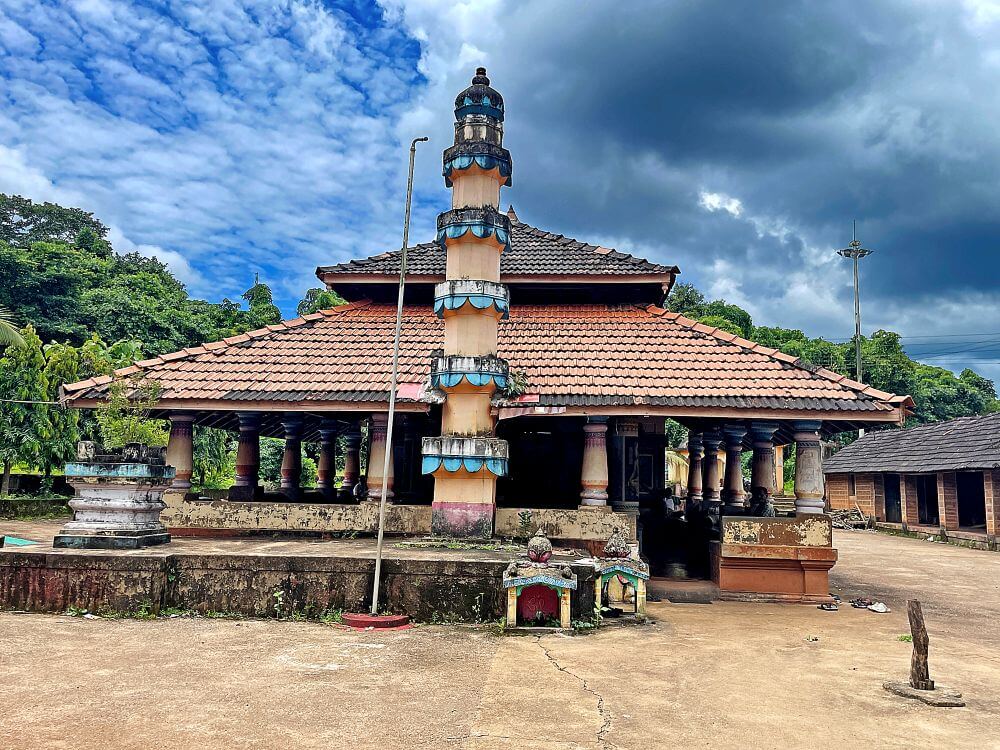
Located near the Hodavada Gram Panchayat office, the Kshetrapaleshwar Temple is situated in a picturesque area adorned with lush greenery. One enters the temple premises through an archway on the road. In front of the Kshetrapaleshwar Temple, there is a platform featuring a Deepastambha (lamp pillar) topped with an Amalaka and a Kalasha. Beside it stands a Tulsi Vrindavan. Following the traditional Konkan architectural style, the temple is two-storied with a tiled roof. The structure consists of a Sabha Mandap (assembly hall), an Antarala (vestibule), and a Garbhagriha (sanctum sanctorum) surrounded by a Pradakshina Path (circumambulation path). The Sabha Mandap is semi-open, with stone benches (Kakshasanas) for devotees to sit on instead of walls. According to Konkan architectural design, a portion of the floor between two rows of pillars is recessed by a few inches. Beautiful paintings of various deities are drawn on all the circular pillars here.
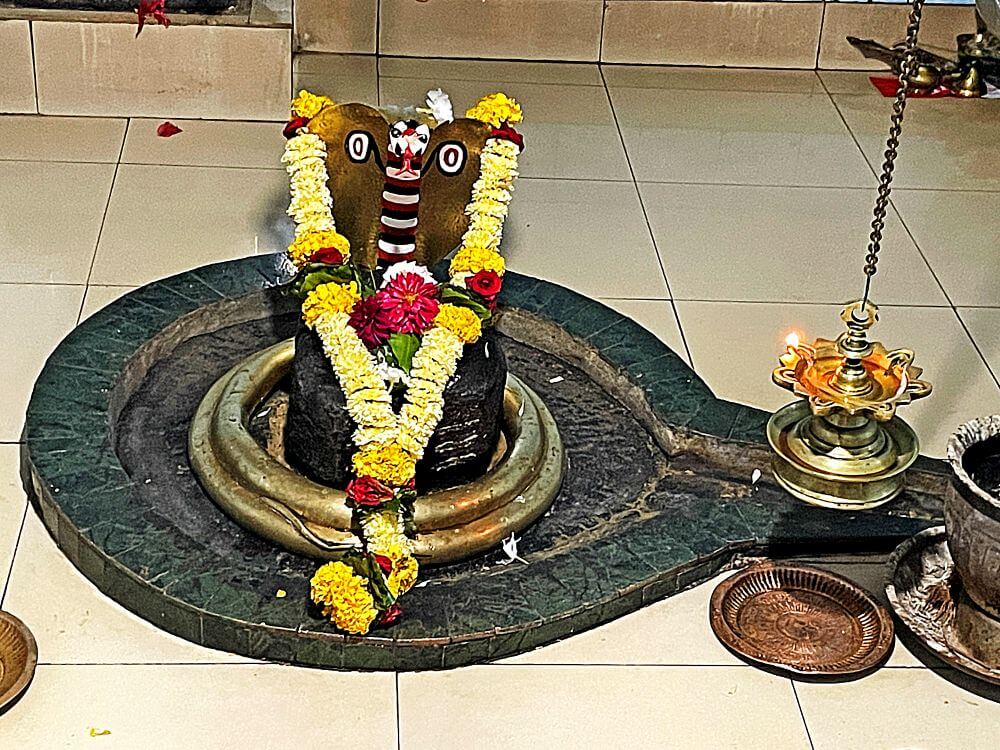
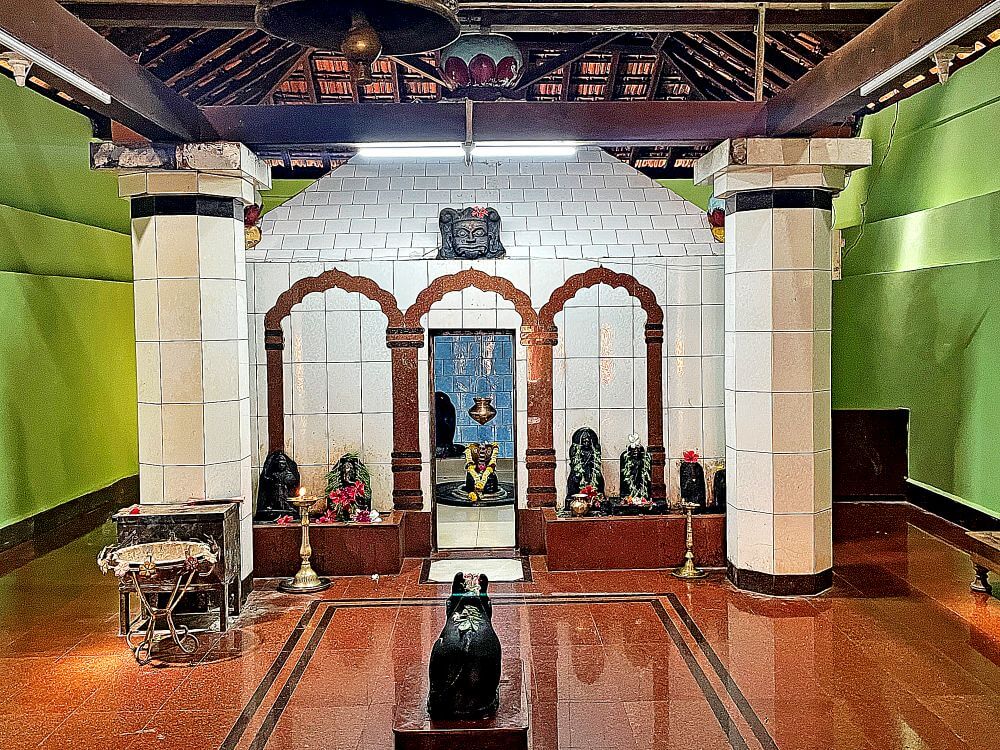
Six steps lead from the Sabha Mandap into the Antarala. The Antarala is enclosed, with windows in the walls to ensure sufficient light and ventilation. Many brass bells, offered by devotees after the fulfillment of their vows, are hung from the beams here. In the Antarala, there is a Nandi idol made of black stone. Additionally, ‘Tarang Kathis’ (processional poles) of various deities are kept on one side. Near the front wall of the Garbhagriha in the Antarala, there are black stone idols of Ganesha, Sharadanand, Lakshmi, Vishnu, and other Ganas. The doorway and the surrounding wall of the Garbhagriha feature arched carvings. The entrance to the Garbhagriha is somewhat narrow. Inside the Garbhagriha resides the Swayambhu (self-manifested) Linga of Kshetrapaleshwar in the form of a Rujiv Pashan. A Swayambhu Linga is considered the most sacred because it is naturally formed and has existed since time immemorial. For this reason, even if it is damaged, there is no need for its reconsecration (Jirnoddhar).
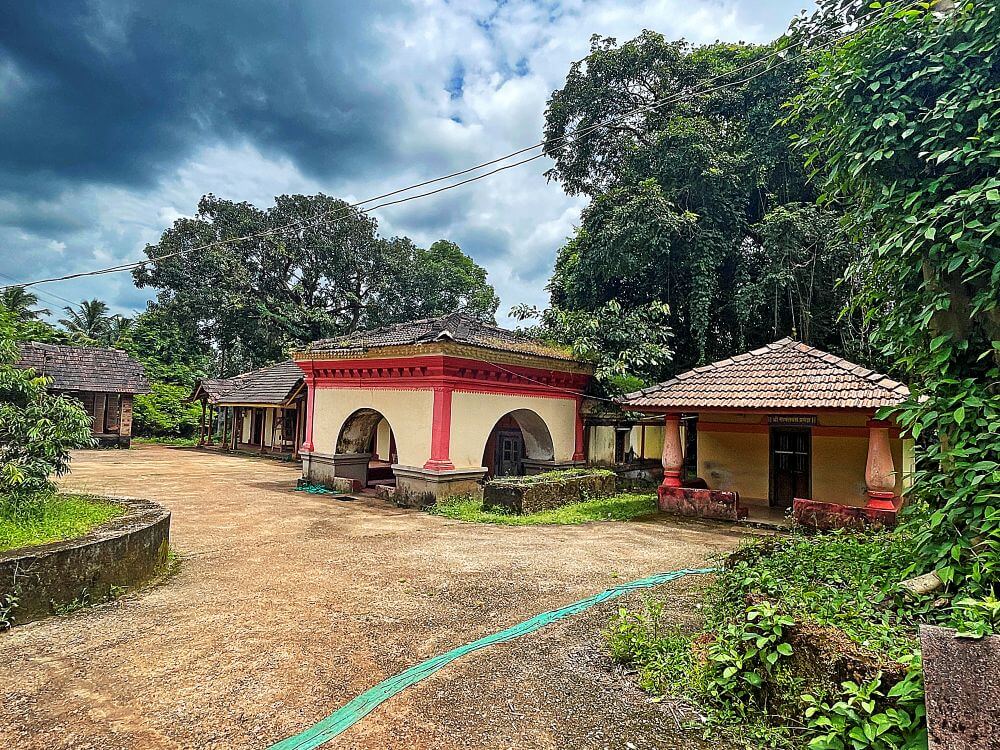
In front of the Kshetrapaleshwar Temple is the Sateri Devi Temple. This temple houses the ‘Dalvi Vas’ (the ancestral deities of the Dalvi community), who are the primary Mankaris (honored officials) of the village. There are also stone idols of the ‘Baracha Purvas’, ‘Baracha Brahman’, ‘Purvecha Vas’, ‘Gavade Vas’, and ‘Naik Vas’. Adjacent to the Sateri Devi temple is the Rajsatta (Government Purvas) temple, as well as the Dev Dandekar and Sawant Vas temples.
Festivals such as Mahashivratri, Navaratri, Dussehra, Shimga, and Padwa are celebrated on a grand scale at the Kshetrapaleshwar Temple Panchayatana. On these occasions, many devotees come to make and fulfill their vows. During the festivals, the deity is bathed (Abhishek) and worshipped daily. A procession of the Tarang Kathis is carried out. The servants of the deity enter a trance state, during which questions are asked to the deity and answers are received.
This sacred temple stands as a testament to deep spiritual devotion, ancient architectural grandeur, and rich local cultural traditions.
The sanctum sanctorum houses the divine idol consecrated according to ancient Vedic traditions, surrounded by serene courtyards and traditional temple architecture.
Navratri, Maha Shivratri, Annual Temple Jatra & Deepotsav
Compare and book flights, secure top-rated local hotels near the temple, hire reliable guides, and rent cars instantly.
Extend your pilgrimage by visiting other highly sacred temples located nearby.


Add ₹999 more to unlock FREE SHIPPING!
Your sacred cart is currently empty.
Shop Photo FramesFill in your delivery details below to place your order.
Add comment