
Add ₹999 more to unlock FREE SHIPPING!
Your sacred cart is currently empty.
Shop Photo FramesLord Jaitir, the Gramdaivat (village deity) of Tulas village in Vengurla Taluka, is widely renowned as a Jagrut Devasthan (a shrine of active divine presence). It is said that this sacred shrine dates back to the fifteenth century. It holds the unique recognition of being the only shrine in South Konkan where a mortal man became a deity and took over the reign of the Panchayatan Devasthan. Every year during the annual fair (Yatrotsav), in memory of Lord Jaitir’s wife, married women (Suvasinis) of the Parab family undergo a ritual bath of burning embers. This tradition is known locally as ‘Ingale Nhane’ (bath of embers). As part of this ritual, women approach the fire covering their heads with their saree pallu, where burning coals are poured onto the pallu covering their heads from a small winnowing tray (supali). Thousands of devotees from across Konkan gather to witness this festival.
The legend surrounding this holy place states that in Tulas village, there lived a righteous man named Jaite Parab, who was an expert in Dandapatta (gauntlet-sword) and swordsmanship. Impressed by his brave nature and mastery of weaponry, the princely state of Sawantwadi appointed him as a Killedar (fort commander) at a fort. While returning from his tenure, he went to his daughter’s in-laws’ home to bring her to her maternal house; however, since no Kunbin (woman of the Kunbi community) accompanied him, the daughter’s in-laws refused to send her. Having no alternative, he returned to Tulas village, and the next day, set out again for his daughter’s house along with Nagal Mahar of the village and a Kunbin. But on the way, they were ambushed by Bhils, who intended to rob the ornaments worn by the Kunbin.
As dialogue yielded no way out, a clash broke out between Jaite Parab and the Bhils. Putting all his skills to the test, Jaite Parab slayed several Bhils with his sword. Seeing his swordsmanship, the Bhils retreated and began shooting arrows at them from the dense forest. In this attack by the Bhils, an arrow struck the Kunbin, resulting in her death. At the same time, an arrow struck Jaite Parab on his head, injuring him. Seizing the opportunity, the Bhils robbed the ornaments from the Kunbin’s body and fled. Nagal Mahar applied medicinal herbs to injured Jaite Parab’s head, carried him on his back, and set off towards Tulas village.
They made their first stop at Narur. A Vaishya gentleman named Sudrik from Narur treated his wounds; however, as the arrow wound was deep, Jaite Parab passed away during treatment. That day was Vaishakha Krishna Chaturdashi. On the very same day, Jaitoba (Jaite Parab) possessed Sudrik’s body and gave instructions regarding his last rites. Accordingly, carrying the head of his master, Nagal Mahar set out for Tulas village. The place where the sanctum sanctorum (Garbhagriha) of the temple stands today was formerly the house of the Rauls. Here, Nagal Mahar placed Jaitoba’s head. The villagers of Narur brought Jaitoba’s headless torso to the same spot. The grand and spacious temple today stands right where Jaitoba’s Samadhi was constructed. Since Nagal Mahar expressed a desire for his own Samadhi to be built facing his master’s shrine, his Samadhi stands directly in front of the temple. Therefore, to this day, the Harijan community is accorded prime honor during every festival celebrated here.
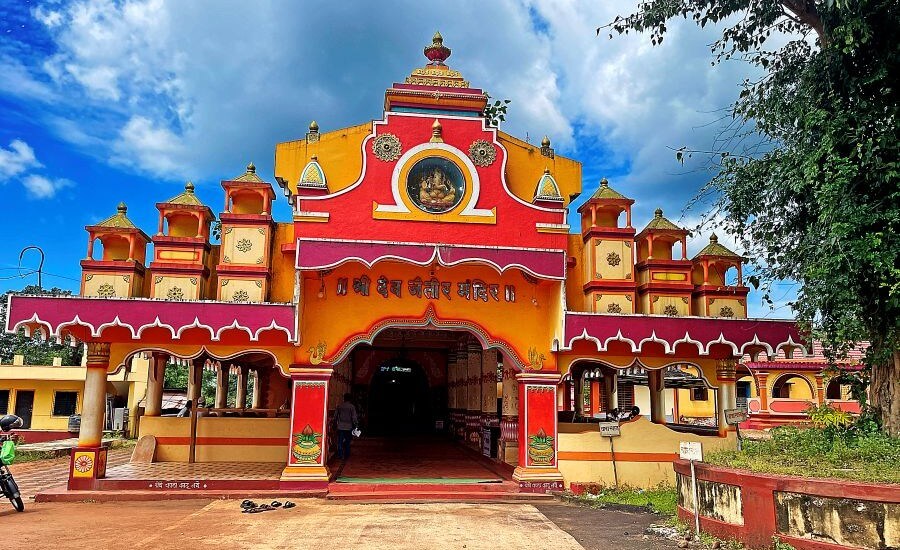
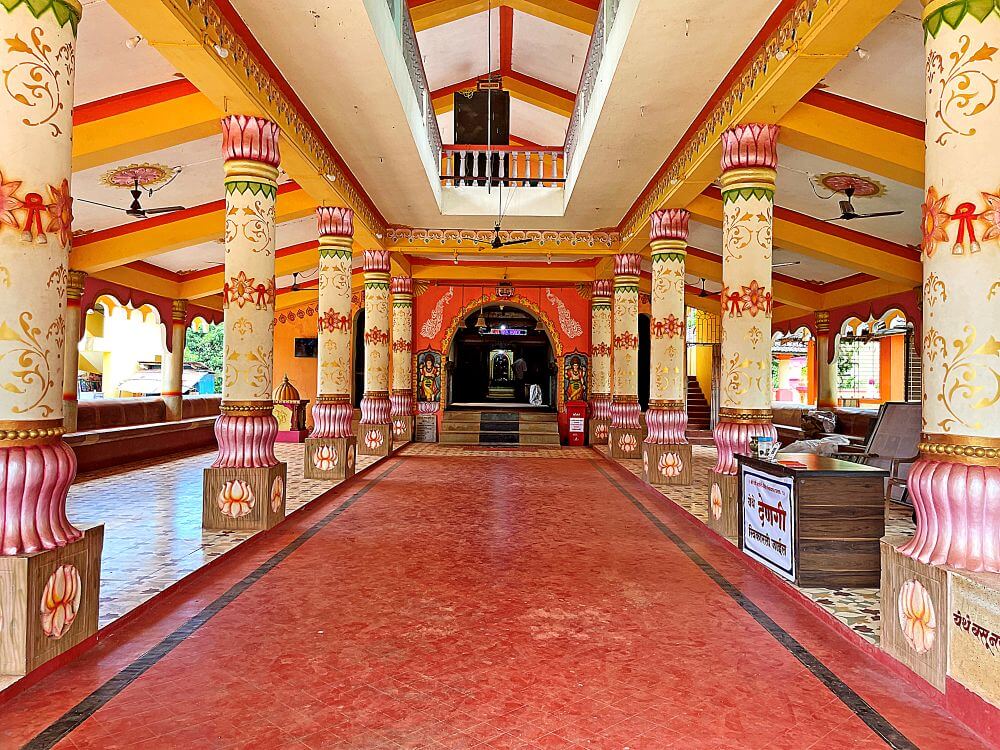
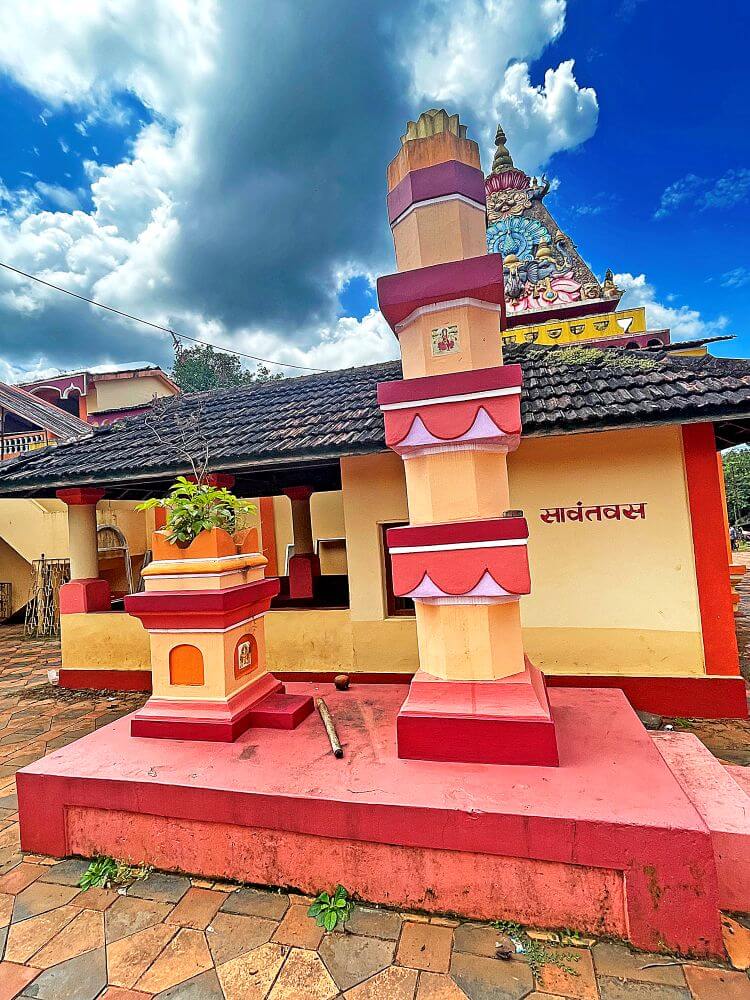
The Lord Jaitir Temple is situated at a central location in the village along the road. At the front of the temple, there is a Deepastambha (lamp tower) and a Tulsi Vrindavan. The design of this two-storeyed temple comprises a Sabhamandap (assembly hall), Antarala (antechamber), and Garbhagriha (sanctum sanctorum). Above the entrance of the Sabhamandap, an idol of Lord Ganesha is enshrined in a circular niche. Above it is a small Shikhara (spire), topped with an Amalaka and Kalash. The pillars in this semi-open Sabhamandap are unique in design—square near the base with lotus artwork, rounded in the middle section, and adorned with lotus shapes again near the ceiling. These pillars feature relief carvings of flowers and creepers. Two rows of such pillars run through the rectangular Sabhamandap. In accordance with traditional Konkani architectural style, the floor section between these two rows of pillars is recessed by a few inches. On the outer sides of the Sabhamandap, there are built-in benches (Kakshasanas) for devotees to sit.
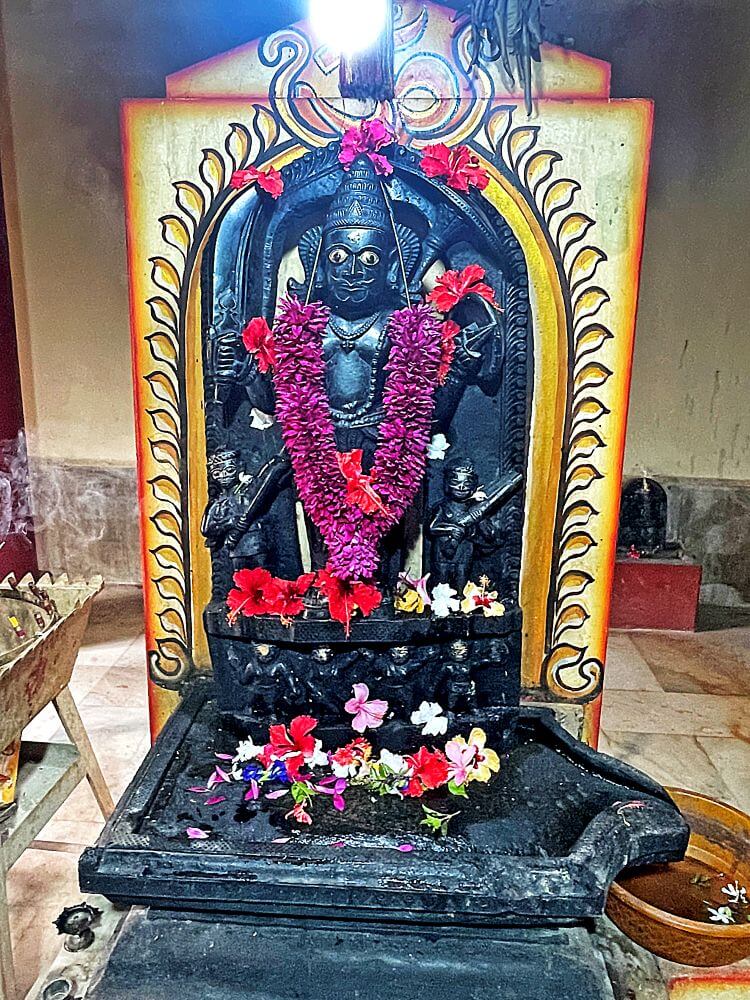
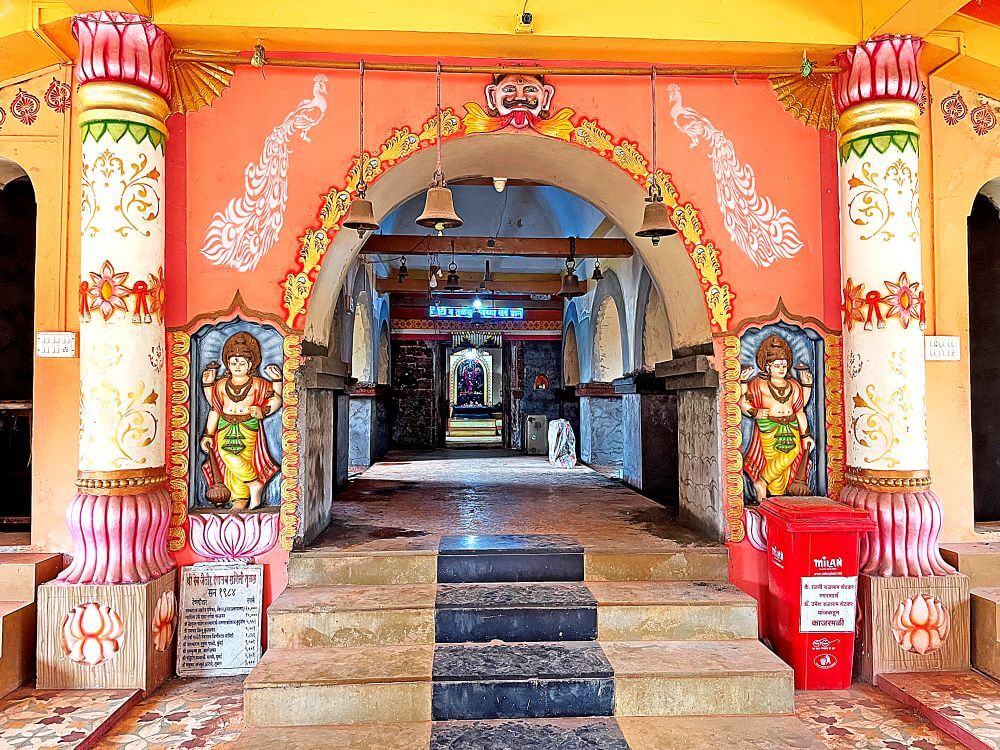
Beyond the Sabhamandap, leaving space for the Pradakshina Marg (circumambulation path), the Antarala and Garbhagriha are located on an elevated level. On either side of the Antarala’s entrance stand carved sculptures of Dwarapalas (doorkeepers) holding a mace (Gada) and Sudarshana Chakra. A Kirtimukha adorns the upper part of the arched doorway. The Antarala here is enclosed, featuring large stone pillars interconnected by arch-like structures. In the center of the Sabhamandap, on a low Vajrapeetha, stands the idol of Lord Jaitir carved from black stone. Above this Garbhagriha rises a unique Shikhara adorned with carved faces of elephants (Gajaraja).
Although the main festival of Lord Jaitir commences on Vaishakha Krishna Chaturdashi, it begins four days earlier on Dashami with night-time lamp rituals. On the day of the fair, a grand procession of Lord Jaitir is taken out amidst the vibrant resonance of traditional musical instruments. Escorting the procession in front and behind are the sacred Tarangas of Lord Ravalnath, Lord Bhutnath, and Goddess Sateri. This festival is famously known across Konkan as the ‘Jaitir Utsav’. On the following day, which was Vaishakha Krishna Amavasya, Jaitir’s mortal remains were brought to Tulas village. It is said that his wife committed Sati with him at that time. In memory of Lord Jaitir’s wife, on the second day of the festival, married women (Suvasinis) of the Parab family place burning embers on their heads. This festival lasts for eleven days. Thousands of devotees from across Maharashtra, Karnataka, and Goa, along with the Konkan region, attend this festival.
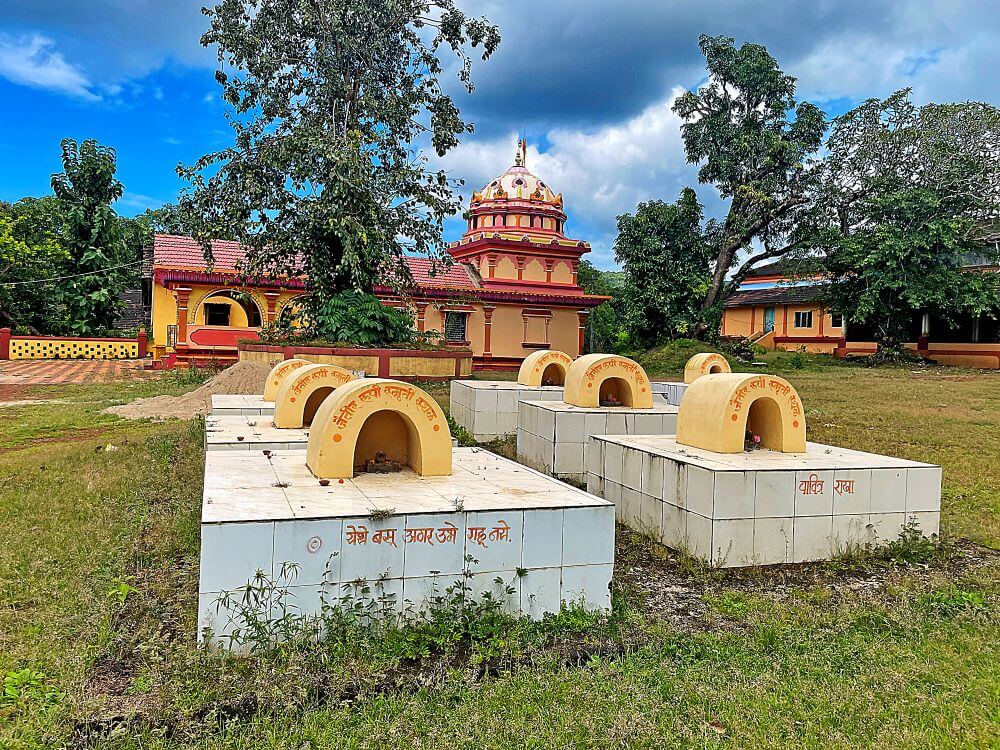
Whenever devotees face calamity, Lord Jaitir emerges with weapons in hand. Devotees hold the firm belief that just as the Lord stands ever-ready to protect his devotees in Tulas village, his sword also strikes against evil forces in the neighboring village of Narur. Within this temple complex lie the Lord Ravalnath Temple, Sawant Vas Temple, and the Samadhis of six generations of patriarchs of Lord Jaitir’s lineage.
This sacred temple stands as a testament to deep spiritual devotion, ancient architectural grandeur, and rich local cultural traditions.
The sanctum sanctorum houses the divine idol consecrated according to ancient Vedic traditions, surrounded by serene courtyards and traditional temple architecture.
Navratri, Maha Shivratri, Annual Temple Jatra & Deepotsav
Compare and book flights, secure top-rated local hotels near the temple, hire reliable guides, and rent cars instantly.
Extend your pilgrimage by visiting other highly sacred temples located nearby.


Add ₹999 more to unlock FREE SHIPPING!
Your sacred cart is currently empty.
Shop Photo FramesFill in your delivery details below to place your order.
Add comment