
Add ₹999 more to unlock FREE SHIPPING!
Your sacred cart is currently empty.
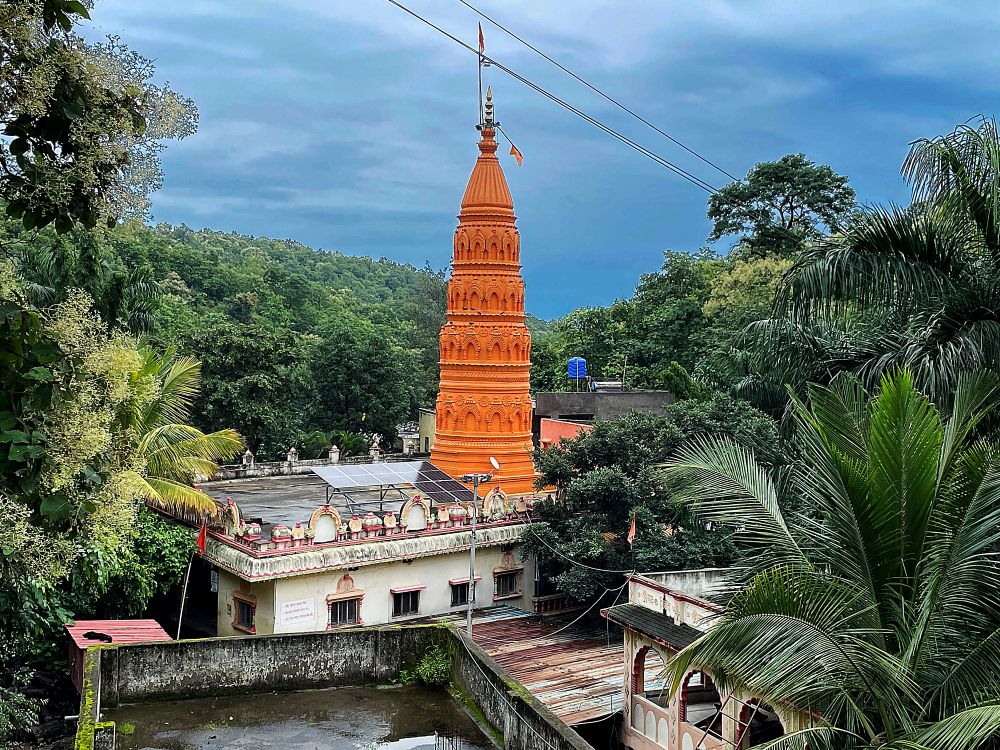
Shop Photo FramesThe Ambarishi Mahadev Temple at Amasari in Sillod Taluka (ancient Shivnitapur) of Chhatrapati Sambhajinagar district is a revered place of faith for thousands of devotees. Many devotees come here for darshan (sacred viewing), driven by the belief that the ancient Shivlinga, nestled 150 feet deep in a valley, within a mountain crevice, and an ancient cave, is a vibrant and awakened presence. In front of this temple, situated in a picturesque natural setting, there is also a waterfall. Adjacent to the temple is the Samadhi Mandir (shrine of samadhi) of Mahant Kailasgiri Maharaj. Considering the profound faith of devotees in both these temples and the large number of pilgrims visiting, the State Government has honored this area by designating it as a ‘C’ grade pilgrimage site.
This ancient temple is located in Amasari, nestled in the Ajanta mountain range, on the border of Khandesh, Vidarbha, and Marathwada. Amasari village is situated three kilometers from Shivna, on the Ajanta to Shivna road. From this village, the holy abode (Devasthan) of Ambarishi Mahadev is another three kilometers away.It is said that King Ambarish performed penance here, and thus the temple was named Ambarishi after him. The story of King Ambarish is recounted in the second chapter of ‘Shri Gurucharitra,’ composed by Shri Saraswati Gangadhar. It states, ‘Ambarish, a Brahmin, for the sake of the Ekadashi Vrat, caused Vishnu to incarnate.’ This king had observed the Ekadashi Vrat of Lord Vishnu. Sage Durvasa had cursed this king that he would have to take birth in all forms of existence. At that time, Ambarish was filled with sorrow, and seeing his plight, Lord Vishnu manifested there and declared that He Himself would endure this curse. It is believed that this king performed his austerities here.
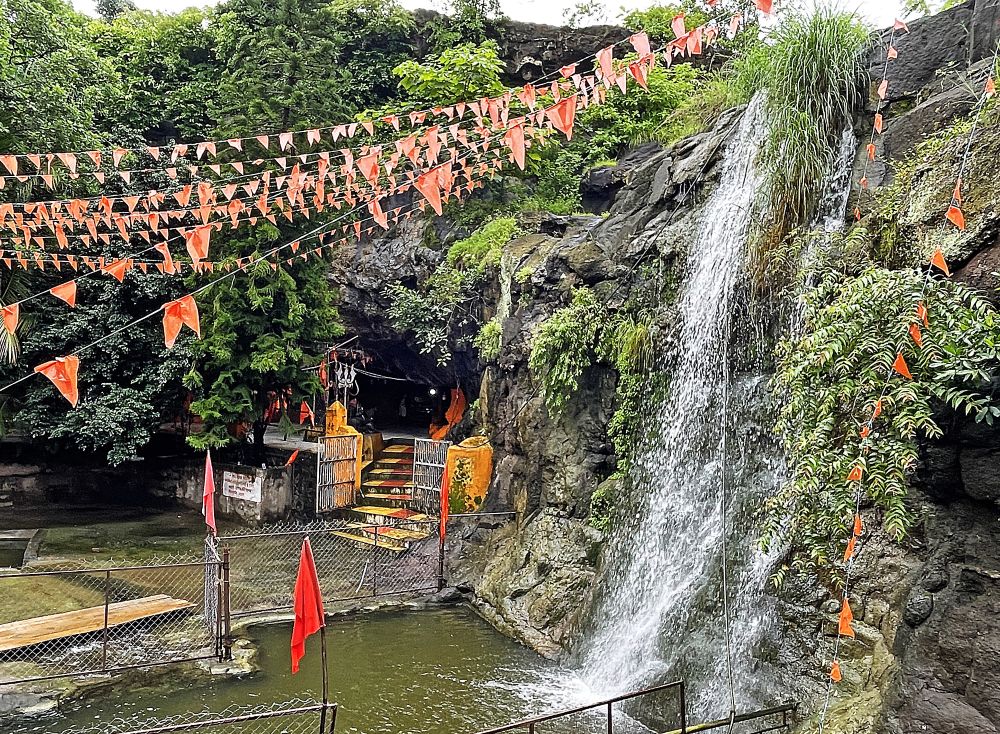
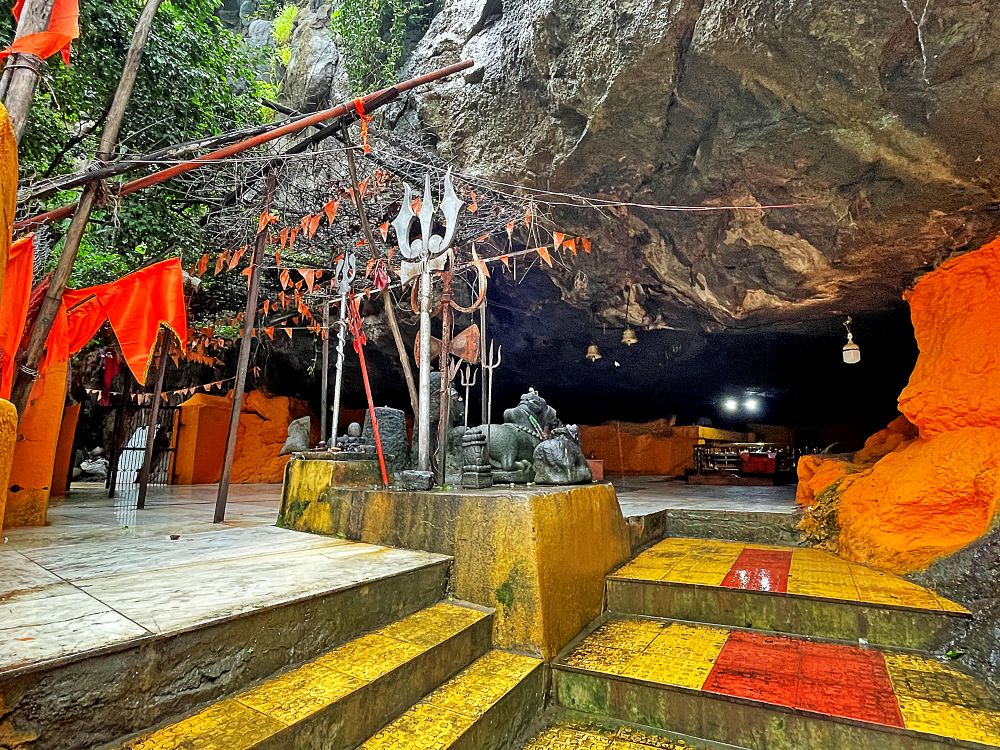
To reach this temple, situated within a cave, one must descend a few steps. Upon descending the steps, one enters the temple courtyard. In the courtyard in front of the temple, there is a ‘T’-shaped water reservoir carved into the rock. Water from the cascading waterfall above flows into this reservoir. The naturally abundant environment, along with the descending waterfall and the cleanliness of the area, enhances the beauty of this sacred space. For the safety of devotees and tourists, steel railings have been installed around the reservoir near the waterfall. To the right of the waterfall, within a cave carved into the rock, is the Ambarishi Mahadev Temple. There are nine steps leading from the waterfall to the temple cave. Upon ascending these steps, one enters the assembly hall (Sabhamandap) of this cave temple.
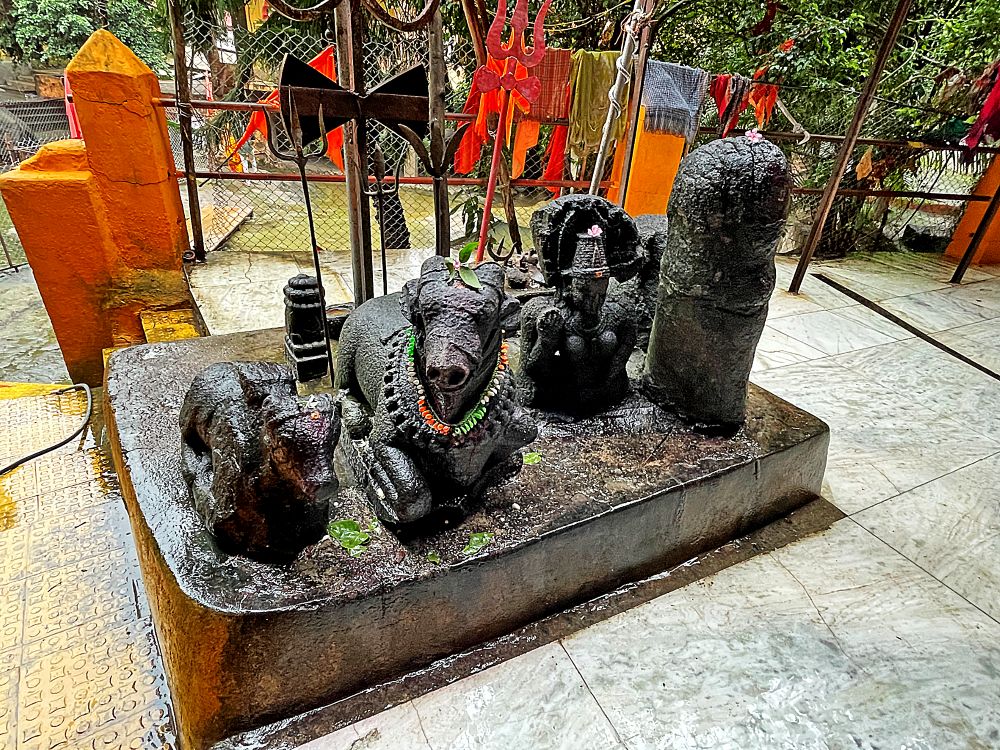
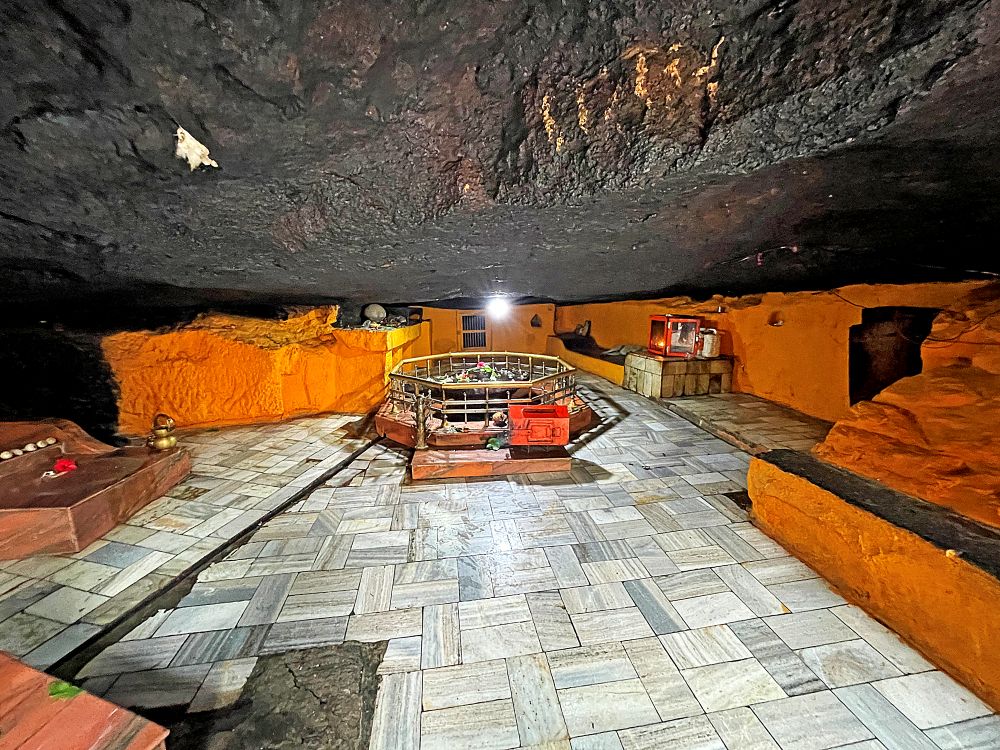
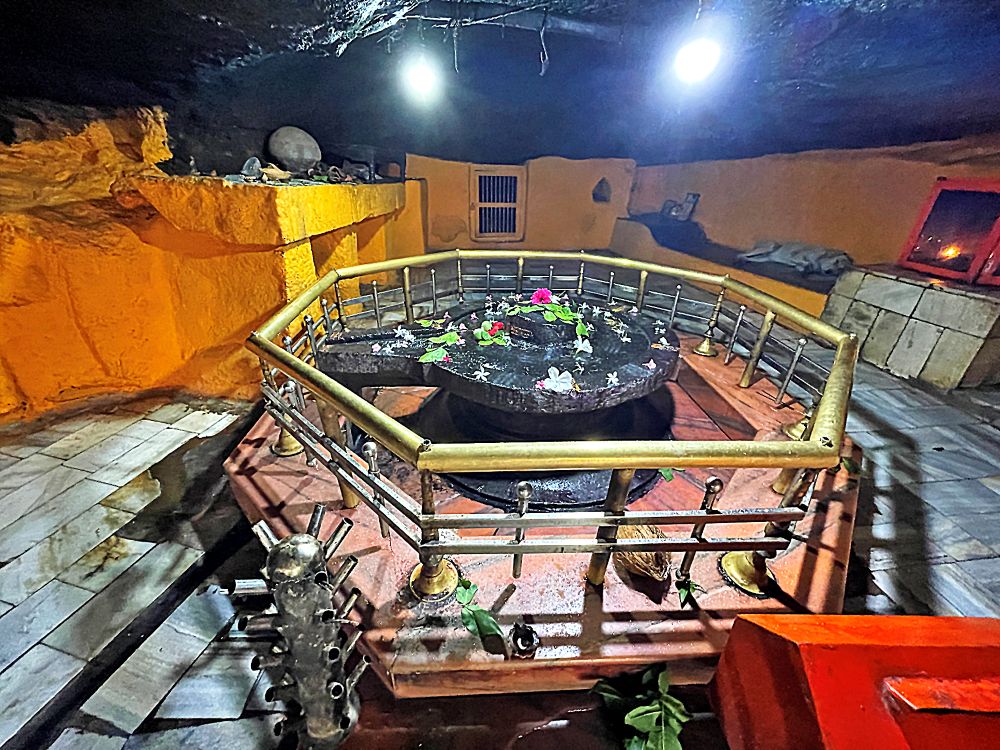
At the beginning of the assembly hall, on the left side, on a platform, there is a tall stone Shivlinga, along with two ancient idols of Goddess Parvati and Nandi. In the center of the assembly hall, on a platform, rests a monolithic idol of Nandi. As this cave has a low ceiling, one must bend at the waist to reach the self-manifested Shivlinga located at the far end of the assembly hall. Around this Shivlinga, there is an octagonal marble platform. In its center is a comparatively tall Shivlinga. Steel railings have been installed around this platform. Additionally, some idols are carved into the walls of this cave. It is said that this cave extends more than a hundred feet inwards, but only the section containing the Shivlinga is open, while the remaining part has been kept closed. There is a legend here that the Nateshwar Mahadev Temple in Natvi village, near Amasari, is connected to the Ambarishi Mahadev Temple by an underground passage. The Nateshwar Mahadev Temple in Natvi houses the ‘Panch Dasnaam Juna Akhaḍā Tera Maḍhi’. Among the total 13 Akhaḍās (monastic orders) of Hindu ascetics, seven belong to the Shivsanyasi Sampradaya (Shaivite ascetic tradition). This Akhaḍā is one of them, established in 1259 CE, with Varanasi as its principal seat.
The Samadhi Sthal (place of samadhi) of the revered Brahmaleen Mahant Kailasgiri Maharaj, associated with this Akhaḍā, is located near the Ambarishi Mahadev Temple. A unique feature of this Samadhi Mandir is that its construction is entirely over a stream. The temple’s design features the shrine above and a flowing stream below. During his lifetime, Mahant Kailasgiri Maharaj guided many devotees towards a path of blissful life. He treated the ailments of the local populace using various medicinal herbs. Consequently, many of his devotees from the surrounding five villages regularly visit his Samadhi Sthal for darshan.
At the entrance of this Samadhi Mandir, on both sides, there are sculptures of doorkeepers (Dwarpalas) holding spears. Above the lintel of the entrance, there is a large idol of Lord Ganesha. Upon entering through this doorway, one first encounters the Garbhagriha (sanctum sanctorum) of Ambika Mata. Above the lintel of the Garbhagriha’s entrance, there is an idol of the Goddess seated on a lotus. Inside the Garbhagriha, there is a vermillion-smeared idol of Ambika Devi in the form of a symbolic rice grain (Tandala Swaroopa). Adjacent to this Garbhagriha is the usual sitting place of Mahant Kailasgiri Maharaj. From this spot, he would guide devotees. On a throne here, his images are placed, and at his sitting spot, his holy sandals (Padukas) are kept. From here, there is a path leading to the temple’s assembly hall. On one side of the spacious assembly hall is the Samadhi Sthal of Kailasgiri Maharaj. Maharaj Kailasgiri took Jivant Samadhi (conscious self-entombment) here on April 14, 2004. Above this Samadhi Sthal, on a marble platform, rests a Shivpindi. The Samadhi Sthal is enclosed by a wooden and glass partition. Every year on April 14, on the occasion of Maharaj’s Punya Tithi (death anniversary), a Harinaam Saptah (week-long chanting of God’s name) is organized here. At that time, thousands of devotees come here for darshan. During this event, arrangements are made for drinking water, a rest house for repose, and Prasad (sacred offerings) for the visiting devotees.
This sacred temple stands as a testament to deep spiritual devotion, ancient architectural grandeur, and rich local cultural traditions.
The sanctum sanctorum houses the divine idol consecrated according to ancient Vedic traditions, surrounded by serene courtyards and traditional temple architecture.
Navratri, Maha Shivratri, Annual Temple Jatra & Deepotsav
Compare and book flights, secure top-rated local hotels near the temple, hire reliable guides, and rent cars instantly.
Extend your pilgrimage by visiting other highly sacred temples located nearby.

Add ₹999 more to unlock FREE SHIPPING!
Your sacred cart is currently empty.
Shop Photo FramesFill in your delivery details below to place your order.
Add comment