
Add ₹999 more to unlock FREE SHIPPING!
Your sacred cart is currently empty.
Shop Photo FramesUpon beholding the Brahmagiri, one is liberated from the abode of Yama.
Nama says, the merit earned from circumambulation is beyond measure.
The greatness of the Brahmagiri mountain is evident from this verse by the supreme saint Namdev Maharaj. This mountain, sanctified by the touch and presence of many great sages and seers since the Puranic era, holds immense spiritual significance. The Godavari River, known as the Dakshin Ganga, along with the Vaitarna and Ahilya rivers, originates from this very mountain. Devotees hold a firm belief that circumambulating this Brahmagiri mountain, where Lord Shiva himself resides, destroys all sins and grants the fruits of one’s prayers.
Brahmagiri is a vast mountain in the Sahyadri mountain ranges. Its height from sea level is 4248 feet. Scholars state that after Kalsubai in Maharashtra, this is the second-highest peak in terms of altitude. The Sahyadri mountains have existed since before the Himalayas emerged from the earth. This part of the Sahyadri is known as Brahmagiri. The Brahmagiri mountain has five peaks named Sadyojat, Vamdev, Aghor, Tatpurush, and Ishan. The Godavari river originated from the Sadyojat peak, while the Vaitarna, Ahilya, Banganga, and Ramganga rivers originated from the Vamdev, Aghor, Tatpurush, and Ishan peaks respectively. It is said that Brahmagiri is the very place where Lord Brahma attained the knowledge of creation!
The legend of the Brahmagiri mountain states that Sage Gautama Maharishi had committed the sin of killing a cow. To attain liberation from this sin, he performed severe penance and pleased Lord Shankara. He requested the Ganga from Shankara, but the Ganga was unwilling to emerge from His matted hair. To bring the Ganga down to the earth, Lord Shankara performed the Tandava dance. At that moment, the entire earth trembled. Lord Shankara struck His matted hair forcefully against the ground and brought the Ganga out for the welfare of the universe. That site is the present-day Jata Mandir on Brahmagiri. The date on which the Ganga originated on Brahmagiri was Magh Shukla Dashami. At that time, Jupiter was in the Leo zodiac sign, and the day was Thursday. Every year on this day, the Gangavataran festival is celebrated at this temple.
According to another legend, a discussion was underway between Brahma and Vishnu. At that time, Lord Brahma stated that he is the creator of the universe, and therefore, he knows the greatness of Shiva very well. Lord Vishnu, however, humbly replied that he had tried very hard to understand the greatness of Shiva and had even performed penance for it, yet he still had not attained complete knowledge of Shiva. Following this, both decided to search for Lord Shankara. It was decided that Brahma would search for the head of Shankara and Vishnu would search for His feet. Both searched extensively, but they found nothing. Then Lord Brahma devised a ruse. Using his divine power, he created a cow and a flower, and by persuading them to bear witness on his behalf, he claimed that he had found the head of Shiva. However, the gods felt suspicious about this. To resolve their doubts, they went directly to Shivaloka. There, they met Shiva and narrated the entire incident. After hearing their account, Shiva realized Brahma’s deception. Enraged, Shiva cursed Brahma, saying that from this day forth, no one on Earth would worship him. Consequently, Brahma also became angry with Shiva and cursed him, saying that he would dwell on Earth in the form of a mountain. Later, however, Brahma realized his mistake. He performed penance for Shiva. Shiva was pleased and promised Brahma that he would reside on Earth in the form of a mountain, and this mountain would be named Brahmagiri! Therefore, this mountain holds great spiritual significance.
The circumambulation of Brahmagiri has been practiced since the Puranic era. It is stated in the Puranas that whoever performs this circumambulation attains the merit equivalent to circumambulating the entire Earth. It is said that Gahininath resided on this mountain. When Dnyaneshwar and his siblings arrived here along with their father Vitthalpant, their elder brother Nivruttinath received the grace and initiation of Gahininath on Brahmagiri itself.
There is a tradition of performing the circumambulation of Brahmagiri in three ways. The first is the Brahmagiri circumambulation only, the second is the Harihar Brahmagiri circumambulation, and the third is the Brahmagiri circumambulation including Anjaneri Mountain. Among these three, the Brahmagiri circumambulation alone is the shortest and most popular. This circumambulation path is approximately 20 to 22 kilometers long, and the circumambulation is generally completed in 7 to 8 hours. The Harihar Brahmagiri circumambulation is a slightly longer circumambulation, and its path is approximately 37 kilometers. The third circumambulation includes Anjaneri, and this distance is approximately 55 to 60 kilometers.
Rising before sunrise, one bathes at Kushavarta, has darshan of Trimbakeshwar, and begins the parikrama. Along this path, one encounters many sacred sites such as Prayag Tirtha, Saraswati Tirtha, Naga Tirtha, Ram Tirtha, and Narasimha Tirtha. On the Brahmagiri mountain, there are places such as the Jata Mandir, Brahmagiri Mandir, and Moolganga Mandir. Many devotees who come for the darshan of Trimbakeshwar also visit this mountain. However, the true gathering of devotees happens here during the month of Shravan. During this period, devotees from every corner of the state arrive here for darshan. In the month of Shravan, and especially on the third Monday, there is an immense crowd here. It is the firm belief of devotees that performing the Brahmagiri parikrama during this time brings special spiritual rewards.
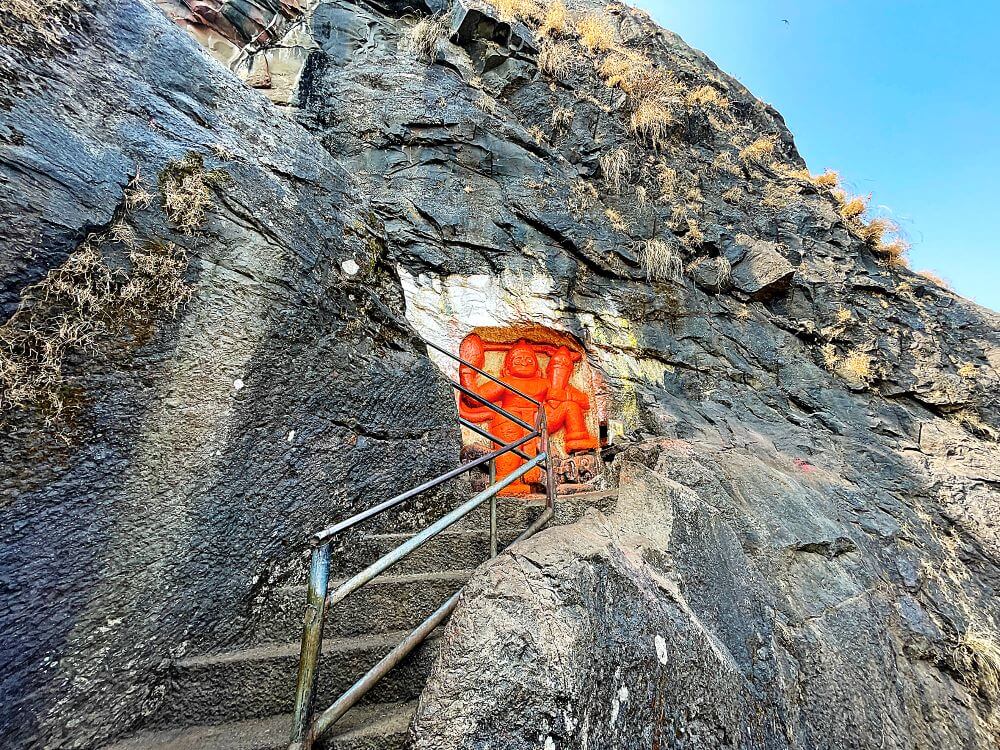
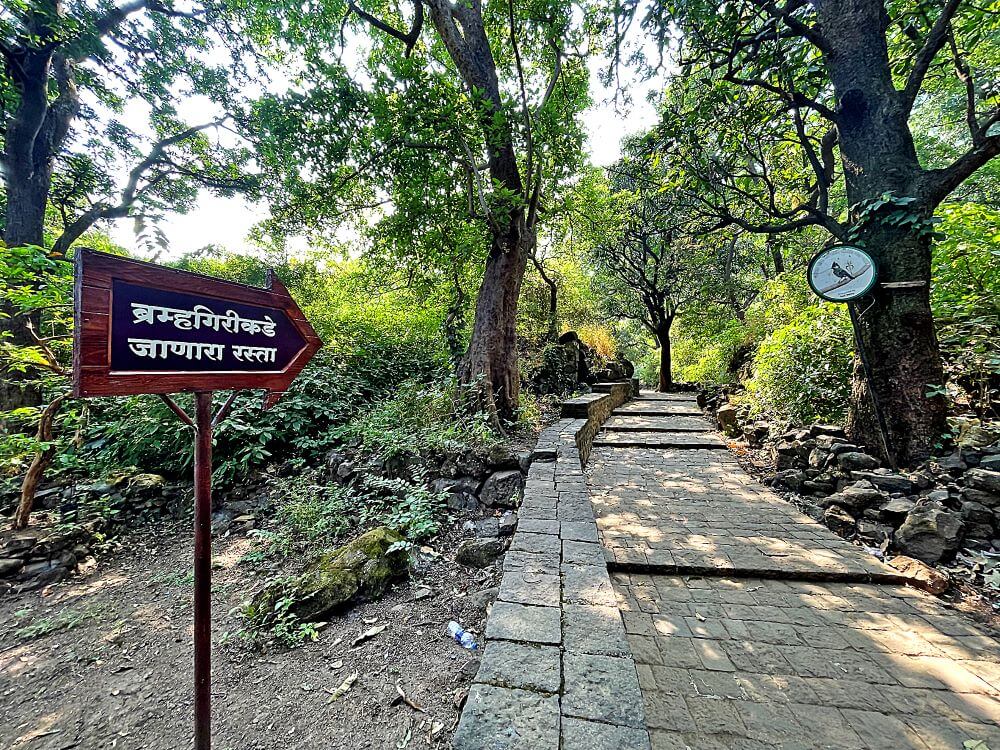
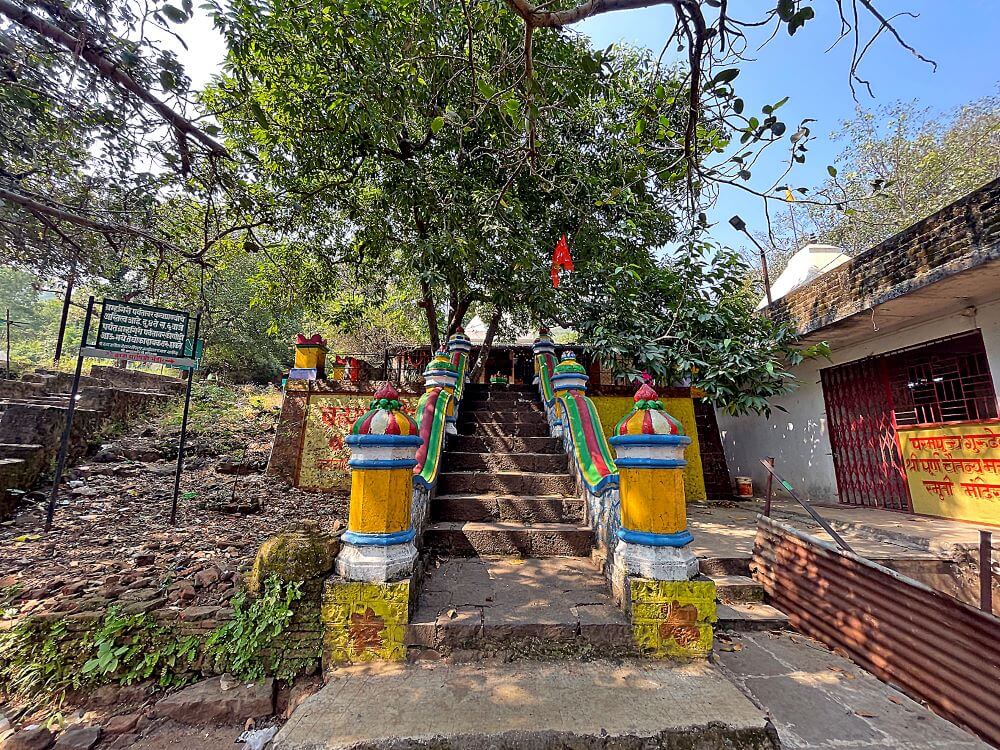
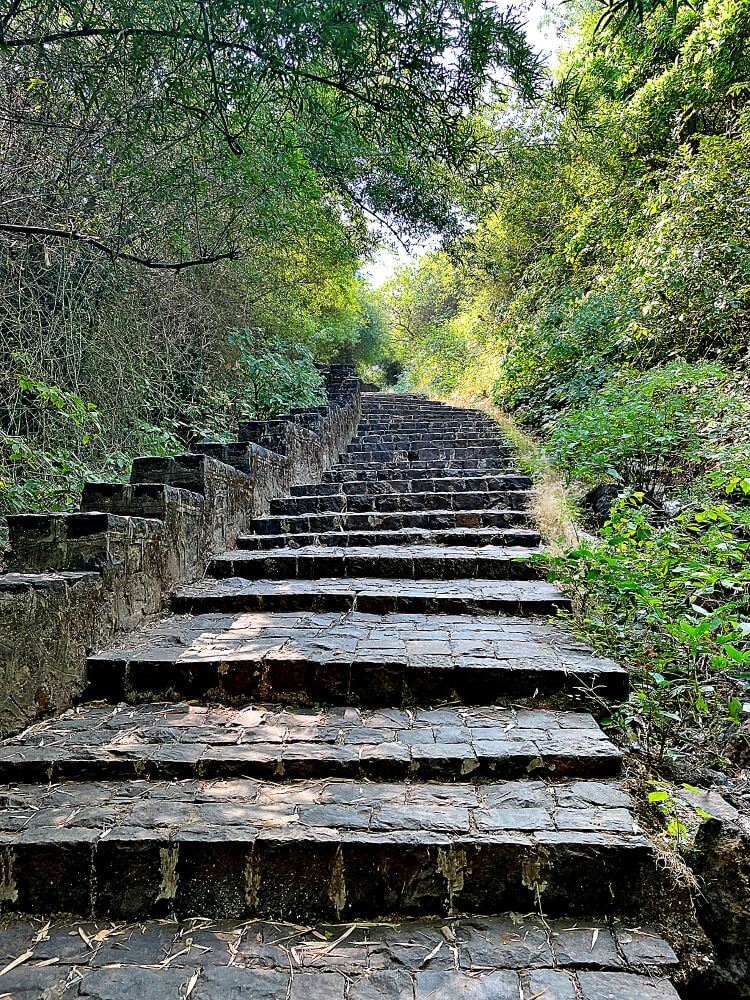
Apart from the parikrama, one can also visit the Brahmagiri temple atop Brahmagiri mountain at other times. To reach there, there is a stairway path starting from the Nivruttinath temple in Trimbakeshwar. It takes approximately two to two and a half hours to reach the top of Brahmagiri mountain via this somewhat challenging stairway. Since Brahmagiri mountain falls under the jurisdiction of the Forest Department, one must pay an entry fee at the Forest Department checkpoint before proceeding up the mountain. On the way along this stairway, there is the Muktadevi temple. After reaching the top of the mountain, one has to descend slightly to enter the Brahmagiri temple. In this small, ancient temple, there is a Shiva Linga, and in the tank in front of the temple, water from the Dakshin Ganga, that is, the Godavari, flows from a Gomukh. The Moolganga and Jata temples are also located in this vicinity. During the monsoon season, the area is crowded with both devotees and tourists.
The Jata Temple is an ancient temple located here. The temple is small in size and built of black stone. This temple houses a Swayambhu Shivling. It is believed that at this very spot, Lord Shankar knelt down and struck his matted locks (Jata) against the stone to release the Ganga. The marks of those locks and the impressions where his knees rested can still be seen in the temple today. It is believed that the Dakshin Ganga, or the Godavari River, originated from the spot where the locks were struck. Performing Jalabhishek and Rudrabhishek here during the month of Shravan is considered highly auspicious. Consequently, there is a large influx of devotees here on Shravani Mondays and Mahashivratri.
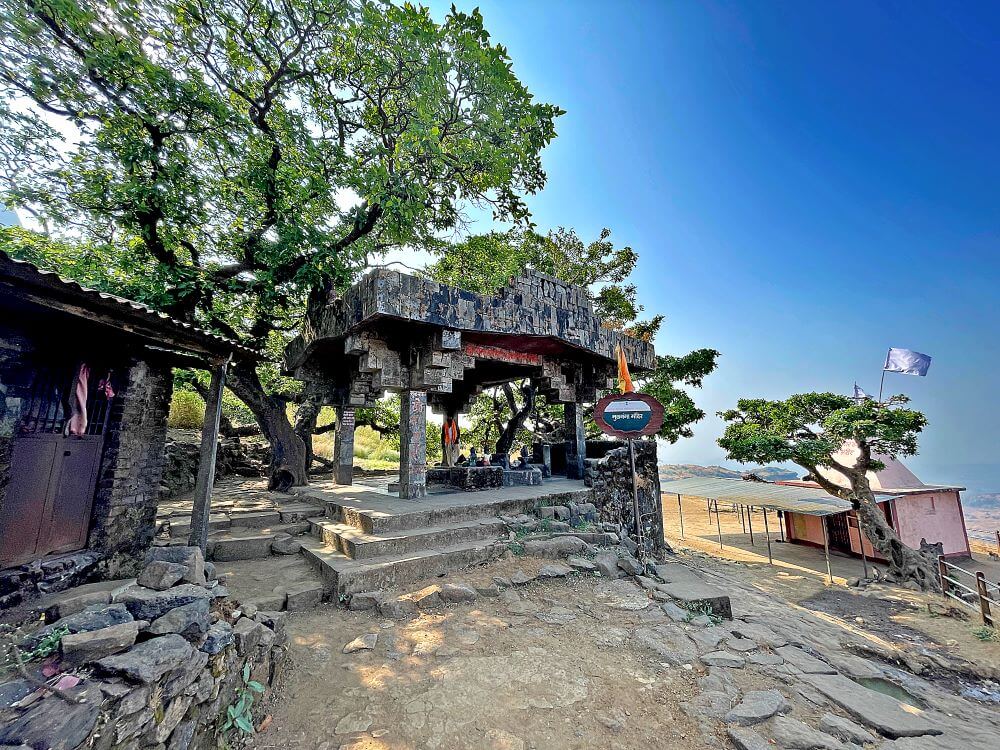
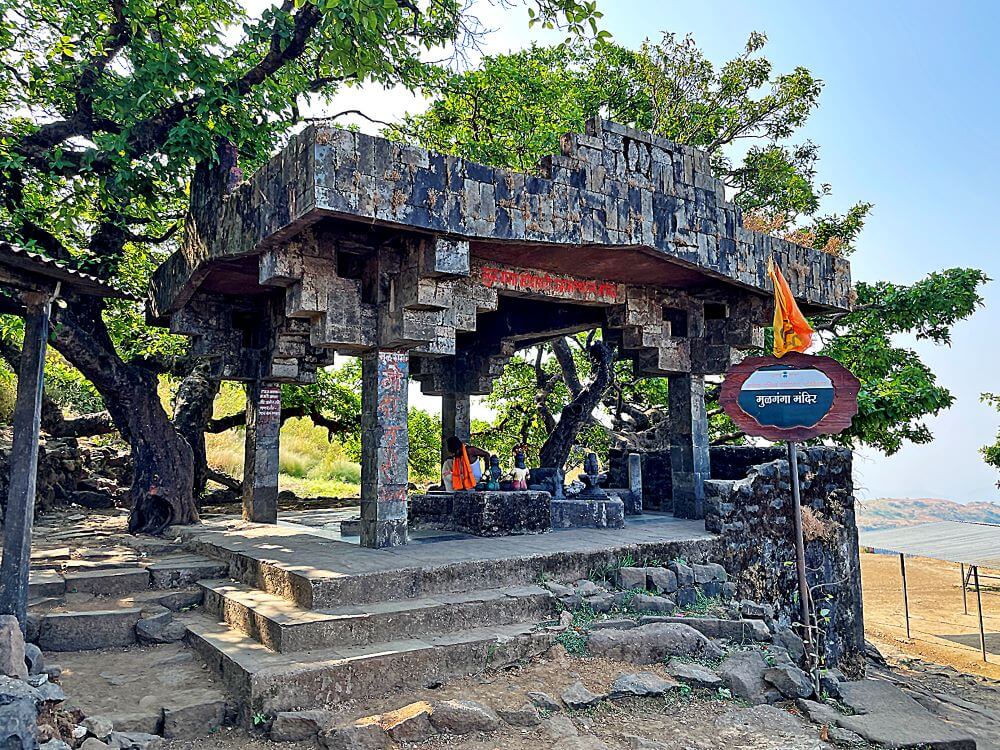
The Brahmagiri Temple is a five-minute walk from the Jata Temple. In the tank in front of the Brahmagiri Temple, water from the Ganga flows through a Gomukh. From there, one can proceed to the Moolganga Temple. The Moolganga Temple contains a small square tank. This is considered the original place of manifestation of the Ganga. The water in this tank never dries up, nor does its level fluctuate. Within this tank resides an idol of Goddess Ganga carved in black stone. In the stone pavilion here, there are ancient idols of Sage Gautam and his wife Ahilya. Nearby, there is a Shivpindi and Nandi. Above the tank, there is a headless cow. It is said that its head is located in the tank in front of the Brahmagiri Temple nearby. (According to legend, the cow’s head was severed by Sage Gautam.) The Ganga flows through three Audumbar trees outside the tank. It is said that after the Ganga manifested, Sage Gautam bathed in this tank. The same Ganga disappears from here and reappears at Gangadwar below, and from there, it flows through the Kushavarta Kund at Trimbakeshwar, passing through Nashik, Panchavati, Paithan, and Nanded, before finally merging into the Bay of Bengal.
This sacred temple stands as a testament to deep spiritual devotion, ancient architectural grandeur, and rich local cultural traditions.
The sanctum sanctorum houses the divine idol consecrated according to ancient Vedic traditions, surrounded by serene courtyards and traditional temple architecture.
Navratri, Maha Shivratri, Annual Temple Jatra & Deepotsav
Compare and book flights, secure top-rated local hotels near the temple, hire reliable guides, and rent cars instantly.
Extend your pilgrimage by visiting other highly sacred temples located nearby.


Add ₹999 more to unlock FREE SHIPPING!
Your sacred cart is currently empty.
Shop Photo FramesFill in your delivery details below to place your order.
Add comment