
Add ₹999 more to unlock FREE SHIPPING!
Your sacred cart is currently empty.
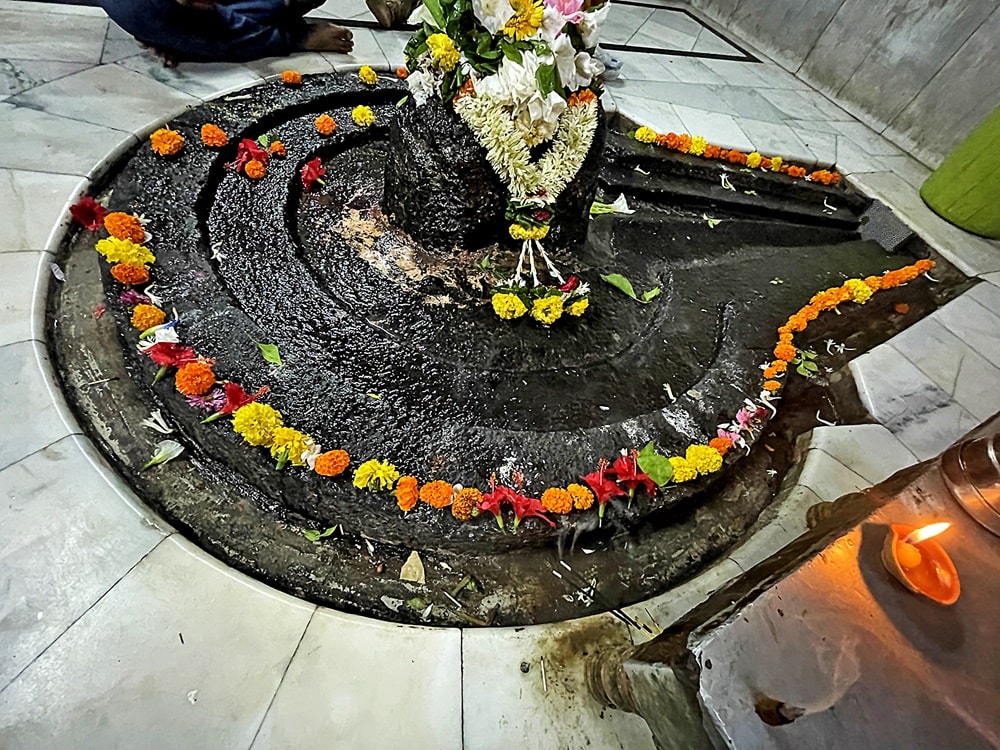
Shop Photo FramesThe Shree Chakreshwar Mahadev Mandir, nestled in Chakan, Khed Taluka, Pune District, is renowned as ‘Prati Bhimashankar’ and is revered by devotees as an exceptionally awakened holy place. This sacred edifice, sanctified by the kirtans of the great Saint Tukaram Maharaj and touched by the lotus feet of Chhatrapati Shivaji Maharaj, holds a significant position in the cultural history of Maharashtra. The magnificent six-foot-long Shivlinga within the temple is its primary attraction. This Linga is mentioned in revered texts such as ‘Lilacharitra’ and ‘Shivleelamrut’. Historical events from the Ramayana are also associated with this temple.
The ‘Lilacharitra’, a text of the Mahanubhav sect composed in the thirteenth century, clearly mentions the town of Chakan and its surrounding area. During the medieval period, this temple bore witness to the conflicts and glories of various ruling powers. Remnants of the original Garbhagriha from the Yadav period can still be seen here today. Later, during the rise of the Maratha Empire in the sixteenth and seventeenth centuries, Chakan attained unparalleled military and religious significance. Records indicate that Chhatrapati Shivaji Maharaj visited this temple to seek the Lord’s darshan during his campaigns for Swarajya. The temple underwent extensive renovation during the Maratha period. Its proximity to the fort ensured royal patronage and public support for this holy place. Saint Tukaram Maharaj frequently visited and performed kirtans here. The childhood of the crown jewel of saints, Santaji Jagnade Maharaj, was spent in this area, and many events of his life are connected with this temple. The temple is also recorded in the British-era Gazetteer.
According to Puranic references, in the Treta Yuga, this town was known as ‘Ekachakra Nagar’. At that time, the ashram of Maharshi Shandilya was located here. As Asuras repeatedly disrupted Shandilya Rishi’s yagnas, he called upon King Dasharatha, the ruler of Ayodhya, for assistance. During the battle between King Dasharatha and the Asuras, when the wheel (chakra) of Dasharatha’s chariot came loose, his wife Kaikeyi displayed great valor by holding the wheel steady. The place where this wheel fell gave the town its name, ‘Chakan’. Pleased by this incident, Dasharatha granted Kaikeyi two boons, which later led to Shree Rama’s exile and Bharata’s reign. Thus, it is believed that the epic of Ramayana began on this very land. In the Dwapar Yuga, the Pandavas also resided here during their period of incognito exile. It is said that Bhima slew Bakasura at this very spot. The Shivlinga in the temple is endowed with seven chakras, hence it is known as ‘Chakreshwar’. This Swayambhu Linga is said to be larger in size than the Lingas of the twelve Jyotirlingas.
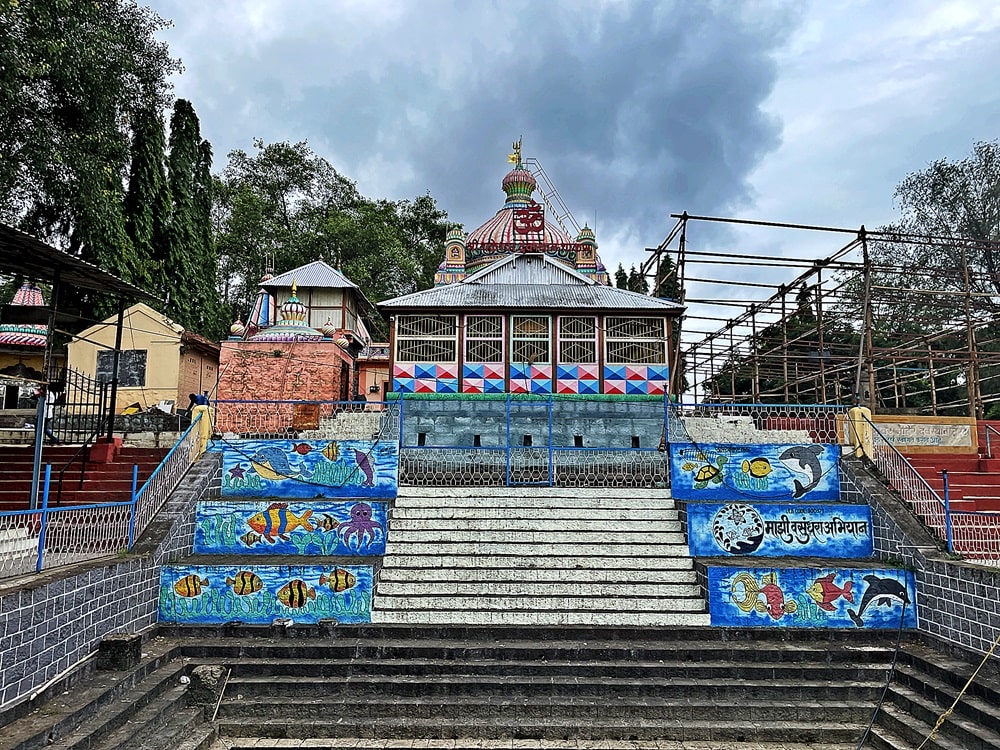
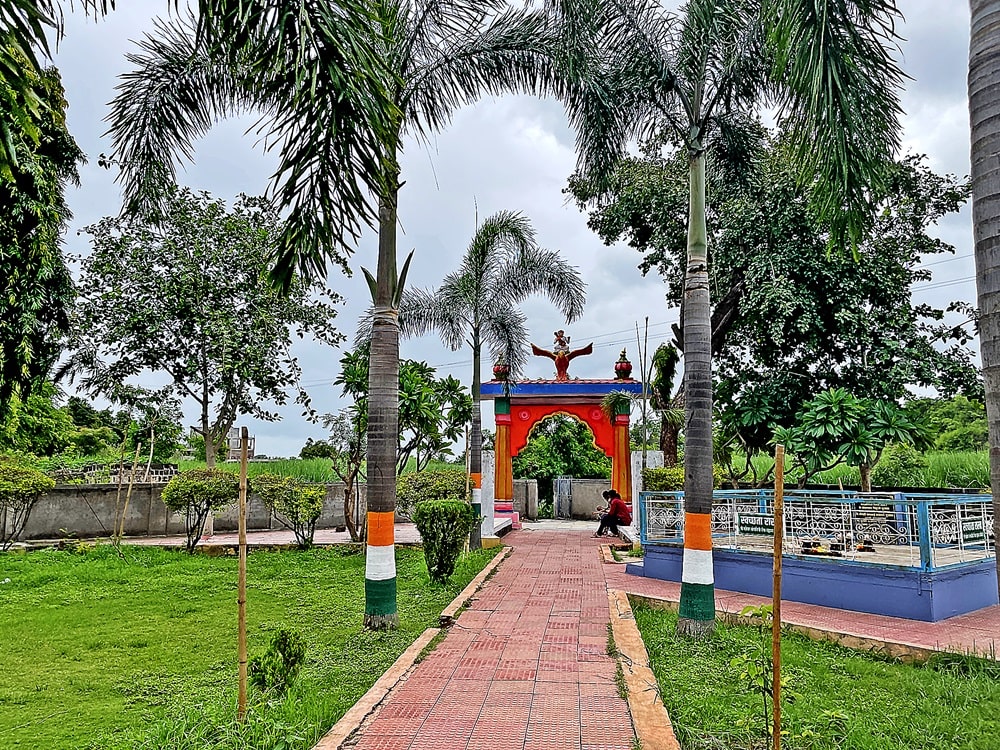
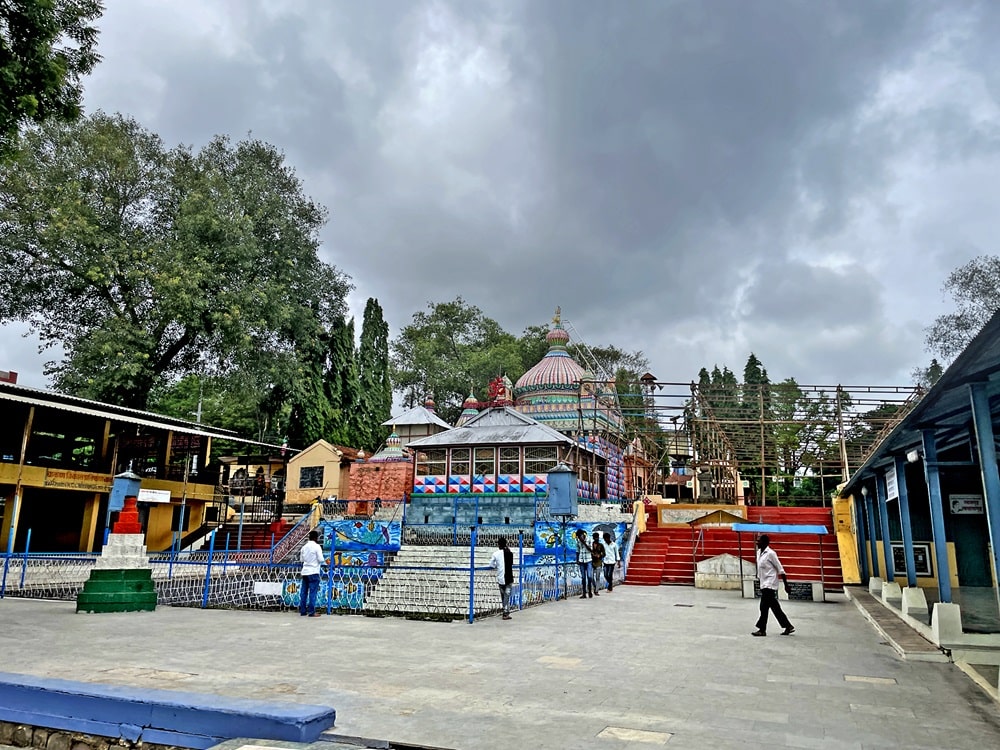
This temple is situated in Chakan, near the Pune-Nashik National Highway. At the temple entrance, there is a beautiful sculpture of Tukaram Maharaj seated on a Garud Dhwaja. A similar sculpture adorns the main temple of Tukaram Maharaj in Dehu. The temple premises are picturesque, surrounded by modern gardens. From the entrance to the temple, there is a paved pathway of paver blocks through the garden. In the courtyard, there is a Deepstambha (lamp pillar). Beyond that, in front of the temple, there is a large square Pushkarani (sacred tank) built of stone. This Pushkarani has steps on all four sides for descent. Its water is considered holy. Devotees believe that the Ganga arrives here every twelve years. During that period, a large crowd gathers for a holy dip. Many devotees share experiences of skin ailments being cured by the water of the Pushkarani.
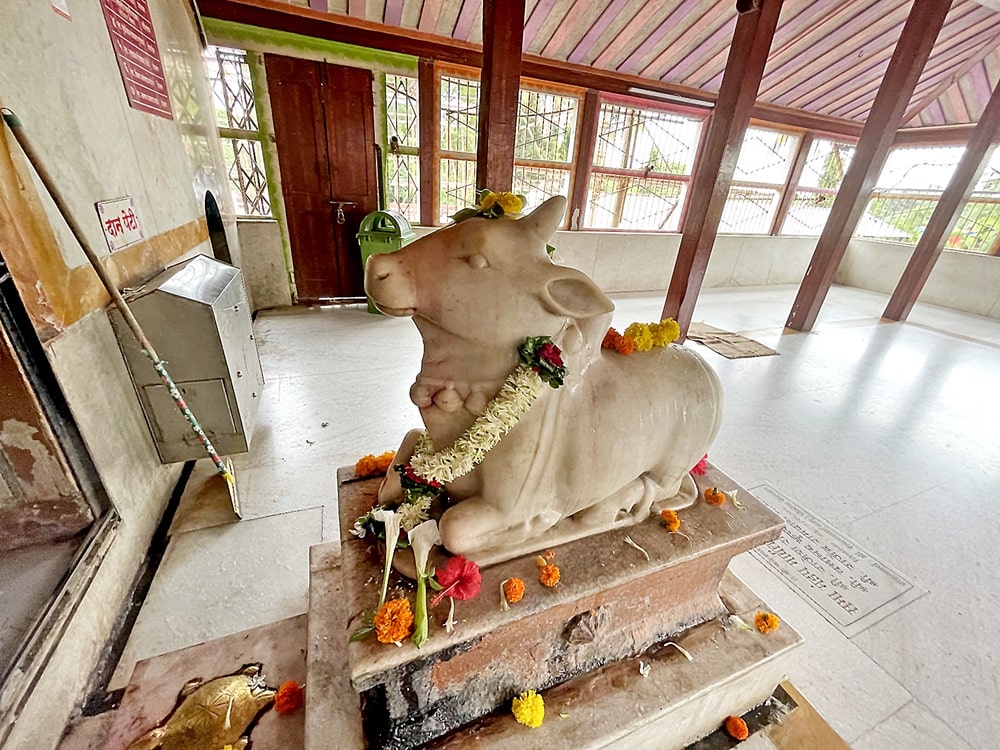
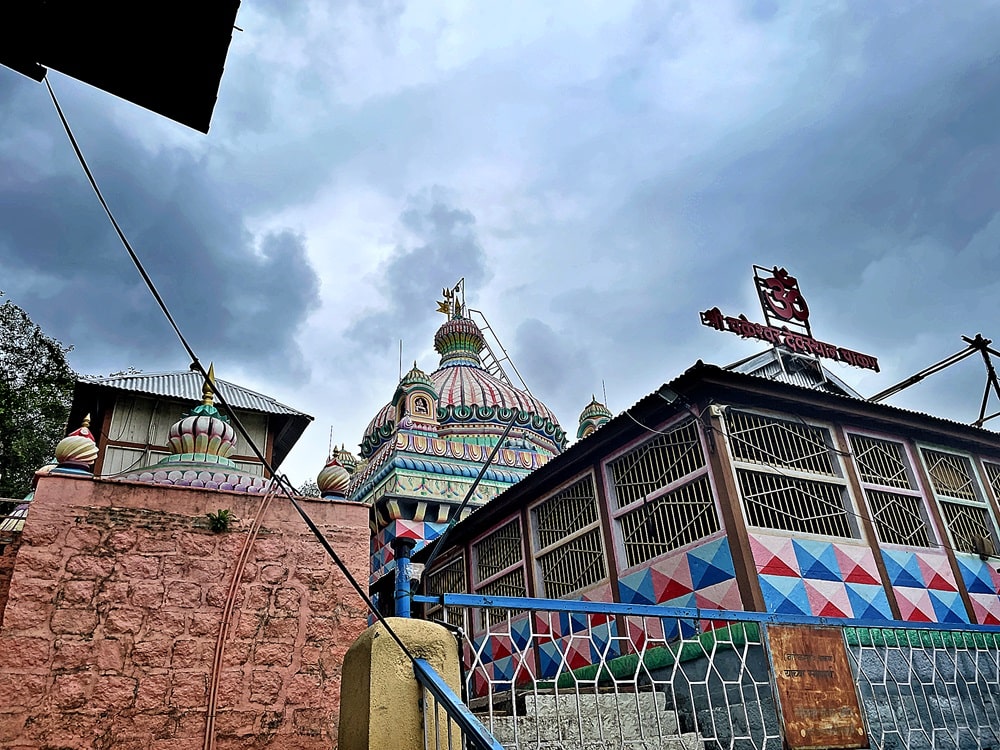
The temple stands on an elevated platform beside the square Pushkarani. The architectural style of the temple showcases a blend of Maratha and Yadav period art. The semi-open Sabhamandap (assembly hall) of the temple features wooden pillars. In the Sabhamandap, near the entrance to the Garbhagriha, on a raised platform, there is a marble idol of Nandi and in front of it, a brass idol of a tortoise. There are doors to the right and left in the Sabhamandap. In the center of the Garbhagriha is a magnificent six-foot-long black stone Shivlinga. The design here is such that when the mantra ‘Om Namah Shivaya’ is chanted in the Garbhagriha, it echoes throughout the temple premises. The outer walls of the temple are adorned with sculptures of various deities and intricate floral designs. The Shikhara (spire) and Kalash (finial) above the Garbhagriha are constructed in Maratha style using bricks and lime mortar. Sculptures depicting Puranic episodes are carved on all four sides of the Shikhara.
Within the temple complex, there are temples dedicated to Sant Savta Mali, Sant Namdev Maharaj, and Goddess Tuljabhavani, along with the Samadhi Mandir of Shandilya Rishi and a Vitthal-Rukmini Mandir. Ancient relics of Varaha, Nandi, and a tortoise, discovered during excavations by the Archaeological Department, are preserved here. The idol of the Yagnavaraha, estimated to be about two thousand five hundred years old, attests to the temple’s antiquity.
Throughout the year, various festivals and celebrations are observed with great enthusiasm at the temple. Mahashivratri is the grandest festival here. Thousands of devotees from Chakan participate in this seven-day continuous Harinam Saptah. According to official records, over two lakh devotees visit for darshan on Mahashivratri day. The Abhishek and Maha-Aarti ceremony, commencing at five o’clock in the morning, is particularly special. Every Monday in the month of Shravan, there is a large gathering of devotees. During Kartik Purnima, a Deepotsav (festival of lights) is celebrated at the temple, illuminating the entire premises with the glow of thousands of lamps. In Adhik Maas or Purushottam Maas, a special thirty-one-day continuous Harinam ceremony takes place here. Maha-Aarti is performed daily at quarter to six in the morning and half past seven in the evening. Except for the period between two and four in the afternoon, the temple remains open for darshan from quarter to six in the morning until nine o’clock at night. On Mondays and special festival days, these timings are extended.
This sacred temple stands as a testament to deep spiritual devotion, ancient architectural grandeur, and rich local cultural traditions.
The sanctum sanctorum houses the divine idol consecrated according to ancient Vedic traditions, surrounded by serene courtyards and traditional temple architecture.
Navratri, Maha Shivratri, Annual Temple Jatra & Deepotsav
Compare and book flights, secure top-rated local hotels near the temple, hire reliable guides, and rent cars instantly.
Extend your pilgrimage by visiting other highly sacred temples located nearby.


Add ₹999 more to unlock FREE SHIPPING!
Your sacred cart is currently empty.
Shop Photo FramesFill in your delivery details below to place your order.
Add comment