
Add ₹999 more to unlock FREE SHIPPING!
Your sacred cart is currently empty.
Shop Photo FramesThe Shri Siddheshwar Temple is situated in a scenic environment on the banks of the Bhima River in Rajgurunagar, a taluka headquarters in Pune district. Located on the Pune-Nashik highway, this Hemadpanthi-style temple is a major center of faith for Shiva devotees in the region. The temple is described in the Bhima Mahatmya of the Skanda Purana, where the village is referred to as ‘Khetak’. Since the Bhima Mahatmya was written in the tenth or eleventh century, it is evident that the temple has existed since before that time. The current temple structure was completed on 4 March 1785 by Trimbak Sheth, an ancestor of the Kashikar Madhave family. Records also indicate that the Bhagirathi Kund was completed on 12 October 1735. There is also a mention that Nana Phadnavis, the Prime Minister of the Peshwas, built two dharmashalas (pilgrim rest houses) here.
A short distance to the northwest of the temple lies the site of the Siddheshwar Padukas (footprints). According to legend, after Trimbak Madhave finished his prayers, Lord Siddheshwar himself would accompany him to this spot at night to see him off. It is said that because this marked the village boundary, the Lord would either vanish or turn back here.
This site is renowned as a place where prayers are answered. Devotees believe that if one makes a vow to the Lord, their wishes will be fulfilled within the specific timeframe they have pledged to the deity.
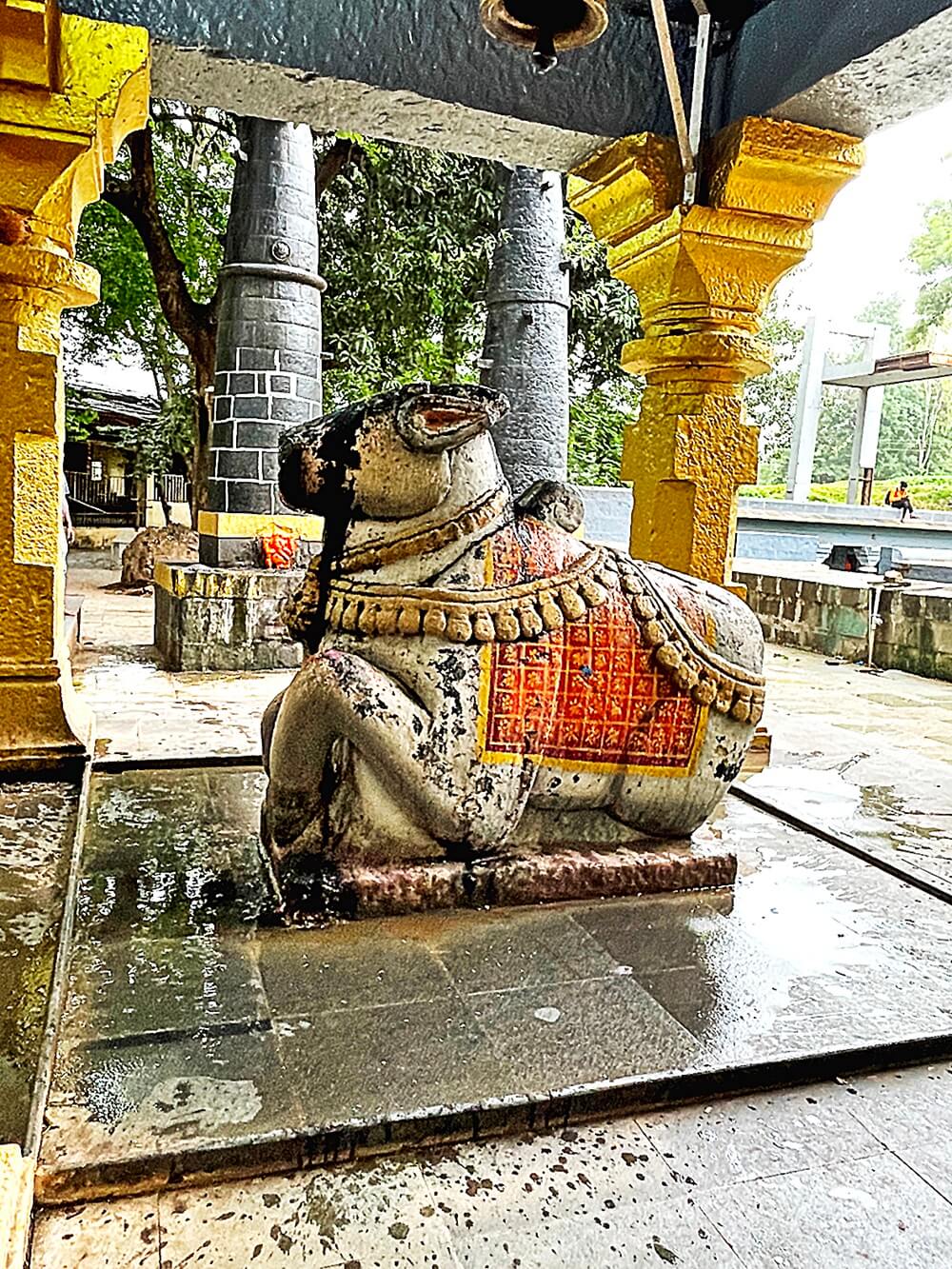
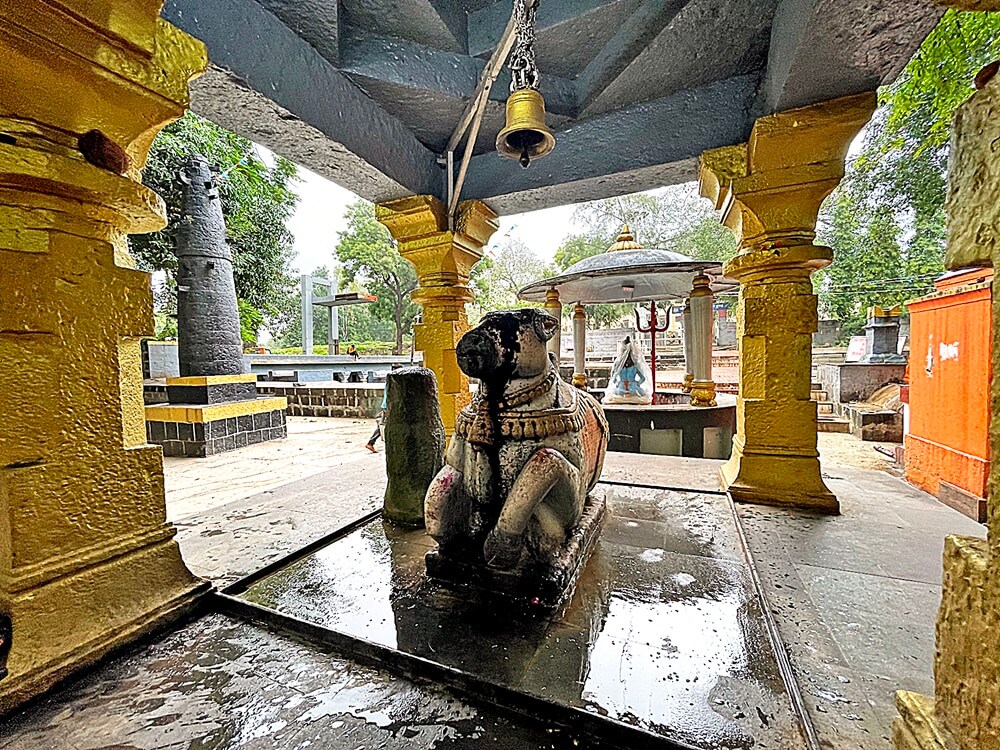
According to another legend, Kailas Mahadev Madhave used to visit the temple regularly at dawn for worship. At that time, Lord Siddheshwar would personally accompany him home. A person became suspicious about this and decided to keep watch on Madhave. However, the Lord did not approve of this intrusion. Consequently, the suspicious individual was turned into stone. This stone is now located next to the Nandi Maharaj statue inside the temple.
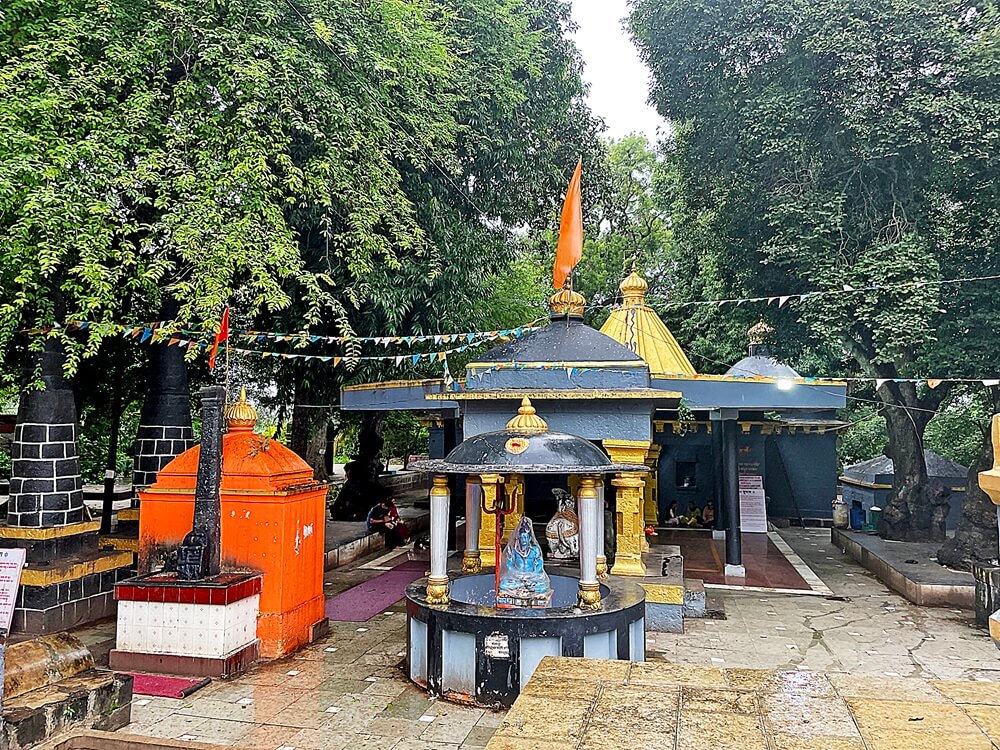
Upon entering the temple courtyard, one finds a beautifully constructed water tank on the right, the architecture of which is truly worth admiring. This tank is known as the Bhagirathi Kund and contains water throughout the year. It is used for the temple’s abhishek (ritual bathing of the deity) and other religious ceremonies. The temple premises also feature four attractive deepmalas (lamp towers), which glow brilliantly when illuminated by countless lamps during festivals.
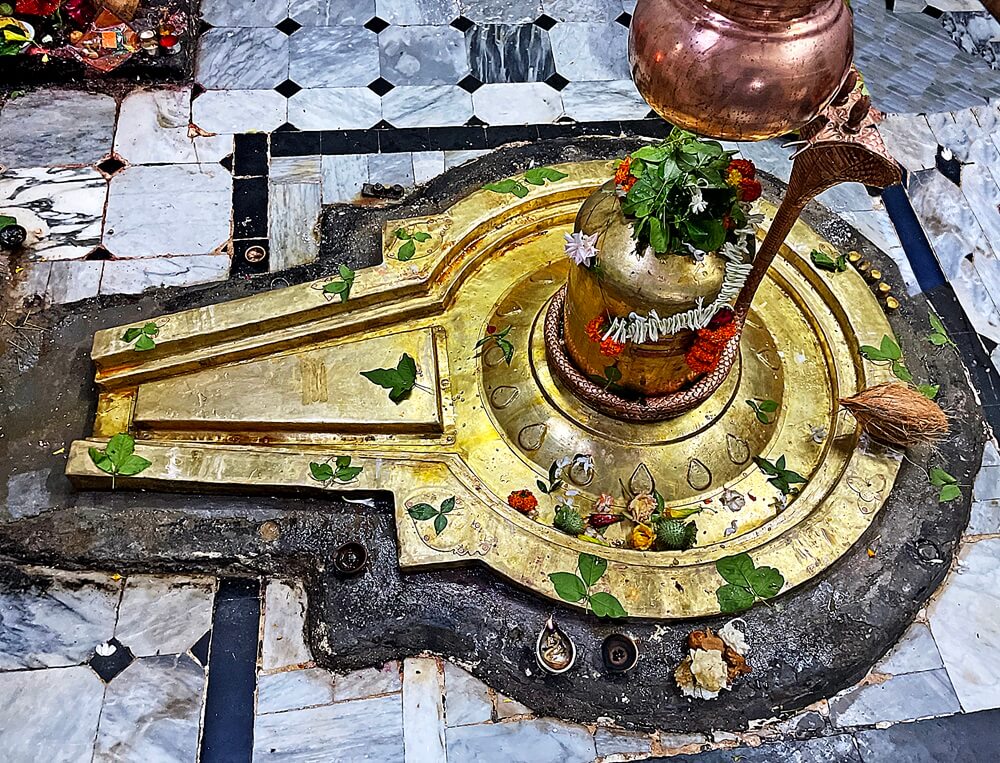
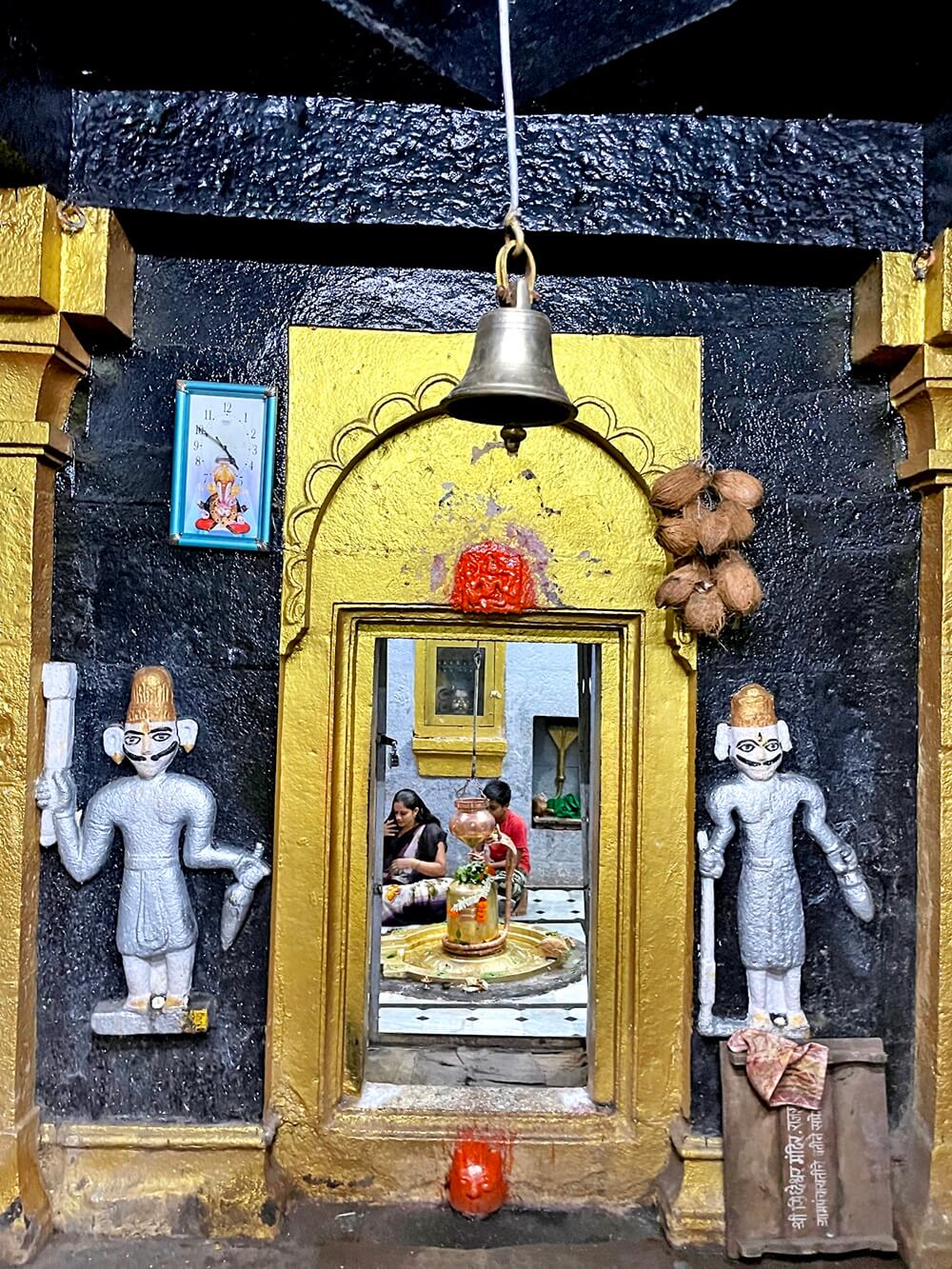
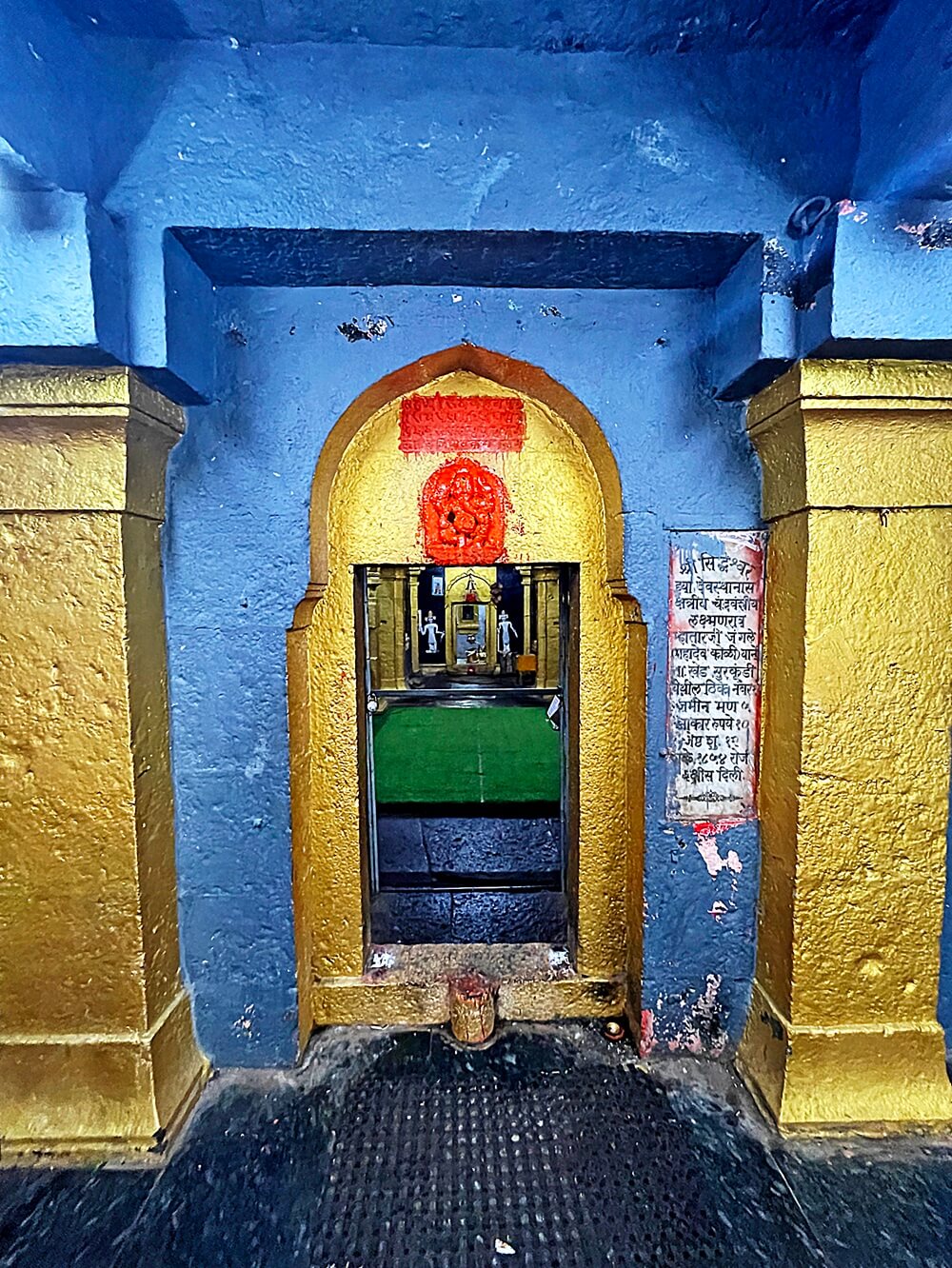
Before entering the sanctum sanctorum, there is a beautiful Nandi Mandap. Preceding this, in another hall, is a meditative idol of Nilkanth Shankar. The main assembly hall features four magnificent, intricately carved pillars, representing a unique specimen of architecture. At the entrance of the sanctum, the gatekeepers Jaya and Vijaya are carved, with an image of Lord Ganesha above the frame. Inside the sanctum resides the Swayambhu (self-manifested) Linga of Siddheshwar, with Goddess Parvati installed on one side.
In the temple courtyard, to the left, is another small Shiva temple dedicated to Pataleshwar, while to the right are the Ganesha Vruksha temple, Maruti temple, Dattatreya temple, and the temple of Shri Kartikswami. With its tall trees and spacious courtyard, this black stone structure lends a unique grandeur to the entire area.
During the holy month of Shravan, thousands of Shiva devotees visit the temple daily for darshan. A grand festival is held here on Mahashivratri, during which the palanquin procession of Lord Siddheshwar is taken out. Another significant festival here is Tripurari Purnima. On this day, both the Siddheshwar temple and the adjacent Kartikswami temple are illuminated with lamps. Only once a year, on Tripurari Purnima, are women permitted to have darshan of Kartikswami, which leads to a large presence of female devotees during this celebration. The vehicle of Kartikswami is the peacock, and it is customary to offer peacock feathers here. Devotees often take the offered peacock feather home, where it is worshipped ritually and preserved with care.
This sacred temple stands as a testament to deep spiritual devotion, ancient architectural grandeur, and rich local cultural traditions.
The sanctum sanctorum houses the divine idol consecrated according to ancient Vedic traditions, surrounded by serene courtyards and traditional temple architecture.
Navratri, Maha Shivratri, Annual Temple Jatra & Deepotsav
Compare and book flights, secure top-rated local hotels near the temple, hire reliable guides, and rent cars instantly.
Extend your pilgrimage by visiting other highly sacred temples located nearby.


Add ₹999 more to unlock FREE SHIPPING!
Your sacred cart is currently empty.
Shop Photo FramesFill in your delivery details below to place your order.
Add comment