
Add ₹999 more to unlock FREE SHIPPING!
Your sacred cart is currently empty.
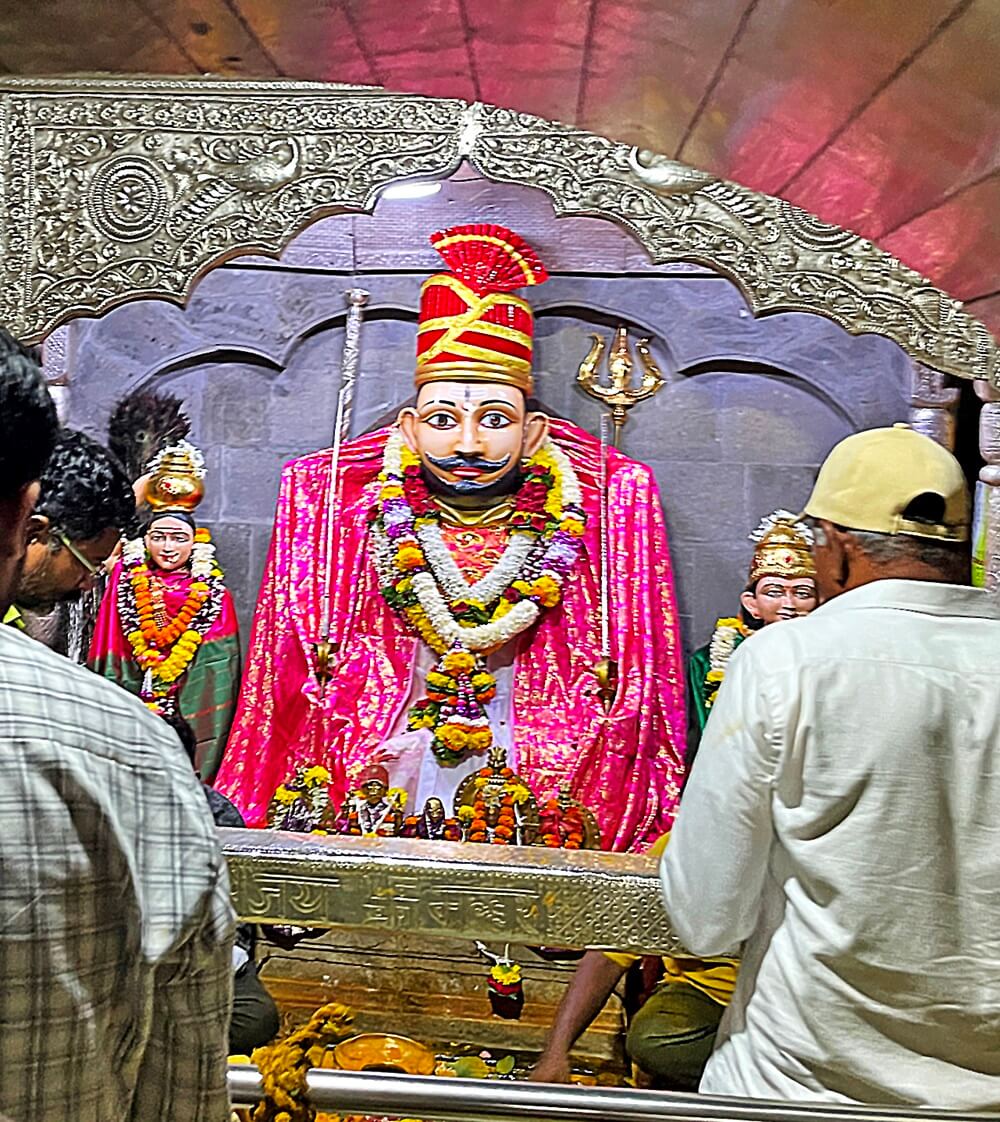
Shop Photo FramesSituated on the banks of the Bhima River in the Khed taluka of Pune district, the Shri Khandoba Devasthan is an important center of faith for the Bahujan community. Recognized by the Government of Maharashtra as a ‘B’ grade pilgrimage site, this temple is known as ‘Prati-Jejuri’. It is the only temple in the state where the ‘Murli’ tradition, associated with Khandoba, is considered strictly prohibited, and only the ‘Waghyas’ perform the service of the deity. A significant astronomical feature of this temple is that between March 13 and 17, the rays of the setting sun fall directly upon the idol of Khandoba. Thousands of devotees visit Nimgaon every year to witness this spectacle.
The oldest historical reference to the Nimgaon Khandoba temple dates back to Margashirsha Shuddha Panchami, Shake 1347, which is November 26, 1424. It is believed that Khandoba manifested at this site on this very day. In the medieval period, this region was known as ‘Nagna’. In later years, the temple was expanded during the Maratha Empire. In 1702 AD, the soldiers of Emperor Aurangzeb attacked the temple, causing major damage to the original mandapa, the Nandi, and the pinnacle (kalash). However, the main linga in the sanctum sanctorum remained unharmed. The temple regained its glory during the Peshwa era. The family of Gangadhar Yashwant Chandrachud, a trusted Diwan of the Peshwas, renovated the temple in 1738 AD. Subsequently, in 1769 AD, Sardar Malharrao Gaikwad of Baroda completed the construction of an impregnable stone fort and a 24-foot-high fortification wall around the temple. This temple is included among the eleven main sites of Khandoba in Maharashtra. In modern times, in October 2024, the Government of Maharashtra transferred approximately 24 acres of land in the temple premises for the development of the Devasthan. This is a major step taken by the government to preserve this historical site.
The legend of Khandoba’s manifestation at Nimgaon states that once, Lord Khandoba left Jejuri Gad in search of peace, accompanied by his minister, Hegadi. Seeing the natural serenity and the beauty of the Bhima River in the Nimgaon area, Khandoba decided to reside there. During his stay, Khandoba remembered his wife, Banai, and ordered Minister Hegadi to bring her. However, instead of bringing Banai, Minister Hegadi presented a Murli disguised as Banai before Khandoba. The deity immediately realized the deception. Enraged by this, Khandoba cursed the Murli, saying, “You shall never return here,” and transformed her into stone. Even today, the flat stone slab among the temple steps is known as the ‘Murli Shila’. Due to this mythological context, the Murli tradition is not practiced at the Nimgaon temple. Here, there is no Waghya-Murli pair; only male devotees, known as Waghyas, perform devotion to Khandoba. It is believed that Khandoba manifested in three different places in sequence, which include Dhamantek, Kadepathar, and the current site at Nimgaon. Regarding the Waghya tradition, it is said that after making a vow for the birth of a child or for a son’s health, the child is offered to the deity. That same son later becomes a Waghya, serves Khandoba, and preserves folk culture through ‘Jagran-Gondhal’.
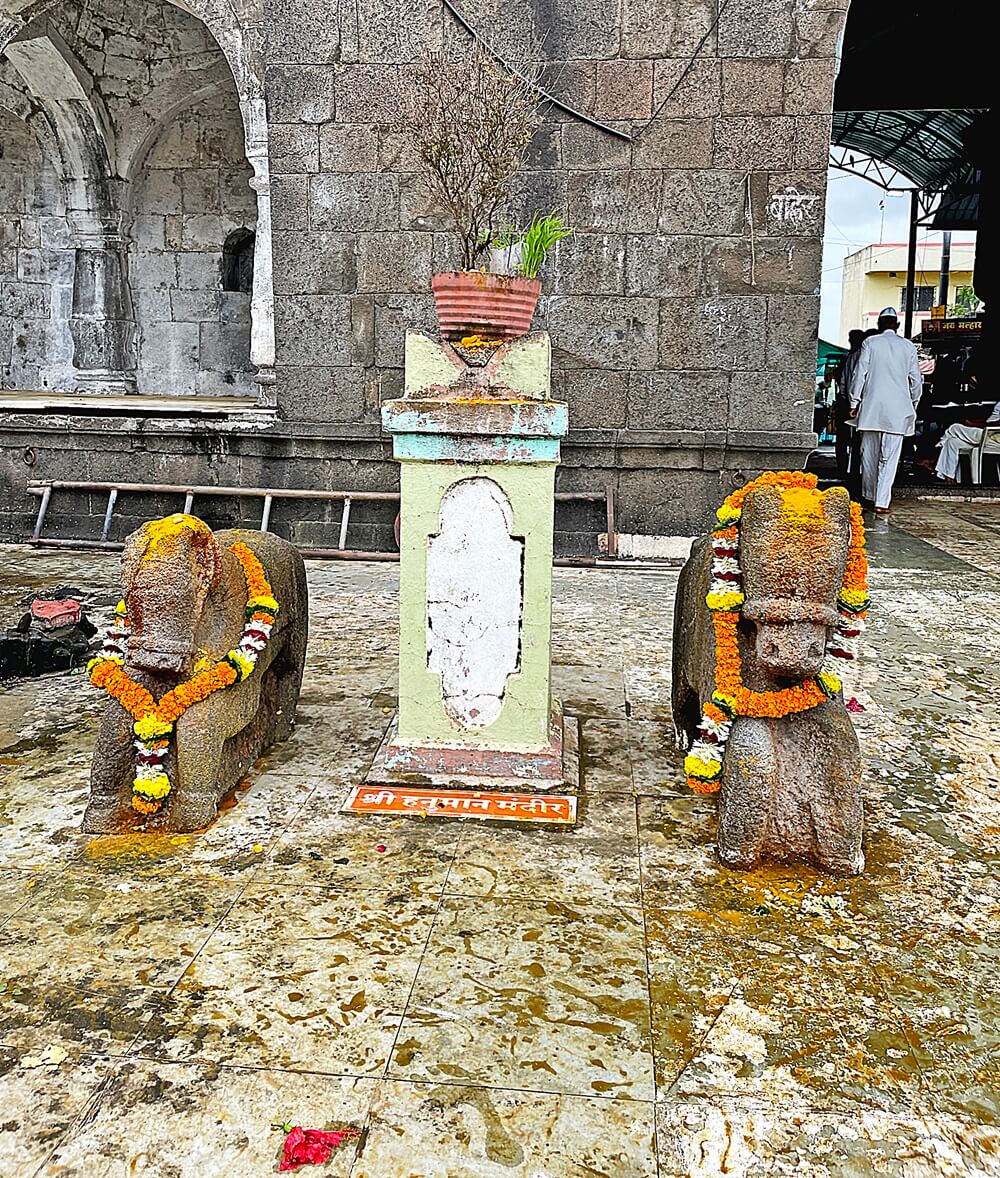
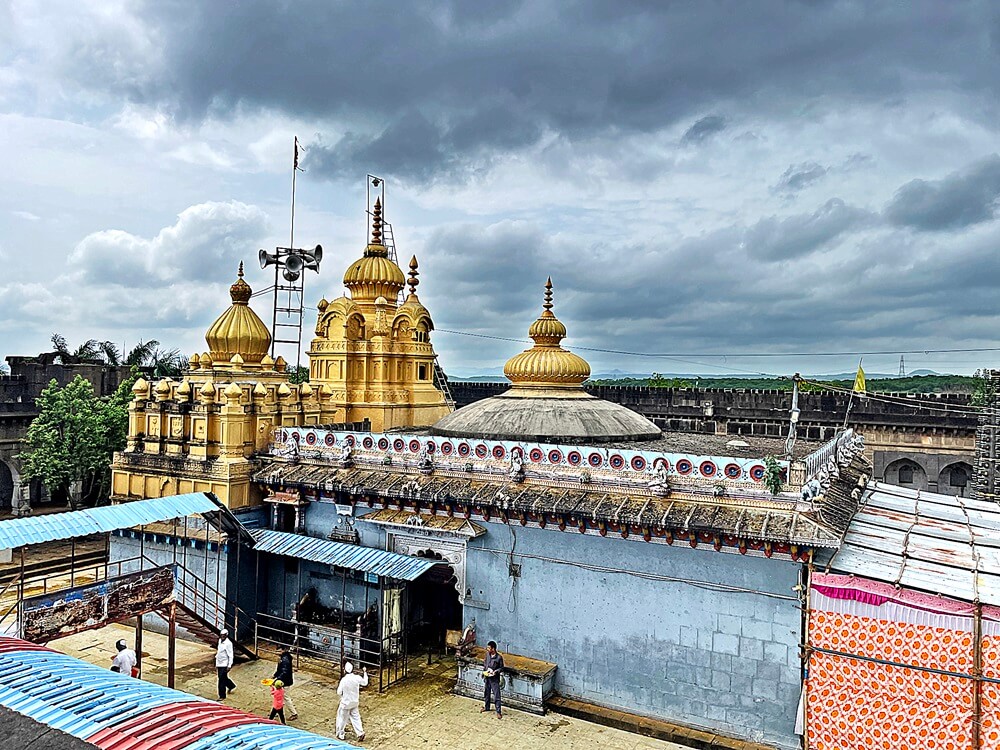
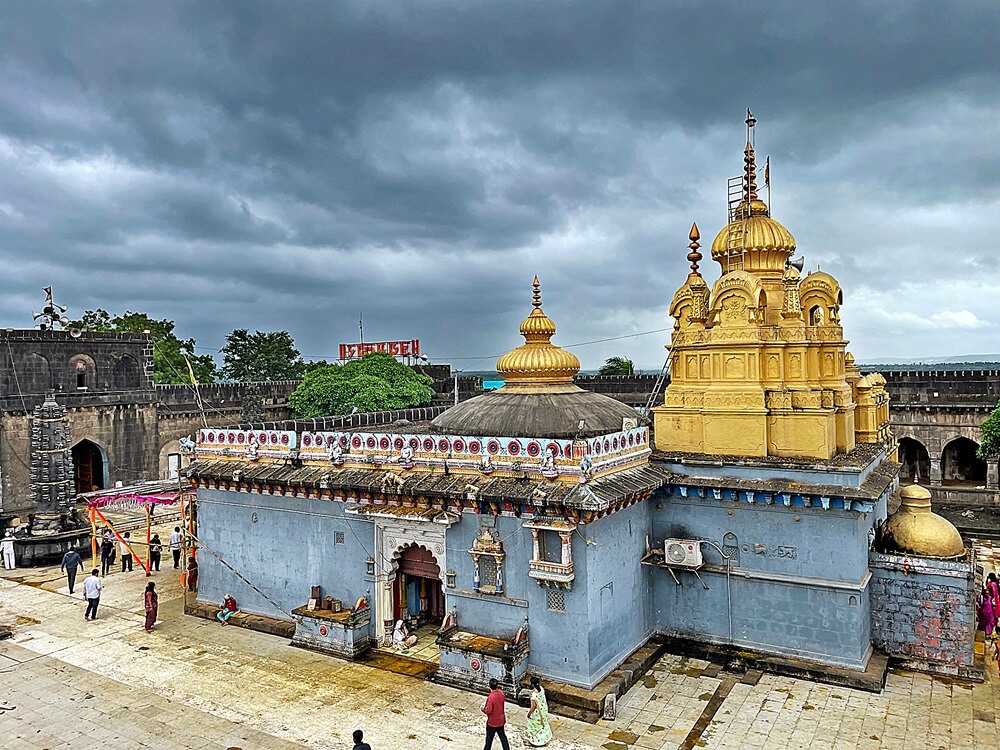
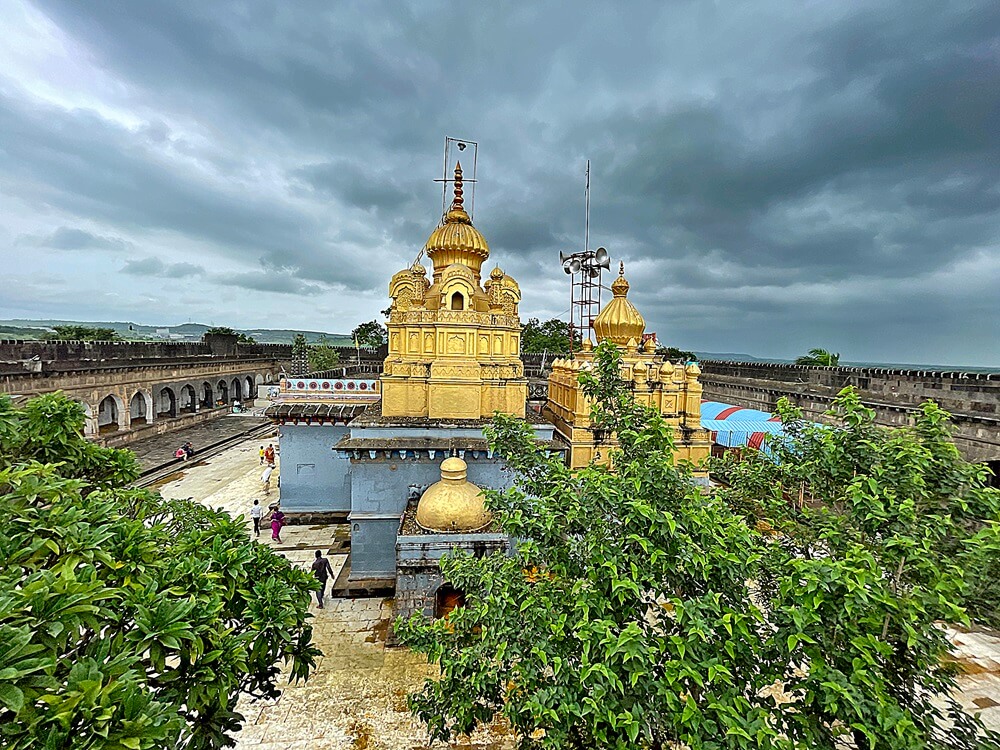
The temple is located on a small hill to the north of Nimgaon village, a short distance from Rajgurunagar on the Pune-Nashik National Highway. Due to the high fortification wall around it, the temple resembles a fort. There are entrances to the temple from three directions: east, west, and south. The main eastern entrance is known as the ‘Dawadi Darwaza’. Idols of Ganpati and Hanuman are installed in the niches of the temple entrance. There are rows of cloisters (ovaris) in the temple premises for devotees. The architectural style of this temple is considered a beautiful specimen of Peshwa-era architecture. It is primarily constructed from black stone. The Nagarkhana above the temple entrance and the intricate carvings beneath it are characteristic of the Maratha architectural style.
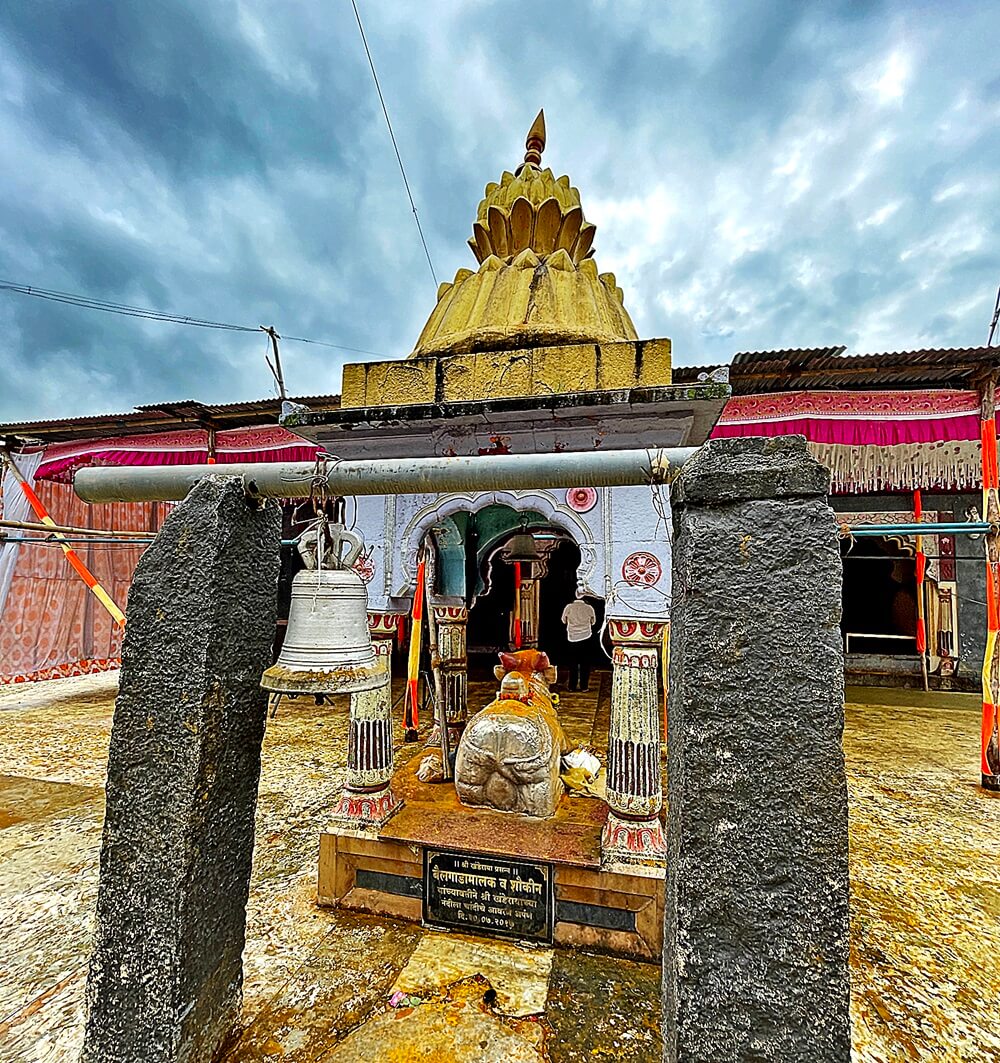
In front of the main temple, there are three tall stone lamp pillars (Deepmalas). The northern lamp pillar bears inscriptions. Directly in front of the lamp pillar is the black stone Nandi mandapa. To the left of this mandapa, two large Portuguese-style bells, with the year 1891 engraved on them, are hung from two tall stones. The temple’s assembly hall (sabhamandapa) is octagonal and dome-shaped. Its unique feature is that there are no pillars in the center; the entire dome rests on eight arches. Beyond the sabhamandapa is the sanctum sanctorum, where Khandoba’s self-manifested (swayambhu) pancha-linga rests in a large yoni-patra. Along with the main linga, there are beautiful metal festival idols of Banai, Mhalasa, Bhairav, and Jogeshwari. On the back wall are stone idols of Khandoba and Mhalasa. The temple spire is tall and intricately carved, featuring sculptures of various deities and ornamental designs. It is said that there are four secret underground tunnels in the temple, and an old legend suggests that one of these tunnels leads to the mansion of the Peshwa’s Diwan, Chandrachud.
The Nimgaon Khandoba temple has a tradition of celebrating various festivals, fairs, and events with great enthusiasm throughout the year. The deity’s manifestation day is celebrated on Margashirsha Shuddha Panchami, followed by Champa Shashthi, which marks the completion of Khandoba’s Navratri and the ceremony of applying turmeric to the deity. During this period, a seven-day unbroken Harinam Saptah, kirtans, and mass feeding programs are organized on a large scale.
Khandoba’s wedding ceremony is held on Magh Purnima. According to local records, about 1.5 to 2 lakh devotees gather here for darshan at that time. On Chaitra Purnima, which is Hanuman Jayanti, the deity’s procession (varat) is taken out. The old tradition of celebrating the ‘Shilangana’ festival on Dussehra is still maintained here today.
On this day, a sword held by Khandoba is taken out for Shilangana, and the border-crossing ritual is performed. During all these festivals, the entire area turns bright yellow with the chanting of “Yelkot Yelkot Jai Malhar” and the showering of Bhandara (turmeric powder).
This sacred temple stands as a testament to deep spiritual devotion, ancient architectural grandeur, and rich local cultural traditions.
The sanctum sanctorum houses the divine idol consecrated according to ancient Vedic traditions, surrounded by serene courtyards and traditional temple architecture.
Navratri, Maha Shivratri, Annual Temple Jatra & Deepotsav
Compare and book flights, secure top-rated local hotels near the temple, hire reliable guides, and rent cars instantly.
Extend your pilgrimage by visiting other highly sacred temples located nearby.


Add ₹999 more to unlock FREE SHIPPING!
Your sacred cart is currently empty.
Shop Photo FramesFill in your delivery details below to place your order.
Add comment