
Add ₹999 more to unlock FREE SHIPPING!
Your sacred cart is currently empty.
Shop Photo FramesThe Datta Sampradaya, which carries forward the unique tradition of Datta devotion in Maharashtra, has flourished for centuries. There is deep reverence for Lord Dattatreya in various Hindu sects like Mahanubhav, Nath, Warkari, and Samarth as well. In the Puranas and five modern Upanishads, Lord Datta is revered as the upholder of Varnashrama Dharma, the ideal embodiment of the Guru principle (Guru-tattva), and the teacher of Yoga. At the Datta Mandir Sansthan in Ruibhar, located in Dharashiv Taluka, Lord Dattatreya is worshipped with great devotion. Along with Datta devotees from the district, pilgrims from various sects come here in large numbers for Darshan.
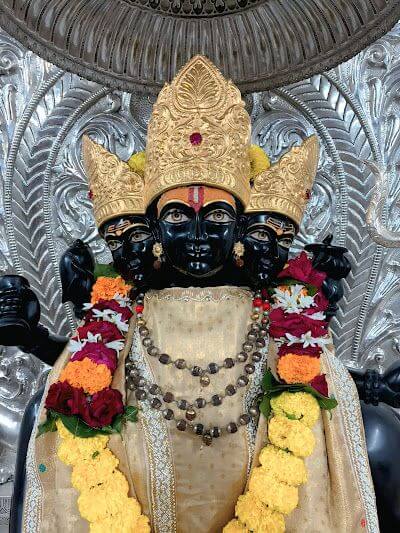
Although the worship of Lord Dattatreya in Maharashtra dates back to the Puranic period, the Datta Sampradaya was widely propagated here due to Shri Narasimha Saraswati, an incarnation of Lord Datta. The era of Narasimha Saraswati is from 1378 AD to 1458 AD. According to the research book *’Datta Sampradayacha Itihas’* by R. C. Dhere, Lord Datta is depicted in a three-faced (Trimukhi) form in the *’Guru Charitra’* written by Saraswati Gangadhar around 1548 AD (Shake 1470). In the Aarti *’Trigunatmak Traimurti’* composed by Sant Eknath (1523 AD to 1599 AD), Lord Datta is also envisioned in a three-faced form. Although Lord Datta is generally worshipped in this form, at many places he is also revered in a single-faced (Ekmukhi) form.
In Maharashtra, Datta worship transcends not only sects but also religions. Along with Hindu devotees, Muslim devotees are also among the worshippers of Lord Datta. Various legends regarding the birth of Lord Datta are prevalent in the Puranas and modern Upanishadic Datta Charitras. A popular legend states that when Sage Narada praised the chastity and piety (Satitva) of Anasuya, jealousy arose in the minds of the consorts of Brahma, Vishnu, and Mahesh. To test her purity, they sent their husbands disguised as guests to Anasuya. At that time, Anasuya’s husband, Sage Atri, was not present in the ashram. Anasuya worshipped these guests with devotion and served them food. To this, they put forth a condition: “We will partake of this meal, provided you serve it without clothes.” Remembering her husband, Anasuya sprinkled sacred water (Teertha) upon the heads of the three gods. Immediately, all three were transformed into small infants.
Meanwhile, exhausted from waiting for their husbands, the goddesses arrived at Sage Atri’s ashram in search of them. Seeing their husbands transformed into infants, they begged Anasuya for forgiveness. Seeing their distressed state, Anasuya restored the gods to their original forms. Thereafter, in accordance with her wish, the gods agreed to be born from her womb. In due course, Chandra was born from the brilliance of Lord Brahma, Dattatreya from the brilliance of Lord Vishnu, and Durvasa from the brilliance of Lord Shiva on earth. The Brahma Purana also states that Dattatreya is an incarnation of Lord Vishnu. Notably, in the Mahabharata and the epic *’Shishupala Vadha’* by poet Magha, it is stated that Dattatreya’s father was not Atri, but that he belonged to the Atri lineage (‘Atri-gotraja’).
Regarding the construction of the Datta Temple in Ruibhar, it is said that about forty to forty-five years ago, following a divine vision (Drishtant) from Lord Dattatreya, Appasaheb Ruikar built this temple here. Initially, the villagers gave him twenty Gunthas of land for the temple. Later, seeing his devotion to Lord Datta, spiritual authority, and public service, the villagers donated another hundred Gunthas of land. A grand temple was constructed here through the donations of devotees. Every Thursday, thousands of devotees visit the temple for Darshan.
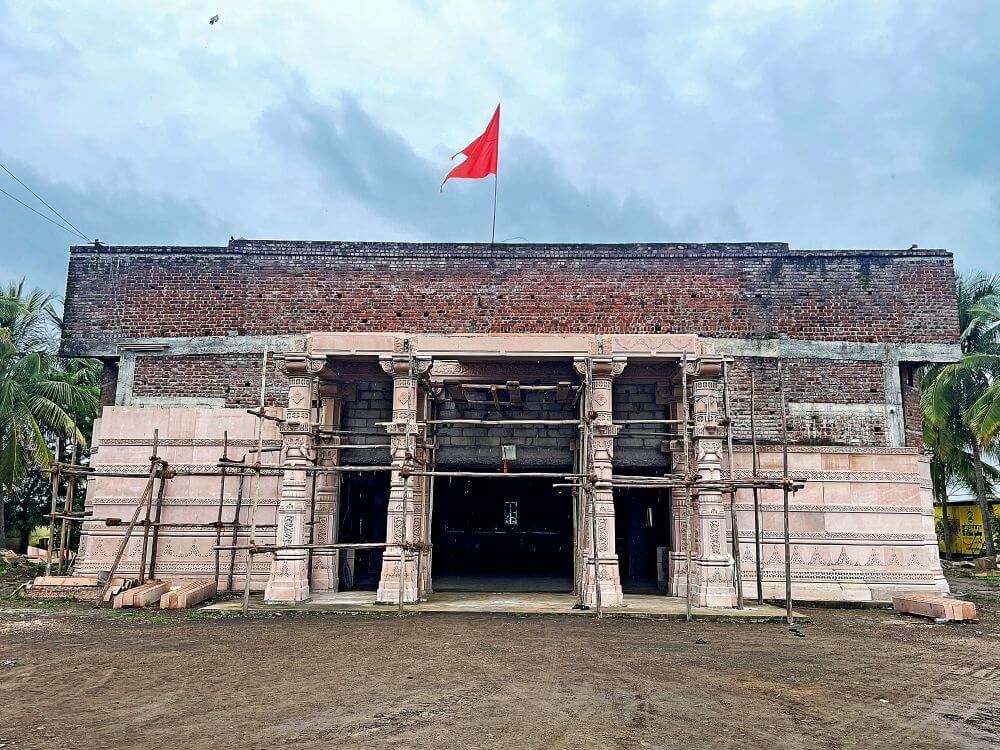
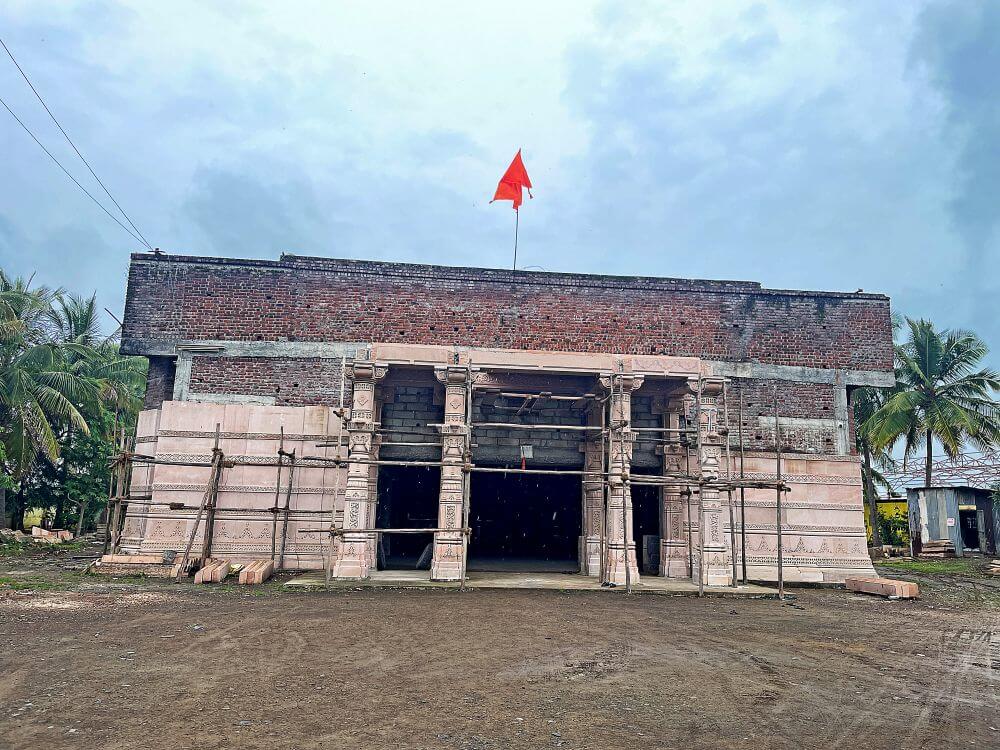
Located in the central part of Ruibhar village, the temple features a large stage in its spacious courtyard. Programs such as Bhajan, Kirtan, music, and Pravachan (spiritual discourse) are organized here every Thursday and during festival times. Further ahead, the temple structure consists of a Mukhamandapa (entrance porch), Sabhamandapa (assembly hall), and Garbhagriha (sanctum sanctorum). The temple is constructed using Rajasthani Dholpur stone. Four carved pillars in the Mukhamandapa are connected to each other by arched gateways. Ahead lies the Sabhamandapa with three entrance doorways. All three entrance doorways have ornate door frames (Dwarashakhas), and on the lintel (Lalatabimba) of the central doorway, there is a sacred icon (Ishtashilpa) along with miniature spire sculptures on the archway. The base thresholds (Mandarakas) of all three doorways feature moonstones (Chandrashilas).
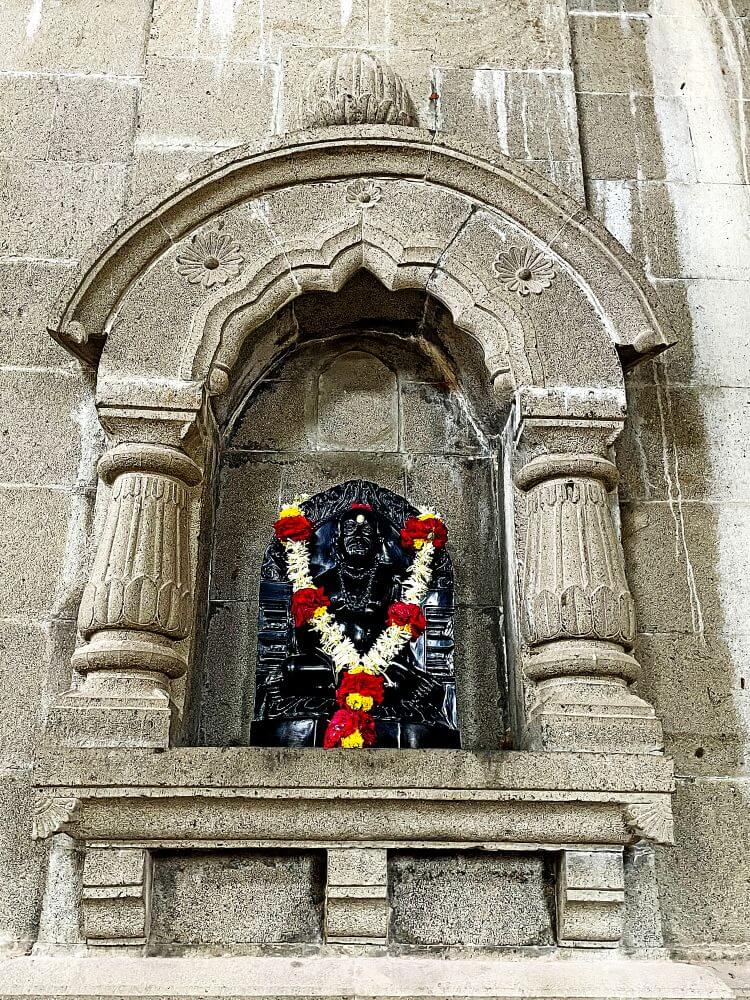
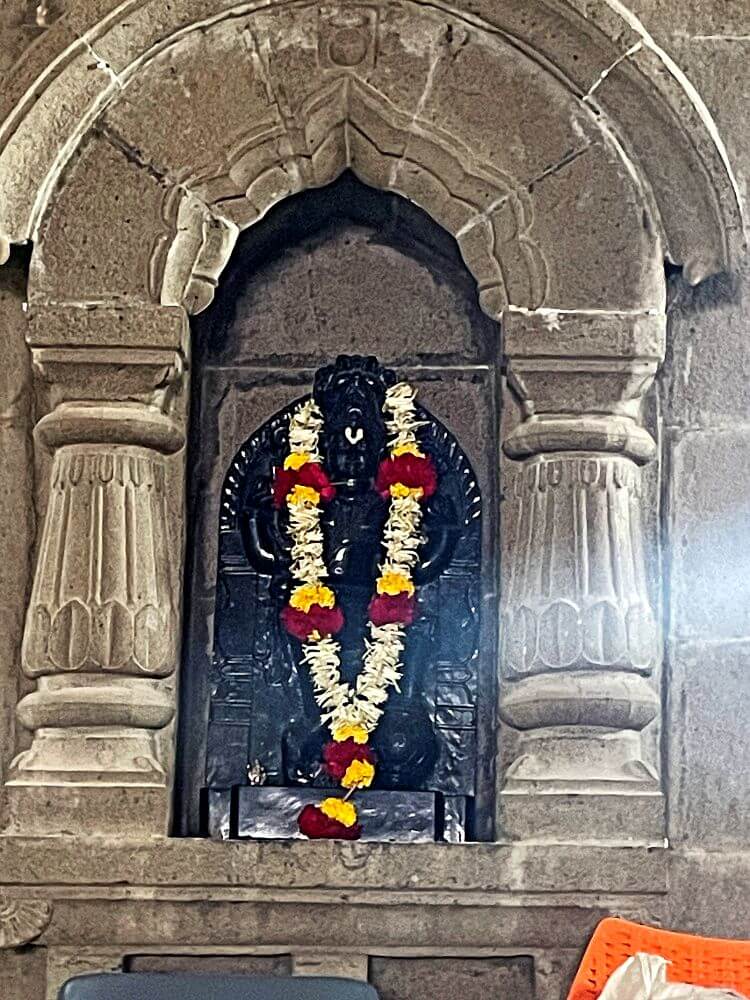
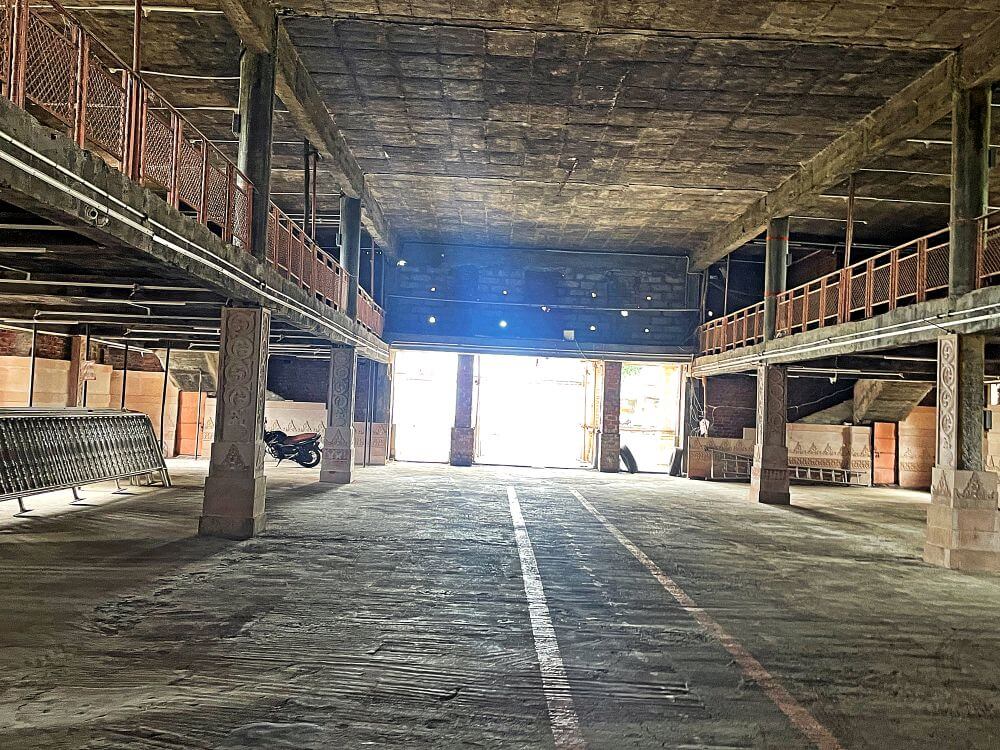
The Sabhamandapa here is spacious, measuring 105 feet long and 70 feet wide. Inside the assembly hall, balconies (Sajjas) are constructed on circular pillars on the left and right sides. Standing on these balconies, devotees behold the holy Palkhi (palanquin procession) of Lord Dattatreya during festival times. Ahead, on a large raised platform, sits the Garbhagriha carved in stone. One enters this sanctum sanctorum by climbing six steps. On the front wall of the Garbhagriha, there are niches (Devakoshtas) on both sides of the entrance. On either side of the entrance stand two carved pillars adorned with arched festoons. The entrance features ornate door frames and an idol of Lord Ganesha on the lintel. Inside the sanctum, a three-faced marble idol of Lord Dattatreya rests upon a Vajrapitha (sacred pedestal). The halo (Prabhavali) behind the idol features intricate floral and leaf carvings. A circumambulatory path (Pradakshina Marga) surrounds the outer side of the Garbhagriha.
On the roof of the Mukhamandapa, there are two decorative architectural pediments (Bashingi structures) at the front and one each on the left and right sides. In the center is a stepped square pyramid-shaped Shikhara (spire). At the top of the spire is a Stupika surmounted by a Kalash (pinnacle). The roof of the Sabhamandapa is enclosed on all sides by a protective parapet wall. Above the Garbhagriha, there is a square Shikhara about 51 feet high with 9 tiers. At the apex of the spire is a domed Stupika, topped with a Kalash and a sacred flag (Dhvajapataka). In the temple courtyard, there is a Dhyan Mandir (meditation hall) for Datta devotees to engage in Namajapa (chanting of holy names), Mantra Sadhana, Yoga, and meditation. In the hall located in the courtyard, marriages, Annachhatra (free meal service), and events like Kirtan and Pravachan during festival times are organized. Adjacent to the hall is a five-story Bhakta Niwas (devotee accommodation) building.
Datta Jayanti is the main annual festival celebrated here with great enthusiasm. On this occasion, a seven-day Harinam Saptah is organized from Margashirsha Shukla Ashtami to Purnima. During this period, events such as Bhajan, Kirtan, Pravachan, and Mahaprasad are organized at the temple. During these seven days, thousands of devotees come to seek the Lord’s blessings and fulfill their vows. On the day of Purnima, Datta Janmotsav (birth celebration of Lord Datta) is celebrated in the temple. At this time, the Palkhi procession of Lord Dattatreya proceeds on a village circumambulation (Grampradakshina) accompanied by dancing elephants and horses, the rhythm of Lezim, the thrum of Dhol-Tasha drums, and the showering of Gulal (vermilion powder). Devotees can offer their prayers and have Darshan at the temple from 6:00 AM to 8:00 PM.
This sacred temple stands as a testament to deep spiritual devotion, ancient architectural grandeur, and rich local cultural traditions.
The sanctum sanctorum houses the divine idol consecrated according to ancient Vedic traditions, surrounded by serene courtyards and traditional temple architecture.
Navratri, Maha Shivratri, Annual Temple Jatra & Deepotsav
Compare and book flights, secure top-rated local hotels near the temple, hire reliable guides, and rent cars instantly.
Extend your pilgrimage by visiting other highly sacred temples located nearby.


Add ₹999 more to unlock FREE SHIPPING!
Your sacred cart is currently empty.
Shop Photo FramesFill in your delivery details below to place your order.
Add comment