
Add ₹999 more to unlock FREE SHIPPING!
Your sacred cart is currently empty.
Shop Photo FramesKnown as the supreme seat of the Kadsiddheshwar tradition of Lingayat Shaivites, the Siddhagiri Mahasamsthan or Math is located in the village of Kaneri in Karveer Taluka. It is considered the *Sthirapitha* (stable seat) of the Kadsiddheshwar tradition. This religiously significant Math is also famous as a center for religious tourism. There is an ancient temple of Lord Mahadeva here, also known as the Kadappa Temple. It is said that the presence of Lord Mahadeva at this site dates back to approximately the 7th century. Devotees constantly flock here to seek the blessings of this ancient Mahadeva.
It is said that the Siddhagiri Math at Kaneri has a tradition spanning about 750 years. Revananath of the Navnath Sampradaya is considered the founder and the first Kadsiddheshwar of the Kadsiddheshwar tradition. The life of Revananath is mentioned in the text ‘Navnath Bhaktisar’. He is considered a contemporary of Gorakshanath. According to the book ‘Nath Sampradayacha Itihas’ by the great researcher Ra. Chi. Dhere, Gorakshanath lived between 1050 and 1150 AD. This is also the period of Revananath. He was a Nath-Siddha. Ra. Chi. Dhere has stated that there was also a Nath-Siddha named Kadsiddha. Revananath and Kadsiddha have connections to both the Nath tradition and the Lingayat tradition. It is said that this Revananath or Kadsiddheshwar established the Math at Kaneri.
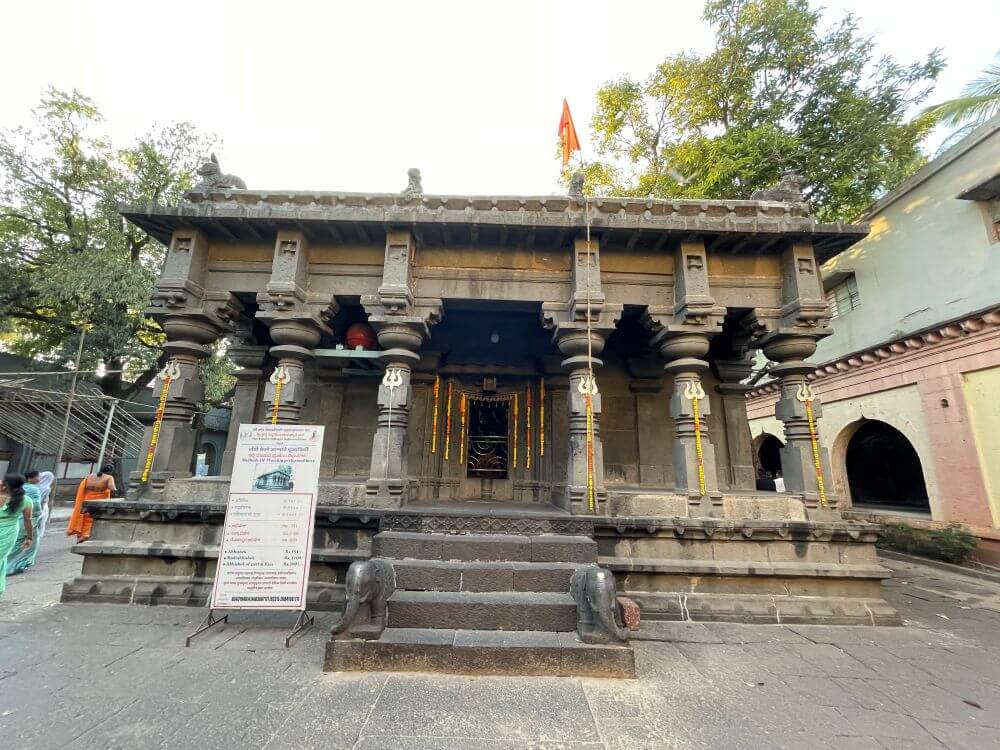
Within the premises of this Math lies this ancient Shiva temple, known by the name of Kadsiddheshwar himself. The temple was renovated in the 14th century. One enters the temple premises via steps through a grand entrance gate built on the road. Near this entrance, there is a colossal statue of Shankara and Nandi. As one ascends the steps, there are large statues of royal elephants on both sides. Above these elephants are the mahouts and howdahs. One howdah features exquisite statues of musicians, while the other depicts women setting out for worship. Directly ahead is the stone main gate of the Mahadeva temple complex. In a niche within this gate stands a beautiful, upright statue of Lord Ganesha.
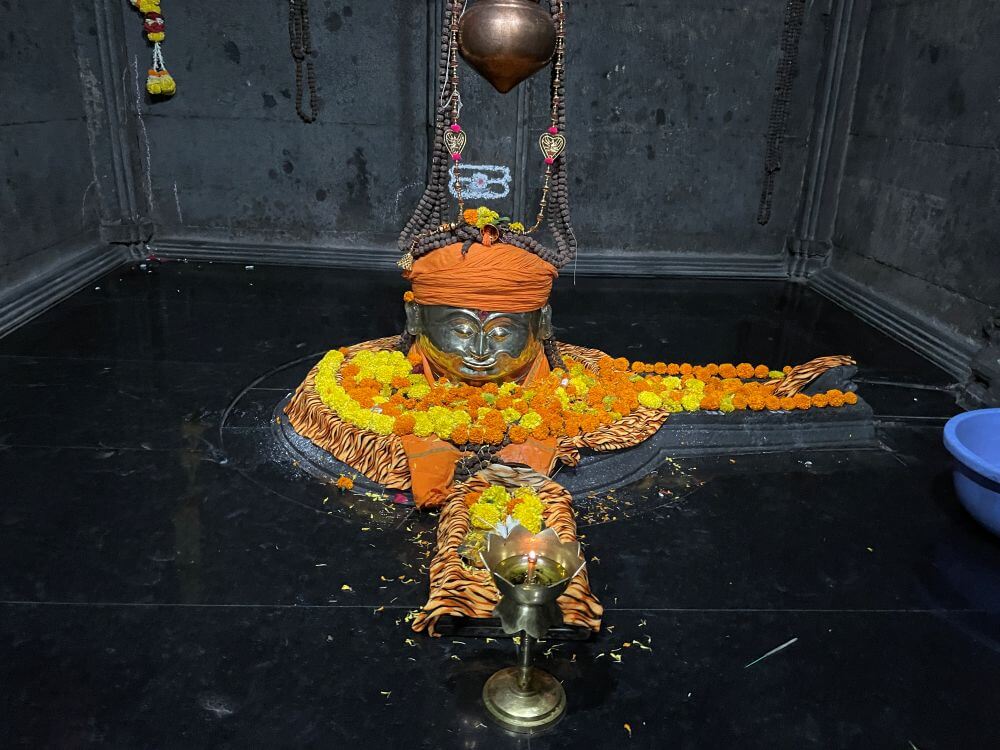
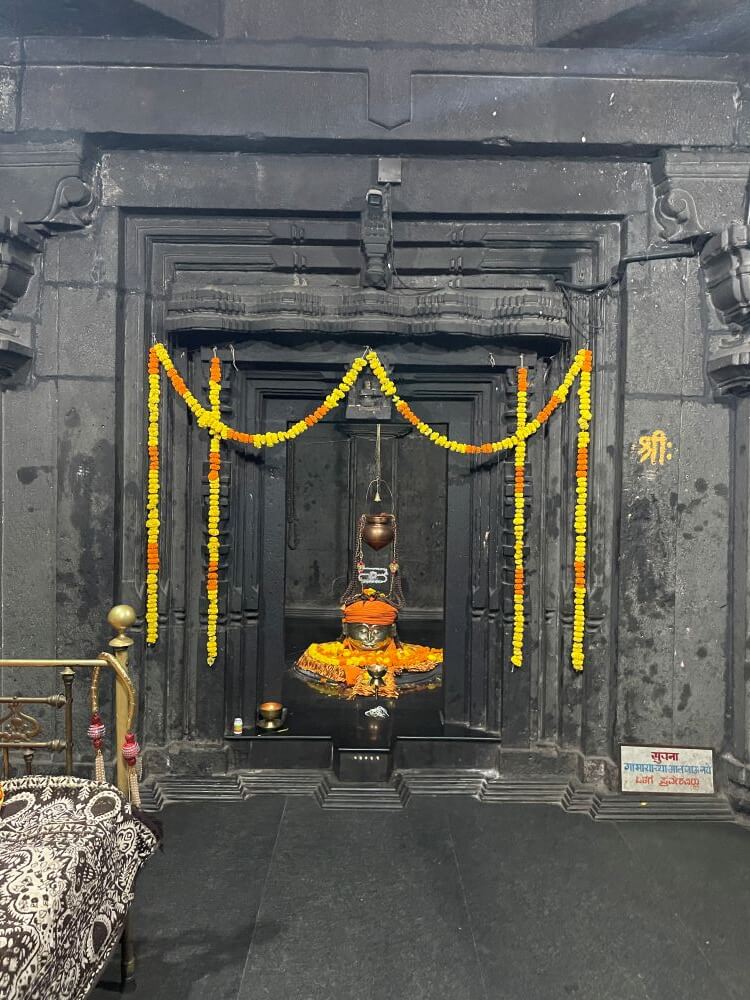
In front lies the ancient stone temple of Mahadeva. The temple is built in the Hemadpanti architectural style on a high plinth. The structure consists of an *Ovari* (veranda), *Sabhamandapa* (assembly hall), *Antarala* (vestibule), and *Garbhagriha* (sanctum sanctorum). One enters the veranda by climbing five steps. On both sides of these steps are small elephant statues. The veranda has five carved stone pillars in the front. In the upper sections of these pillars, small square panels depict carvings of Shiva Lingas and Nandi. There are also Nandi statues on the ceiling of the veranda. The entrance to the assembly hall is five-fold (*panchashakhiya*). On the high lintel of the door is a crescent moon, and at the center of the lintel is a Shiva Linga. The assembly hall has entrances on the left and right sides in addition to the main front entrance. Inside the hall, the image and *padukas* (footwear) of Kadsiddheshwar Swami are placed on a silver pedestal upon a brass platform. There is also a place for his seat. In the vestibule, there is a large stone statue of Nandi. The Nandi’s headgear, eyes, ears, and horns are made of brass, and it wears Rudraksha malas and bell garlands around its neck. The entrance to the sanctum is also five-fold. Inside, on the floor, is a large Shiva Linga covered with a mask of Shankara. Above the Linga is a copper *galantika* (anointing vessel). Above the sanctum, the temple features a stone-built, pyramid-shaped, star-patterned spire topped with a metal *kalash*.
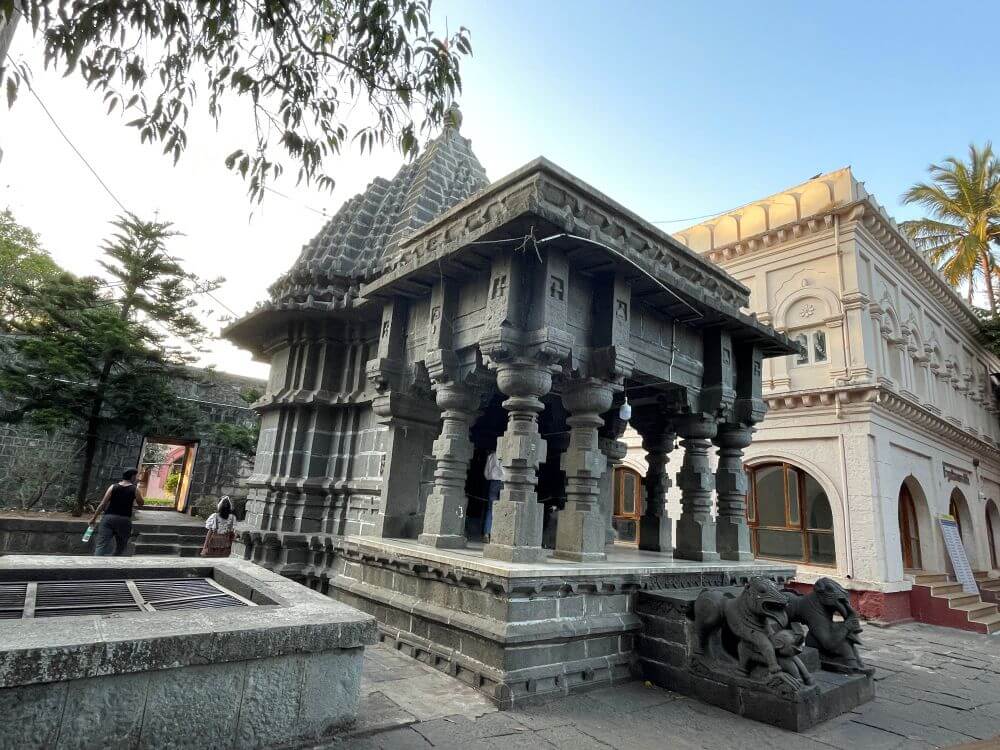
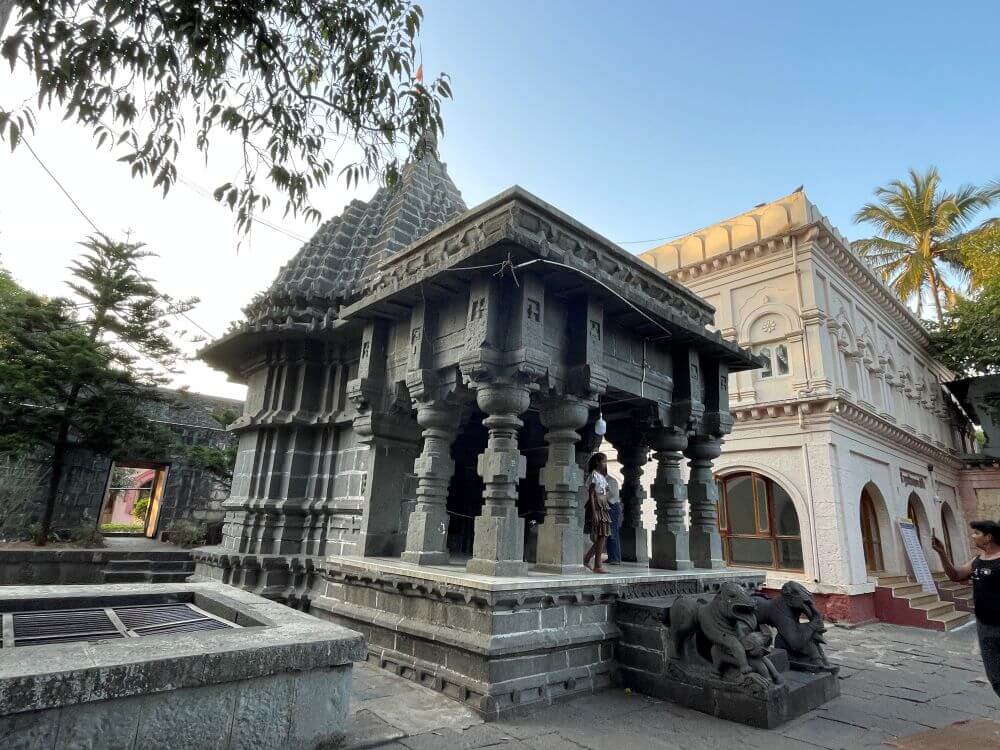
To the left and behind this Kadappa Mahadev Temple is another temple dedicated to Shankara. Based on its architectural style, it appears to have been constructed during the same period as the Kadappa Temple. A unique feature of this temple is the large *Sharabha* sculptures on the sides of the steps. The *Sharabha*—a mythical creature with a lion-like face, bulging eyes, a fierce mouth, a mane, and four-toed feet—is depicted holding a baby elephant in its front paws with its trunk, a rare type of sculpture. This temple also stands on a high plinth. It consists of an open assembly hall, a small vestibule, and a sanctum. The carved pillars in the assembly hall are a major attraction. A Nandi statue is seated in the center of the assembly hall. In the square panels at the base of the pillars near the entrance to the vestibule, images of Shankara, Bhairava, Ganesha, and Gandabherunda are carved, while Naga images appear in the middle of the pillars. The entrance to the sanctum here is three-fold, with door-pillars carved adjacent to the door frame. The lintel of the entrance is high with a crescent moon, and a Shiva Linga is at the center. Inside the stone sanctum, there is a Shiva Linga on the floor, adorned with a mask of Shankara. The exterior of the sanctum is star-shaped. The temple spire, like that of the Kadappa temple, is pyramid-shaped and star-patterned.
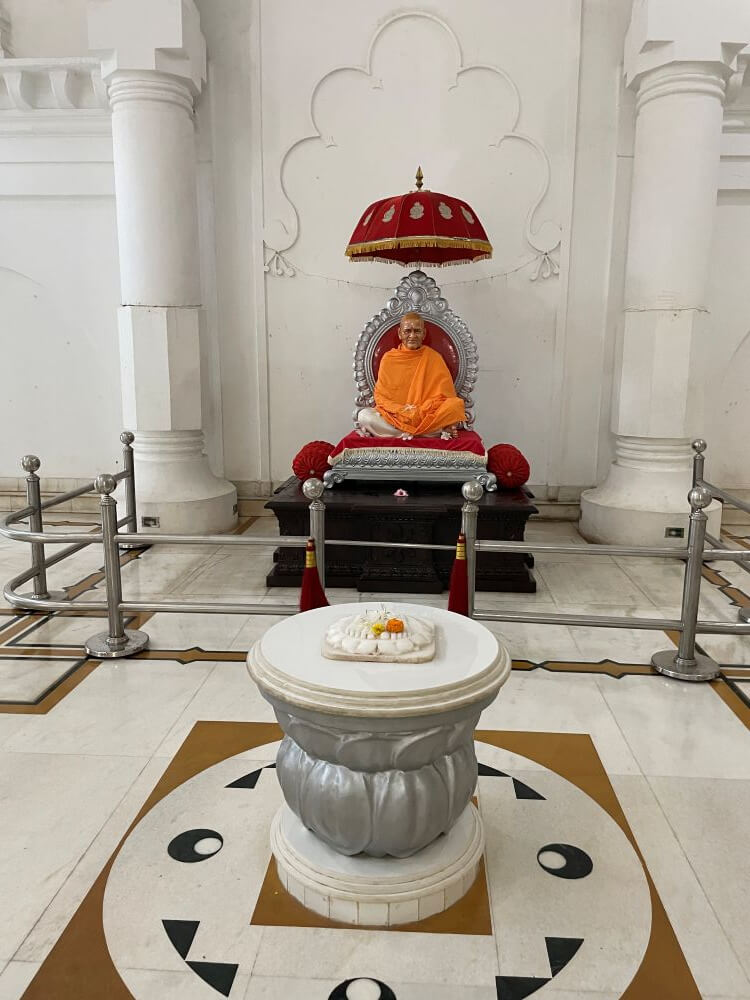
Behind these temples is the modern, two-story Gurudev Meditation Temple. This is the *Samadhi* (resting place) of the 48th Mathadhipati, Muppin Kadsiddheshwar Swami. The invisible Kadsiddheshwar Swami oversaw the construction of this Samadhi temple. A statue of Muppin Kadsiddheshwar Swami is installed here. The Swami is considered the presiding deity of the Math. Every *satsang* program in the Math begins with the *aarti* in this temple. Many devotees come here to meditate.
Within the Math premises is the ‘Siddhagiri Gramjivan Museum’, which offers a glimpse into the traditional lifestyle of rural India. Spread over 30 acres, this museum features sculptures that capture various authentic aspects of rural life. Along with this exhibition, significant work is done here in the fields of organic farming, environmental conservation, and healthcare. The Math premises include an organic farming project, a medicinal plant garden, and a cow protection center. Other attractions for tourists include the Siddhagiri Divine Garden, a yoga and meditation center, and much more.
A grand three-day festival is held here on Mahashivratri. Yoga and meditation camps are organized on Guru Purnima. Various religious rituals are performed throughout the month of Shravan. A festival of lights is celebrated in the month of Kartik. For these festivals, a large number of devotees arrive from Maharashtra as well as the states of Karnataka and Goa. A daily *Annachhatra* (free food service) operates here. On festival days, more than 50,000 people are served *Mahaprasad* at the *Annachhatra*.
This sacred temple stands as a testament to deep spiritual devotion, ancient architectural grandeur, and rich local cultural traditions.
The sanctum sanctorum houses the divine idol consecrated according to ancient Vedic traditions, surrounded by serene courtyards and traditional temple architecture.
Navratri, Maha Shivratri, Annual Temple Jatra & Deepotsav
Compare and book flights, secure top-rated local hotels near the temple, hire reliable guides, and rent cars instantly.
Extend your pilgrimage by visiting other highly sacred temples located nearby.


Add ₹999 more to unlock FREE SHIPPING!
Your sacred cart is currently empty.
Shop Photo FramesFill in your delivery details below to place your order.
Add comment