
Add ₹999 more to unlock FREE SHIPPING!
Your sacred cart is currently empty.
Shop Photo FramesRenowned as the ‘Kashi of Vidarbha’, the Koteshwar Mahadev Temple in Deoli Taluka is considered one of the most significant and ancient places of worship in the Vidarbha region. Ancient texts mention that this sacred site has existed for approximately 4,000 years. It is said that the hill upon which this temple stands, amidst a region rich in natural beauty on the western bank of the Wardha River, is the ‘Bhasma Hill’ (Hill of Ashes). A unique and miraculous feature of this site is that the Wardha River flows northward around the temple, circumambulating it before continuing its eastward-westward course.
The legend of the Koteshwar Temple states that while Sage Vishwamitra was traveling along the riverbank, he saw the hundred sons of Sage Vashistha, the guru of Lord Rama, sleeping in the forest. Overcome with sudden anger, Vishwamitra sprinkled water from his kamandalu (water pot) on the sleeping sons, turning them into ash. When Sage Vashistha, who was deep in meditation, realized what had happened, he performed a ‘Koti Yajna’ (a sacrifice performed ten million times) here and propitiated the river to flow northward. At Vashistha’s request, the river turned northward, and with its holy water, he brought his sons back to life. After the successful completion of his task, he installed a Shiva Linga on this very hill of ashes. It is said that this is the same Shiva Linga present in the Koteshwar Temple today. Excavations in this area reveal that instead of soil, one finds sacrificial ash that carries the fragrance of ghee.
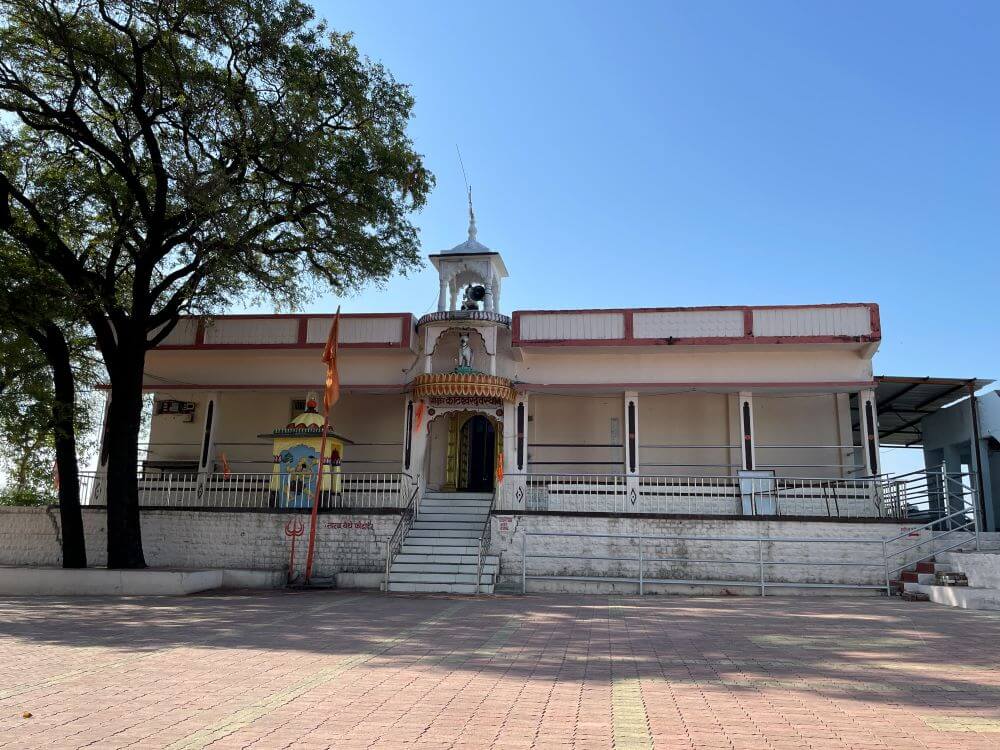
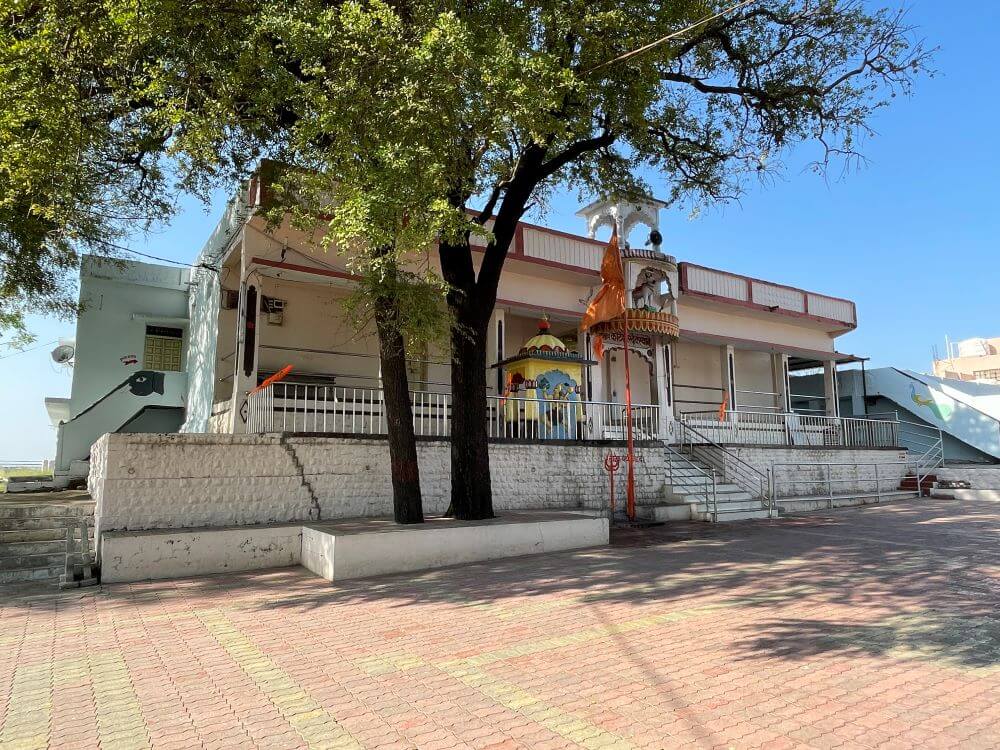
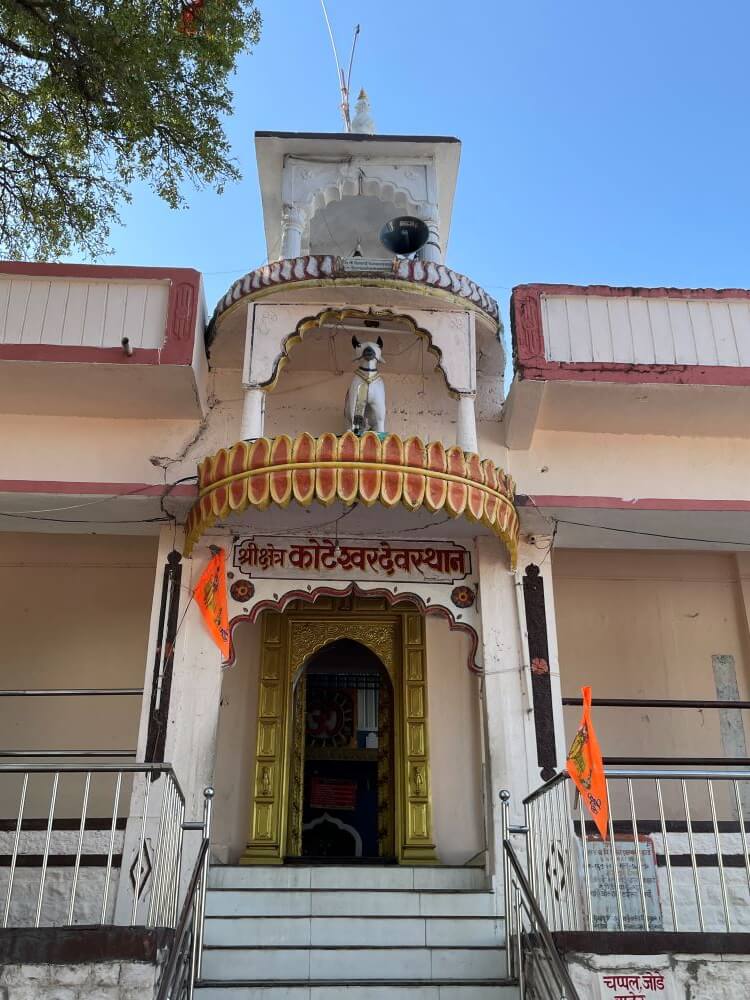
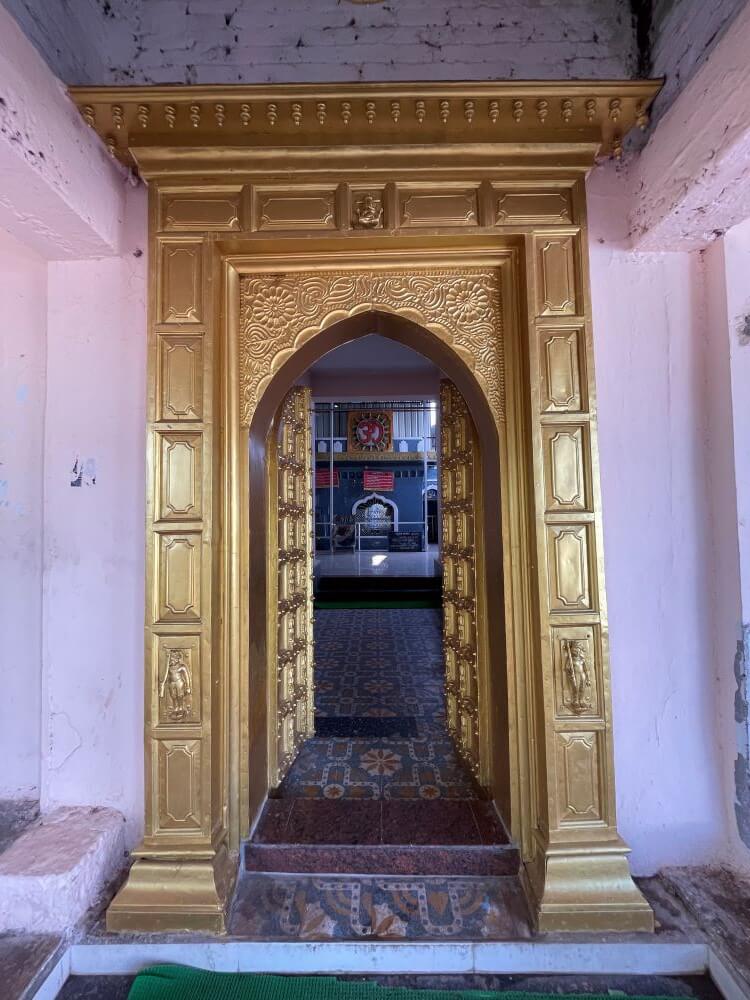
It is believed that Lord Rama resided in this temple area, which is situated on the banks of the Wardha River on the Wardha-Yavatmal road. The temple is built in the Hemadpanti architectural style, utilizing long and large stone blocks. To protect the temple from floodwaters, a stone retaining wall has been constructed around the hill on which it stands. There is a spacious courtyard in front of the temple, and the structure itself is built on a platform 5 to 6 feet high. After climbing 12 to 13 steps from the courtyard, one reaches the entrance of the temple’s Sabha Mandapa (assembly hall). This entrance and the door frame surrounding it are made of brass and feature exquisite carvings. Above the entrance stands a Nandi, and above that, in a small niche on the ceiling, is an idol of Mahadev.
Passing through the entrance, one sees the ancient and original temple, which consists of an Antarala (vestibule) and a Garbhagriha (sanctum sanctorum). There is a brass Nandi in the Antarala. The Garbhagriha here is 3 feet deeper than the Antarala, and the ancient Shiva Linga within it is encased in brass plating. It is said that often, the Ganga miraculously appears in the sanctum, covering the Shiva Linga with one and a half to two feet of water, which then recedes after some time.
The Wardha River serves as the border between the Wardha and Yavatmal districts. On the opposite bank of the Koteshwar Temple lies a shrine named Khateshwar, which falls under the Yavatmal district. To connect these two temples, work is underway to build a suspension bridge over the river using government funds. This will be the first bridge of its kind in Vidarbha and is set to become a major attraction. Every year, the Mahashivratri Yatra festival begins here from Magh Shuddha Chaturthi. The festival concludes after Mahashivratri and Phalguna Shuddha Pratipada with programs such as Dahi Handi, Gopal Kala, and Mahaprasad. This tradition has been followed for many years. Records indicate that during this festival, more than 1,00,000 devotees come to seek the blessings of Koteshwar Mahadev. Additionally, thousands of devotees visit throughout the month of Shravana.
The temple premises house the samadhis (memorial shrines) of several sages and saints. There is a temple of Lord Rama on the eastern side of the Wardha River. It is said that the Wardha River never runs dry; even in summer, the river has plenty of water. Notably, if a Bel leaf is dropped into the river, it does not float but sinks directly. The river holds special significance due to its northward flow. Devotees believe that performing ‘Raksha Visarjan’ (immersion of ashes) at Koteshwar grants salvation to the departed, which is why many people come here daily for this ritual.
Considering the deep faith of the devotees in this ancient shrine, the large number of visitors, and the scenic surroundings, the Maharashtra Government has granted this temple ‘B’ grade pilgrimage status.
So far, the Maharashtra Government has provided funds of 9,00,00,000/- (nine crore) rupees for the development of this temple complex. Like other tourist destinations, Koteshwar Temple and its surroundings are being developed.
This sacred temple stands as a testament to deep spiritual devotion, ancient architectural grandeur, and rich local cultural traditions.
The sanctum sanctorum houses the divine idol consecrated according to ancient Vedic traditions, surrounded by serene courtyards and traditional temple architecture.
Navratri, Maha Shivratri, Annual Temple Jatra & Deepotsav
Compare and book flights, secure top-rated local hotels near the temple, hire reliable guides, and rent cars instantly.
Extend your pilgrimage by visiting other highly sacred temples located nearby.


Add ₹999 more to unlock FREE SHIPPING!
Your sacred cart is currently empty.
Shop Photo FramesFill in your delivery details below to place your order.
Add comment