
Add ₹999 more to unlock FREE SHIPPING!
Your sacred cart is currently empty.
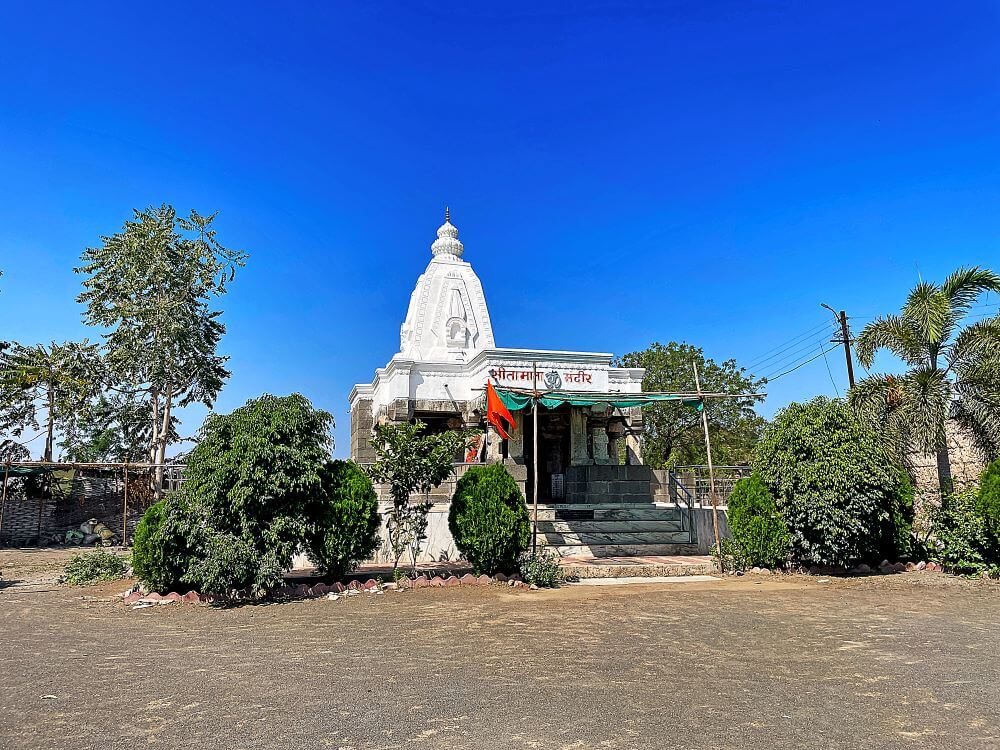
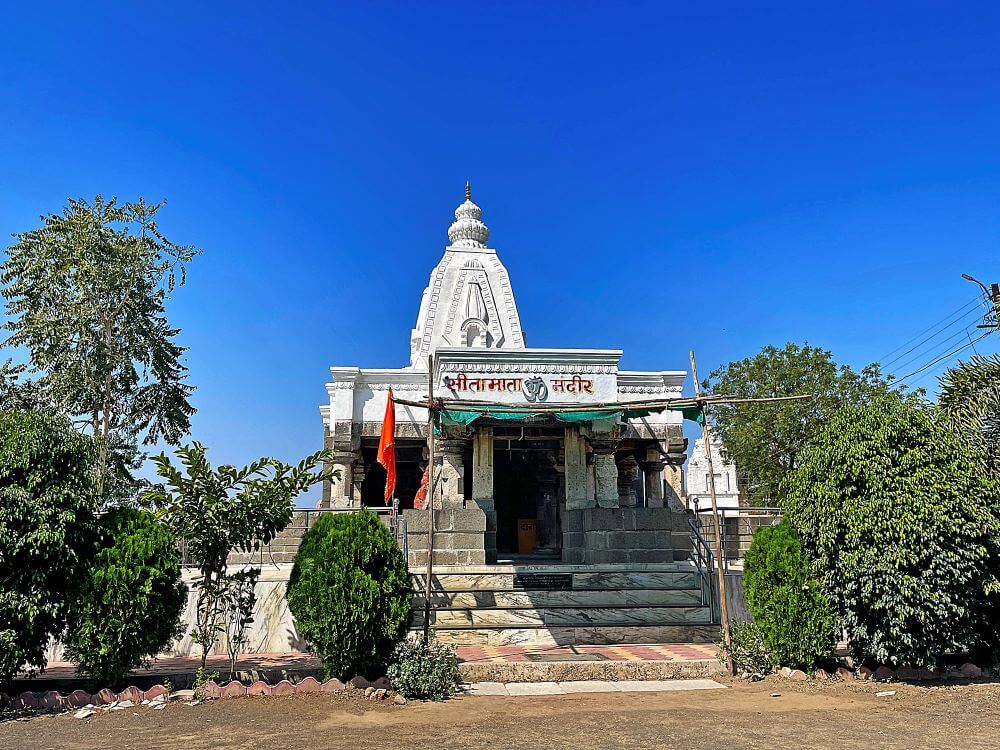
Shop Photo FramesThe Sitamata Temple in Raver, the presiding deity of Ralegaon taluka in Yavatmal district, is said to be the only temple of its kind to find mention in the Puranas. It is believed that in the Treta Yuga, when this region was known as Dandakaranya, Lord Rama had Lakshmana leave a pregnant Sita here. According to the Puranas, Mother Sita resided in the ashram of Sage Valmiki, and it was here that Luv and Kush were born. Given the temple’s religious significance, the deep faith of the devotees, and the number of pilgrims visiting, the state government has honored it by granting it the ‘C’ grade status of a pilgrimage site.
Ralegaon in Yavatmal district is a tribal-dominated taluka. The famous Sita Mata Temple here had become dilapidated due to its great antiquity. Following the initiative of farmer leader Sharad Joshi and the cooperation of the villagers, the temple underwent renovation in 2001, which gave it its present form. A few years ago, the Shri Ram Sanskritik Shodh Sansthan in Delhi conducted research across the country and discovered 294 pilgrimage sites bearing specific footprints of Shri Ram from his period of exile. This includes places from Ayodhya to Lanka. Among these, the pilgrimage site of Raveri is included at number 141.
According to the information provided by the villagers, soil from the premises of the Sita Mata Temple in Raveri and water from the Tamsa River (present-day Ramganga), which is mentioned in the Ramayana, were sent for the foundation stone laying ceremony of the famous Shri Ram Temple in Ayodhya. Furthermore, another coincidence is that on the very same day in January 2024 when the Ram Temple in Ayodhya was inaugurated, the re-consecration of the idol of Sita Mata was performed at the Sita Mata Temple in Raveri. It is said that the Ramganga River, which flows near the temple, turned northward and came here because Mother Sita had summoned it.
The legend of the temple states that after Lord Rama defeated Ravana and brought Mother Sita back to Ayodhya, some people raised doubts about her purity. To prove her sanctity, Mother Sita underwent the Agnipariksha. Even then, whispers among the citizens continued. Consequently, Lord Rama asked Lakshmana to take a pregnant Sita in his chariot and leave her in the Dandakaranya forest. The place where Lakshmana left Mother Sita was the ashram of Sage Valmiki. It was here that she gave birth to two sons, Lava and Kusha. Lava and Kusha spent their childhood under the tutelage of Sage Valmiki. During this time, Valmiki trained them to become proficient in various arts, scriptures, and weaponry.
Here, Shri Rama decided to perform the Ashwamedha Yajna in Ayodhya. The sacrificial horse released for this purpose, under the leadership of Lakshmana and Shatrughna, was conquering many kingdoms. When this horse arrived in this region, Lava and Kusha stopped it. In the battle that ensued, they defeated Lakshmana and Shatrughna. When Shri Rama learned of this, he sent Hanuman to capture those two children. Upon arriving here, Hanuman recognized the children and decided not to fight them. At that time, the mighty Hanuman was bound by Lava and Kusha using vines. Today, there is a temple of Hanuman at this very spot, where the idol of Hanuman remains in the bound state even now.
According to another legend, the village of Raveri and its surrounding areas were once part of the Dandakaranya forest. It is said that after the birth of Luv and Kush in this very village, Sita Mata asked the villagers for a handful of wheat, but when they refused, she cursed the village, decreeing that wheat would never grow here. For hundreds of years thereafter, wheat was not cultivated in the village. However, it is believed that around the year 1900, the villagers prayed to Sita Mata and took a solemn vow that they would not consume a single grain of wheat until they had first offered the freshly harvested crop at the temple, and thus, they began cultivating wheat again. Even today, 125 years later, the wheat harvested by the local farmers is first brought to the temple of Sita Mata, and only then is it taken to their home granaries or sent to the market for sale.
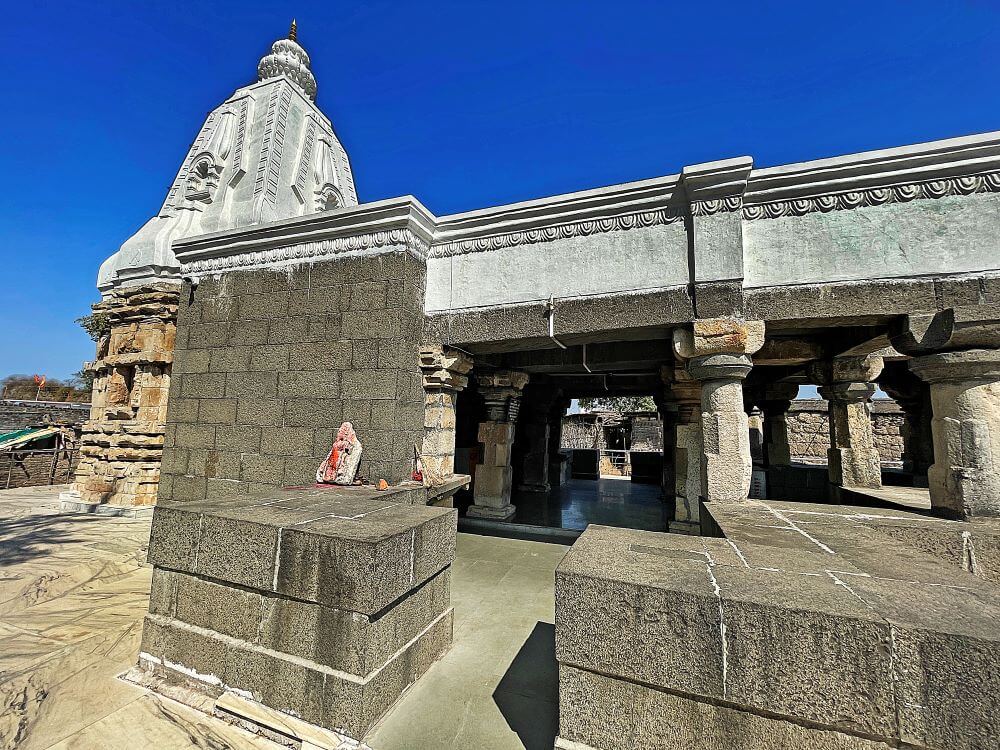
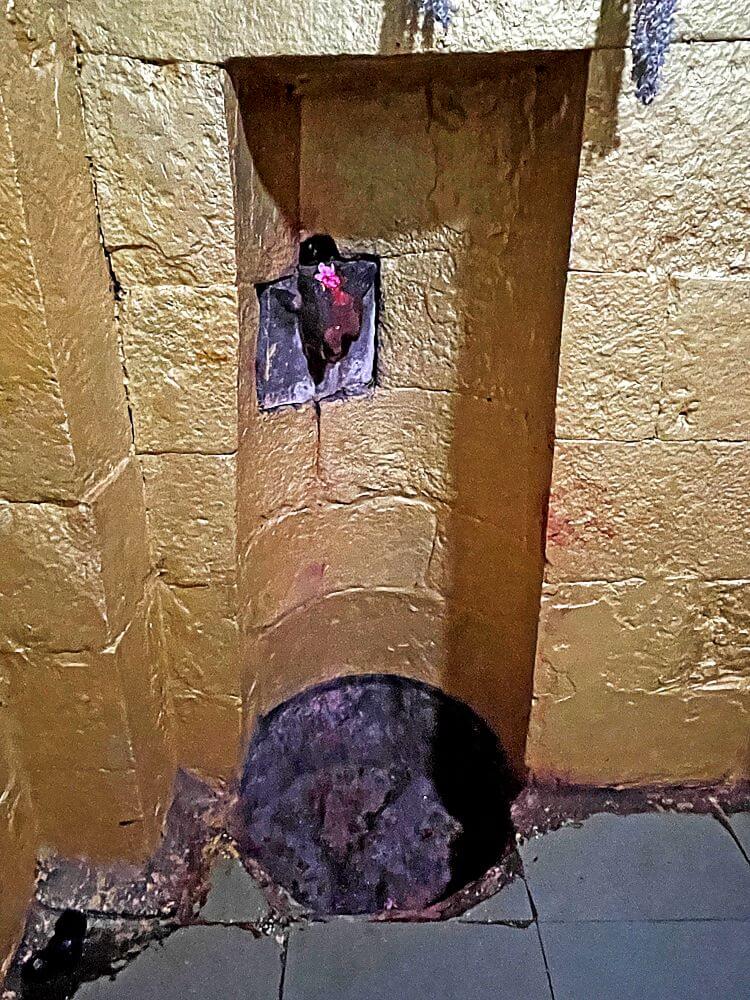
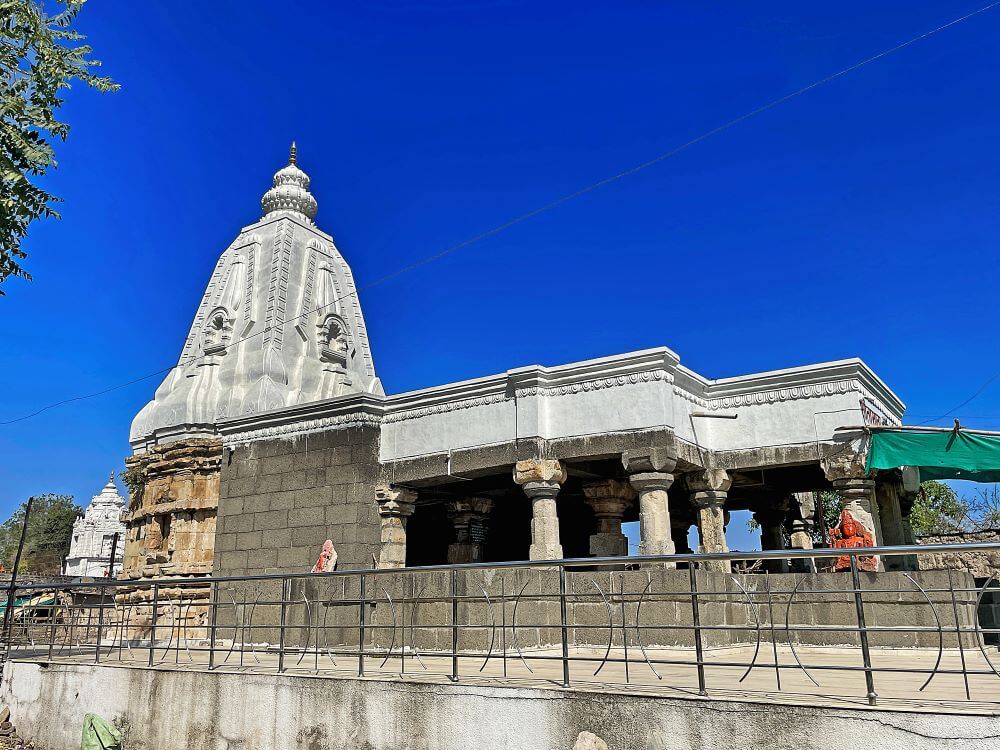
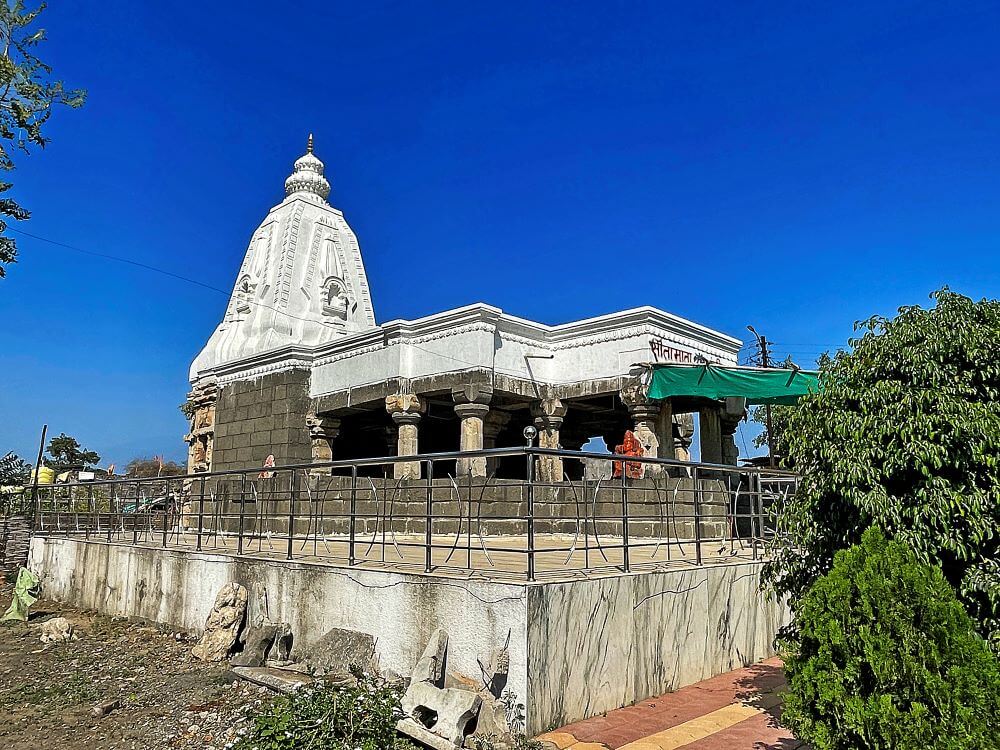
The Hemadpanti-style temple of Mother Sita is situated on a high plinth and consists of a Darshan Mandap, Sabha Mandap, Antarala, and Garbhagriha. It is said that this temple is approximately 700 to 800 years old. There are stone pillars in the Darshan Mandap and Sabha Mandap, and idols of Shri Ganesha and Hanuman are placed on both sides of the entrance to the Antarala. Sculptures are carved on both sides of the doorframe of the Garbhagriha, and the image of Shri Ganesha is positioned on the Lalatbimba. Inside the Garbhagriha, there is a Shivlinga in front of the idol of Mother Sita. It is said that Sita was a devotee of Lord Mahadeva. Below the Shivlinga here is a well, and right next to the Shivlinga is a Kunda that always contains water. The villagers here refer to this Kunda as ‘Sita’s Nahani’. Within the temple premises is the place of penance of Sage Valmiki, and at some distance from the temple on the riverbank is a Hanuman temple. This sacred site is known as a spiritually awakened place of Lord Hanuman.
Festivals such as Ram Navami, Hanuman Jayanti, Sita Navami, and Navratri are celebrated at the temple of Mother Sita. Along with religious programs, marriages of boys and girls from poor families are conducted here at a low cost. Every year, thousands of devotees come here to seek the blessings of the Primal Energy (Adishakti).
This sacred temple stands as a testament to deep spiritual devotion, ancient architectural grandeur, and rich local cultural traditions.
The sanctum sanctorum houses the divine idol consecrated according to ancient Vedic traditions, surrounded by serene courtyards and traditional temple architecture.
Navratri, Maha Shivratri, Annual Temple Jatra & Deepotsav
Compare and book flights, secure top-rated local hotels near the temple, hire reliable guides, and rent cars instantly.
Extend your pilgrimage by visiting other highly sacred temples located nearby.


Add ₹999 more to unlock FREE SHIPPING!
Your sacred cart is currently empty.
Shop Photo FramesFill in your delivery details below to place your order.
Add comment