
Add ₹999 more to unlock FREE SHIPPING!
Your sacred cart is currently empty.
Shop Photo FramesThe village of Dhom in Wai taluka is well-known due to the dam built on the Krishna River. However, this village has been known since ancient times for its distinctive Sri Lakshmi-Narasimha Temple here! The sculpture of a lotus with sixteen petals carved out of black stone in front of this temple is considered extremely rare. In the water reservoir (haud) of this lotus sculpture, upon the back of a large stone tortoise, stands an octagonal Nandi mandapa which houses a distinctively carved Nandi. On one side of this reservoir is the Lakshmi Narasimha Temple, and facing it is the Siddheshwar Mahadeva Temple.
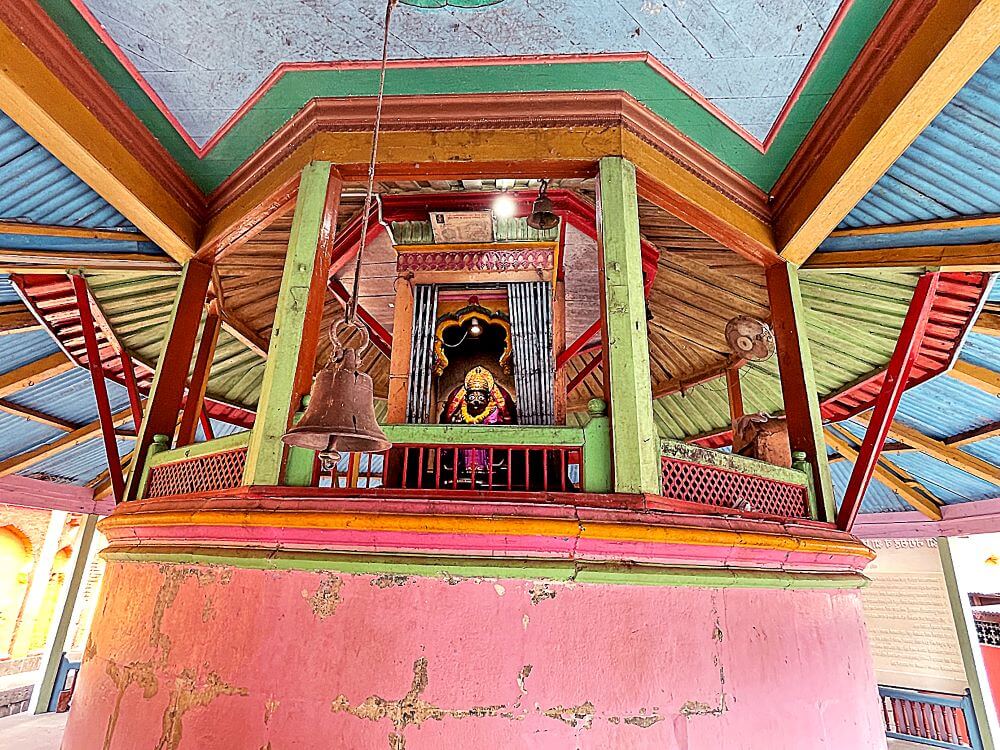
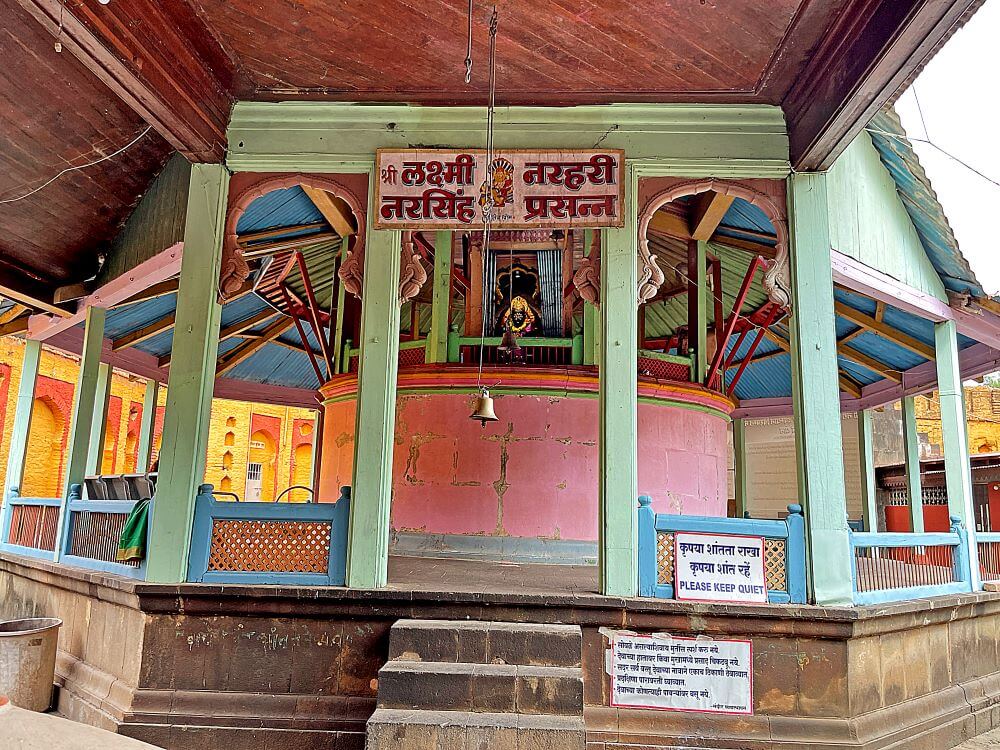
Known in earlier times as ‘Viratnagari’, Wai is famous as a city of temples. A beautiful blend of history and architecture, the Narasimha Temple is located in the village of Dhom, near Wai, at the confluence of two rivers, the Valke and the Krishna. The entrance gate of this temple resembles a fort. There are grand stone bastions on both sides of the entrance, and the wooden door here bears testimony to its antiquity. Passing through a narrow path from this entrance leads towards the Sri Lakshmi-Narasimha Temple. The construction of this unique temple is tall and circular, with the Sri Lakshmi-Narasimha shrine situated in the center and a circular balcony built around it to serve as a pradakshina (circumambulation) path.
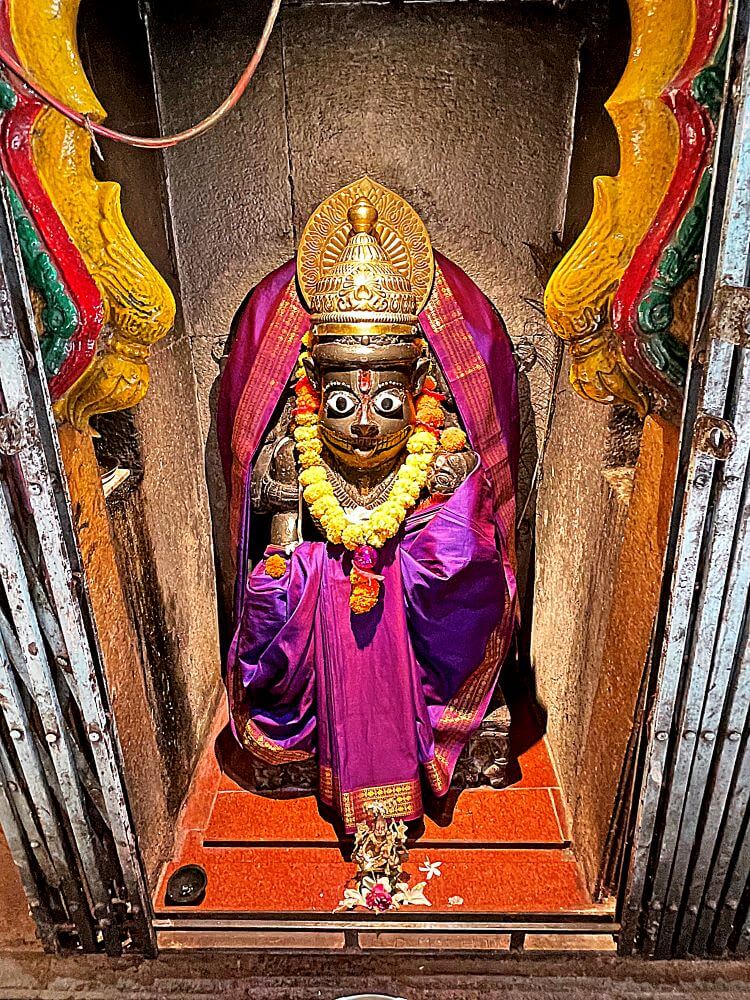
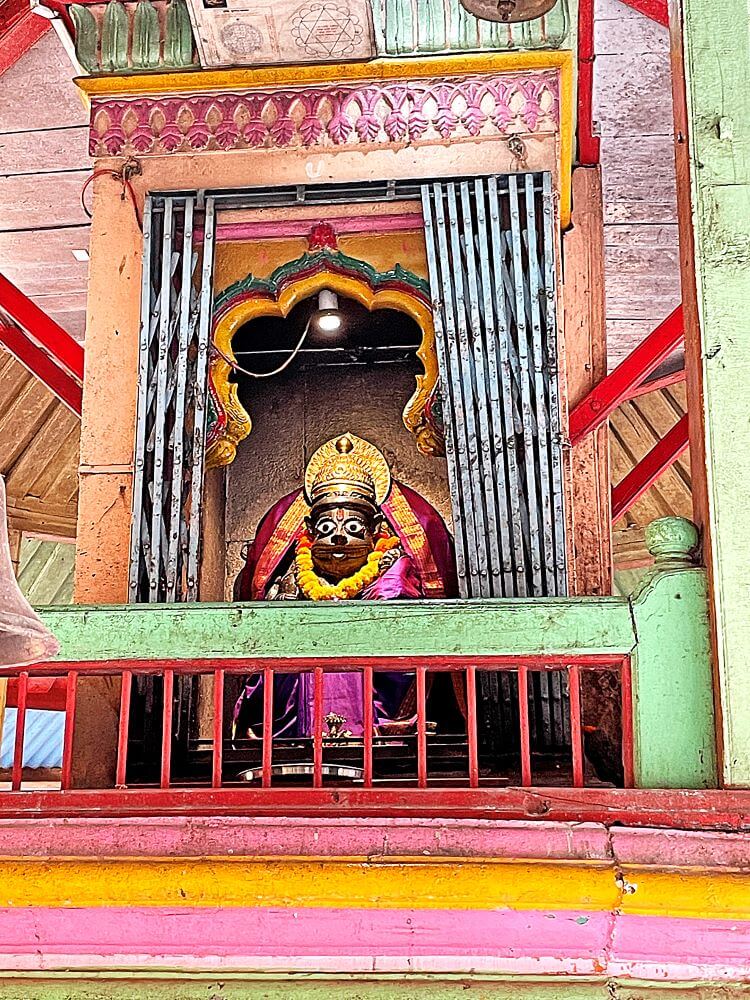
This sacred abode of Sri Lakshmi Narasimha is situated on a large wooden pillar, and a narrow flight of steps leads up to it. Teakwood has been used throughout this entire construction. Facing east-west, the temple houses the fierce (raudra) form of Lord Narasimha slaying the demon Hiranyakashipu on one side, and a tranquil four-armed (chaturbhuja) and enthroned form on the other side. In this latter form, Goddess Lakshmi is seated on Narasimha’s lap. In a small niche (devli) in front of this temple is an idol of Prahlada. It is said that in December 1769, Peshwa Narayanrao had Brahmins perform sacred observances (anushthaan) here for the good health of Thorle Madhavrao. The festival of Narasimha Jayanti is celebrated here on Vaishakh Shuddha Dashami.
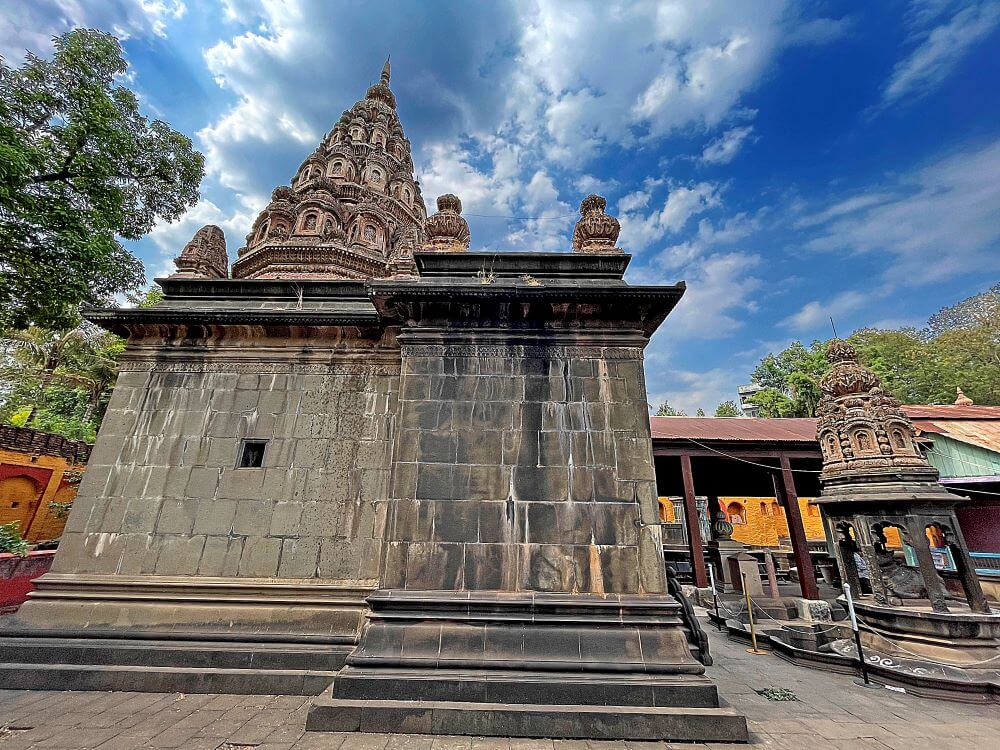
Within the premises of the Lakshmi Narasimha Temple stands the ancient stone-built Siddheshwar Mahadeva Temple. Right in front of this temple is a reservoir featuring a unique architectural design, and upon it, in an octagonal shrine, is the idol of Nandi. The reservoir has been fashioned in the shape of a lotus flower out of exquisite black stone, with a two-meter-long stone tortoise seated in the center. Atop the back of this tortoise rests an octagonal shrine where Nandi is enshrined. When this reservoir is filled with water, it creates the visual spectacle of a tortoise floating on the water carrying a cloud-canopy-like (meghdambarisadrush) shrine upon its back. This rare temple and its intricate artistry are certainly worth visiting.
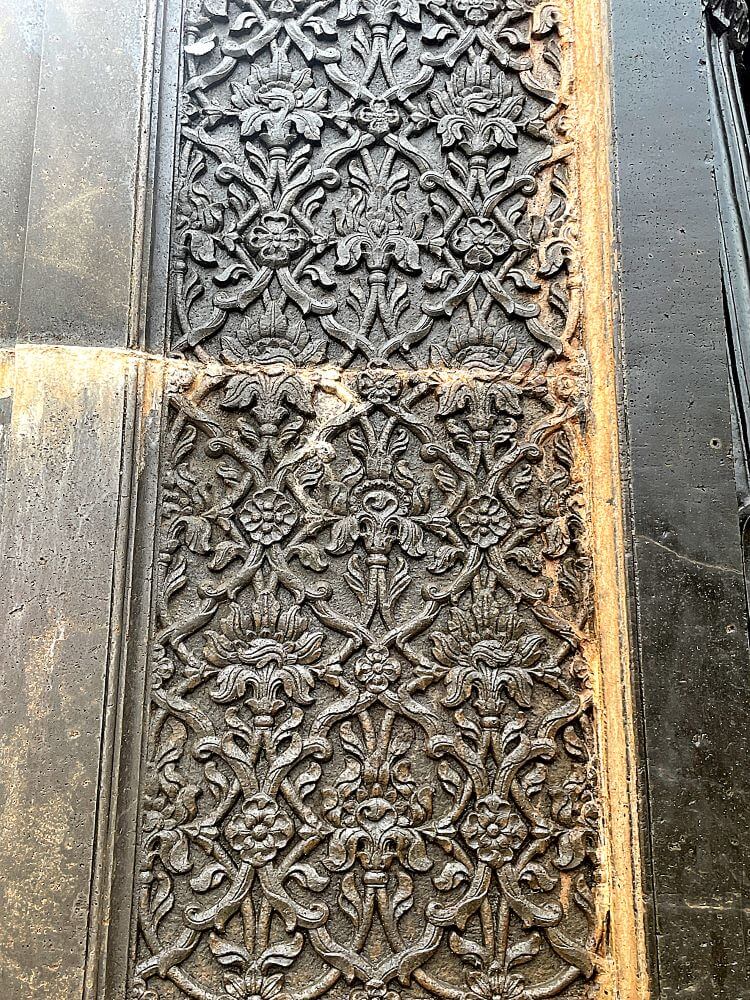
Situated opposite this reservoir is the Siddheshwar Temple. It is said that this temple was established by Sage Dhaumya. The village derived its name, Dhom, from him. The carvings on this temple and its pillars are remarkably distinct. Artistry executed with such fine detail in monolithic black stone is rarely seen elsewhere. The sanctum (garbhagriha) of this temple is also intricately carved. Inside the sanctum lies a beautiful, six-layered Shivlinga carved out of a single stone. Floral sculptures are carved on the inner ceiling of the temple towards the kalasha (spire).
The Siddheshwar Temple is in the form of a Shivapanchayatana. Situated in the four cardinal directions of the temple are shrines dedicated to Sri Vishnu, Sri Ganesha, Goddess Parvati, and Suryadeva. Among these, the Parvati Temple features a composite idol of Goddess Parvati accompanied by Sri Ganesha and Kartikeya Swami. The idol of Lord Surya in the Suryadeva Temple is depicted riding a chariot driven by seven horses. Additionally, the samadhi (memorial shrine) of Sage Dhaumya is located in the foundation of the Mahadeva Temple. One has to descend through an underground passage to reach this samadhi.
Opposite the northern doorway of this temple is a small Ganesha temple. In front of this temple stands a five-faced Shiva pillar, with its four faces pointing in the four cardinal directions and the fifth face pointing towards the sky. The carvings on this pillar are also distinctive. This pillar is considered to be the energetic core (urjasthan) of the entire temple. Within the temple premises is a well known as ‘Andhar Vihir’ (Dark Well). This well is enclosed, and its water never dries up. Stone steps lead down into the well. Since ancient times, the water from this very well has been used for the temple’s rituals. The annual fair (yatra) of the Siddheshwar Temple is held on Vaishakh Purnima.
According to historical records here, Shivram, a sahukara (moneylender) from Pune, renovated these temples in the year 1780 during the Peshwa era. Prominent figures including Chhatrapati Sambhaji Maharaj and Chhatrapati Shahu Maharaj, among many others, have issued royal grants (sanads) for this temple from time to time.
This sacred temple stands as a testament to deep spiritual devotion, ancient architectural grandeur, and rich local cultural traditions.
The sanctum sanctorum houses the divine idol consecrated according to ancient Vedic traditions, surrounded by serene courtyards and traditional temple architecture.
Navratri, Maha Shivratri, Annual Temple Jatra & Deepotsav
Compare and book flights, secure top-rated local hotels near the temple, hire reliable guides, and rent cars instantly.
Extend your pilgrimage by visiting other highly sacred temples located nearby.


Add ₹999 more to unlock FREE SHIPPING!
Your sacred cart is currently empty.
Shop Photo FramesFill in your delivery details below to place your order.
Add comment