
Add ₹999 more to unlock FREE SHIPPING!
Your sacred cart is currently empty.
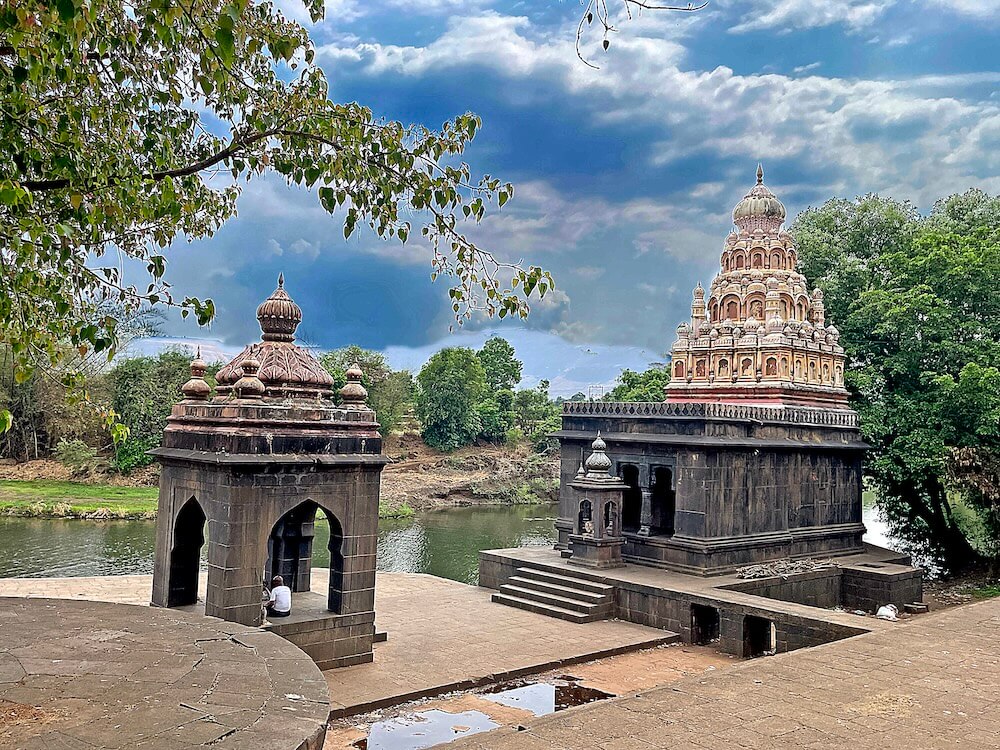
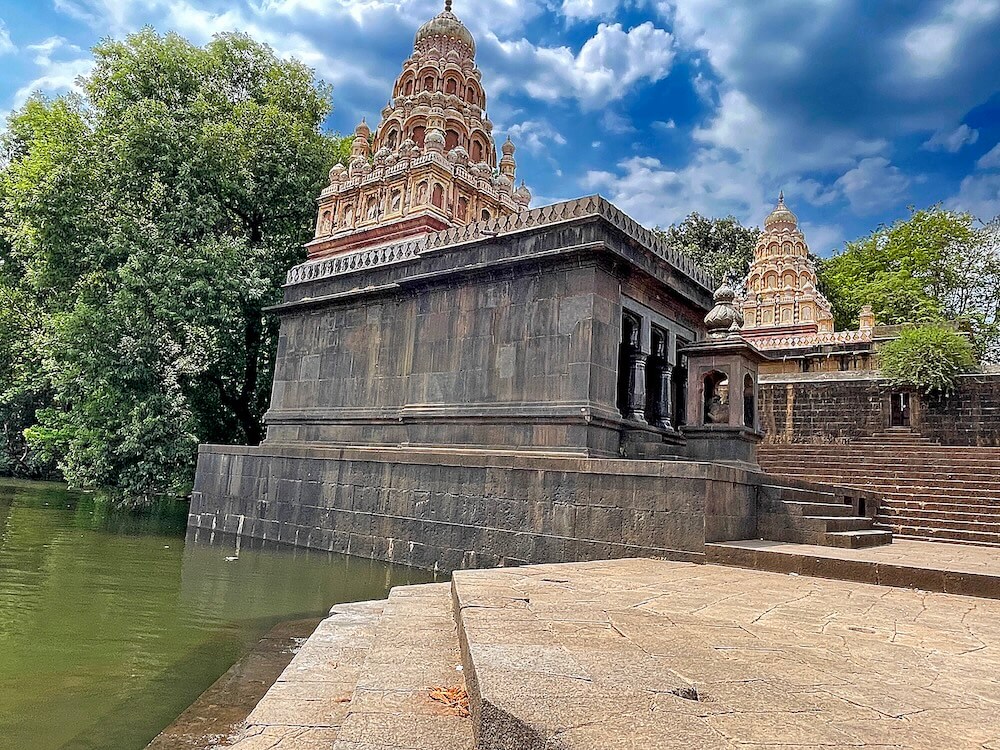
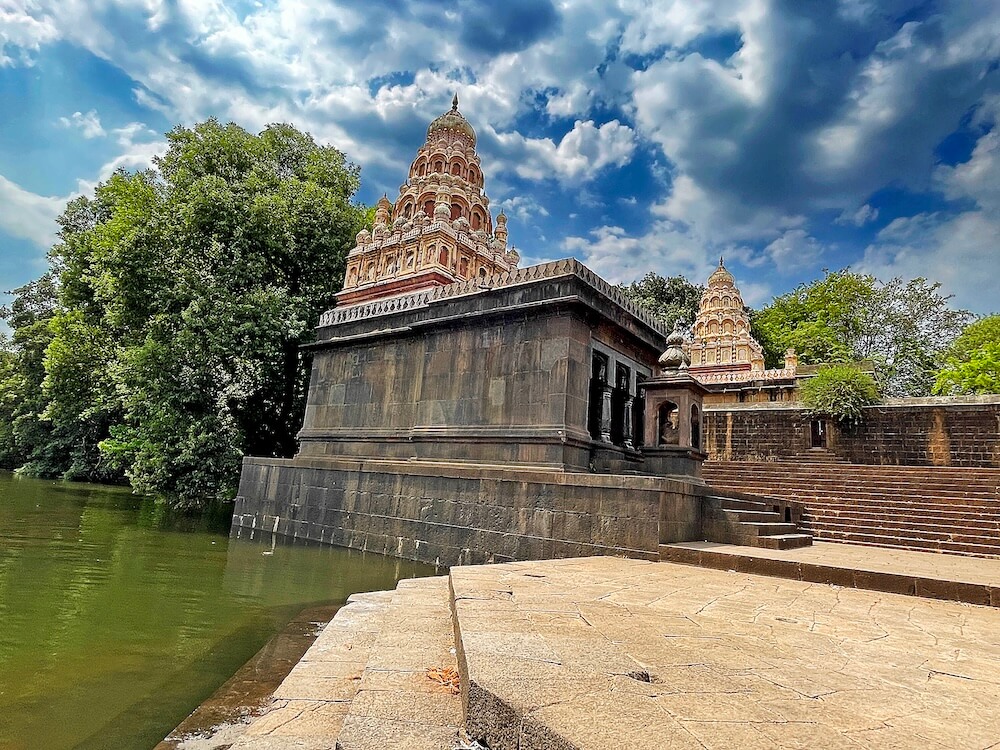
Shop Photo FramesThe village of Menavali, located near Wai, was established by Balaji Janardan Bhanu, popularly known as Nana Fadnavis, one of the three-and-a-half wise men of the Peshwa era. Nana Saheb, who managed the accounts of the Peshwa administration, was a highly trusted confidant of the Peshwas. On the banks of the Krishna River here, he constructed a crescent-shaped ghat, and alongside it, he built the Ghanta Temple (Bell Temple), the Meneshwar Temple, the Vishnu Temple, and a grand mansion (Wada) for himself. Although Menavali is primarily known for Nana Saheb’s mansion, the Meneshwar and Vishnu temples he built here remain sacred places of deep faith for devotees.
Menavali village is situated approximately 3 kilometers from Wai. This village in the Wai taluka holds significant historical and religious importance. Nana Fadnavis received this land on the banks of the Krishna as a gift in 1768 from Bhagwan Tryambak Pantpratinidhi of Aundh and Raghunath Ghanshyam Mantri of Satara. On this land, Nana Fadnavis established the small and picturesque village of Menavali. Subsequently, he constructed a ghat on the Krishna River using dressed stone, which stands as a magnificent example of architectural brilliance. The Meneshwar Temple and Vishnu Temple, located on this ghat, still stand in good condition today, bearing witness to the craftsmanship of the Peshwa era.
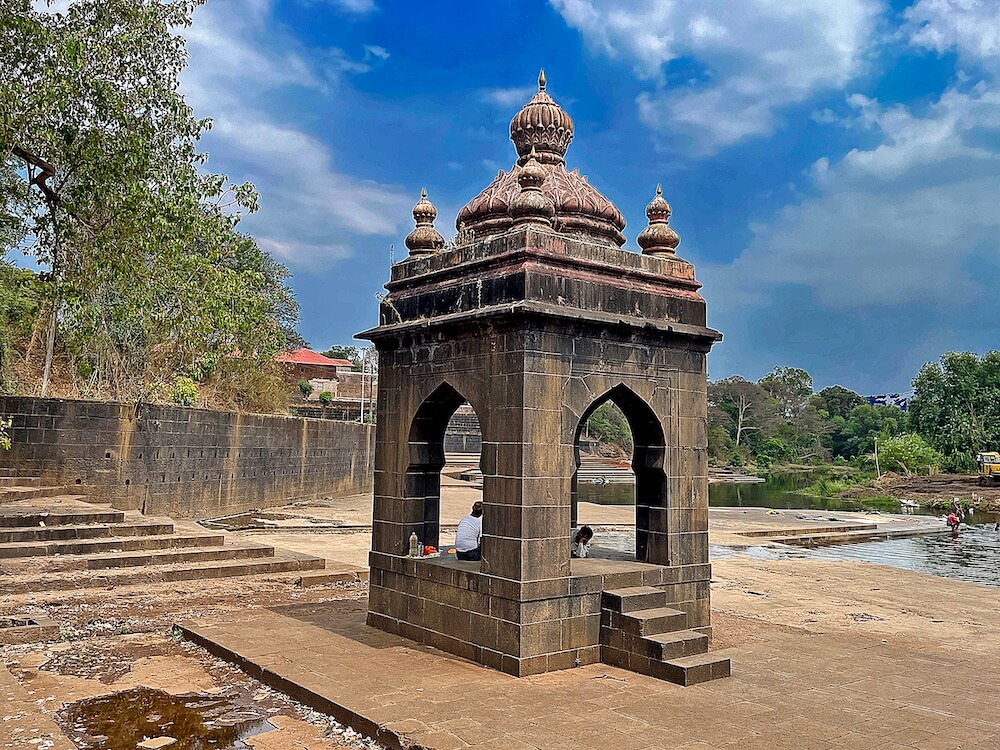
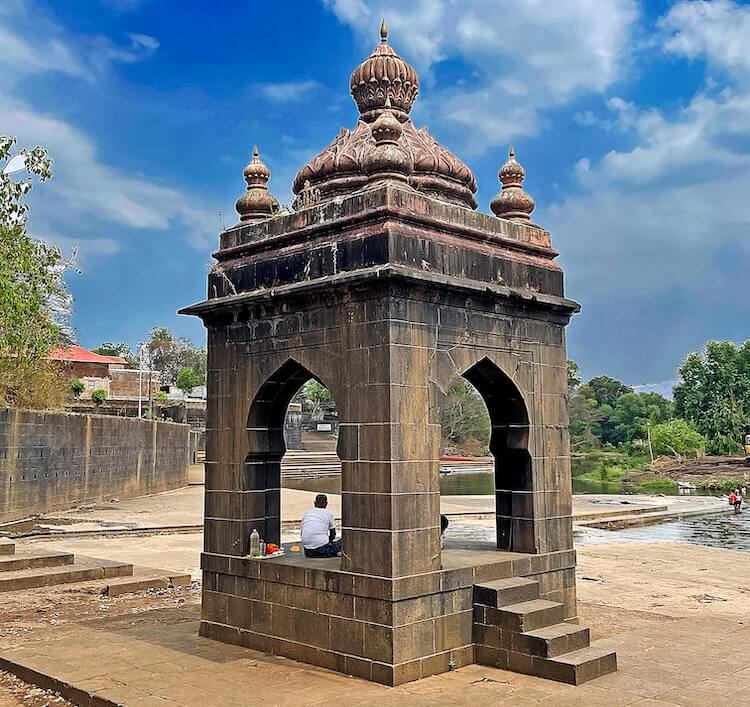
The main attraction of the Meneshwar Temple on the banks of the Krishna is the 650-kilogram panchdhatu (five-metal) bell situated in front of the temple. This bell, which bears witness to the Marathas’ victory at Vasai, features engravings of Jesus and Mary and is inscribed with the year 1707. Nana Saheb had built a special temple to house this bell in front of the Meneshwar Temple. Such a temple is rare in Maharashtra. Even today, one can see this magnificent bell in the Ghanta Temple.
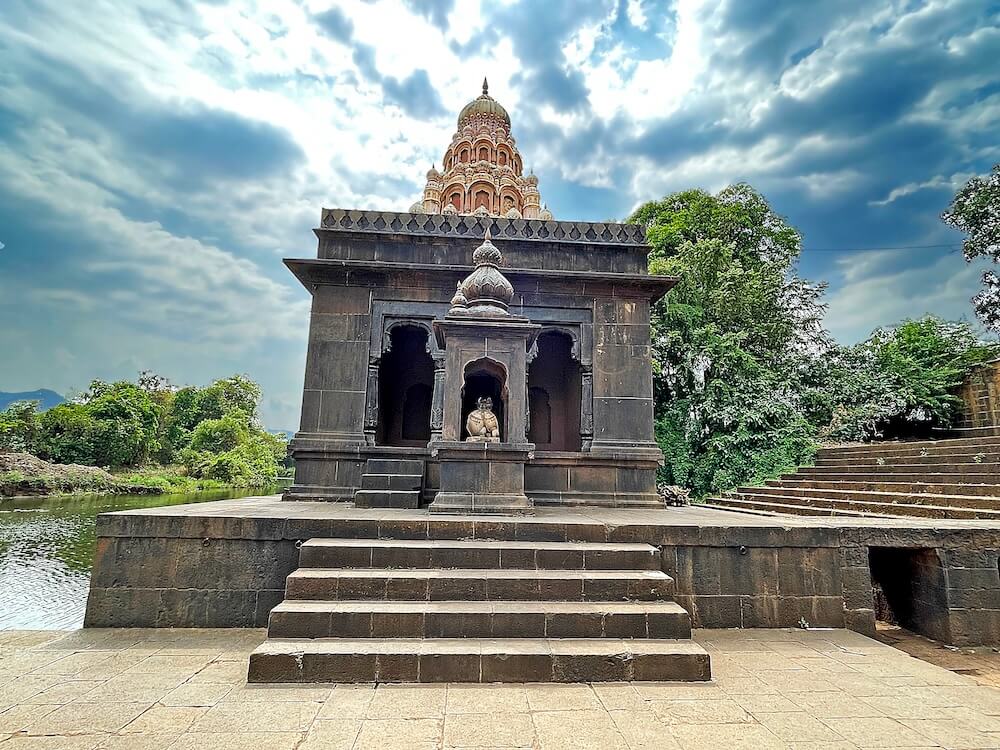
In front of the Ghanta Temple lies the Meneshwar Temple, constructed entirely of stone in the Hemadpanti style. To reach the plinth of this temple, which is slightly elevated from the Ghanta Temple, one must climb five to six steps. The temple is structured with a Nandi Mandapa, Mukha Mandapa, Sabha Mandapa, and the Garbhagriha (sanctum sanctorum). A unique feature of this temple is that the sanctum is located 12 to 14 feet below the level of the Sabha Mandapa. There is a narrow, tapering staircase leading down from the Sabha Mandapa, with steps that are about one-and-a-half to one-and-three-quarter feet high. Due to the dark, narrow path and the high steps, one must descend into the sanctum with great care. In the center of the Shiva Linga within the sanctum, there is a depression that holds water. During the monsoon season, when the water level of the Krishna River rises, the Shiva Linga in the sanctum remains submerged.
Upon exiting the Meneshwar Temple, one finds the Vishnu Temple situated at a higher level. After climbing a few steps from the river ghat, one enters the premises of the Vishnu Temple. The exterior design and the structure of the shikhara (spire) of this temple are similar to those of the Meneshwar Temple. The Meneshwar Temple remains open for devotees throughout the day, but the Vishnu Temple can only be visited during the morning hours, after which it remains closed for the rest of the day.
Apart from the Ghanta Temple, Meneshwar Temple, and Vishnu Temple, the other attractions of Menavali village are the crescent-shaped ghat on the Krishna River and the spacious mansion of Nana Fadnavis located nearby. This mansion is spread over approximately one-and-a-half acres of land. A two-story structure that serves as an excellent example of Peshwa-era architecture and woodwork, it has stood firm since 1770, braving the sun, wind, and rain. According to historical records, since the Peshwa administration was conducted from Pune, Nana Saheb resided in this mansion for very few days. In this mansion, one can see Nana Saheb’s Diwankhana (audience hall), items of his daily use, and many distinctive murals. A massive Gorakh Chinch (baobab) tree in the courtyard of the mansion draws immediate attention. Many Hindi and Marathi films have been shot at this mansion.
This sacred temple stands as a testament to deep spiritual devotion, ancient architectural grandeur, and rich local cultural traditions.
The sanctum sanctorum houses the divine idol consecrated according to ancient Vedic traditions, surrounded by serene courtyards and traditional temple architecture.
Navratri, Maha Shivratri, Annual Temple Jatra & Deepotsav
Compare and book flights, secure top-rated local hotels near the temple, hire reliable guides, and rent cars instantly.
Extend your pilgrimage by visiting other highly sacred temples located nearby.


Add ₹999 more to unlock FREE SHIPPING!
Your sacred cart is currently empty.
Shop Photo FramesFill in your delivery details below to place your order.
Add comment