
Add ₹999 more to unlock FREE SHIPPING!
Your sacred cart is currently empty.
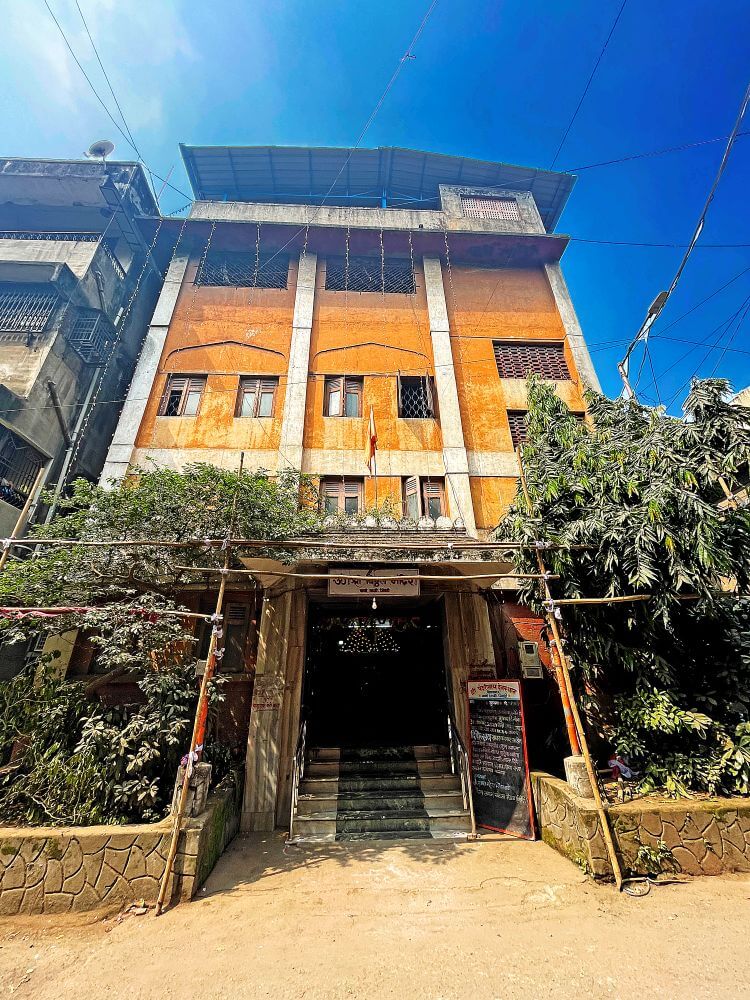
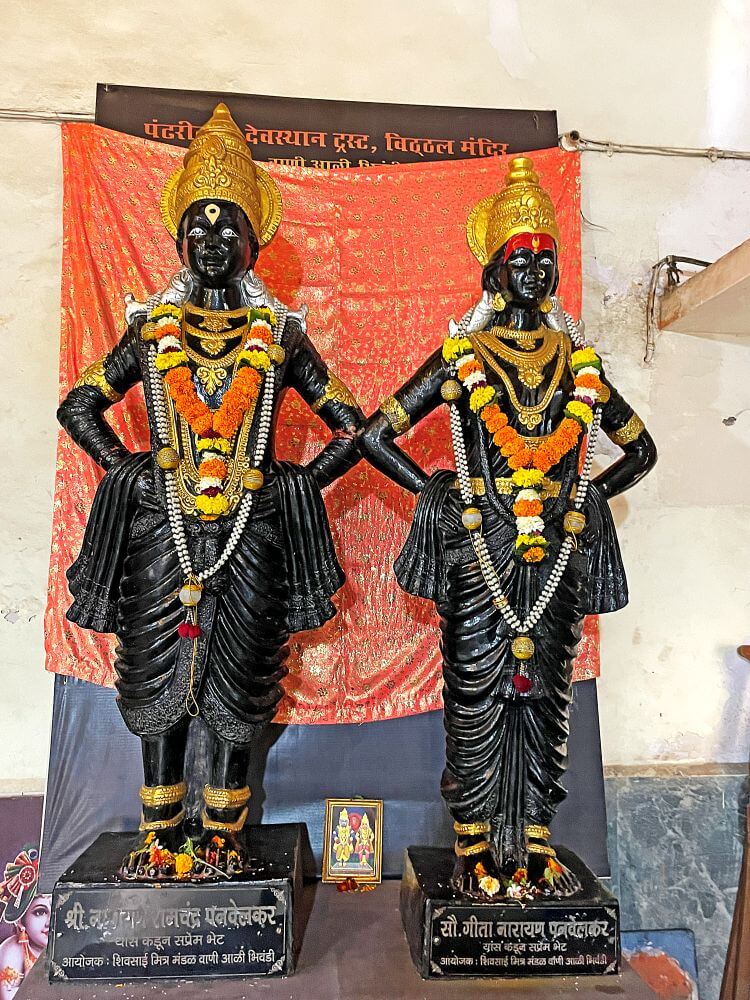
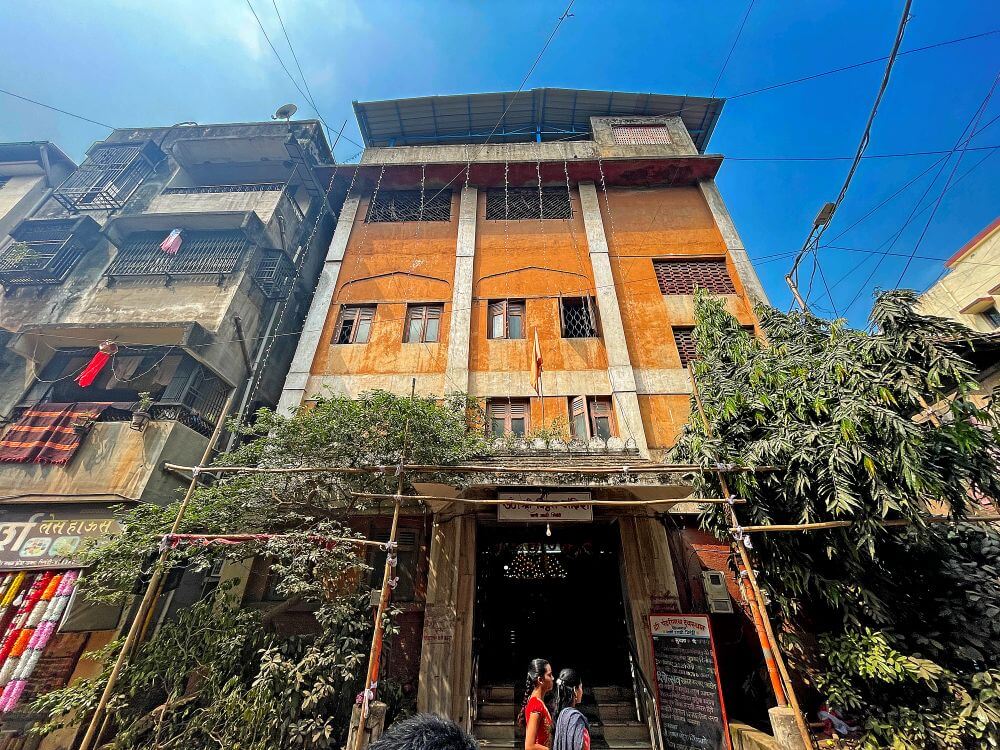
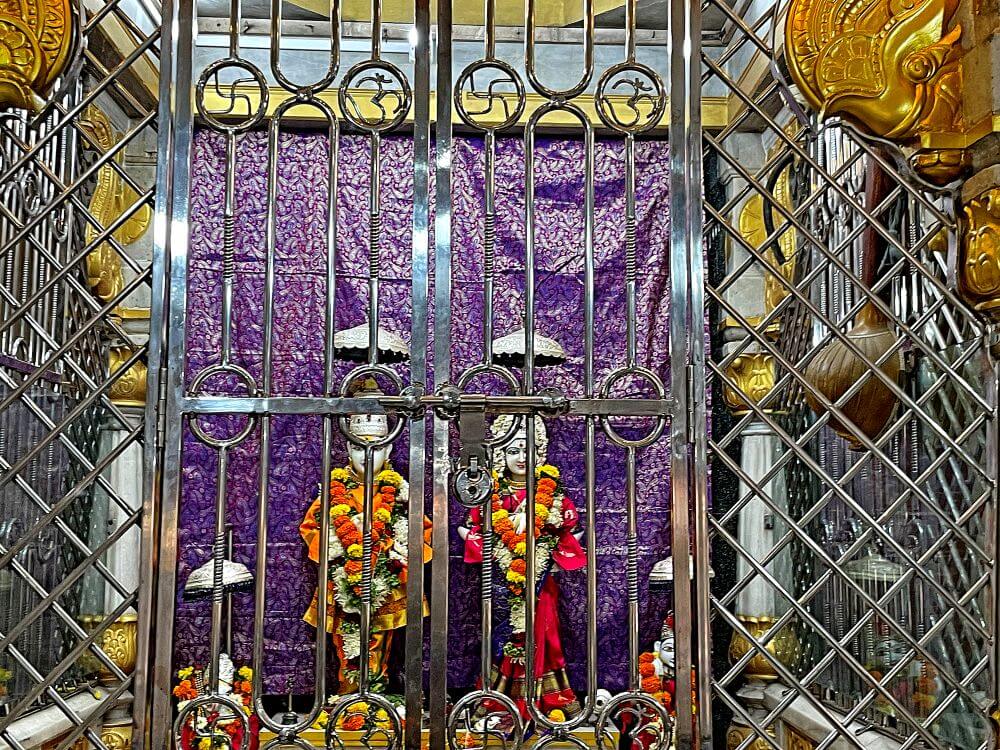
Shop Photo FramesWhen one mentions the Vitthal Temple, the dark-complexioned idol of Vitthal-Rukhumai with hands on their waists comes to mind; however, the Vitthal-Rukhumai idols in the Vitthal Temple located in Vani Ali of Bhiwandi city (District Thane) are fair-complexioned. This temple, one of the oldest in historic Bhiwandi, is owned by the Vaishya community. In this temple, which is over three hundred and twenty-five years old, there is a tradition of celebrating Ganeshotsav for more than one hundred years. On the day of Ganesh Visarjan, the procession of this Ganesh idol, which holds the place of honor, is taken out in a palanquin. Other public Ganesh idols of the area follow in a line behind this idol.
Since ancient times, Bhiwandi was famous as a trading center and port on the west coast. It is said that the Vaishya community settled here seven hundred years ago. The original settlement of the Vaishya community was in the Mungi Paithan region on the banks of the Godavari. Towards the end of the fourteenth century, during the reign of Mahmud Shah Bahmani I, a famine known as the ‘Durgadevi Famine’ occurred. This famine, which began in thirteen ninety-six, lasted until fourteen hundred and seven. According to Ferishta’s book ‘Gulshani Ibrahimi’, the Bahmani Sultan employed ten thousand oxen to bring grain from Malwa and Gujarat during this period; however, as there was no rain for eleven years, the suffering of the people knew no bounds. During that time, the Vaishya community descended from the ghats into the Konkan in large numbers. Some of them settled in Bhiwandi. They established themselves well in trade. During the Vasai campaign, the traders of this community also assisted Chimaji Appa. It is said that the Vitthal Temple in Vani Ali was built by a Brahmin Sardar. Over time, the Vaishya community began to manage this temple.
A major riot took place in Bhiwandi between fourteen and eighteen April eighteen thirty-seven. It was the month of Muharram. At that time, some fanatics opposed the taking out of the Ram Navami procession. This sparked a riot. The administration brought a regiment of Native Infantry from Thane, after which the riot subsided. However, the ‘Gazetteer of Bombay Presidency’, volume fourteen, records that during these five days, fanatics attacked many temples; information about this incident is also provided in the biography written in nineteen sixteen by Vinayak Pitale titled ‘Shrimant Namdar Jagannath Shankarshet alias Nana Shankarshet’. In the ‘Powada Bhiwandicha’ given in the appendix of this book, it is stated: ‘On the second day (Chaitra Shuddha Dashami), the non-believers brought Tazia into the market. As the drum of Shiva worship sounded, they rushed into the temple. They broke the idol of Shri Vitthal, see what a great atrocity they committed.’ According to the aforementioned biography, the rioters were not punished for this riot. They were released. Then, Nana Vitthalseth Vani of the Vaishya community went to Mumbai and met Nana Shankarshet. Nana alias Jagannath Shankarshet Murkute was a great social reformer, industrialist, and educationist of that time. He is called the architect of modern Mumbai. Nana Vitthalseth Vani informed him about what had happened. Thereafter, Nana Shankarshet met the then Governor Sir Robert Grant. His name has been given to Grant Road station as well as Grant Medical College. He ordered an impartial inquiry into the matter. After a proper investigation, the rioters were punished. According to the records in the Gazetteer, twenty-one people from other religions were sentenced to imprisonment ranging from one to ten years in this case. A few days after this incident, new idols were consecrated in the temple at an auspicious time.
The old structure of this temple in Vani Ali was tiled and like a four-sided mansion. Near the mansion was a water tank and ahead was a Nagarkhana. In nineteen fifty-five, a part of the Nagarkhana collapsed. Thereafter, an entrance gate was built there in nineteen fifty-seven. At that time, the height of the temple was increased and a floor was added above. Around nineteen seventy, a porch was built at the back of the temple. The temple was renovated again in nineteen eighty-eight. In front of this four-story temple is a road, and across the road is a stone lamp pillar (Deepastambha). Religious programs of the Vaishya Vani community take place on the first floor.
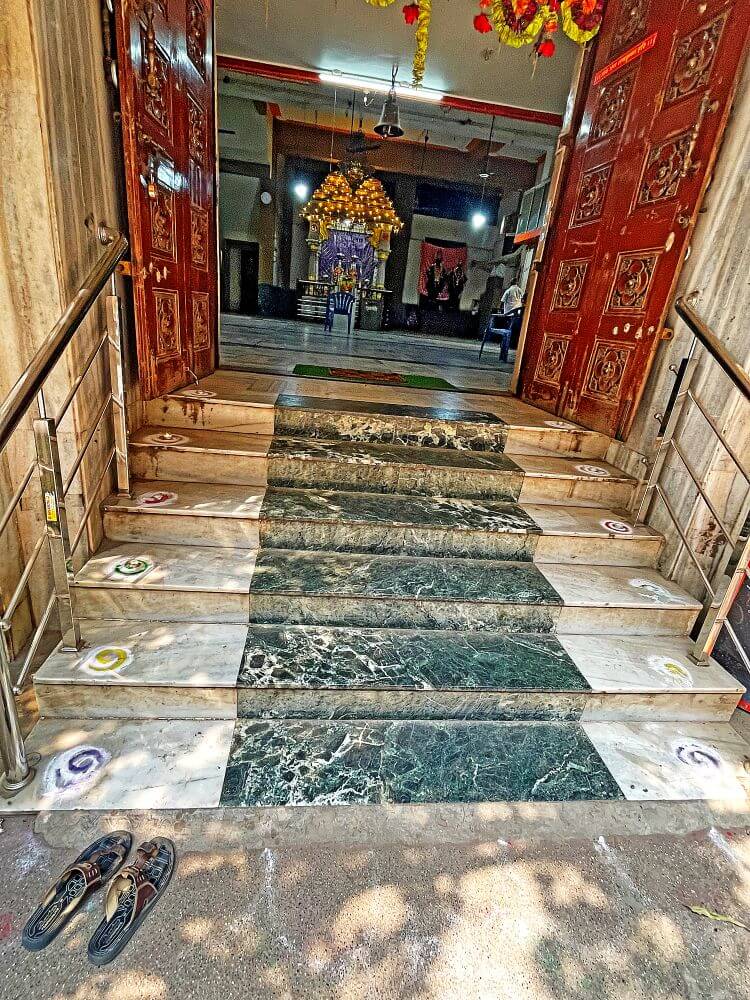
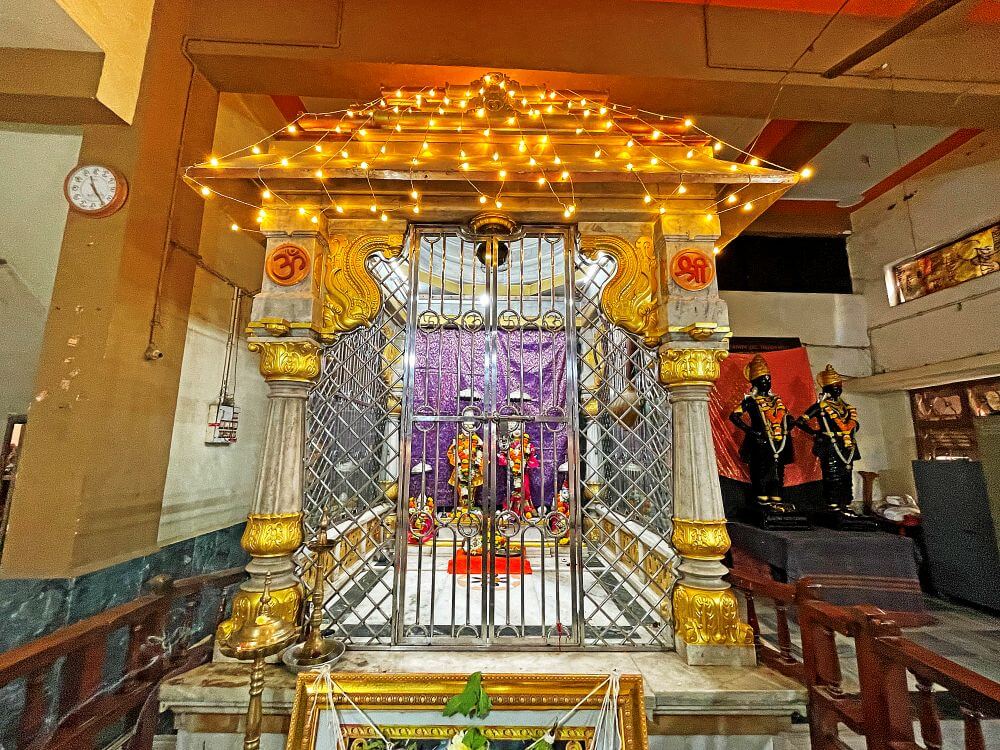
The temple consists of a Sabha Mandap (assembly hall) and beyond it, a circumambulation path leading to the Garbhagriha (sanctum sanctorum). The Sabha Mandap here is enclosed and the entire floor is paved with marble. There is a Ganesh idol on the lintel of the entrance to the Garbhagriha. On the pillars of the entrance to the Garbhagriha, there are elephants on both sides. Inside the Garbhagriha, there are marble idols of Vitthal-Rukhumai on a Vajrapitha. These idols have silver crowns and a silver umbrella above them. A Garuda is carved on Vitthal’s seat. To the left of Vitthal is Ganesh, and to the right of Rukhumai is a marble idol of Shri Krishna holding a flute.
This temple was visited by the Shankaracharya of Puri in nineteen forty-eight, and by the Shankaracharya of Kanchi Kamakoti Peeth, Jayendra Saraswati, in nineteen eighty. Since ancient times, festivals are held in the temple from the tenth day of the bright fortnight (Shukla Paksha) to the first day of the dark fortnight (Vadya Pratipada) on the occasion of Ashadhi and Kartiki Ekadashi. At this time, the area takes on the appearance of a pilgrimage site. On Ekadashi, a grand worship (Mahapuja) of Vitthal is performed. On the full moon day (Purnima), the palanquin of Vitthal goes to the nearby Bhimeshwar Temple. There used to be water tanks near the Bhimeshwar Temple. With the sentiment that Vitthal goes to meet Chandrabhaga, the holy footprints (Padukas) of the deities are bathed and worshipped in the Bhimeshwar Temple. Later, after circling the platform (Par) in Thange Ali, the palanquin comes near the Maruti Temple. Then, via the market, the palanquin returns to the Vitthal Temple. The festival concludes after the Kala Kirtan on the day of Vadya Pratipada. Kirtans are held here on the occasion of both Ekadashi festivals. Women’s bhajans are also held here every Thursday. During Chaturmas, Puranas are read daily in the temple. When the palanquin arrives at the temple on Tripurari Ekadashi, the Tripura worship is performed here. The lamp pillar in front of the temple is illuminated with lamps. At night, a battle of fireworks (arrows) takes place on the road in front of the temple. Experts say that this battle is held in memory of a battle that took place in history.
The public Ganeshotsav was started in Vani Ali in the year 1909. During this festival, cultural programs such as fairs, plays, and Powadas were held. Zhenda Naka is located near this temple. After Chhatrapati Shivaji Maharaj captured Bhiwandi in 1657, he had naval ships built in Bhiwandi in 1659. Before conquering the Mahuli fort in 1670, he had camped in Bhiwandi. Previously, the area up to the Bandar Naka in the city was under the rule of the Rajas of Jawhar. Later, to commemorate the inclusion of this region into Swarajya, this junction was named Zhenda Naka. Earlier, during the Holi festival, a Karanja tree would be planted in the center of the junction, and a flag would be hoisted upon it. Over time, the tradition of cutting the tree was discontinued, and now only the flag is hoisted. Later, the location of the flag was moved to the side of the road to avoid obstructing traffic. Every year, flag hoisting is performed here on the day of Shiv Jayanti.
This sacred temple stands as a testament to deep spiritual devotion, ancient architectural grandeur, and rich local cultural traditions.
The sanctum sanctorum houses the divine idol consecrated according to ancient Vedic traditions, surrounded by serene courtyards and traditional temple architecture.
Navratri, Maha Shivratri, Annual Temple Jatra & Deepotsav
Compare and book flights, secure top-rated local hotels near the temple, hire reliable guides, and rent cars instantly.
Extend your pilgrimage by visiting other highly sacred temples located nearby.


Add ₹999 more to unlock FREE SHIPPING!
Your sacred cart is currently empty.
Shop Photo FramesFill in your delivery details below to place your order.
Add comment