
Add ₹999 more to unlock FREE SHIPPING!
Your sacred cart is currently empty.
Shop Photo FramesIn the districts of Ratnagiri and Sindhudurg, the festival of Holi, known as Shimgotsav, is celebrated with great enthusiasm. This festival typically lasts from five to fifteen days. During this time, the idols or masks of the deities are placed in the palanquin of the village deity, which is then carried around the village or the surrounding area. However, the village of Nirul in Ratnagiri taluka is famous for its unique Shimgotsav. In this celebration, the palanquin of the village deity, Swayambhu Samba Deva, is not taken around the village but is instead placed on a raised platform known as the Sahana. For the past two hundred years, a tradition has been followed where all the women of the village, including those who have married and moved away, come to offer the Oti.
Surrounded by hills on all four sides, dense forests, Alphonso mango orchards, lush green paddy fields visible during the monsoon, and a river flowing perennially throughout the twelve months of the year, the village of Nirul is nestled in this nature-rich landscape. The Swayambhu and Jagrut Sambh Temple in this village is famous as a place of faith for thousands of devotees and an important tourist destination for visitors. Due to the surrounding area of this village and the perennial river flowing through it, many tourists visit here throughout the year. Consequently, the state government has included this village in the tourism sector and has granted it a ‘C’ grade for tourism. It is said that about 400 years ago, a great soul built this temple. This temple, which was beautified a few years ago, is considered one of the famous Shiva temples in Ratnagiri.
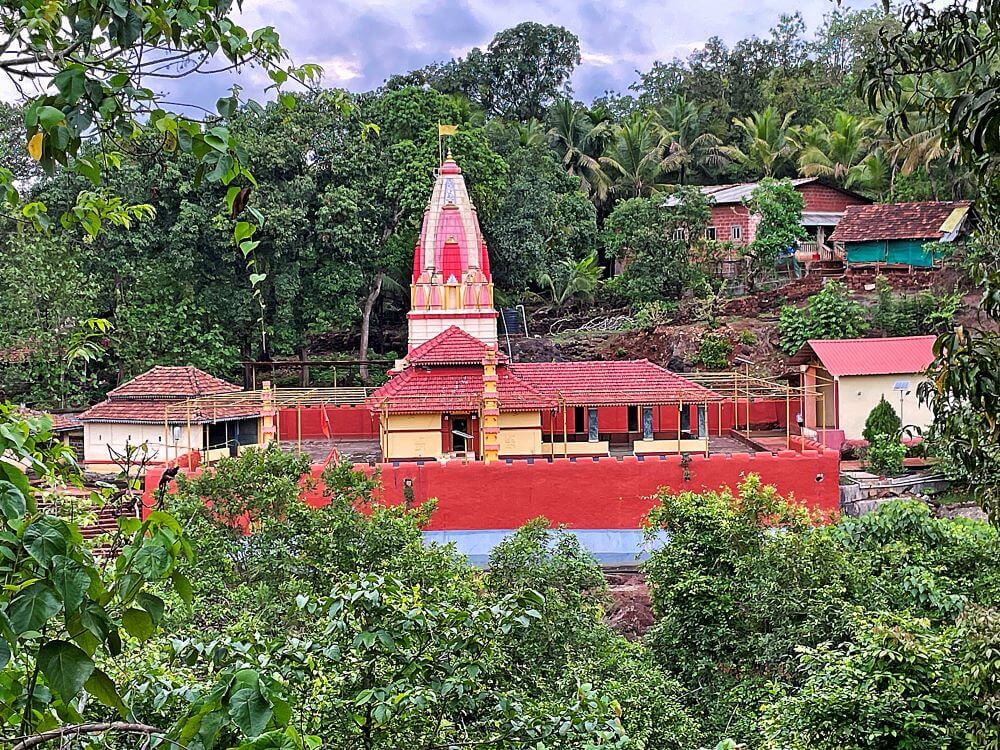
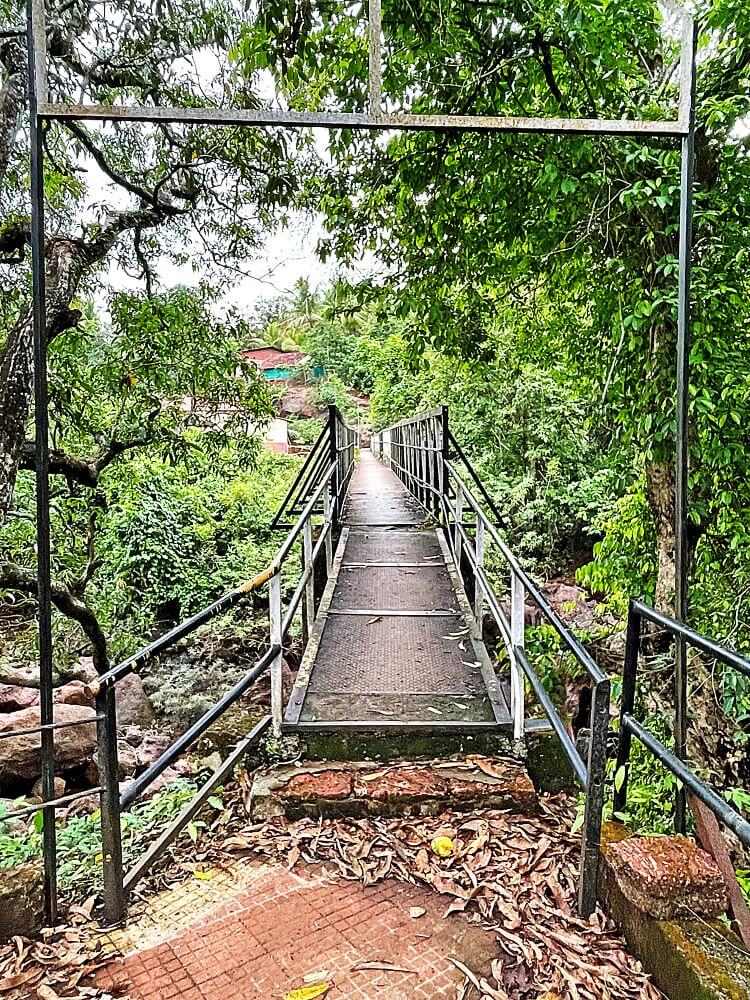
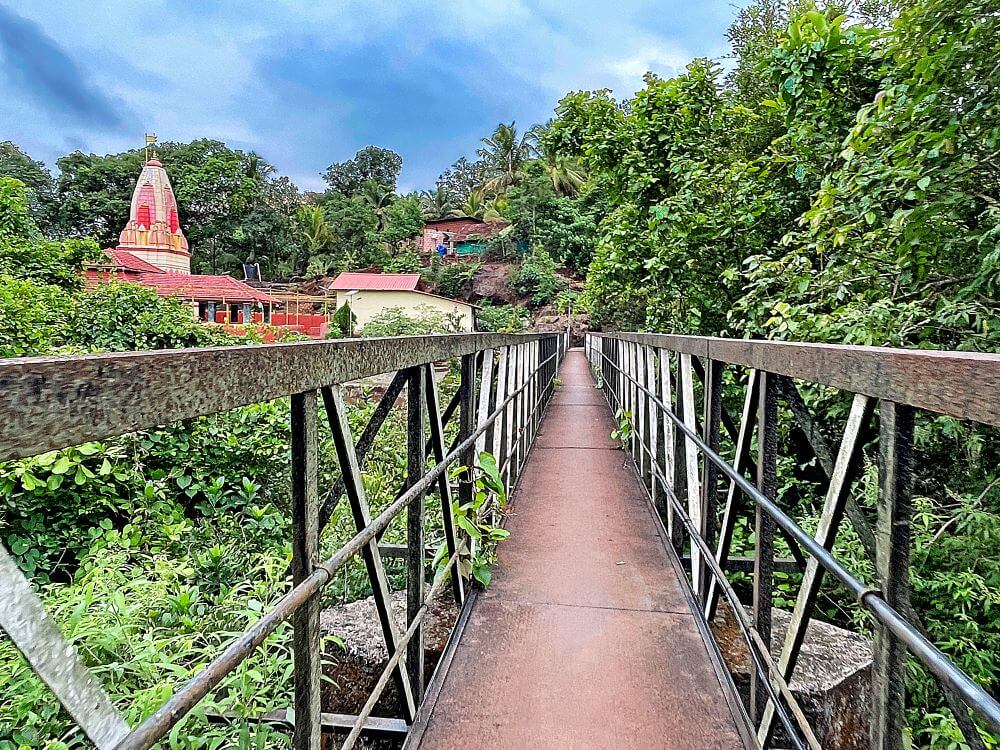
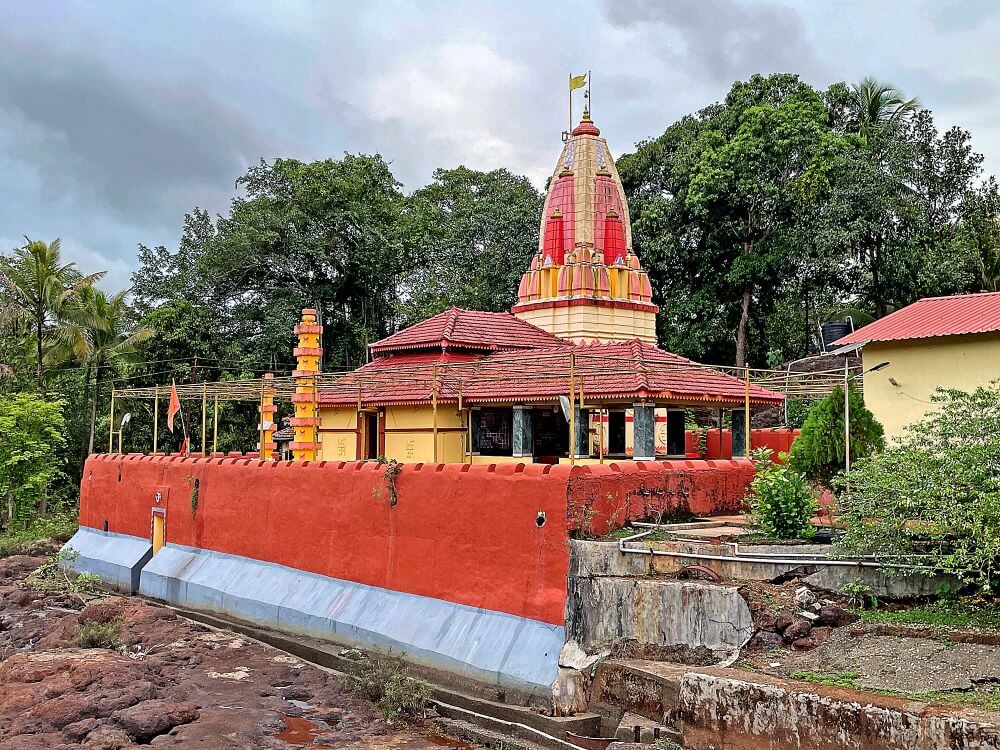
After arriving from Ratnagiri via the Bhatye bridge, there are two routes to reach Nirul. One route goes through the nearby village of Bhatye via Phansop, while the other goes via Pawas. There are large mango trees on both sides of the road leading to the temple. One must cross an iron bridge about 100 feet long over the nearby river to reach the temple. Nestled in the lap of nature, amidst charming tiled-roof houses, stands the Samba temple, the presiding deity of this village. The view of this temple complex, situated on the riverbank, is indescribable during the monsoon season.
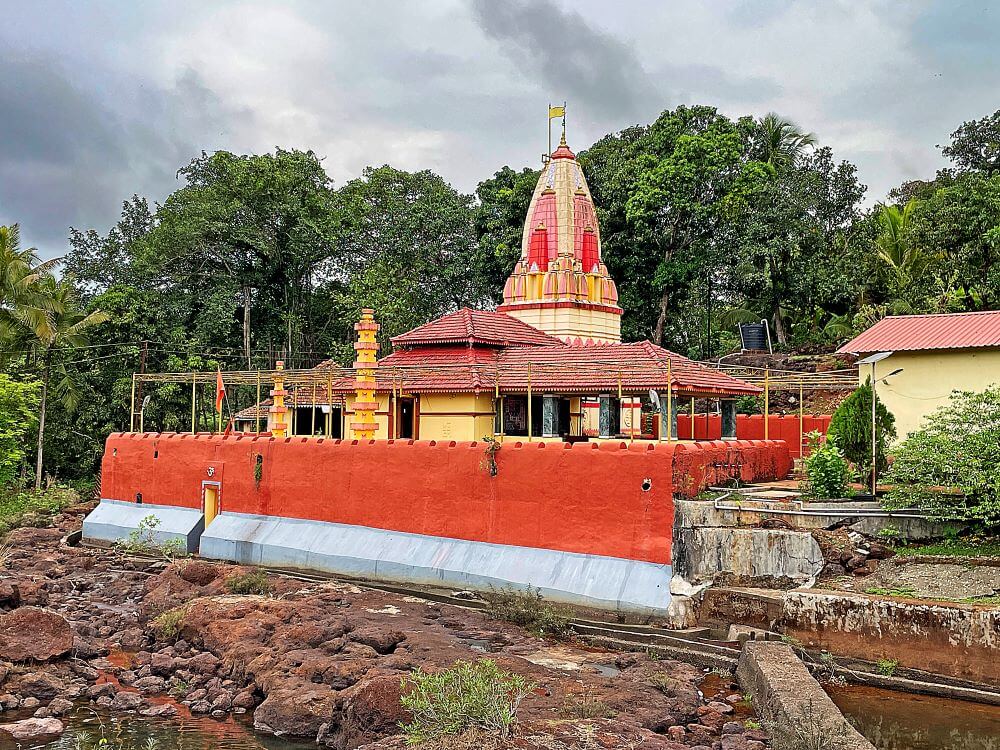
The Samba Temple is situated within a sturdy embankment of laterite stone along the riverbank. Upon entering the temple premises through the gateway in this embankment, the temple’s towering shikhara immediately draws one’s attention. This main shikhara is adorned with numerous carved sub-shikharas, complete with kalashas. The entire courtyard is paved with stone, giving the area a clean and beautiful appearance. In addition to the main entrance, there is a stepped path through the embankment that allows access to the temple from the river. Near this stepped path, there are two deepmalas within the temple courtyard. The temple structure consists of an ardhamandapa, a sabhamandapa, and a garbhagriha. It is evident that the ardhamandapa adjacent to the temple was constructed at a later period. The ardhamandapa and sabhamandapa have tiled roofs, while the garbhagriha features a distinctive shikhara.
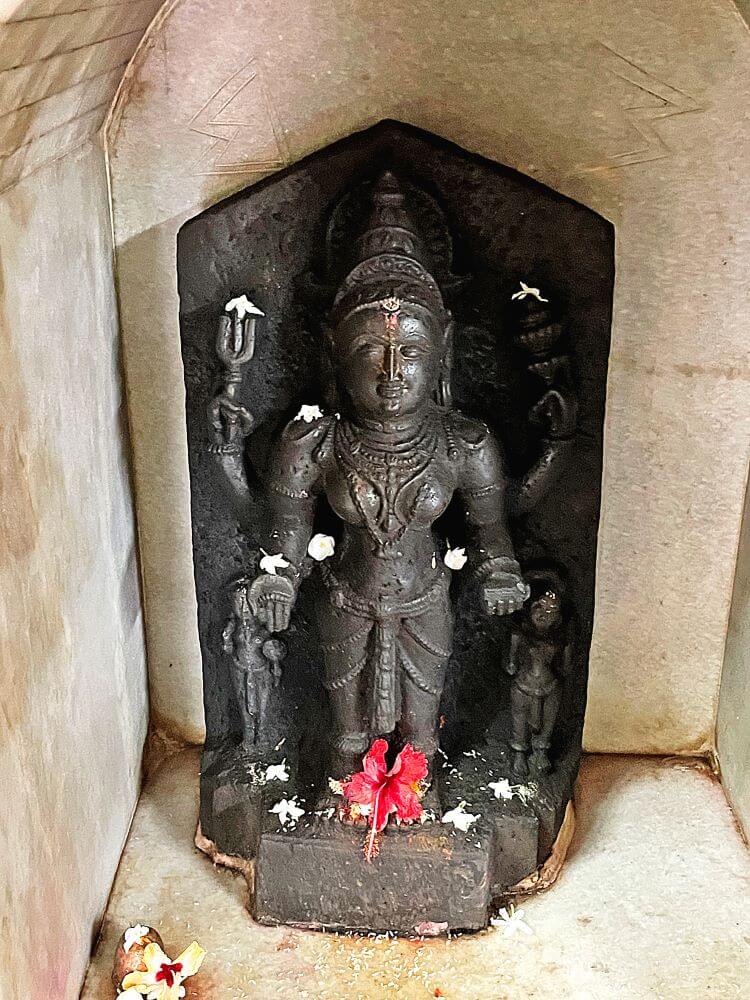
Laterite stone and wood have been extensively used in the construction of the temple. The doorframe at the entrance of the assembly hall (Sabhamandapa) features intricate carvings, with an idol of Lord Ganesha adorning the lintel (Lalatbimba). In the assembly hall, there is a statue of a tortoise, and in front of it stands an idol of Nandi carved from a single monolithic stone. The pillars here also display exquisite carvings. In the niches on both sides of the sanctum sanctorum (Garbhagriha) entrance, there are Shiva Lingas and marble idols of Lord Ganesha. Near the wall on the right side of the sanctum sanctorum, there is a monolithic black stone idol of the family deity, Mother Dhanin (Bhavani). On the lintel of the sanctum sanctorum’s doorframe, there is a large Kirtimukha, with an idol of Lord Ganesha behind it. Inside the sanctum sanctorum, there is a self-manifested (Swayambhu) Linga of Lord Samba, with a serpent hood (Nagaphana) to its left.
A grand five-day pilgrimage fair is held here during the Shimga festival, which takes place on Phalguna Shuddha Trayodashi. During this time, the Shimga festival is celebrated in all the village temples, including the temple of the village deity Swayambhu Samba, as well as those of Mata Dhanin, Jakadevi, Mahakali, Nagadevi, and Dev Vishweshwar. In this, on the first day, from 11 to 3 in the morning Meanwhile, the idols of all the deities are placed in the palanquin. It is said that the mask of Shri Sambh Deva, which is seated in the palanquin, was crafted in the year 1800. After the idols are installed, the palanquin is brought from the Sambh temple to the Sahane (the designated place for placing the palanquin) between 9:30 PM and 12:00 AM. Thereafter, the Holi is brought from 12:30 AM to 4:30 AM. The Shimga festival is celebrated here the next day between 11:00 AM and 5:00 PM. On the third and fourth days, programs such as Shiv Jayanti, Satyanarayan Puja, Naman (Thap Marne), the offering of offerings (Oti) by the dignitaries, and the offering of Oti by the villagers are conducted.
The uniqueness of Nirul village lies in the fact that once the palanquin, carrying the idols of the deities, is placed on the stone platform, it proceeds directly to the temple only on the fifth day. Unlike other villages in the Konkan region, this palanquin is not taken around the village, outside its boundaries, or to individual homes. Villagers who have moved away for work or business, as well as women who have married and moved out of the village, make it a point to be present for this festival. The villagers believe that because the palanquin is not paraded through the village, disputes are avoided, and the festival is celebrated in harmony. Apart from this festival, a grand celebration also takes place at the Samba temple on Mahashivratri. During that time, an unbroken week-long observance is held for four days. Throughout this festival, thousands of devotees come to the temple with their prayers and petitions. Every year on the 12th of May, the temple’s anniversary festival is celebrated. Many devotees also visit during the month of Shravan. Devotees can have the darshan of Lord Samba daily from 7 in the morning until 6 in the evening. Along with this temple, the Jakadevi temple in the village is also a place of deep faith for the devotees.
Along with devotees, tourists also visit this place in large numbers. The pristine, foaming water of the river flowing beside the Samba temple is an attraction for both devotees and tourists alike. Many tourists also visit the temple premises for monsoon picnics. There are large boulders in the perennial river. The water flowing over these boulders creates the illusion of a waterfall. On the bank of the river, there is a large section of rock which the villagers call ‘Devacha Maad’. This river, which otherwise flows calmly, assumes a fierce form during heavy rains.
This sacred temple stands as a testament to deep spiritual devotion, ancient architectural grandeur, and rich local cultural traditions.
The sanctum sanctorum houses the divine idol consecrated according to ancient Vedic traditions, surrounded by serene courtyards and traditional temple architecture.
Navratri, Maha Shivratri, Annual Temple Jatra & Deepotsav
Compare and book flights, secure top-rated local hotels near the temple, hire reliable guides, and rent cars instantly.
Extend your pilgrimage by visiting other highly sacred temples located nearby.


Add ₹999 more to unlock FREE SHIPPING!
Your sacred cart is currently empty.
Shop Photo FramesFill in your delivery details below to place your order.
Add comment