
Add ₹999 more to unlock FREE SHIPPING!
Your sacred cart is currently empty.
Shop Photo FramesTasgaon taluka is famous for its grape production. The village of Savalaj in this taluka is situated on the banks of the Agrani River. Local villagers state that the village gets its name, Savalaj, from the fact that the river takes six bends while flowing around the village. The ancient Savalsiddha Temple, built in the Hemadpanti architectural style, is famous in this village. The Maruti deity in this temple is addressed as Savalsiddha, derived from the name of the village. Devotees believe that the deity here is one who fulfills their vows. The nine-day-long Dussehra festival celebrated here is especially renowned.
Due to the influence of the Navnath tradition on the social life of Western Maharashtra, the word ‘Nath’ began to be added before the names of many deities. Maruti possessed the eight Siddhis: Anima, Mahima, Garima, Laghima, Prapti, Prakamya, Ishitva, and Vashitva. Through the Anima and Mahima Siddhis, Maruti was able to assume both an extremely minute and a colossal form. Due to the Garima and Laghima Siddhis, he could become extremely heavy or weightless. With the Prapti Siddhi, Maruti could obtain any object in the universe, and he also understood the languages of all animals and birds. Because he possessed the Prakamya Siddhi, Maruti was capable of traversing the skies, the netherworld, and the waters. Through the Ishitva Siddhi, he attained divine powers. Due to the Vashitva Siddhi, he was capable of controlling both body and mind. Because he possessed these Siddhis, the name Siddhanath became associated with Maruti.
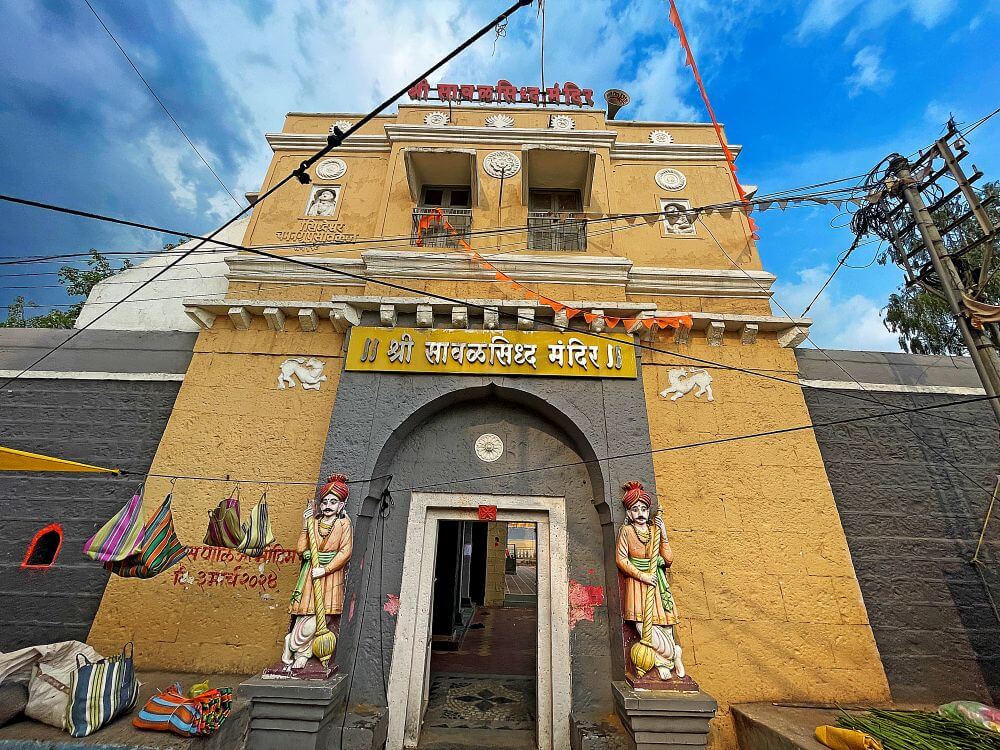
It is said that this temple, built of carved stone, is seven hundred to eight hundred years old. This temple has a fortification with strong bastions and a two-story entrance gate. There is a crescent-shaped arch above the entrance. On both sides of the entrance There are guardian sculptures on the sides. On the facade above the entrance, there are Vyala sculptures in relief style. There is a Nagarkhana on the floor above it. Due to the unique design of the window in the temple fortification to the left of the entrance, one can have a darshan of the Siddhanath Maruti idol in the sanctum sanctorum when looking through it. There are guard rooms on both sides inside the entrance. Further ahead is the temple courtyard. In the courtyard, on a large platform, there is a two-tiered circular lamp pillar and a Tulsi Vrindavan to the side.
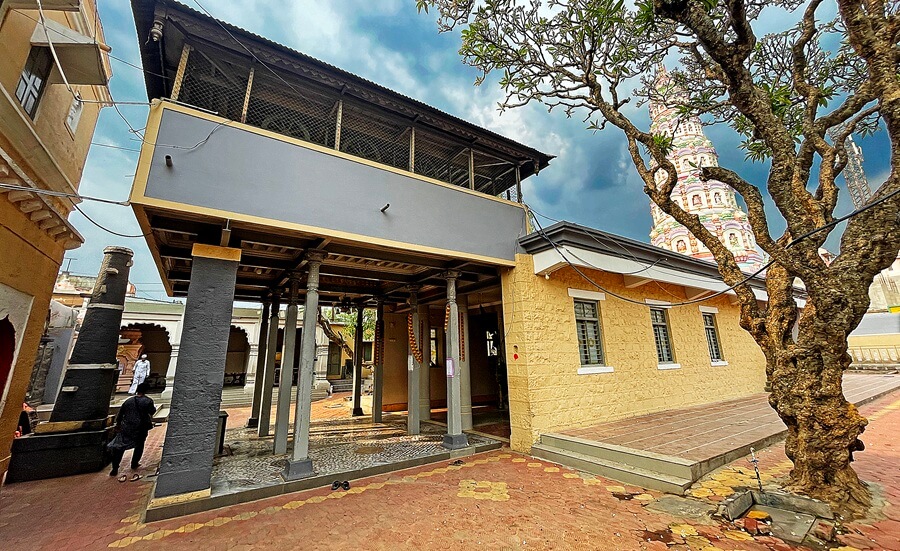
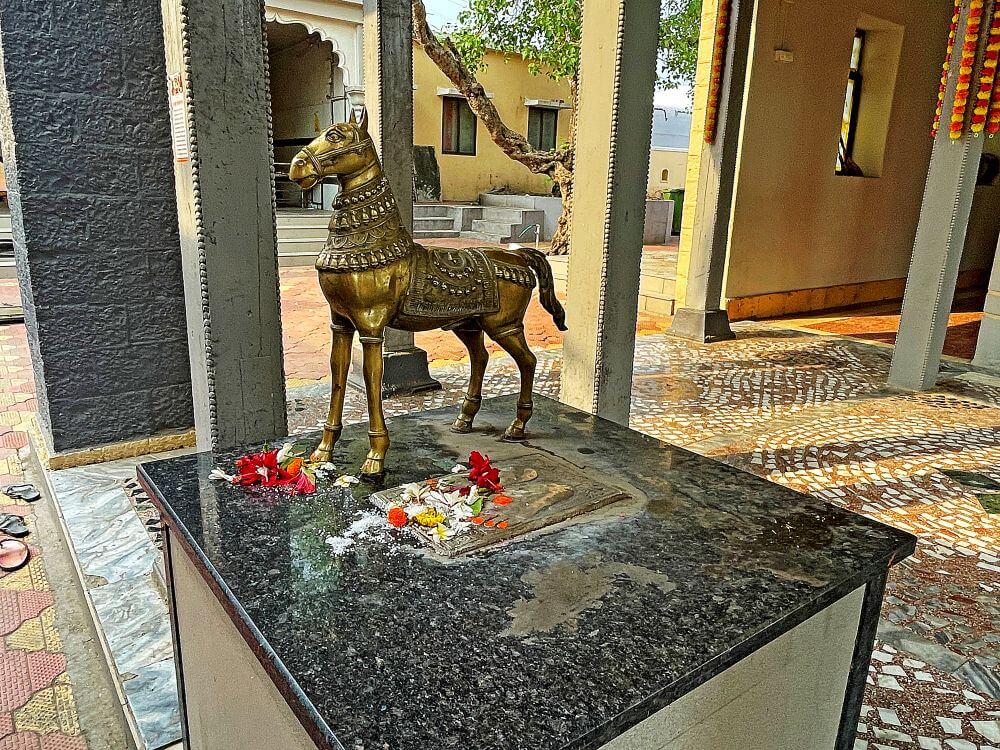
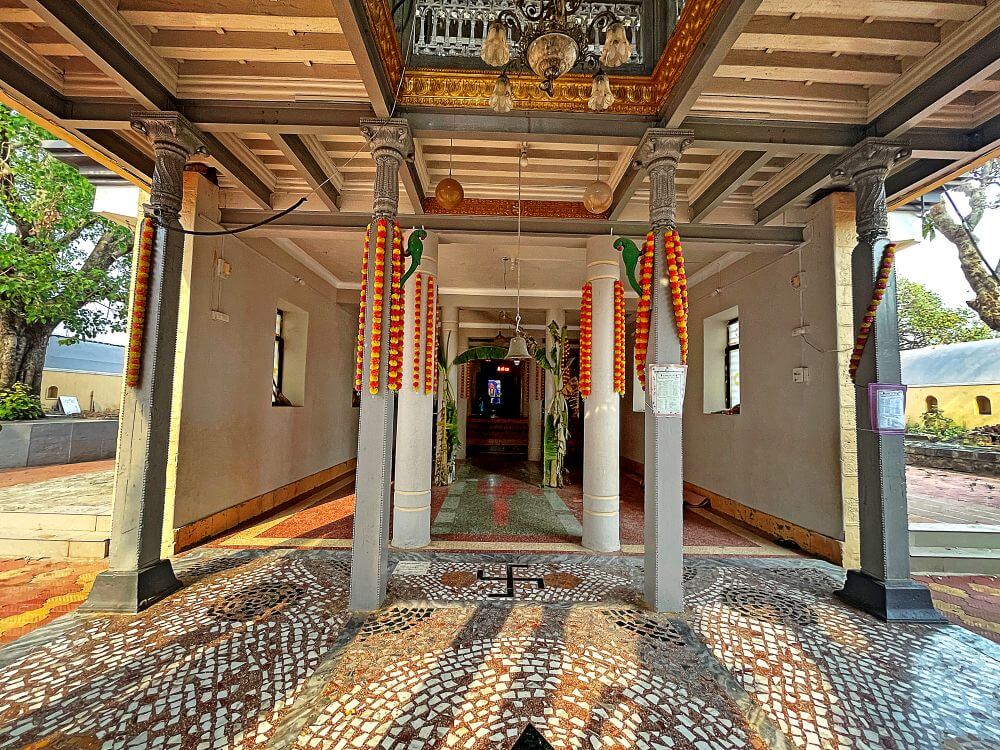
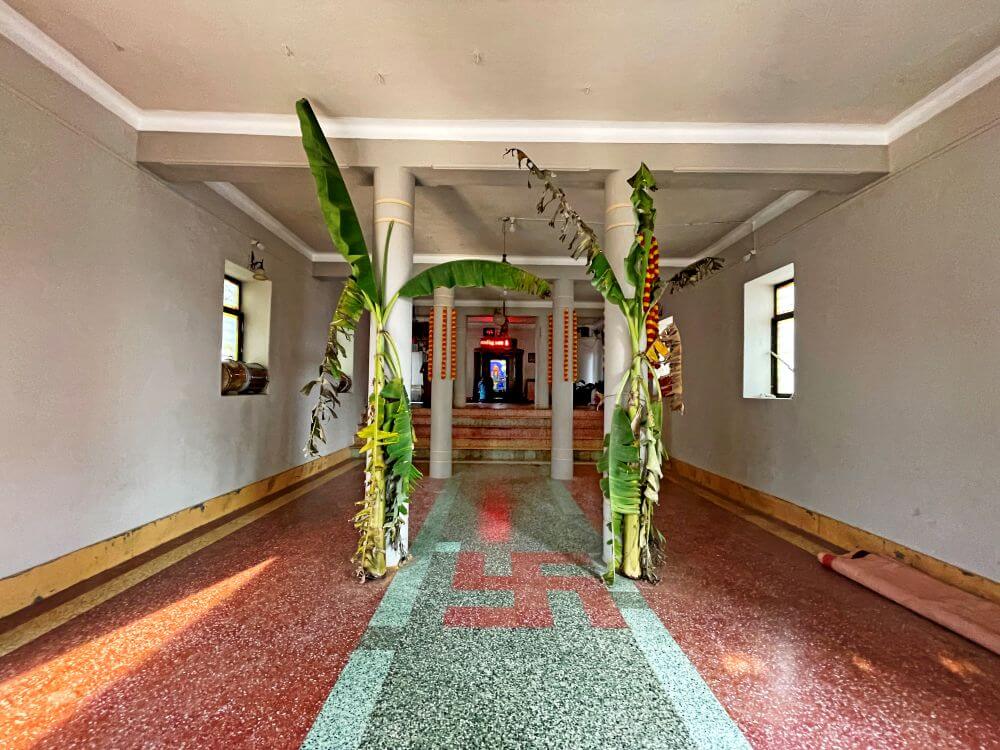
Beyond that is the two-storied wooden entrance pavilion (Mukhamandapa) of the temple. On the beam of the Mukhamandapa, there is an inscription stating that this pavilion was built by Bhimrao Dhondi Sutar between the years 1857 and 1858. In the center of this, on a raised platform, there is a brass idol of a horse and silver footprints (Padukas). Below this platform is an ancient idol smeared with vermilion. Further ahead is the enclosed stone assembly hall (Gudhamandapa) of the temple. The enclosed assembly hall has windows arranged for light and ventilation. From this assembly hall, moving further ahead to a slightly elevated area, another One enters the assembly hall. On its walls are serpent sculptures and paintings of Hanuman and Ganapati painted in the year 1975. The palanquin used during festival periods is hung from the ceiling here.
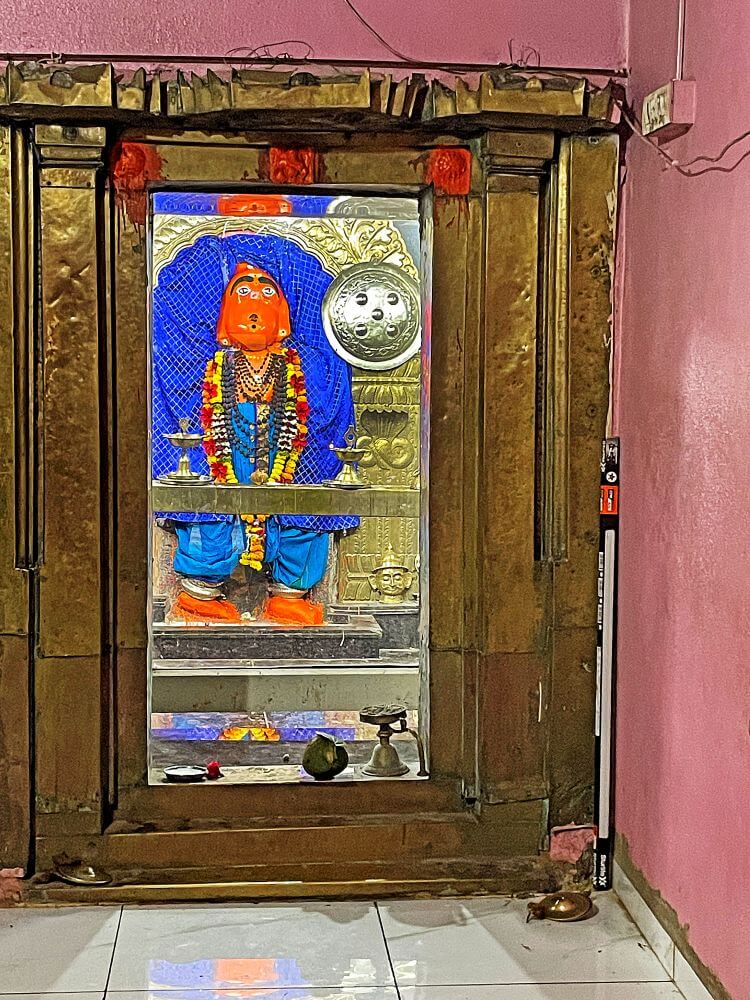
Ahead is the entrance to the Antarala. On all three doorjambs of the entrance, there are vertical carvings, and an idol of Lord Ganapati is placed on the Lalatabimba. On both sides of the entrance, there are two ornate pillars. In the bedroom located within the Antarala, the deity’s bed is beautifully decorated. On the walls of the bedroom, there is an ancient idol of Lord Ganesha smeared with vermilion. The doorjambs at the entrance of the Garbhagriha are covered with brass sheets. On the Lalatabimba here, there is an idol of Lord Ganesha, and on the lintel, there are carvings of lotus flowers on both sides. In the Garbhagriha, on a Vajrapitha, stands a six-foot-tall idol of Siddhanath Maruti, smeared with vermilion. The idol’s eyes, mustache, and the crown on its head are made of silver. Beside the idol, which is adorned with a dhoti and an upper garment, is a shield. On the brass covering behind the idol, there are floral and leaf carvings. This is a living deity. As this is a sacred temple, this Maruti is worshipped with strict ritual purity.
On the roof of the sanctum sanctorum, there are four small spires at each of the four corners, topped with finials. In the center of the roof stands a five-tiered, twelve-sided spire. Each tier features twelve niches containing idols of deities. At the apex of the spire is the amalaka, surmounted by a finial and a sacred flag. On the exterior wall at the rear of the temple is a gomukha. Adjacent to this gomukha are ancient ruins and hero stones of the temple. In the temple courtyard, along the fortification wall, there are pillared corridors adorned with intricate carvings. Within these corridors are shrines dedicated to Ganapati, Shri Datta, Vitthal-Rukmini, and Maruti. It is said that the idol in the Maruti temple located within this corridor was installed by Samarth Ramdas Swami. Beneath the vast peepal tree in the courtyard, there is an idol of Shani Deva placed upon a stone platform.
The main annual festival of Dussehra is celebrated in the temple for nine days. On each of these days, Maruti is adorned in different forms. During this time, programs such as bhajans, kirtans, discourses, and music are organized. Throughout the festival, a palanquin procession of the deity is taken out daily amidst the sound of drums and the showering of gulal. At this time, thousands of devotees from across the state come for the darshan of the deity and to fulfill their vows. Apart from this, a seven-day saptah is celebrated here in the month of Chaitra. A grand fair is held here on the last Monday of Shravan.
This sacred temple stands as a testament to deep spiritual devotion, ancient architectural grandeur, and rich local cultural traditions.
The sanctum sanctorum houses the divine idol consecrated according to ancient Vedic traditions, surrounded by serene courtyards and traditional temple architecture.
Navratri, Maha Shivratri, Annual Temple Jatra & Deepotsav
Compare and book flights, secure top-rated local hotels near the temple, hire reliable guides, and rent cars instantly.
Extend your pilgrimage by visiting other highly sacred temples located nearby.


Add ₹999 more to unlock FREE SHIPPING!
Your sacred cart is currently empty.
Shop Photo FramesFill in your delivery details below to place your order.
Add comment