
Add ₹999 more to unlock FREE SHIPPING!
Your sacred cart is currently empty.
Shop Photo FramesThe village of Akola (Vasud) in Mangalvedha taluka is known for the ancient temple of Siddhanath, who is worshipped in the form of Kalbhairav and is considered a manifestation of Lord Shiva. Situated on the banks of the Man River, the villagers believe that this temple of Siddhanath was built in the fourteenth century. The temple of Siddhanath here is of the ‘Sarvatobhadra’ style. Additionally, the sculpted lamp pillar (Deepmal) in front of the temple is considered a major attraction. Siddhanath is the guardian deity of the village. He is also the family deity (Kuldaivat) of many families in this region. Devotees firmly believe that Siddhanath is a deity who grants the wishes of those who pray to him.
The legend of Siddhanath is found in the scripture ‘Siddhantabodh’, composed by the Muslim saint-poet Shahmuni. Shahmuni, also known as Shah Hussain, who was born in Pedgaon in Ahmednagar district, composed this work in the year 1778 AD during the Peshwa era. The great author Shridhar Swami, who composed ‘Shivlilamrut’ Nazarekar has also narrated the legend of Siddhanath. According to it, in ancient times, a demon named Kalasura caused great suffering to the sages and ascetics of the southern region. To seek deliverance from him, they approached Lord Shankara. Hearing their plea, Lord Shankara struck his matted locks forcefully against the ground. From this, a Siddha Purusha was created, who was named Siddhanath. Following the instructions of Lord Shankara, he consumed the water from five sacred pools in the netherworld to attain divine powers, and through them, he vanquished Kalasura.
Villagers state that the temple of Siddhanath at Akola (Vasud), who is addressed by the names Kalbhairav, Bhairavnath, Shidoba, and Siddheshwar, dates back to the Yadava era. Mughal invaders had damaged this temple. Brahmapuri, located about 60 kilometers from here, was a major center of Mughal power for some time. Emperor Aurangzeb, who descended into the Deccan to overthrow Maratha power, had established a massive military camp at Brahmapuri from 21 May 1695 to 16 October 1699. It is estimated that the temple may have been damaged during those four and a half years. It is said that later, in the nineteenth century, Sardar Shamrao Ligade renovated this temple. Shamrao Ligade belonged to a noble family from the Peshwa era. He was born in the village of Akole around 1880. He was an avid hunter. Due to this hobby, he developed a close friendship with Chhatrapati Rajarshi Shahu Maharaj of Kolhapur. He was an important leader of the masses in Solapur and of Mahatma Phule’s Satyashodhak movement. He had established a ‘Marathi Boarding’ in Pandharpur at his own expense. A few years after Sardar Shamrao Ligade renovated this temple in his native village, the villagers collected donations and renovated the temple again. Through this, the temple attained its current form.
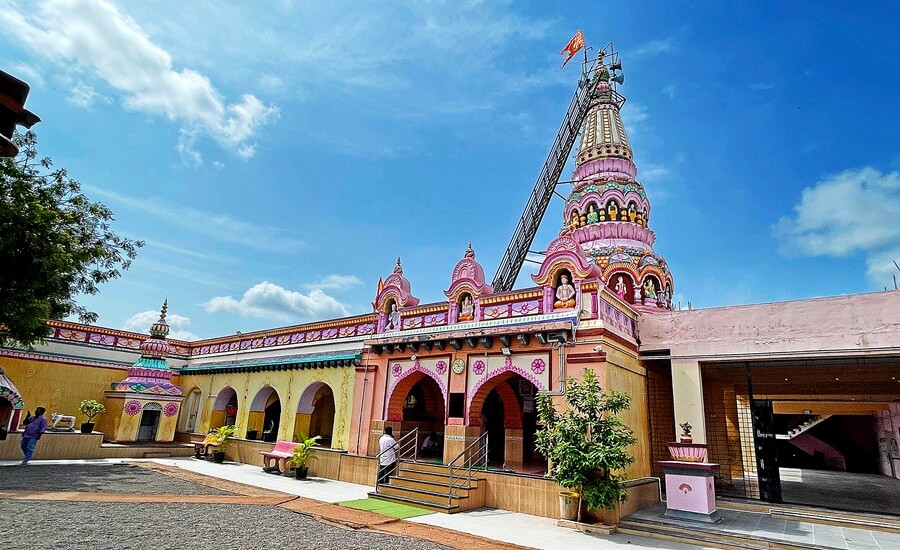
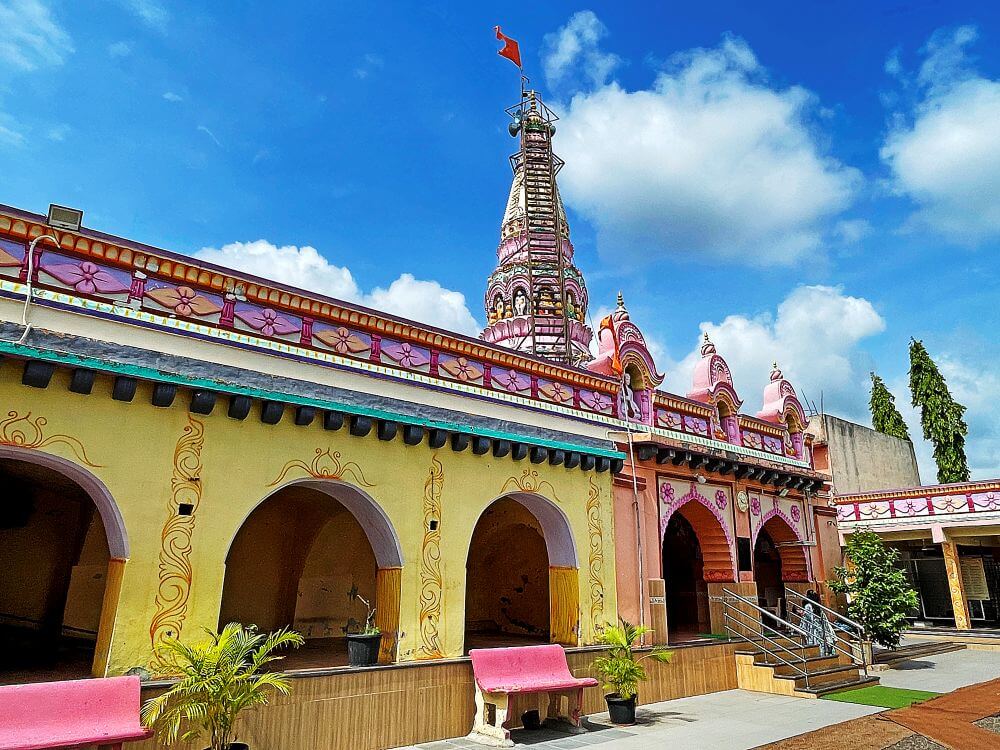
If one observes an overview of this temple, its shape appears like a Vimana. This The temple is built in the Sarvatobhadra style. Sarvatobhadra means auspicious from all sides. A temple that can be entered from all four directions and features a circumambulatory path around the sanctum sanctorum is generally known as Sarvatobhadra. Special significance is attributed to this type of temple in the Vishnu Dharmottara Purana.
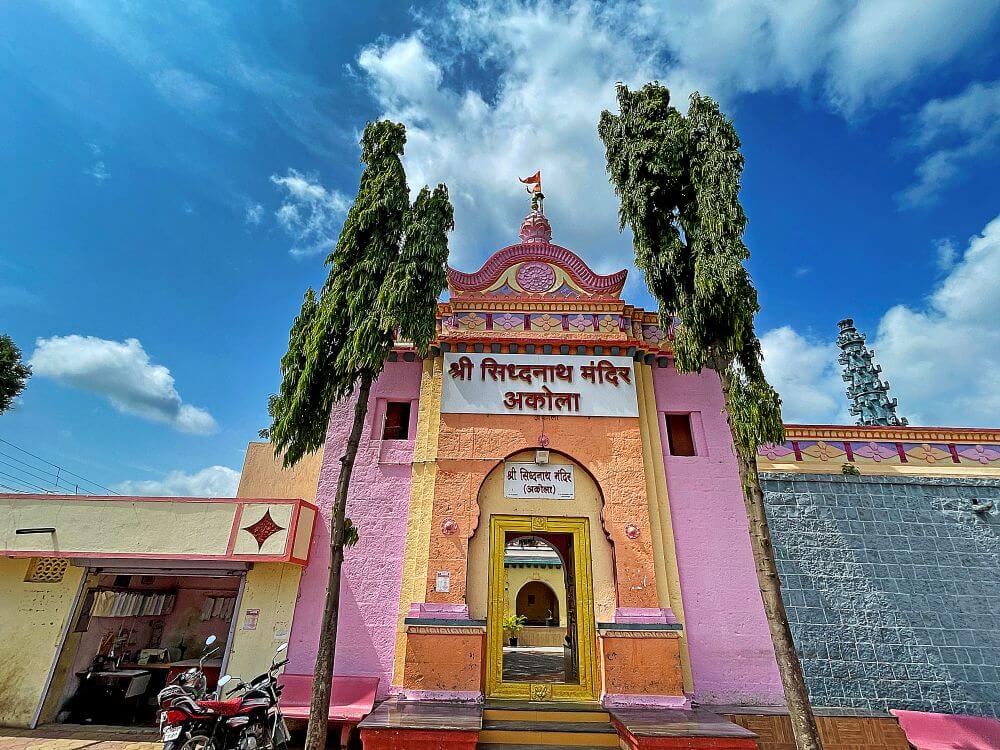
The Siddhanath Temple is located in a central position in Akola (Vasud). Surrounding this temple is a stone fortification, similar to a fort, approximately 20 feet in height. In front of the entrance gate within the fortification, on a high platform on the outer side, stands an ancient stone lamp pillar (Deepstambha). This lamp pillar features a unique arrangement of stones for climbing to the top. In front of the main entrance of the temple within the fortification, there are stone benches (Kakshasanas). The door frames of the entrance are adorned with intricate carvings. In the lower section, there is a Kirtimukha, and on the lintel (Lalatbimba), there is an idol of Lord Ganesha. At the top of this stone-constructed entrance, there is a decorative parapet (Bashingi Kathada), followed by beautiful carvings, and above that, an Amalaka and a Kalasha. This entrance gate has been painted. It looks beautiful because it has been done.
Upon entering through the gateway in the fortification, the Deepmala, which is the main attraction of this temple, catches one’s eye. This Deepmala, adorned with distinctive craftsmanship and various sculptures, has fourteen tiers. The brackets present in each of these tiers are in the shapes of various animals. Approximately 105 sculptures are carved onto this 40-foot-tall Deepmala. Generally, all Deepmalas stand on a plinth, but looking at the structure of this one, it appears to stand on four pillars. In the first tier, four octagonal pillars rise from the ground, and in the niches within the octagonal stone masonry between them, there are idols of various deities facing the four directions. Above this first tier and along the sides of the Deepmala are intricately carved elephant sculptures. In the tiers above that, sculptures of various animals have been used as brackets for the Deepmala. A Deepmala of this kind, with such delicate carving, is rarely seen. Notably, even after enduring the harsh sun and rain for hundreds of years, the beauty of its sculptures It has not diminished even by a hair’s breadth.
The entrance to the Siddhanath Temple is located in front of the lamp tower. There are five steps to reach this temple, which is situated on a high plinth above the ground. The structure of this temple consists of a main hall and two sanctum sanctorums. Three pillars near the entrance are connected to each other by two arched gateways. From here, one enters the main hall of the temple. All the intricately carved pillars in the main hall are connected to each other by arches. In a niche within the main hall, there is an idol of Lord Ganesha adorned with vermilion.
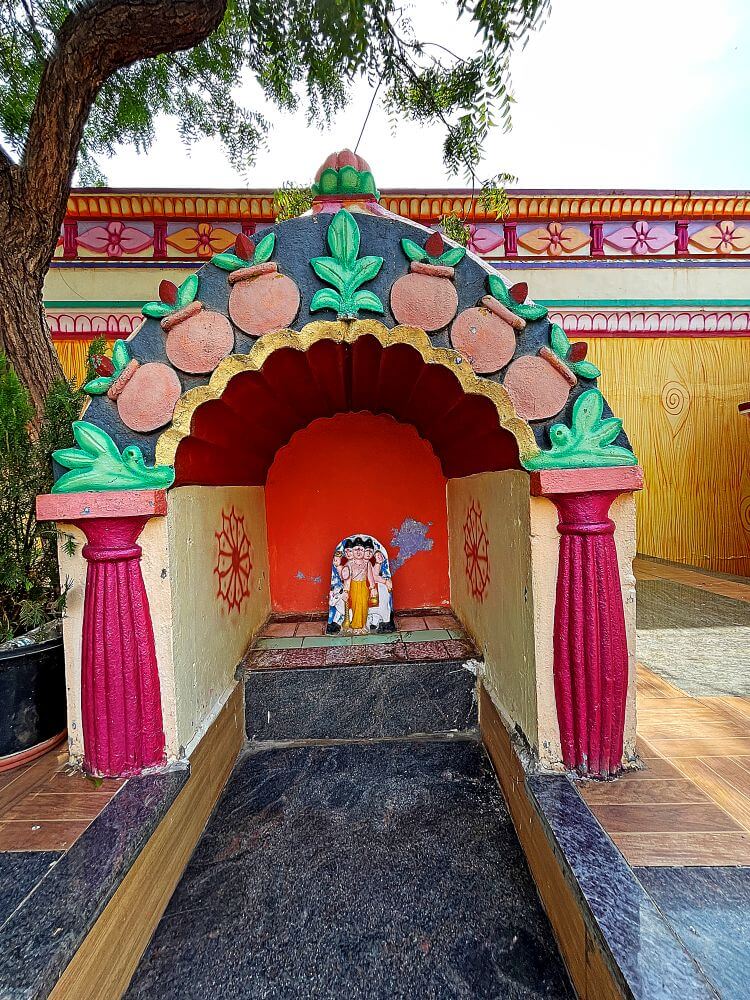
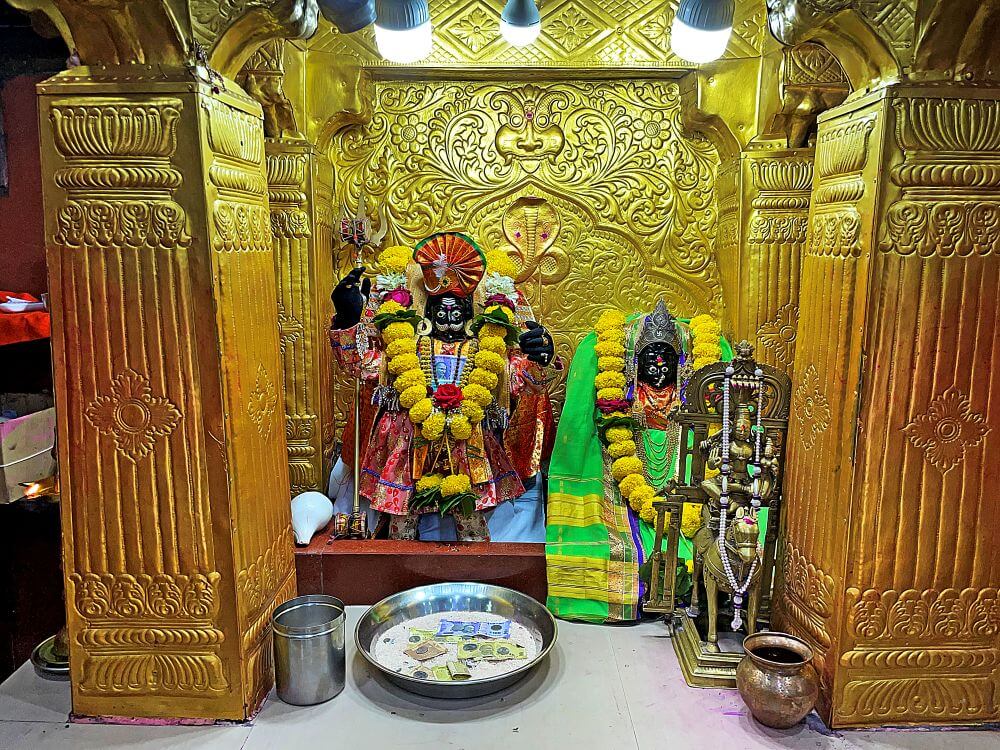
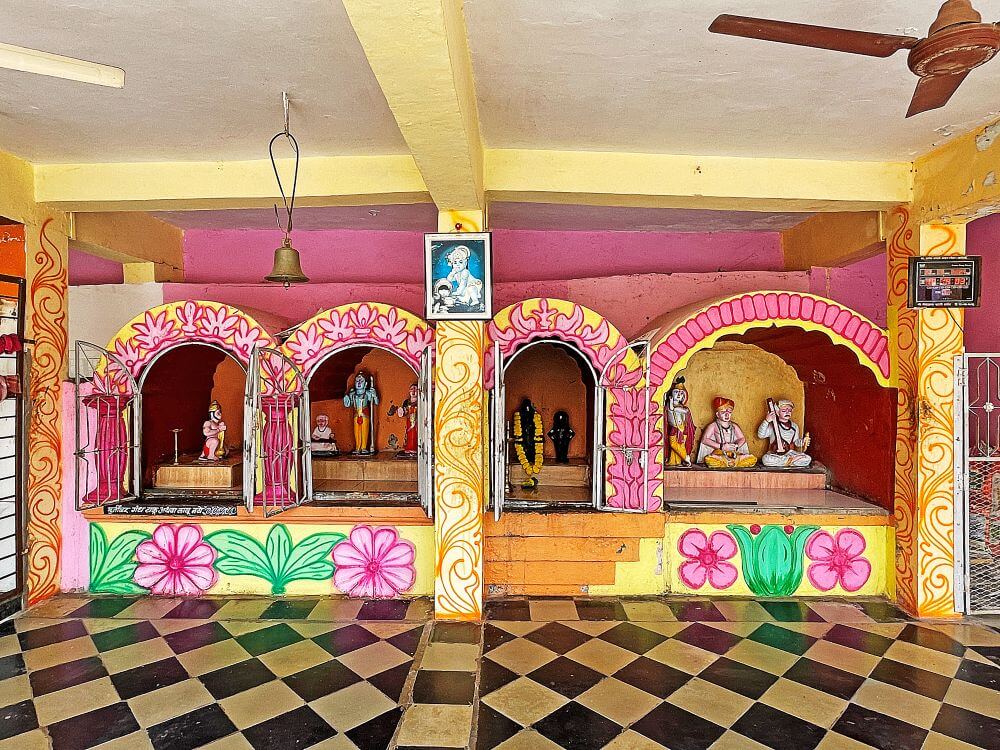
In the small sanctum to the left of the assembly hall is the idol of Maruti, while in the main sanctum to the right, the idols of Siddhanath Baba and Jogeshwari Devi are enshrined on a diamond-studded pedestal. Siddhanath wears a turban on his head, and his imposing moustache, eyes, and the sandalwood mark on his forehead are made of silver. There are rings on the fingers of both hands of the idol. Jogeshwari Devi wears a crown on her head, and her eyes and nose ring are made of silver. Both these idols are adorned in rich, ornate garments. The pillars and walls of the sanctum are covered with brass sheets featuring beautiful craftsmanship. Behind the idols of Siddhanath and Jogeshwari, a hooded serpent is carved, and above it is a Kirtimukh. There are many small temples in the temple courtyard. These house the idols of Shri Datta, Hanuman, Shri Ram, Sita, Shivling, Shri Krishna, Vitthal, Rukmini, Saint Dnyaneshwar, and Saint Tukaram Maharaj. Festivals such as Ram Navami, Simollanghan ceremony, and Navratri are celebrated in this temple. A grand fair is held here on Chaitra Purnima. On the occasion of the fair, the temple and its surrounding areas are decorated. The Kavadi dance, performed amidst the chants of ‘Bam Bam Bhole’, is the main attraction of this fair.
This sacred temple stands as a testament to deep spiritual devotion, ancient architectural grandeur, and rich local cultural traditions.
The sanctum sanctorum houses the divine idol consecrated according to ancient Vedic traditions, surrounded by serene courtyards and traditional temple architecture.
Navratri, Maha Shivratri, Annual Temple Jatra & Deepotsav
Compare and book flights, secure top-rated local hotels near the temple, hire reliable guides, and rent cars instantly.
Extend your pilgrimage by visiting other highly sacred temples located nearby.


Add ₹999 more to unlock FREE SHIPPING!
Your sacred cart is currently empty.
Shop Photo FramesFill in your delivery details below to place your order.
Add comment