
Add ₹999 more to unlock FREE SHIPPING!
Your sacred cart is currently empty.
Shop Photo FramesDeities are named Uttareshwar and Dakshineswar based on the direction they face. There are many famous Shiva temples in India named Uttareshwar. Among these, the 12th-century Uttareshwar Shiva Temple in Bhubaneswar, Odisha, and the Uttareshwar Mahadev temples in Kolhapur and Talegaon-Dhamdhere, Maharashtra, are particularly renowned. Additionally, there are Uttareshwar Mahadev temples in districts like Nanded and Beed. One such ancient and famous temple is located in Kasba Peth of Madha city. The twin temple here is known as Uttareshwar Parmeshwar.
Some scholars believe these temples date back to the Yadava dynasty, seven to eight hundred years ago. Looking at the craftsmanship and pillar structure, they appear to resemble Yadava-era temples. Another school of thought suggests that these temples were built about three hundred years ago by the capable king Ravarambha Nimbalkar of the Nimbalkar dynasty. The Nimbalkar family had long-standing matrimonial relations with the Bhonsle family of Chhatrapati Shivaji Maharaj. Ravarambha Nimbalkar was born into this family and became a Jagirdar through his merit. Later, due to a fallout with Peshwa Balaji Vishwanath, the Nimbalkars went to the Mughals and subsequently served the Nizam. Scholars estimate that Ravarambha Nimbalkar likely built these temples while residing in Madha between the years 1710 and 1736. In any case, it is certain that these temples are at least 300 years old.
It is said that the Shiva temple facing north is known as Uttareshwar, while the Shiva temple facing east was referred to as Purveshwar. Over time, due to linguistic evolution, Purveshwar came to be called Parmeshwar. Thus, the temples here became famous as Uttareshwar and Parmeshwar. It is said that the early morning sun rays perform an abhishek in the sanctum sanctorum of the Parmeshwar temple, while the evening sun rays perform an abhishek in the sanctum sanctorum of the Uttareshwar temple.
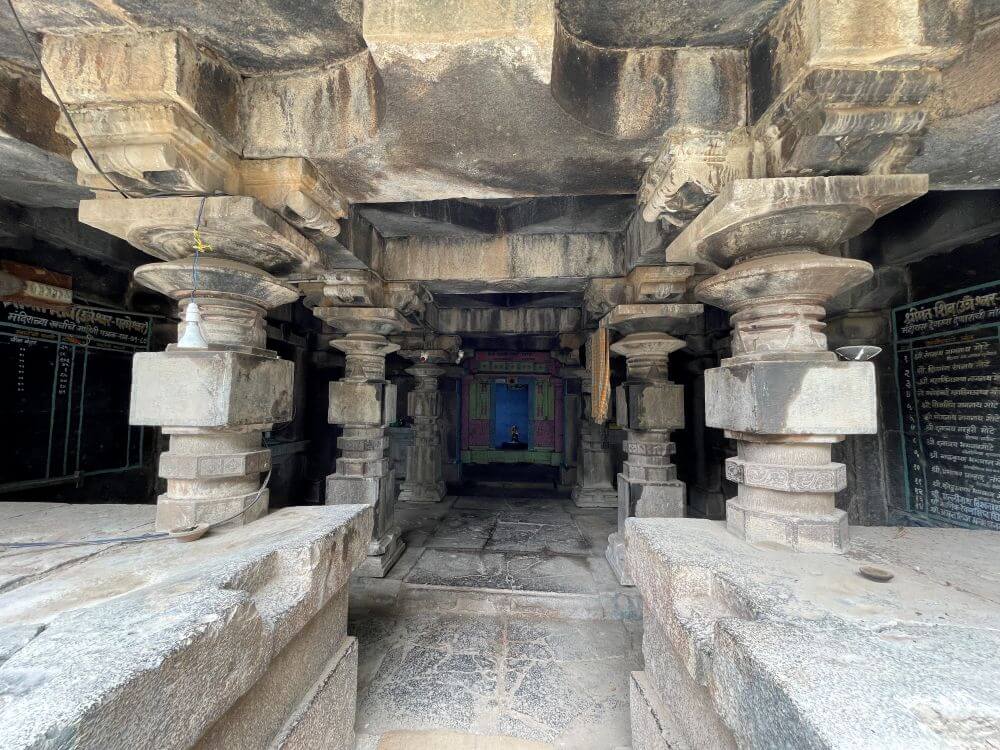
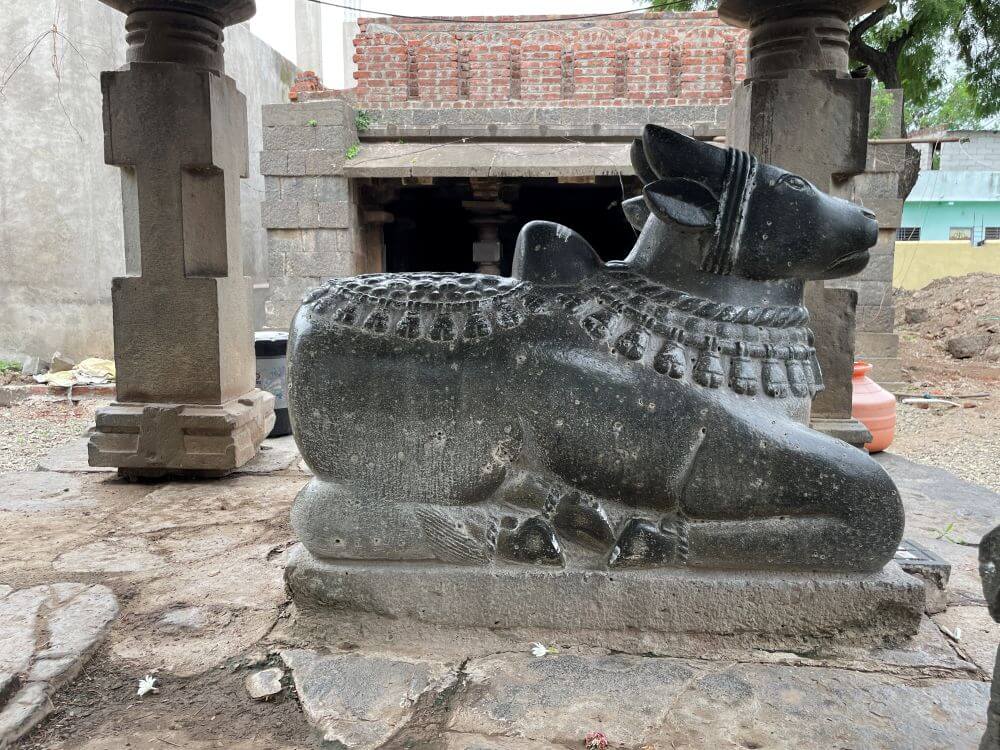
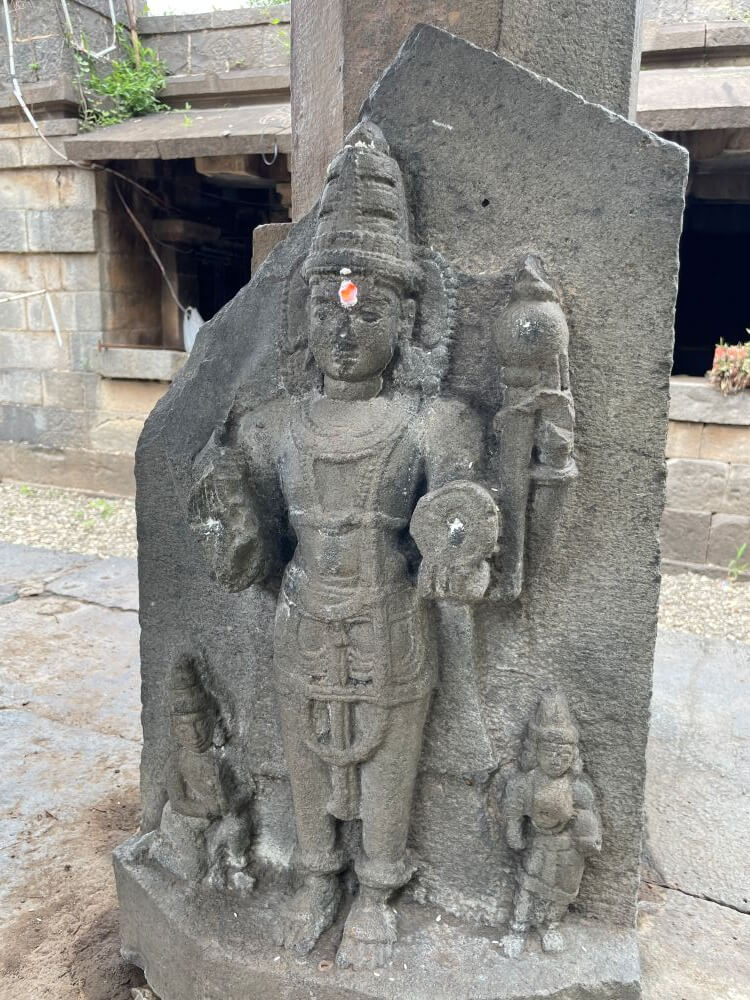
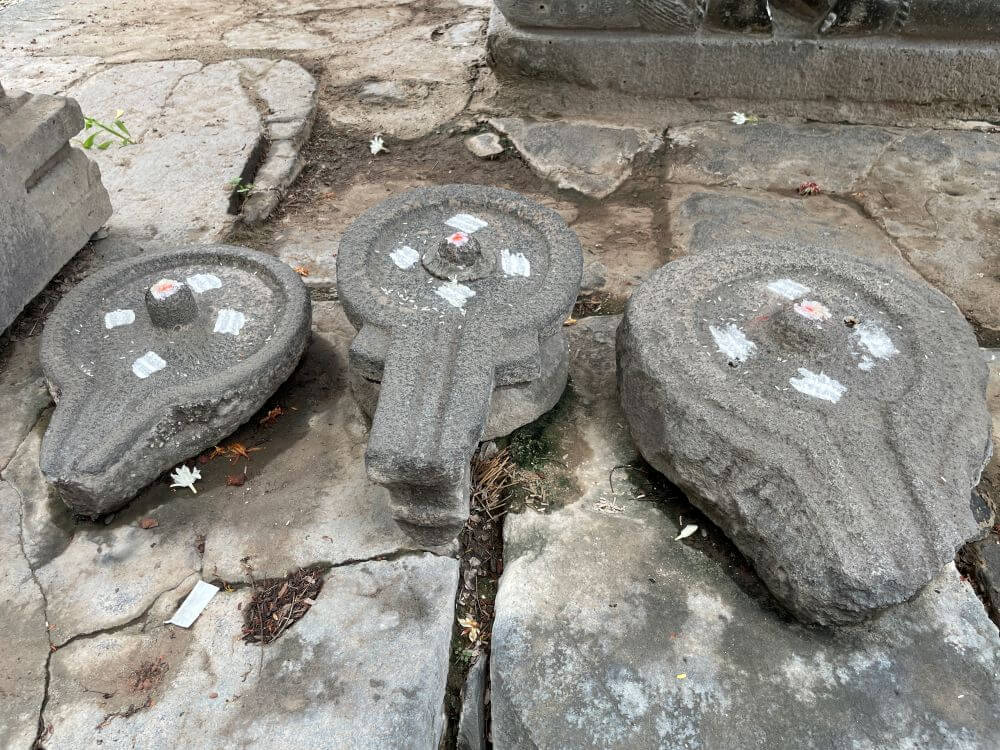
These temples are located in the Kasba Peth area near the outskirts of the city. The temple complex has a strong stone fortification and an entrance gate. Through the entrance, one enters the spacious courtyard of the temple. In the courtyard, there is a single common Nandi Mandapa for both temples. On the stone platform of the Nandi Mandapa, there are four intricately carved pillars at the four corners. The pillar shafts feature various geometric shapes such as squares, hexagons, and circles. At the top of the pillars are brackets, and above the brackets are beams supporting the roof. The octagonal ceiling features a circular floral design in the center. In the middle of the platform, there is a black stone idol of Nandi. Nandi’s face is directed toward the entrance of the Parmeshwar temple. Nandi is adorned with a garland of bells and a carved saddle cloth on its back. Beside the Nandi idol, leaning against a pillar, is a four-armed stone idol of Lord Vishnu. Vishnu holds a conch, discus, mace, and lotus in his hands. Garuda and Hanuman are carved near the feet of the deity. Next to the Vishnu idol are three Shiva Lingas. Adjacent to the Nandi Mandapa platform, there are several Veergal (hero stones), Sati stones, and Kanya (maiden) sculptures on the ground. There is an ancient well in the courtyard. Some other hero stones, Nandi idols, and sculptures are scattered in this area. The Uttareshwar temple consists of a Sabha Mandapa (assembly hall), Antarala (vestibule), and Garbhagriha (sanctum sanctorum). The Sabha Mandapa has railings on both sides of the entrance with four half-pillars. The Sabha Mandapa has four rows of four pillars each. The four half-pillars near the entrance and the four pillars in the center of the Sabha Mandapa are intricately carved. The pillar shafts feature various geometric shapes such as squares, hexagons, octagons, and circles. The octagonal ceiling between the four pillars has a circular floral design in the center. The temple floor is paved with stone, and there is a square Rangashila (dance stone) between the four central pillars. At one time, programs such as dance, drama, singing, and instrumental music were organized on the Rangashila for the deity’s entertainment. There are a total of four niches in the Sabha Mandapa—two on either side of the entrance and two on the front wall of the Antarala.
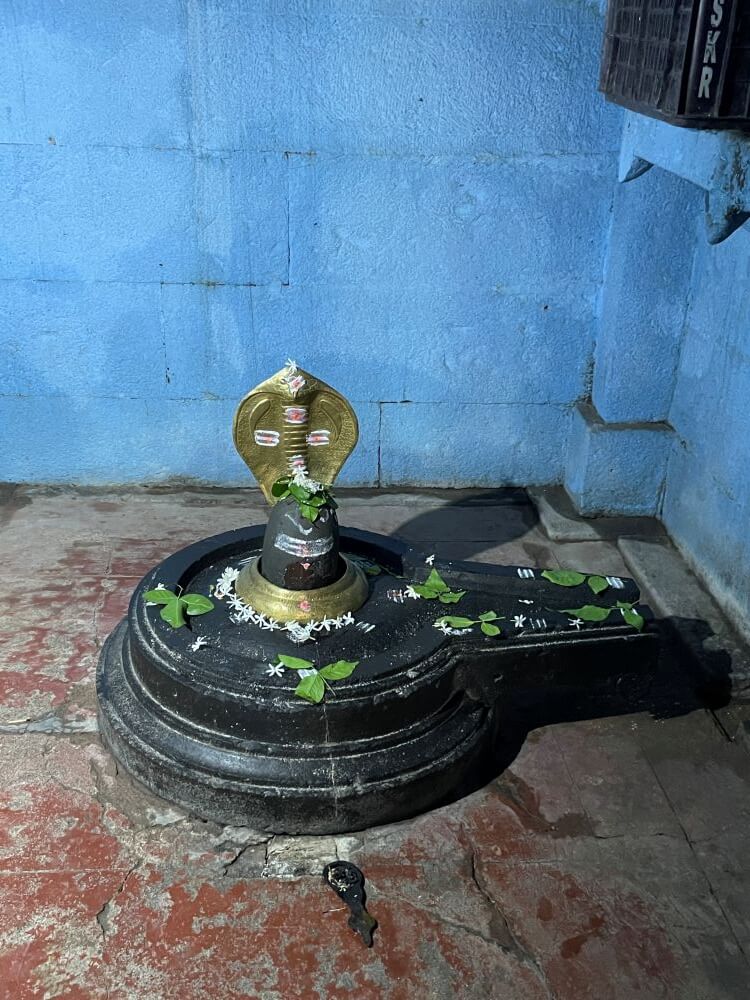
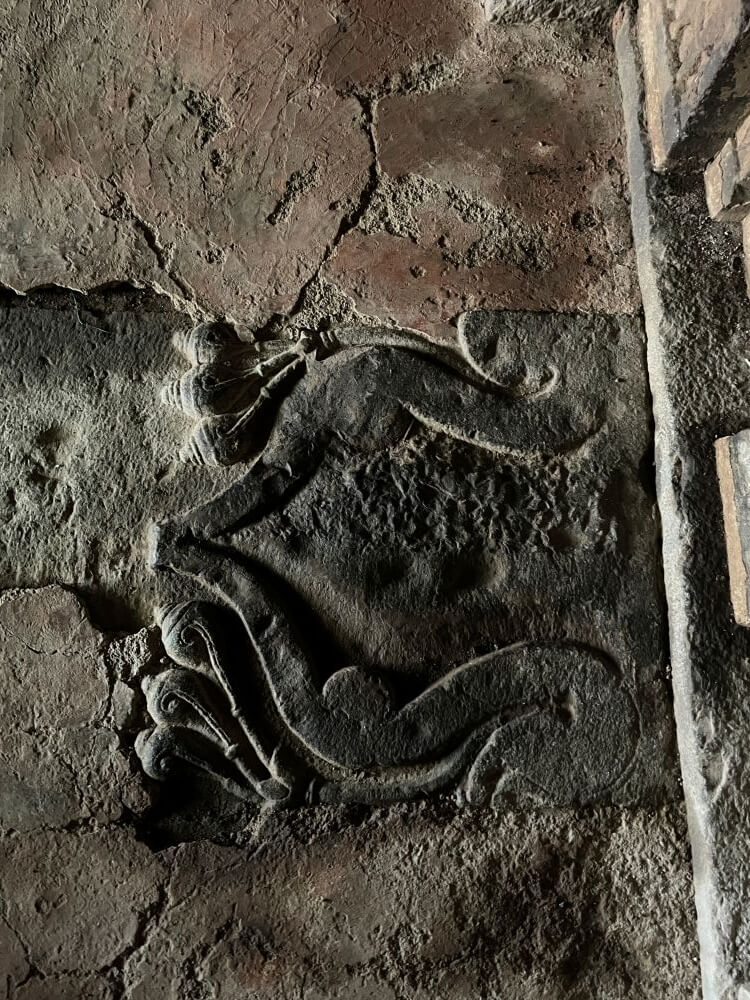
In the Antarala, in front of the entrance to the sanctum sanctorum, there is a welcoming design carved into the stone floor. At the entrance of the sanctum sanctorum, on both sides, there are sculptures of Shaiva and Vaishnava gatekeepers, female gatekeepers, and attendants holding whisks. The door frames feature carvings of leaves, flowers, and pillars. There is an idol of Lord Ganesha on the lintel, and the arch is decorated with floral motifs. On both sides of the moonstone (Chandrashila) at the threshold, there are Kirtimukha and elephant friezes. In the center of the sanctum sanctorum, there is a Shiva Linga on the floor. A brass cobra with a hood is placed over the Shiva Linga. The ceiling of the sanctum sanctorum is supported by the walls, and the ceiling features a circular design with a stone chandelier in the middle.
The Parmeshwar temple is located next to the Uttareshwar temple. The structure of both temples is generally similar. There are railings on both sides of the Sabha Mandapa entrance. The four half-pillars on the railings and the four pillars in the center of the Sabha Mandapa are carved, while the other pillars are plain and square. There is a square Rangashila in the center of the four middle pillars. The Sabha Mandapa has niches, and there is a welcoming stone on the floor in front of the sanctum sanctorum entrance in the Antarala. At the entrance of the sanctum sanctorum, there are sculptures of gatekeepers and attendants, and intricately carved door frames. There is an idol of Lord Ganesha on the lintel, and a moonstone and Kirtimukha at the threshold. The Shiva Linga in the sanctum sanctorum is relatively smaller than the Shiva Linga of Uttareshwar.
A large fair is held here on Mahashivratri. During this time, a large number of devotees come to these temples for darshan. Various religious programs are organized on this occasion. Along with this, the number of devotees visiting the temple is relatively higher during Nag Panchami, the month of Shravan, and other festivals throughout the year. Students of architecture and sculpture frequently visit these temples, which are a heritage of history. Devotees can visit these temples for darshan every day from early morning until late at night.
This sacred temple stands as a testament to deep spiritual devotion, ancient architectural grandeur, and rich local cultural traditions.
The sanctum sanctorum houses the divine idol consecrated according to ancient Vedic traditions, surrounded by serene courtyards and traditional temple architecture.
Navratri, Maha Shivratri, Annual Temple Jatra & Deepotsav
Compare and book flights, secure top-rated local hotels near the temple, hire reliable guides, and rent cars instantly.
Extend your pilgrimage by visiting other highly sacred temples located nearby.


Add ₹999 more to unlock FREE SHIPPING!
Your sacred cart is currently empty.
Shop Photo FramesFill in your delivery details below to place your order.
Add comment