
Add ₹999 more to unlock FREE SHIPPING!
Your sacred cart is currently empty.
Shop Photo Frames‘Atri’ signifies a state that transcends the three primordial attributes, while ‘Anasuya’ denotes a disposition entirely free from malice; it is from the union of these two virtues that true knowledge is born. For this reason, Lord Dattatreya is regarded as the very embodiment of supreme wisdom. Consequently, the Dattatreya incarnation is considered the Eternal Incarnation of the Supreme Being, also known as the ‘Imperishable Incarnation’. The worship of Lord Dattatreya has flourished in Gujarat since ancient times. Mount Girnar in Saurashtra is revered as one of the foremost sacred seats of Dattatreya. In modern times, Sant Rang Avadhoot Maharaj, one of the greatest devotees of Dattaguru, inspired widespread devotion to Lord Dattatreya throughout Gujarat. The awakened seat of worship at Pathri, situated on the banks of the Wanki River, belongs to this enduring spiritual tradition.
The five later Upanishads and the Puranas describe Lord Dattatreya as the upholder of the Varnashrama Dharma, the supreme embodiment of the Guru principle and the preceptor of Yoga. Several accounts of His birth are found in the Datta Charitra. Among them, the most popular legend narrates that Sage Narada extolled the unparalleled chastity and virtue of Anasuya. Hearing his praise, the wives of Brahma, Vishnu and Mahesh became envious of her. To test and diminish her virtue, they persuaded their husbands to visit Anasuya’s hermitage disguised as wandering guests.
At that time, Sage Atri was away from the hermitage. Anasuya welcomed the three guests with great devotion and served them a meal. They agreed to accept her hospitality, but only on the condition that she should serve them unclothed. Faced with this extraordinary demand, Anasuya remembered her husband in prayer and sprinkled holy water upon the heads of the three divine visitors. Instantly, all three were transformed into six-month-old infants.
Meanwhile, the divine consorts, distressed by the prolonged absence of their husbands, came in search of them to Sage Atri’s hermitage. Seeing their husbands transformed into infants, they sought Anasuya’s forgiveness. Moved by their plight, Anasuya restored the three gods to their original forms. In gratitude, they granted her wish and agreed to be born through her. In due course, Chandra was born from the radiance of Brahma, Dattatreya from the radiance of Vishnu and Sage Durvasa from the radiance of Lord Shiva. The Brahma Purana also identifies Lord Dattatreya as an incarnation of Lord Vishnu.
Interestingly, both the Mahabharata and Magha’s celebrated epic ‘Shishupalavadha’ describe Dattatreya not as the direct son of Sage Atri but as one born into the lineage of Atri (Atrigotraja). According to scholars of religious history, Dattatreya was originally depicted with a single face until around the twelfth century CE. Thereafter, His now familiar three-faced form gradually came into prominence.
Shripada Shrivallabha is regarded as the first incarnation of Lord Dattatreya, while Narasimha Saraswati is revered as His second incarnation. Narasimha Saraswati devoted his life to the revival and preservation of the Vedic tradition by emphasising the principles of Varnashrama Dharma. He is generally believed to have lived between 1378 and 1458 CE. Through his teachings, Dattatreya worship developed into an organised spiritual tradition. Among the greatest saints of this lineage was Rang Avadhoot Maharaj, who propagated the Datta tradition extensively throughout Gujarat. He received initiation from Vasudevanand Saraswati, popularly known as Swami Tembe Maharaj. In 1925, Rang Avadhoot Maharaj settled at Nareshwar on the banks of the Narmada in present-day Vadodara district, where he established his ashram. Revered as a saint-poet, he composed numerous spiritual works and is worshipped by many devotees as an incarnation of Lord Dattatreya.
The temple at Pathri was established by the devoted disciple Anasuya Mata and her son, Gurudas Maharaj. According to local tradition, Anasuya Mata belonged to a Brahmin family from Maharashtra and had been deeply devoted to Lord Dattatreya since childhood. After her marriage, she undertook three pilgrimages on foot, travelling from Kanyakumari to the Himalayas. She is believed to have performed intense spiritual penance in the Himalayas. Her son, Gurudasji Maharaj, was likewise a devoted follower of Dattaguru. It is said that while residing in Gujarat, Anasuya Mata received a divine command to establish a temple dedicated to Lord Dattatreya at Pathri. Following this revelation, she built the temple on the sacred banks of the Wanki River with the assistance of local villagers and fellow devotees. The consecration ceremony (Prana Pratishtha) of the temple was performed on 8 February 1998 by the Shankaracharya of the Karveer Peeth. In later years, the shrine was expanded into an extensive temple complex. Today, this sacred Dattadham occupies nearly seven acres.
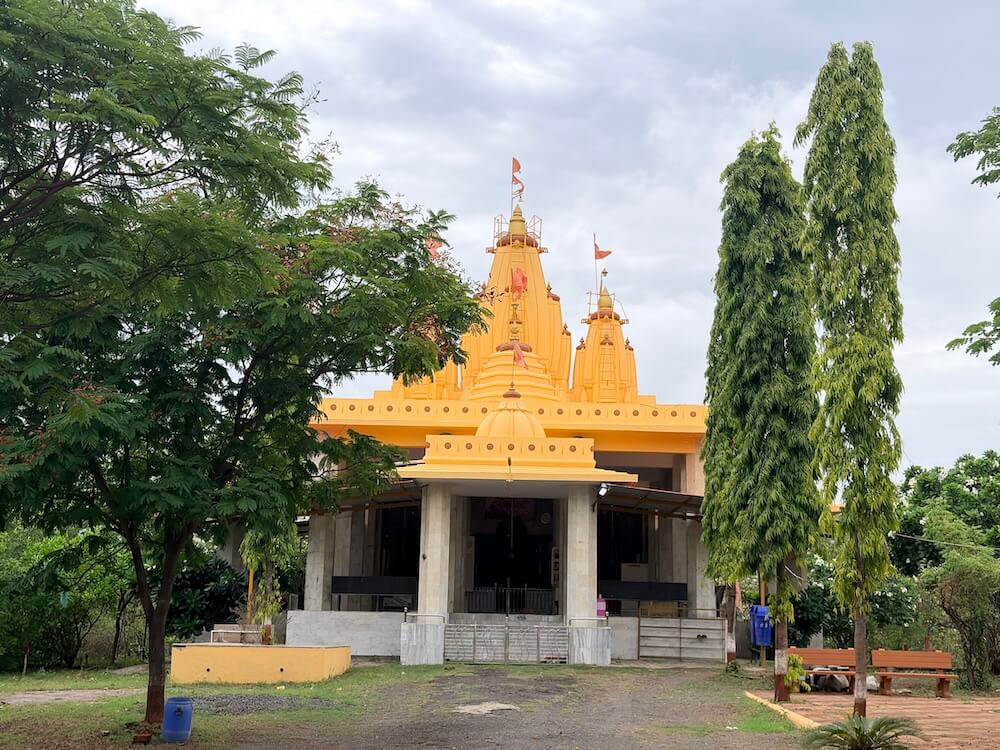
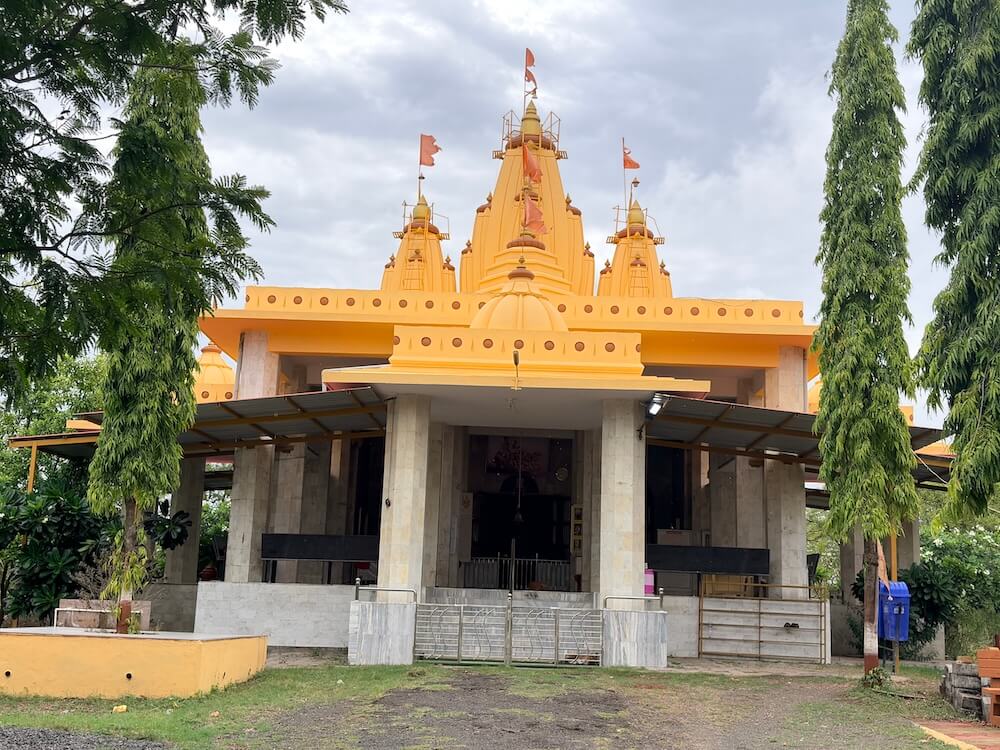
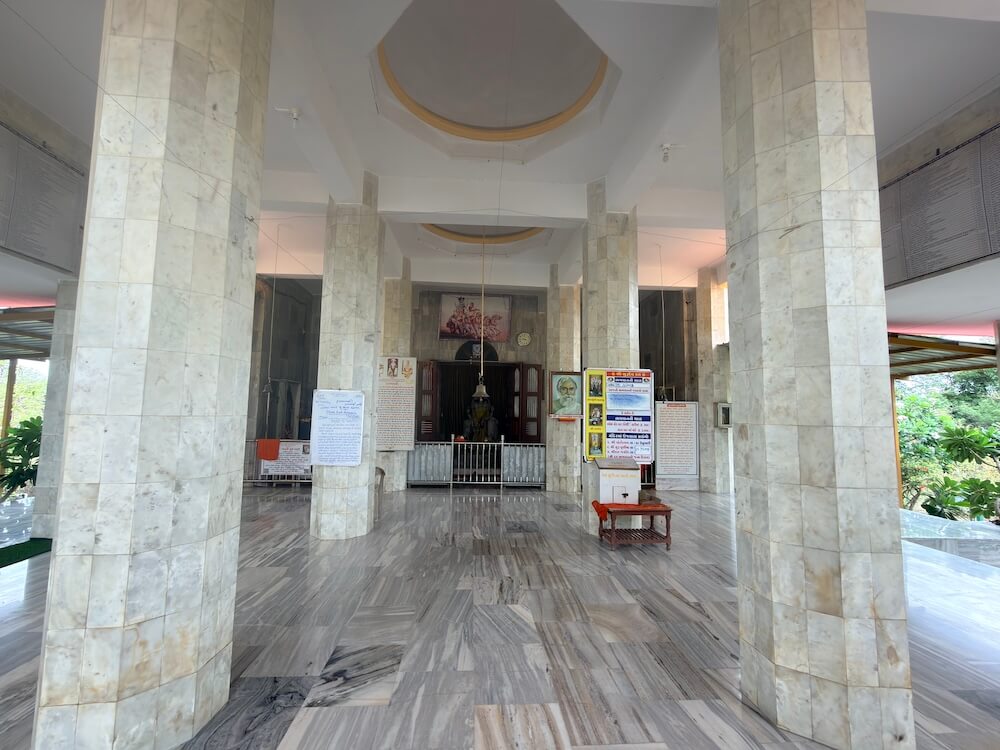
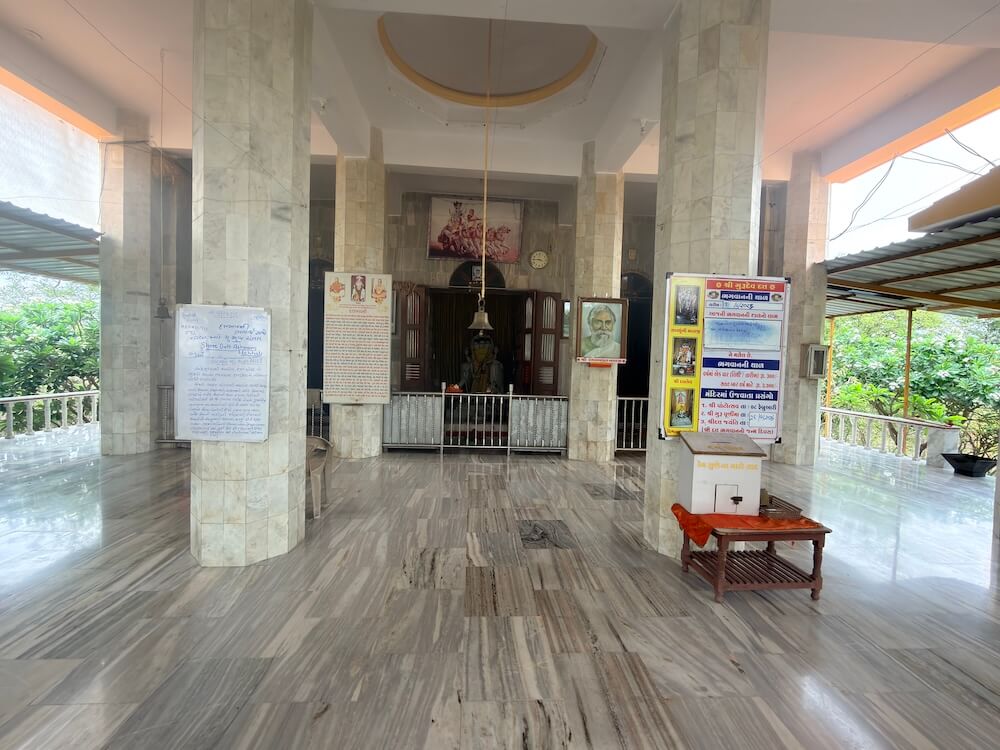
Eight steps from the courtyard lead to the temple, which stands upon a high plinth. The temple comprises three entrance porches, an assembly hall, a circumambulatory passage and three sanctums. The entrance porches and assembly hall are paved with marble and are of a semi-open design. Benches have been provided in the assembly hall for the convenience of devotees. Beyond the hall, in the antarala, the niches contain an image of Lord Hanuman on the right and Lord Ganesha on the left.
The temple contains three sanctums in all. The principal sanctum enshrines a radiant white marble image of Dattaguru upon a marble pedestal. The deity is depicted in the traditional three-faced form. A sacred cow stands behind the idol. The deity bears the conch, discus, mace and lotus in His hands. One hand rests upon the back of the cow, while another holds a kamandalu. Sacred sandals (padukas) adorn His feet and several animals are shown resting near them. Rudraksha rosaries are also held in His hands.
One of the adjoining sanctums houses the image of Goddess Saptashrungi, while the other is dedicated to Lord Shiva and is known as the Vishwanath Temple. This shrine contains a Shivalinga, with an image of Goddess Parvati placed behind it. Nandi is installed in the antarala facing the Vishwanath Temple. A circumambulatory passage runs around all three sanctums, with wall niches housing images of various deities along the route.
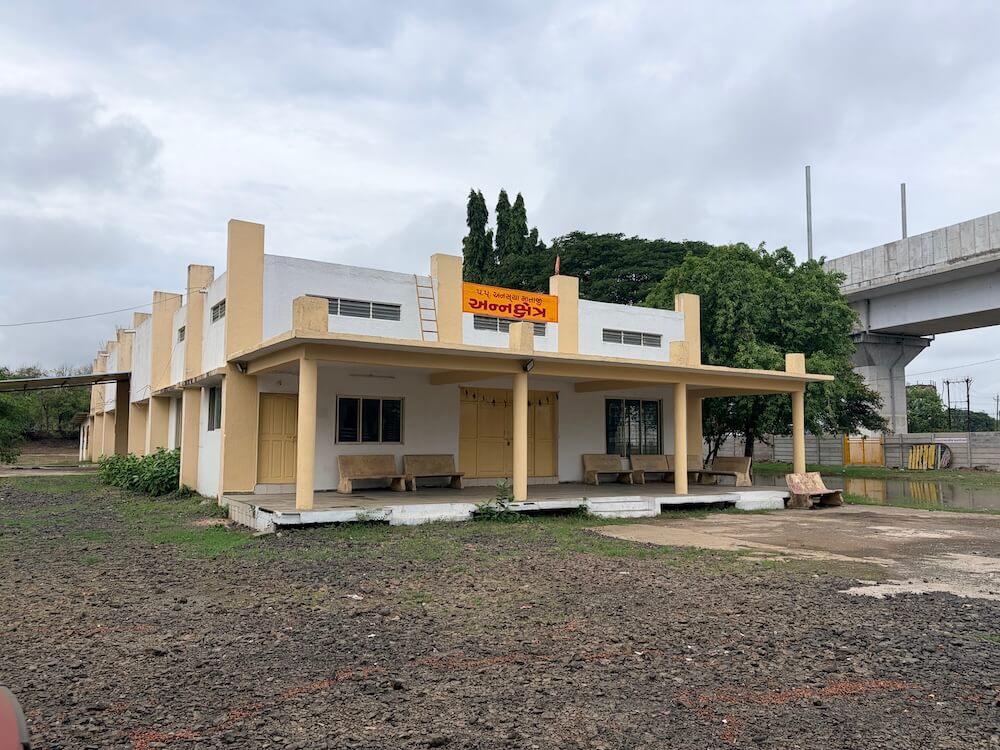
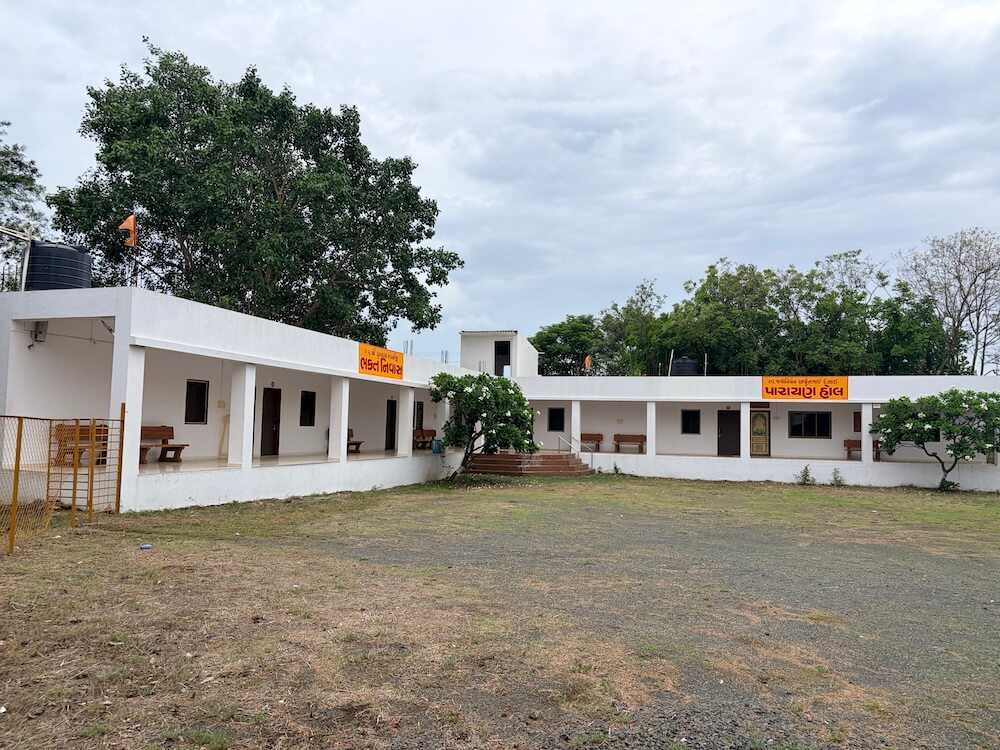
The entrance porch is crowned with a domed superstructure, while the assembly hall bears a stepped pyramidal roof. Each of the three sanctums is surmounted by its own spire. The temple courtyard is shaded by several trees, including fragrant Champa trees. Facing the temple is a sacrificial pavilion known as the Yajna Kutir. The complex also includes a recital hall for the reading of sacred scriptures, a pilgrims’ rest house (Bhakta Nivas) and an Annachhatra where meals are served to devotees.
A distinctive feature of the complex is its Gurukul hostel. Here, young students receive instruction in Hindu philosophy, Vedic chanting and a wide range of sacred scriptures. The Gurukul also has its own library containing an extensive collection of spiritual literature.
The temple is administered by the ‘Dattapeeth Sansthan, Pathri’. Devotees may have darshan daily from 5.00 a.m. to 12 noon and from 3.00 p.m. to 8.00 p.m. Datta Jayanti is the temple’s most important annual festival. On this occasion, the worship of the sacred Padukas begins at 8.30 a.m., followed by the Maha Aarti at 12 noon. From 12.15 p.m. until 2.30 p.m., Mahaprasad is served to all devotees. Hundreds of followers from Pathri and the surrounding villages participate in these celebrations. Every year on 8 February, the temple commemorates its Patotsav, or Foundation Day, with great religious fervour and a variety of devotional programmes. On this day, Mahaprasad is distributed between 12 noon and 2.30 p.m. The temple also celebrates Navratri, Guru Purnima and other important Hindu festivals. In addition, programmes such as Datta Bavani Parayan, Chakri Parayan and devotional singing dedicated to Lord Dattatreya are organised periodically throughout the year.
This sacred temple stands as a testament to deep spiritual devotion, ancient architectural grandeur, and rich local cultural traditions.
The sanctum sanctorum houses the divine idol consecrated according to ancient Vedic traditions, surrounded by serene courtyards and traditional temple architecture.
Navratri, Maha Shivratri, Annual Temple Jatra & Deepotsav
Compare and book flights, secure top-rated local hotels near the temple, hire reliable guides, and rent cars instantly.
Extend your pilgrimage by visiting other highly sacred temples located nearby.


Add ₹999 more to unlock FREE SHIPPING!
Your sacred cart is currently empty.
Shop Photo FramesFill in your delivery details below to place your order.
Add comment