
Add ₹999 more to unlock FREE SHIPPING!
Your sacred cart is currently empty.
Shop Photo FramesAsoli village in Sindhudurg district is famous for its Surangi trees, which are considered extremely rare in the state. These flowers are commercially produced in Asoli. The leaves of this tree are glossy, and a profusion of flowers blooms along the lower part of its trunk. These fragrant and beautiful flowers have four petals. There is a high demand for these flowers both in the country and abroad. It is a tradition to offer garlands of these flowers to ‘Vetoba’ in Arawali in the district. Another unique feature of this village is the ancient temple of Lord Devnarayan located here, adorned with unique architecture and rich craftsmanship.
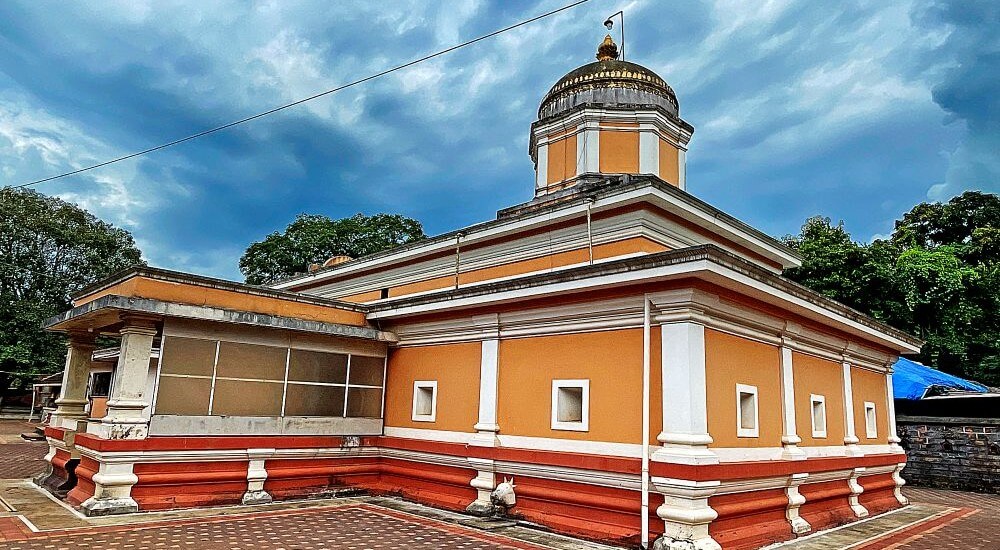
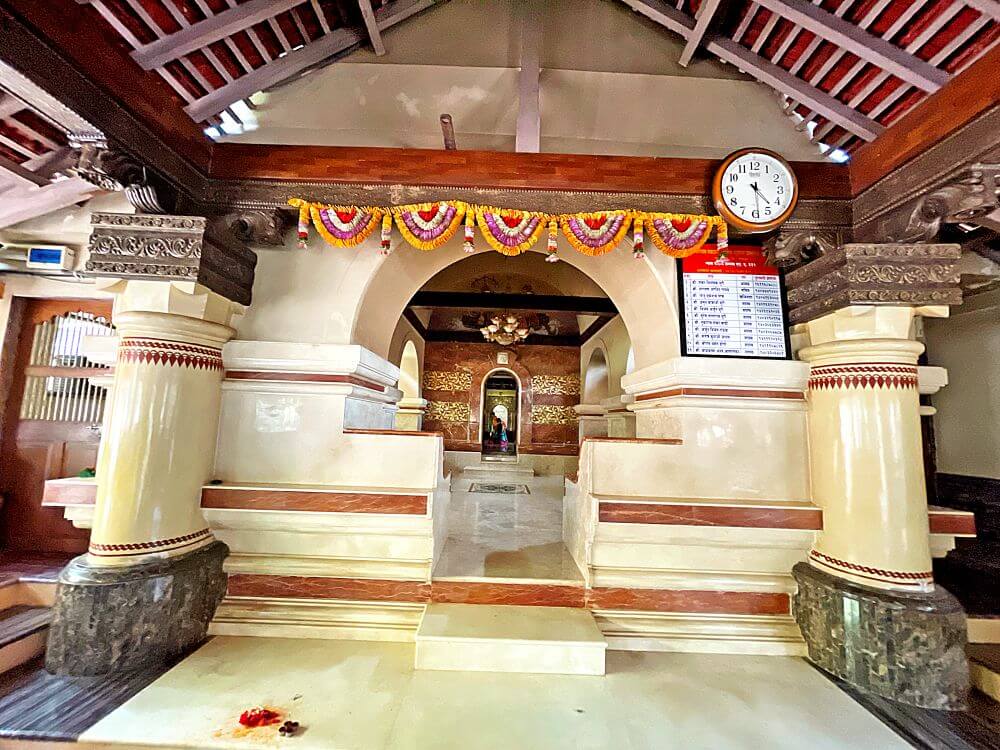
The Devnarayan Temple in Asoli village is one of the ancient and renowned temples in Konkan. It is regarded as a rich architectural heritage of Konkan. The Darshan of the idol of Lord Narayan in the sanctum sanctorum (Garbhagriha) can be seen even from the road outside the temple; however, the unique feature here is that as one moves closer towards the sanctum sanctorum, the idol of Lord Narayan appears to recede backwards. Consequently, the idol of the Lord as seen from the street and as seen inside the sanctum sanctorum appears to be of the exact same size. This is the distinctiveness of its architectural design. It is said that this illusion is created due to the specific design and dimensions of the entrances of the Mukhamandapa, Sabhamandapa, Antarala, and Garbhagriha. Although the temple underwent restoration a few years ago, its original architectural layout was preserved without any changes.
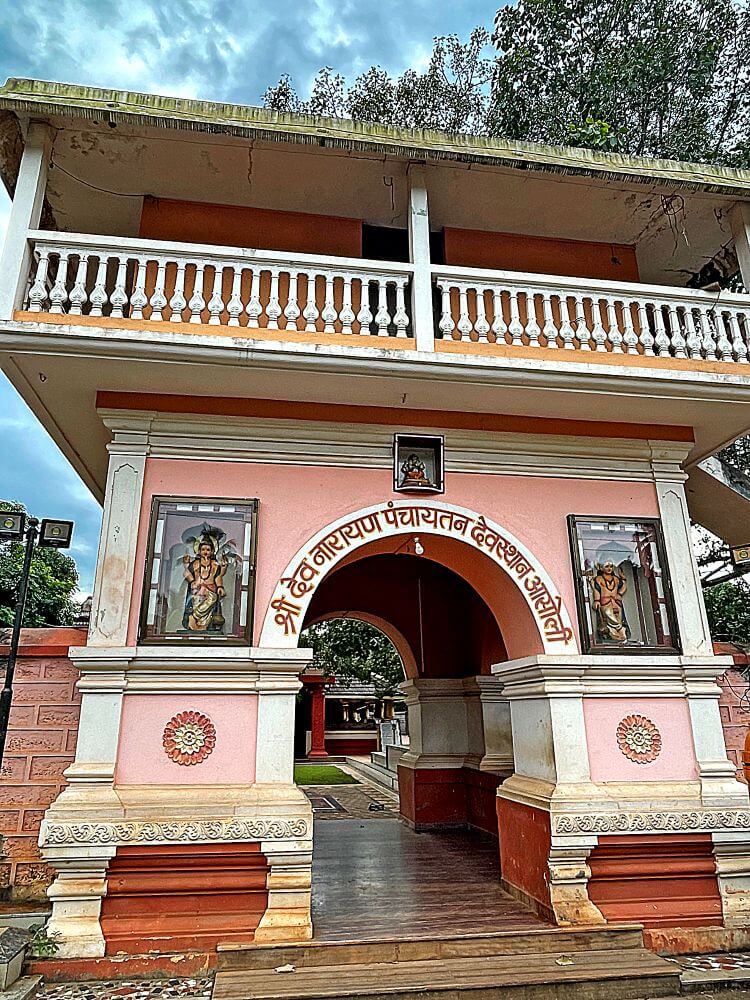
The tradition of worshipping Lord Devnarayan and Goddess Lakshmi has existed among us for thousands of years. Devotees customarily offer earnest prayers to Lord Devnarayan to remove their difficulties and afflictions, as well as to seek opulence, wealth, prosperity, and fame. Thousands of devotees visiting Asoli firmly believe that Lord Devnarayan relieves the sufferings of His devotees and fulfills their sacred vows. The Devnarayan Temple is enclosed by a fortification wall. The main entrance gate within this wall is double-storied and resembles the magnificent gateway of a fort. On both sides of this entrance gate are idols of Dwarapalas (gatekeepers), and above the arch sits an idol of Lord Ganesha. On the upper floor of the gateway is a Nagarkhana (drum house), accessible via stairs on the side. The upper floor features a balcony on all four sides. The entrance gateway is constructed of stone and embellished with intricate craftsmanship.
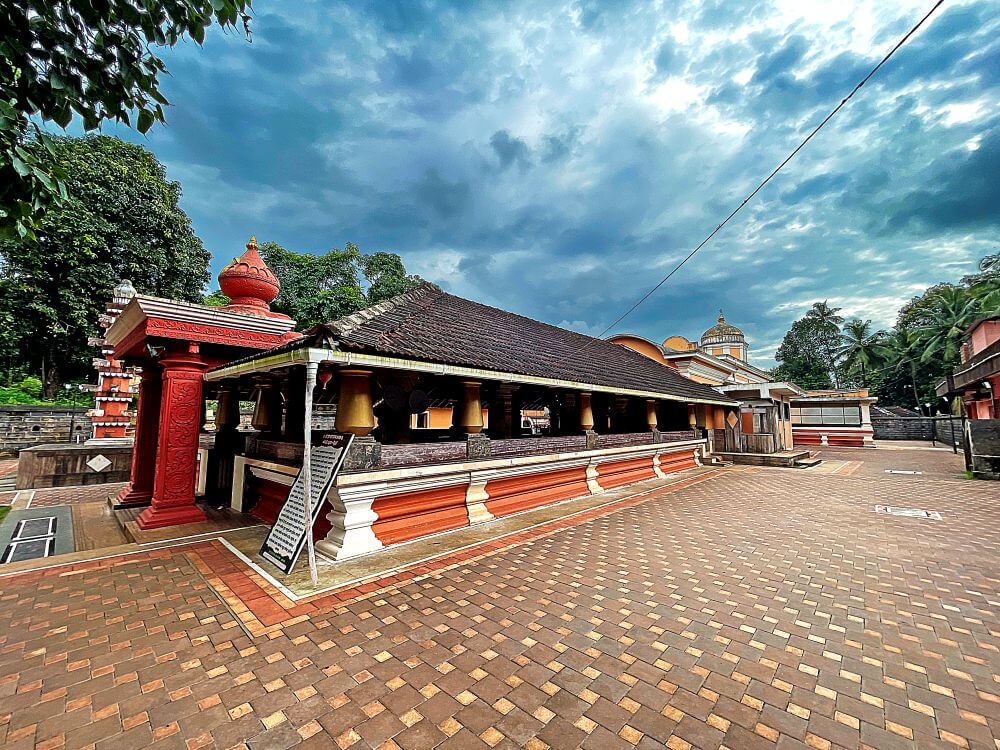
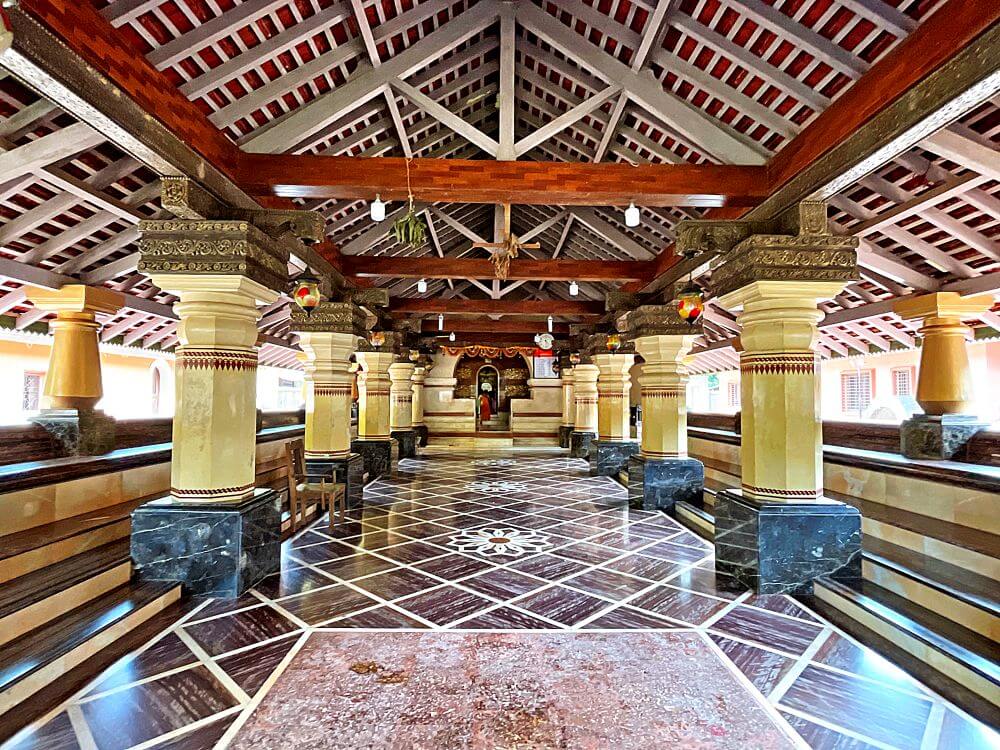
Passing through the main gateway, one enters the spacious temple courtyard. Just inside near the gateway stands an ancient Peepal tree surrounded by a large raised platform (paar). Upon this platform rests a Shivlinga. In this courtyard, right in front of the temple entrance, a large rectangular lawn has been developed. This manicured green lawn is illuminated with decorative electric lights, further enhancing the temple’s beauty. The layout of this temple comprises a Mukhamandapa, two Sabhamandapas, an Antarala, a Pradakshina patha (circumambulatory passage), and the Garbhagriha. The Mukhamandapa here stands on two large carved pillars. Above this Mukhamandapa is a Shikhara carved with Nagphani (serpent hood) motifs, crowned with a Kalasha. On the inner ceiling, floral designs are intricately carved. From the Mukhamandapa, one enters the main Sabhamandapa of the temple. This Sabhamandapa is semi-open in design, featuring Kakshasanas (bench seating with backrests) for devotees on three sides instead of solid walls. There are three steps between the Kakshasanas and the hall of the Sabhamandapa.
Upon entering the Sabhamandapa, the magnificent, intricately carved stone pillars immediately catch the eye—so massive that they cannot be spanned even by joining both arms. These pillars are carved out of single stone monoliths. The design of these pillars and the beams above them resembles the Hemadpanti architectural style. There are four rows of six such pillars each in this Sabhamandapa. The lower section of these pillars is square in shape and covered with marble tiles. The middle section above it is octagonal, topped by a square abacus and cross-shaped brackets (tarangahasta) that support the beams overhead. These wooden bracket capitals (tarangahasta) feature intricate carvings. Moving forward from the main Sabhamandapa, one enters the second Sabhamandapa. This hall has two rows of pillars. Here too, arrangements for Kakshasanas are provided. The pillars in this hall are situated within the Kakshasanas and are interconnected with arches.
The outer wall of the Antarala and the frame arch of its entrance are made of marble. At the top is a Kirtimukha. Above the Kirtimukha, a beautiful painting depicts Lord Vishnu resting on Sheshnag (Sheshashayi Vishnu) with Goddess Lakshmi gently pressing His feet. The lotus emerging from Lord Vishnu’s navel with Lord Brahma seated upon it is also portrayed in this picture. On the vaulted (elephant-back shaped) ceiling of the Antarala, the Vishnu Sahasranamavali is inscribed. On the six large pillars in the Antarala, the lower sections feature beautifully crafted idols of the Dashavatara (the ten incarnations of Lord Vishnu)—Matsya, Kurma, Varaha, Narasimha, Vamana, Parashurama, Rama, Krishna, Buddha, and Kalki—painted in exquisite golden hues. Above these idols are intricate floral and foliage patterns. Wooden beams rest above the pillars, and these pillars are joined together by arches. Sacred ritual staffs (tarang kathya) of the deities are kept in the Antarala.
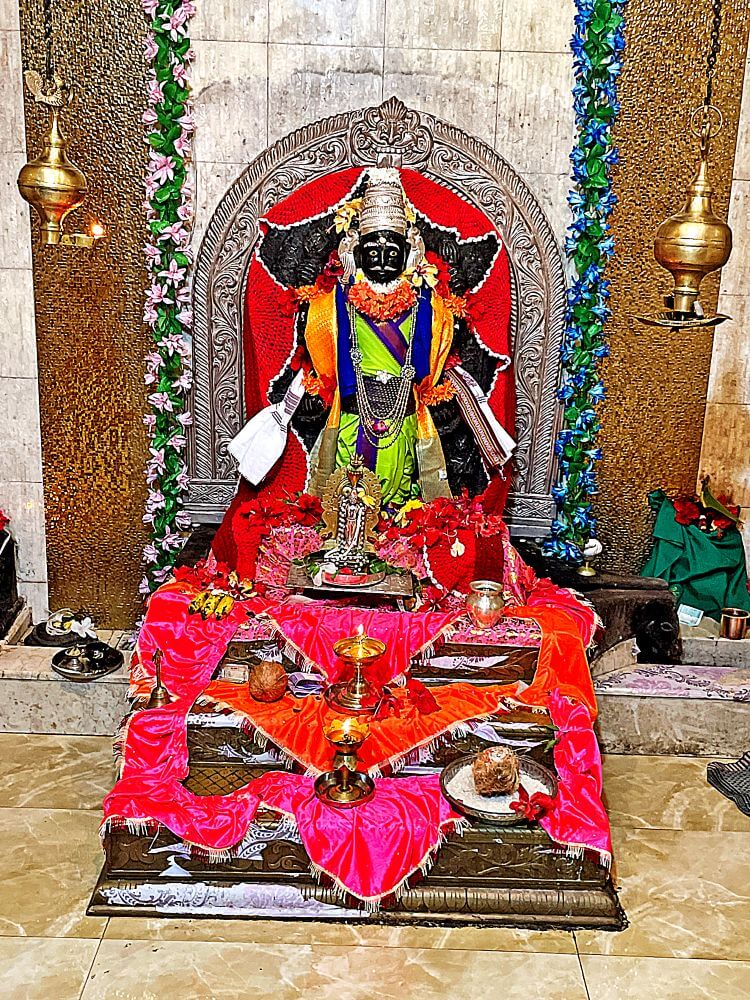
On both sides of the entrance to the Garbhagriha, idols of Dwarapalas are placed on marble pedestals. On the arch above the door, there is a sculpture of a five-hooded serpent. Inside the Garbhagriha stands a beautiful idol of Lord Devnarayan carved out of black stone. The unique feature of this idol is that Lord Narayan is depicted with a mustache here. Large expressive eyes, a silver crown upon His head, and exquisite garments and ornaments further enhance the divine beauty of the idol.
During Chaturmas, that is, the four-month period from Ashadh Shuddha Ekadashi to Kartik Shuddha Ekadashi, all festivals are celebrated on a grand scale at this temple. The annual festival of Lord Devnarayan is celebrated on Ashwin Shuddha Dashami, which is Dussehra. Additionally, the festival of Shri Krishna Janmashtami is also celebrated here with great enthusiasm. On these occasions, thousands of devotees arrive for Darshan.
This sacred temple stands as a testament to deep spiritual devotion, ancient architectural grandeur, and rich local cultural traditions.
The sanctum sanctorum houses the divine idol consecrated according to ancient Vedic traditions, surrounded by serene courtyards and traditional temple architecture.
Navratri, Maha Shivratri, Annual Temple Jatra & Deepotsav
Compare and book flights, secure top-rated local hotels near the temple, hire reliable guides, and rent cars instantly.
Extend your pilgrimage by visiting other highly sacred temples located nearby.


Add ₹999 more to unlock FREE SHIPPING!
Your sacred cart is currently empty.
Shop Photo FramesFill in your delivery details below to place your order.
Add comment