
Add ₹999 more to unlock FREE SHIPPING!
Your sacred cart is currently empty.
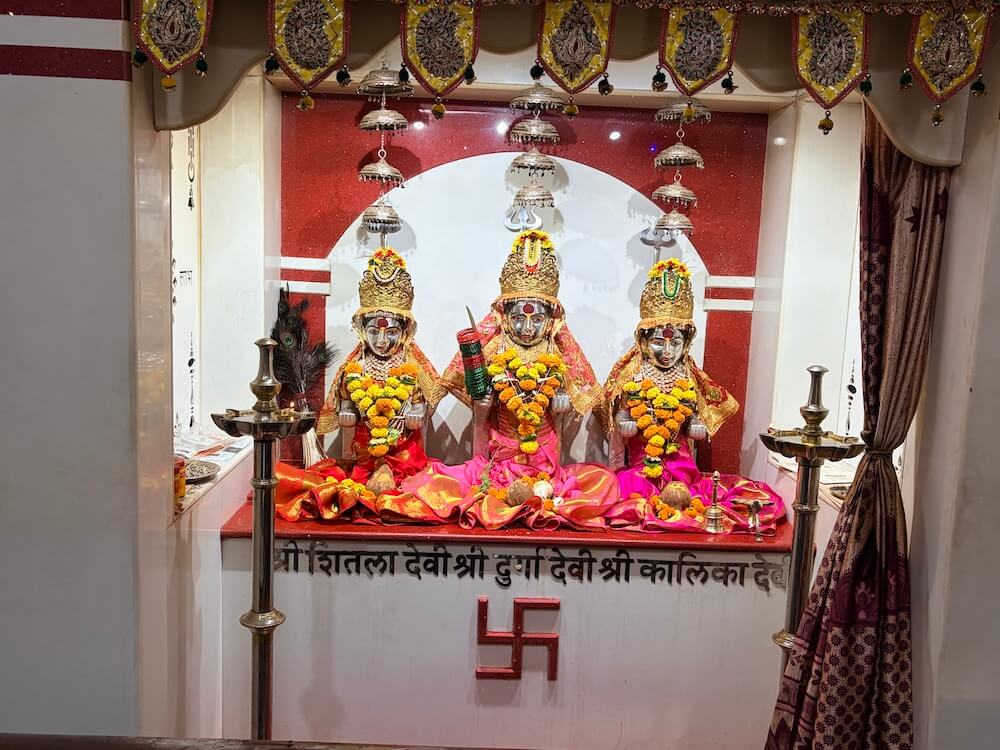
Shop Photo FramesGoddess Durgadevi, recognized in various forms such as Uma, Gauri, Parvati, Chandi, and Kali, is the supreme deity of Shakti (Divine Power). According to sacred legends, Durgadevi is the primal energy, Adi Shakti, who destroyed the demon named Durg. She manifests in both fierce (*raudra*) and gentle (*saumya*) forms. In Kolkata, She is worshipped in Her Kali form, while in Goa, She resides in Her serene Shantadurga form. A historic temple dedicated to the Goddess is located in Kumbharwada near Grant Road Station. Here, the Goddess presides with a radiant and benevolent countenance (*prasannavadana*). Along with Durgadevi, idols of Kalika Mata and Sheetala Devi are also consecrated in this temple.
The glory of the Goddess (*Devi Mahatmya*) is extolled in chapters 81 to 93 of the Markandeya Purana. Containing 700 verses (*shlokas*), this sacred text is known as the ‘Durga Saptashati’. In it, the divine deeds of Goddess Durga are described through Her three manifestations: Mahakali, Mahalakshmi, and Mahasaraswati. These three forms symbolize the three *gunas* (qualities): *Tamas*, *Rajas*, and *Sattva*, respectively. According to this Purana, Goddess Durga emerged from the divine energies (*amsha*) of deities including Shiva, Yama, Vishnu, Chandra, Indra, Varuna, Bhumi, and Surya. Through Her supreme valor, She vanquished formidable demons such as Madhu-Kaitabha, Mahishasura, Chanda-Munda, and Shumbha-Nishumbha. According to the Markandeya Purana, Goddess Durga brought forth the gods into existence. All realms of knowledge are embodiments of Durga. She is the manifestation of Omkara. Whenever righteousness (*dharma*) declines, Goddess Durga takes an avatar. In Her fierce form, She is the revered worshipful deity of Tantric practitioners.
Considered the *Gramadevata* (patron deity) of Kumbharwada, the exact history of who established this temple and when remains unknown. According to the temple priests, the shrine is at least two hundred years old. In Dr. Bhalchandra Aaklekar’s book *Mumbai’s Aadya Jagrut Shaktipithe*, it is mentioned that “This temple is said to have been built by the community that won the ‘Kashi Kavad’.” According to historical and cultural references, ‘Kashi Kavad’ refers to the sacred tradition of carrying holy Ganga water in a *kavad* (shoulder pole) all the way from Kashi. The primary community associated with winning or participating in this tradition was the ‘Bhoi’ community, along with members of the ‘Gosavi’ or ‘Bairagi’ sects who were also at the forefront. The *kavad* had to be carried without touching the ground, strictly adhering to rules and reaching within a stipulated time. The group or community that observed all traditions and reached first to perform the sacred ritual bath (*abhisheka*) of the primary deity with Ganga water was said to have “won the Kavad.” Historically, such *kavad*-bearers received royal patronage in the princely states of the Holkars and Gaekwads. According to another reference in Dr. Aaklekar’s book, the temple underwent its first renovation in 1875 CE. It was renovated again in the 1990s. Subsequent renovations a few years ago gave the temple its present magnificent form.
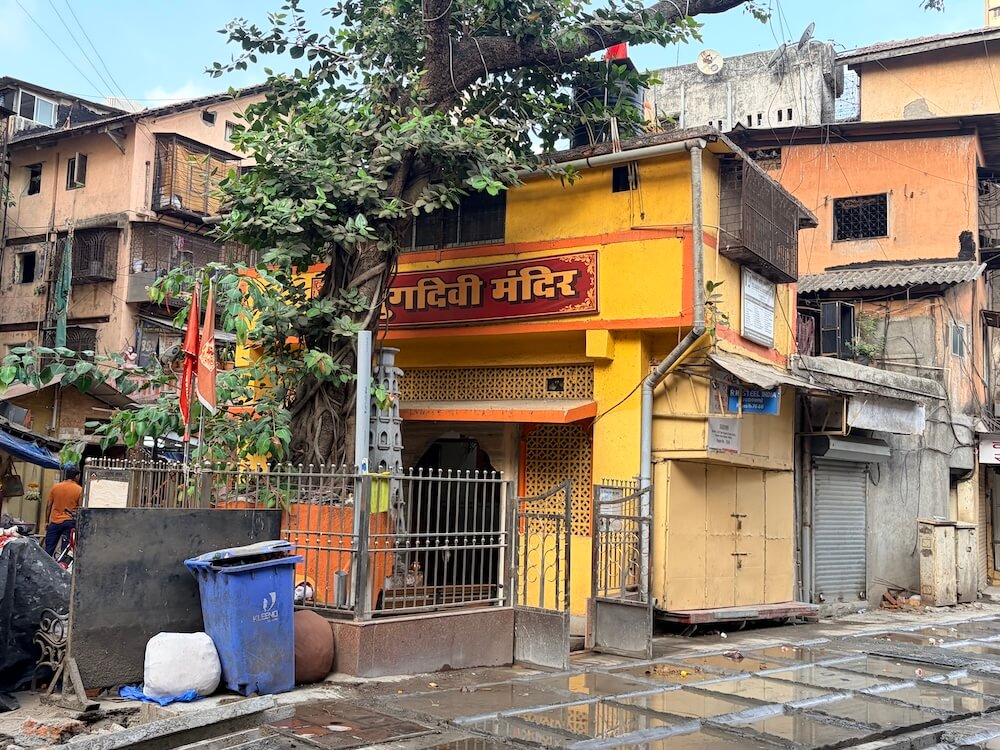
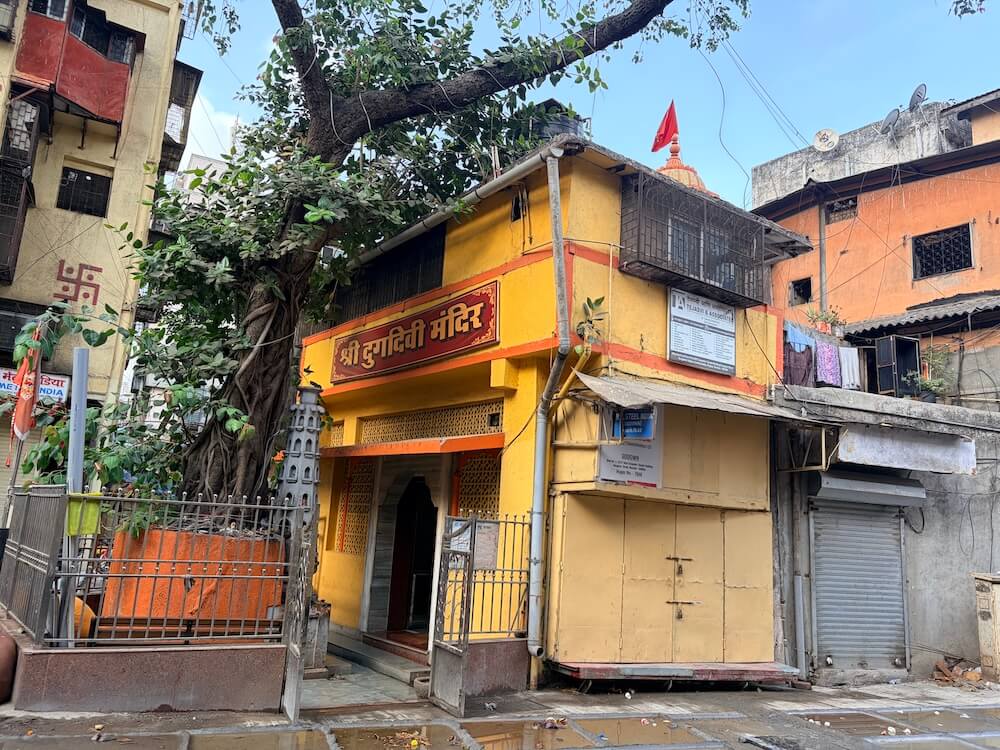
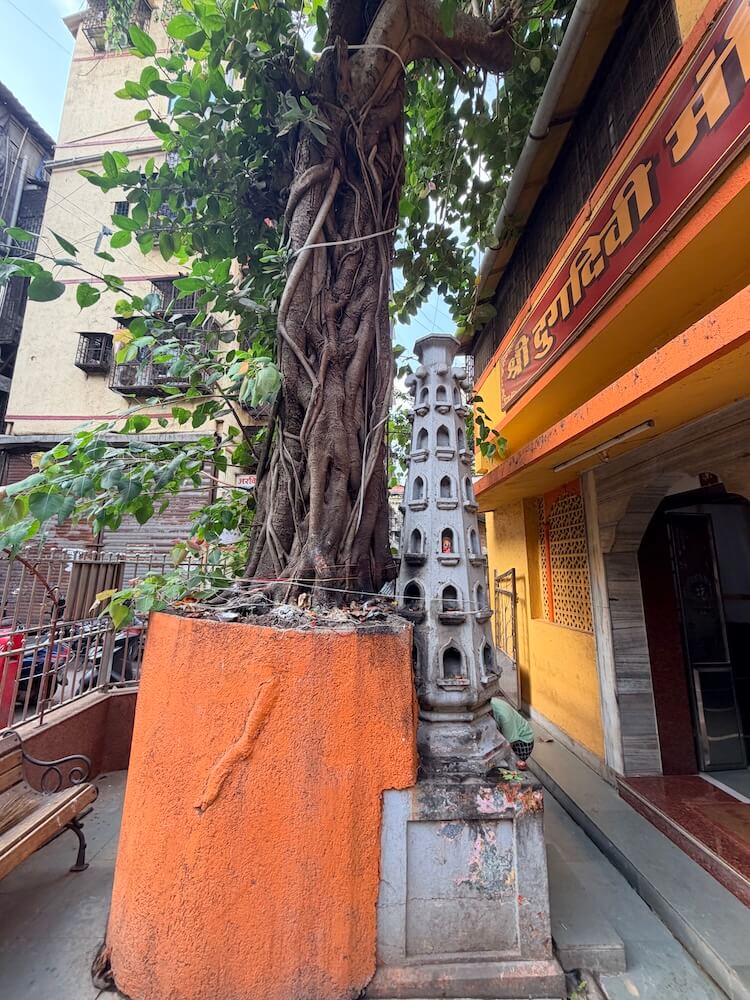
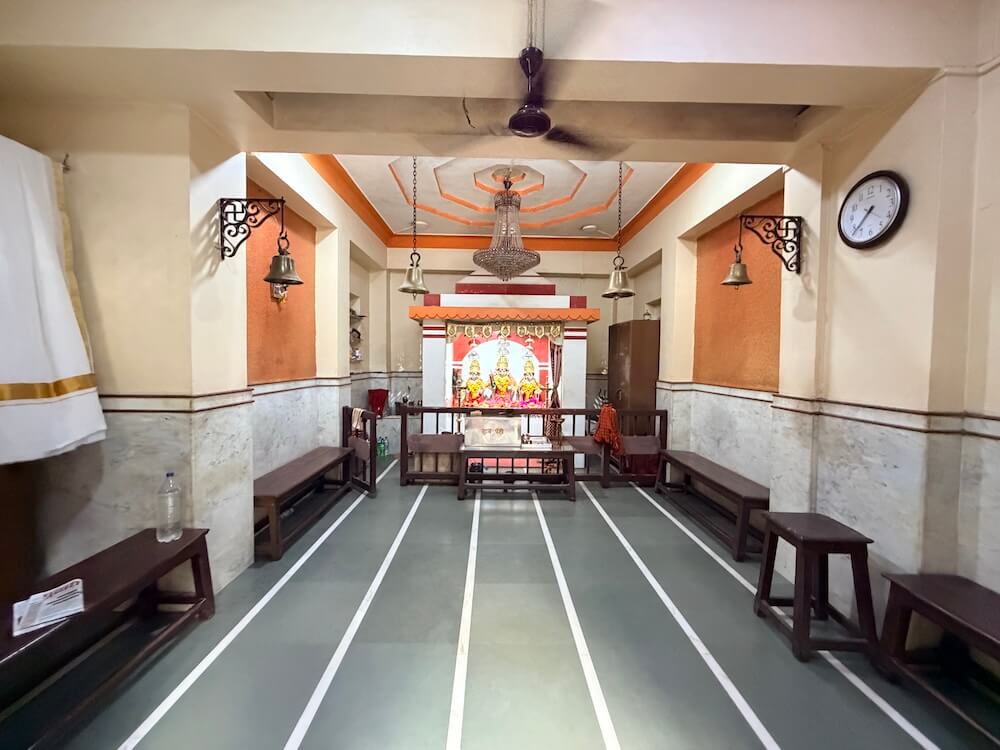
The temple is a compact two-storey structure. In the small courtyard in front of the temple stands a banyan tree with a raised platform (*paar*). Beside it stands a seven-tiered *Deepastambha* (lamp tower). The temple architecture comprises a spacious *Sabhamandapa* (assembly hall) and a sanctum sanctorum (*Garbhagriha*) in the form of a large niched shrine (*devakoshtaka*) crowned with a *Shikhara*. Above the main shrine rises a simple, elevated spire. The assembly hall features an arched entrance with marble flooring inside. Wooden benches are placed along the walls for devotees to sit. A brass bell and a glass chandelier hang from the ceiling of the hall. On one wall hangs a portrait of the temple’s late trustee, Babayya Ramayya Ijap (1906–1941). In the front section, within a shrine niche featuring a pyramid-shaped spire, the idols of the Goddesses are consecrated on a raised pedestal. Goddess Durga presides in the center, flanked by Sheetala Mata on Her left and Kalika Devi on Her right. Adorned with sacred garments, ornaments, and flower garlands, these two-armed idols feature silver hands and silver masks (*mukhavata*). Golden crowns grace the heads of the deities. Durgadevi here is portrayed in the form of *Khadagadharini* (wielder of the sword). A trident (*Trishula*) stands behind all three idols, and a triple silver canopy (*chhatra*) hangs above them.
The administration of the temple is managed by the ‘Durgadevi Temple Trust’. Devotees can seek the sacred *darshan* of the Goddess from 6:00 AM to 9:00 PM. Large crowds of devotees gather for *darshan* every Tuesday and Friday. Devotees hold a deep belief that the Goddess grants prayers and vows (*navas*); offering a saree and blouse (*saree-choli*) is a common vow made here. Major festivals are celebrated here on Vijayadashami and Pithori Amavasya, on which days a grand procession of the Goddess is taken out. Navratri is another major festival celebrated at the temple with great enthusiasm and traditional ritual fervor.
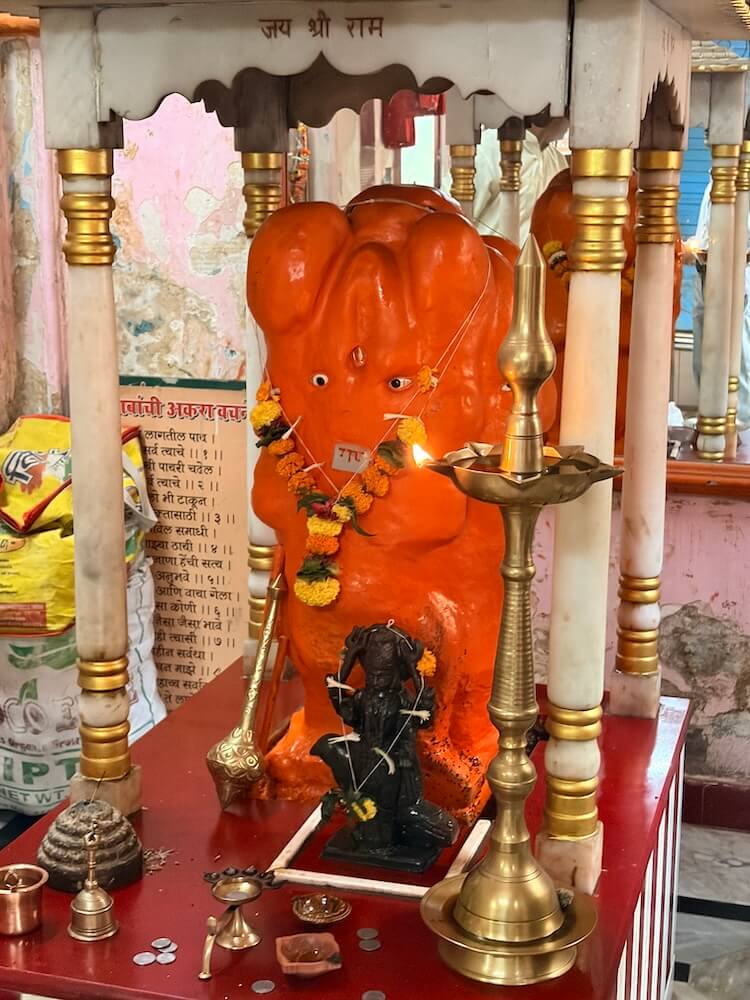
Located close to the rear of the Durgadevi Temple is a Panchamukhi Hanuman Temple. It is a compact, ancient-style structure reflecting the influence of traditional Nagara temple architecture. The parapet on the roof features sculptures of sages (*rishis*) and celestial monkeys. The spire (*shikhara*) is built in the *Urushringa* style. Sculptures of sages and faces of spiritual seekers (*sadhakas*) adorn all four sides of the *Amalaka*. A tall finial (*Kalasha*) rests above the circular *Amalaka*. The lintel above the entrance frame of the assembly hall features a beautiful relief sculpture depicting Banshidhar Shri Krishna with two cows. Inside, upon a raised marble altar within a marble shrine (*devhara*), a vermilion-coated stone idol of Panchamukhi Hanuman is consecrated. In one shrine niche, a marble idol of Santoshi Mata presides, while another niche houses an uncarved natural stone (*anaghad*) idol of Lord Ganesha.
This sacred temple stands as a testament to deep spiritual devotion, ancient architectural grandeur, and rich local cultural traditions.
The sanctum sanctorum houses the divine idol consecrated according to ancient Vedic traditions, surrounded by serene courtyards and traditional temple architecture.
Navratri, Maha Shivratri, Annual Temple Jatra & Deepotsav
Compare and book flights, secure top-rated local hotels near the temple, hire reliable guides, and rent cars instantly.
Extend your pilgrimage by visiting other highly sacred temples located nearby.


Add ₹999 more to unlock FREE SHIPPING!
Your sacred cart is currently empty.
Shop Photo FramesFill in your delivery details below to place your order.
Add comment