
Add ₹999 more to unlock FREE SHIPPING!
Your sacred cart is currently empty.
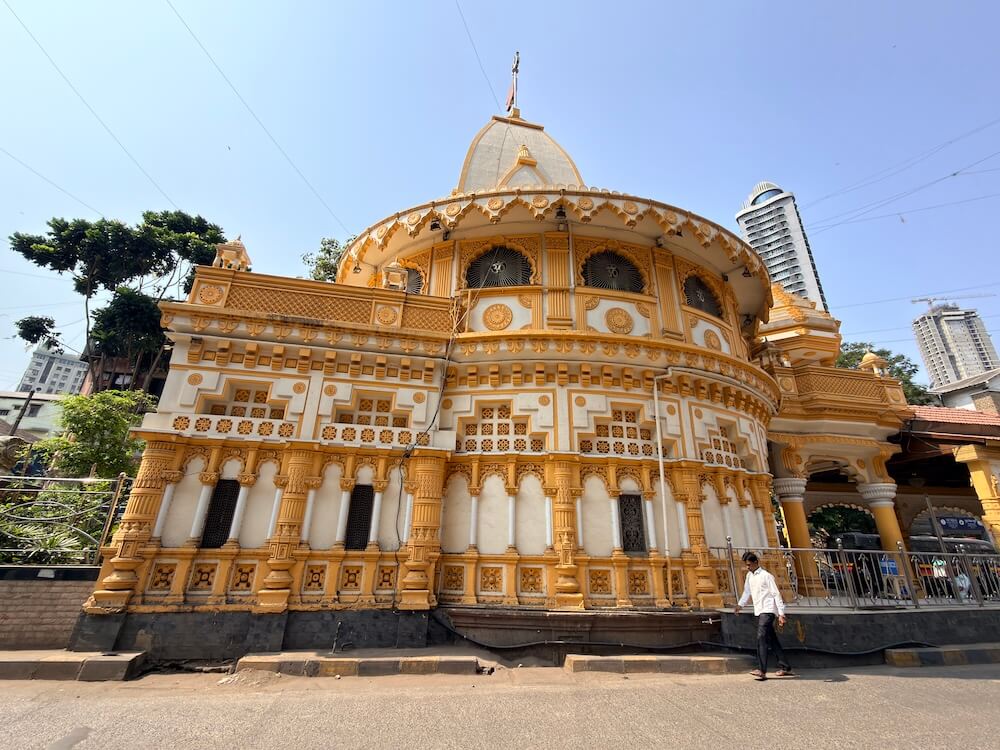
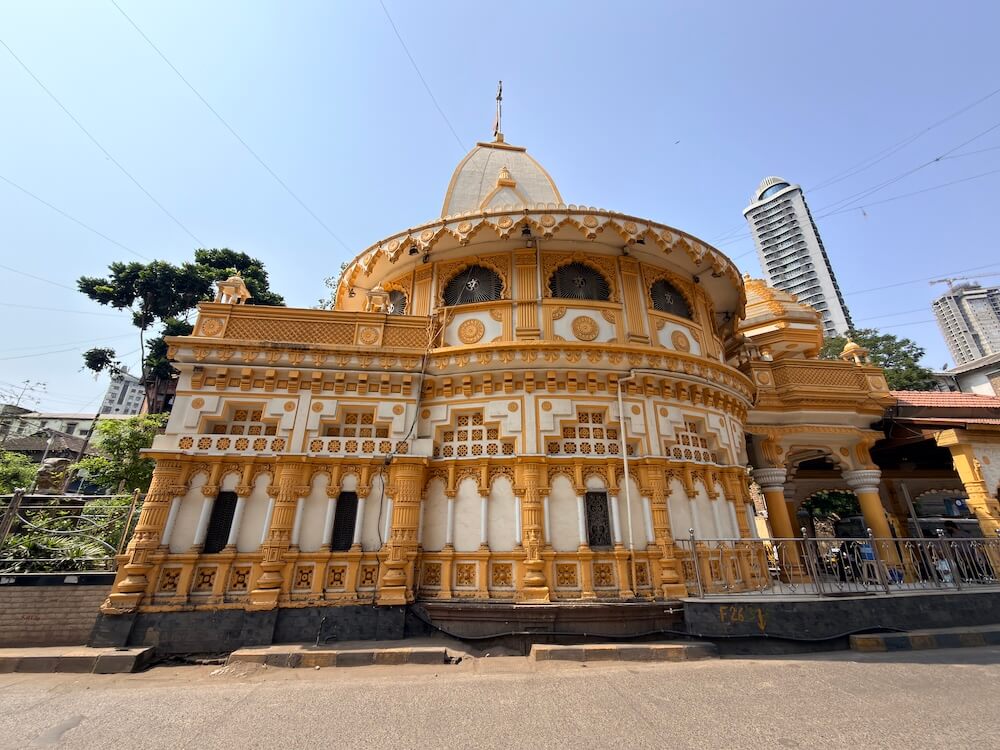
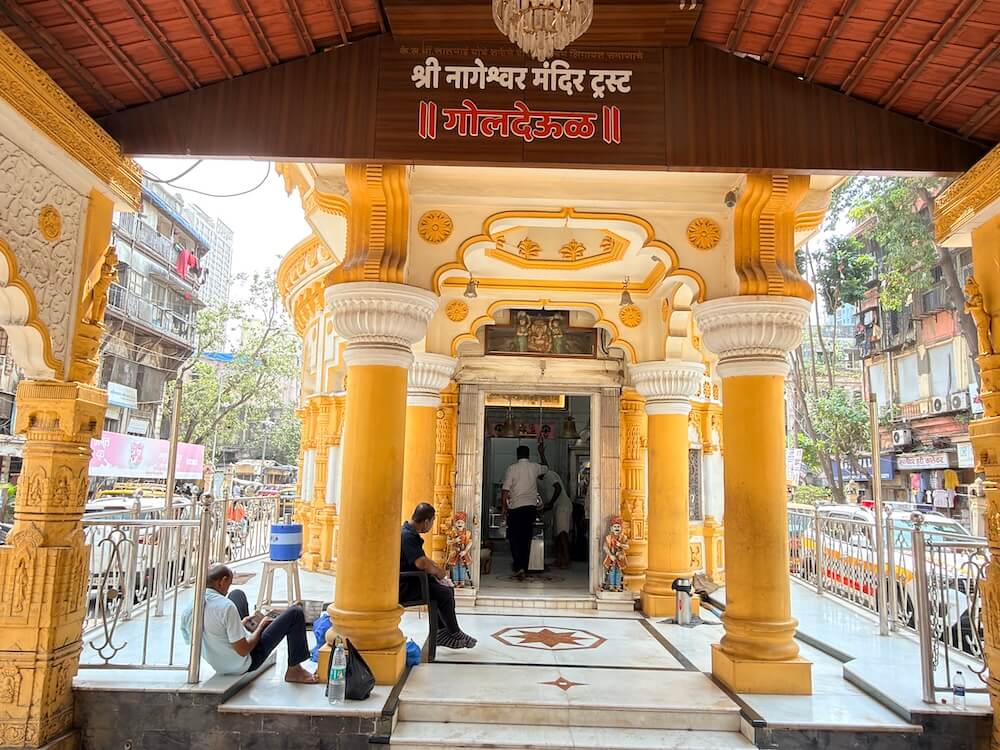
Shop Photo FramesThe historic Nageshwar Temple, also known as Gol Deul (Round Temple), is situated on Sardar Vallabhbhai Patel Marg in the Pydhonie area of Mumbai. Mumbai is part of the Konkan region, which in ancient times was heavily populated by the Naga tribe. It is believed that the name Konkan itself is derived from the name of a valiant clan of Nagas from this region. In memory of this, Nagas are deified and worshipped in many places. These Nagas have a close association with Lord Shiva. In the Hindu religious tradition, the twelve Jyotirlingas hold immense significance; the eighth Jyotirlinga is located at Aundha Nagnath and is known as Nageshwar. A beautiful Shiva temple dedicated to this very Nageshwar is located at Pydhonie. Situated right in the middle of Sardar Vallabhbhai Patel Marg, this temple is also known as ‘Gol Deul’ due to its circular shape. Serving as a sacred place of faith for Shiva devotees in the Pydhonie locality, devotees throng this temple for darshan every morning and evening.
In earlier times, Pydhonie was a ordinary village in Mumbai. Writing about this in his book ‘Mumbaiche Varnan’, published in the year १८६३, Govind Narayan Madgaonkar states, “Matarpakhadi, Umarkhadi, Mazgaon, and Mahim were separate islands, with small saltwater creeks in between. The place which we used to call Pydhonie was a continuous saltwater creek from where, upon high tide, the water would flood all the way from Bhendi Bazaar to Chinchbazaar. The reason this place came to be called Pydhonie is said to be that in earlier times, people coming from Mahim, Worli, and Matunga would wash their feet in this creek before entering Mumbai, and hence it came to be called Pydhonie.” According to the book ‘Mumbaicha Vrittanta’ (१८८९) by Balkrishna Bapu Acharya and Moro Vinayak Shingne, tidal waters reached up to Pydhonie until roughly the decade of ১৭৯০. During that era, the low-lying areas of Byculla, Bhendi Bazaar, and Pydhonie would get submerged with water. William Hornby, the Governor of Mumbai (in office from १७७१ to १७८४), built a dam at Worli to hold back this water, following which the surrounding area developed.
Although the exact history of the Gol Deul here is not available, a popular legend is associated with this temple. Mumbai experienced a major epidemic of ‘bubonic plague’ in १८९६-९७. This pandemic had spread due to various reasons such as urban filth, clogged drains, flooded areas, and congested, damp houses. Consequently, on १४ February १८९८, Lord Sandhurst introduced the ‘City of Mumbai Improvement Bill’ in the British Parliament, proposing measures for building new roads in the city, improving old roads, and making the city more airy. After Parliament approved it, the ‘Bombay City Improvement Trust’ (BCIT or BIT) was established on ९ November १८९८. Through this trust, road-widening work began in the city. When this work was underway in the Pydhonie area, the administration decided to remove the Nageshwar Mahadev temple as it was obstructing the path. Accordingly, when the government contractor arrived to demolish the temple, a King Cobra (Nagaraj) emerged from the sanctum sanctorum of the temple. It was seated upon the Shiva Linga. Considering this a divine sign, the decision to demolish the temple was cancelled. This miracle became the talk of the town everywhere, and thereafter some Shiva devotees came together and built a large temple here. This incident occurred around roughly १९०७. Subsequently, through periodic renovations, this temple has attained its magnificent form today.
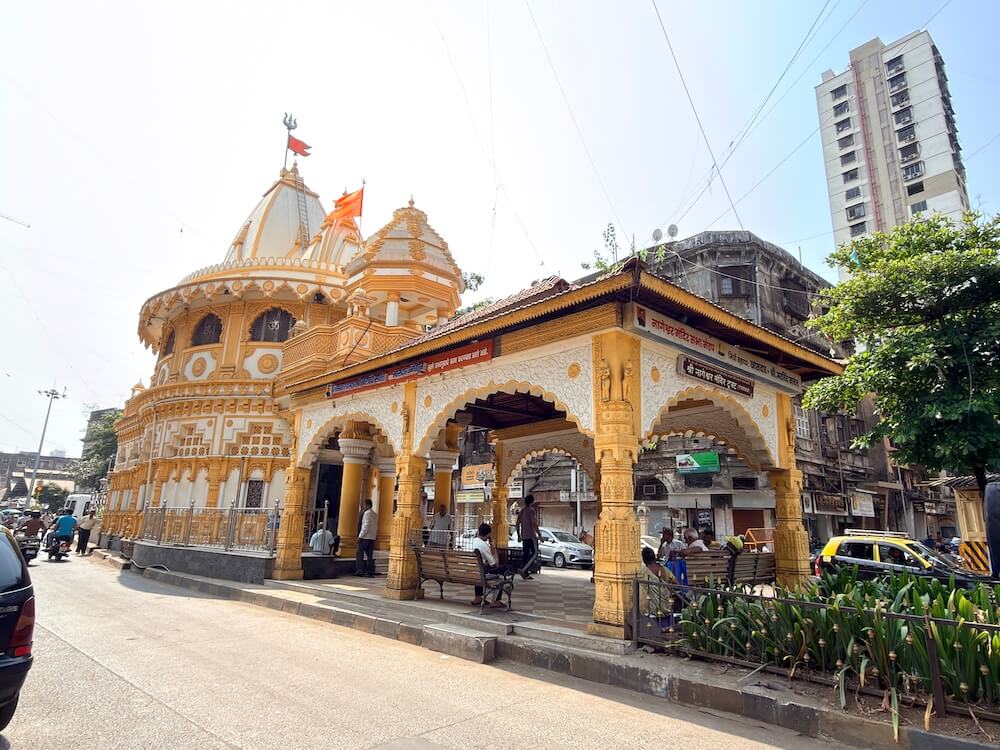
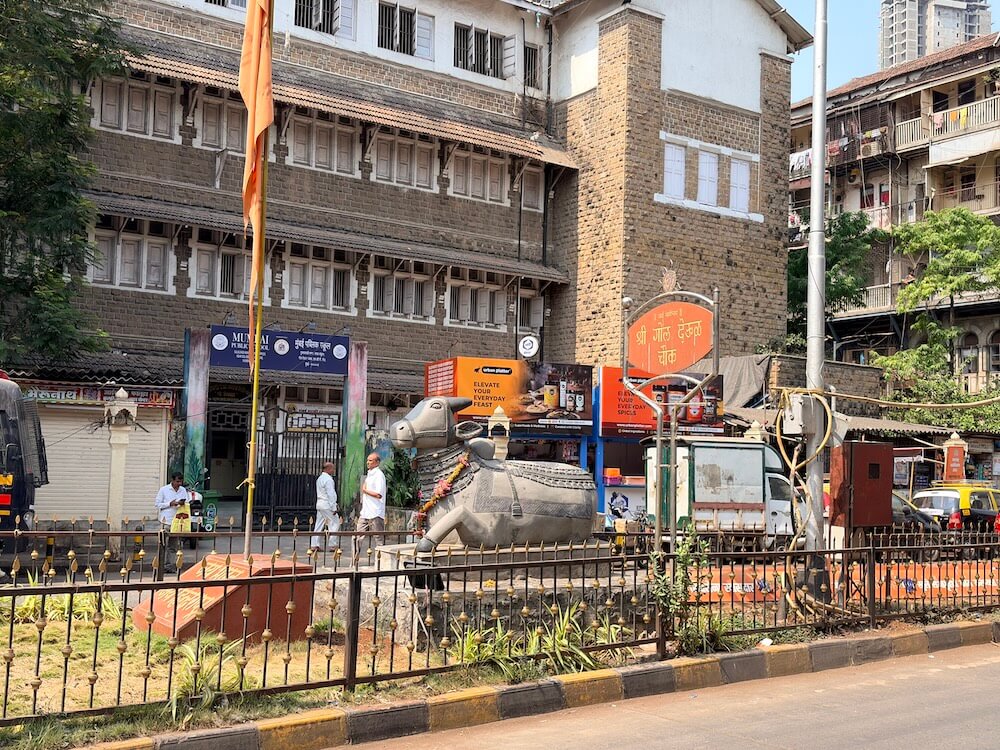
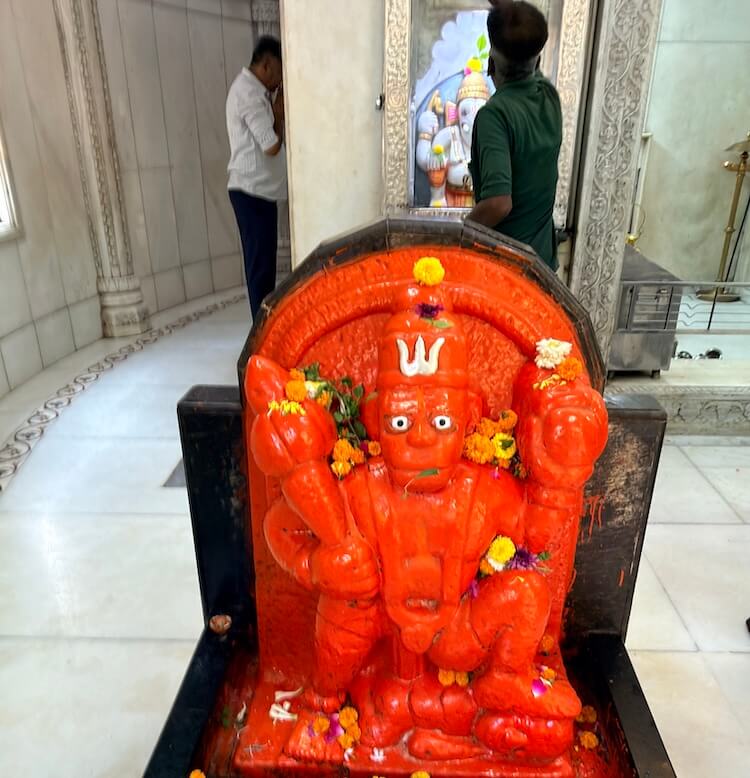
Standing right in the middle of a very busy street at the Gol Deul Chowk in Pydhonie, this temple is prominently situated. Gardens have been developed in place of road dividers on the rear and front sides of the temple. In front of it stands a large stone-carved sculpture of Nandi upon a high pedestal. A flagmast stands before it, and the temple architecture comprises an open pavilion (khula mandap), a front porch (mukhamandap), an assembly hall (sabhamandap), and the sanctum sanctorum (garbhagriha). The open pavilion features a sloped roof. The assembly hall has six intricately carved pillars and cusped arches. Arrangements of benches have been provided here for devotees to sit. Beyond this is the front porch with four round pillars. Near the entrance gate are sculptures of guardian deities (dwarapalas) holding staves. Above the doorframe is an image of Lord Ganesha, flanked on both sides by sculptures of Riddhi and Siddhi waving chauris (whisks). The assembly hall is circular, from where the circumambulation path (pradakshinamarga) of the sanctum begins. Upon entering inside, to the left one sees a vermilion-smeared sculpture of the mace-bearing Hanuman carrying Mount Dronagiri. In the center, on a high pedestal, stands an attractive silver sculpture of Nandi, and in front of it is a silver tortoise sculpture (kurma shilp). Five brass bells hang from the ceiling of the assembly hall. To the left of the sanctum entrance is a marble idol of Ganesha and to the right is a marble idol of Trimurti Dattatreya. The entrance of the sanctum is made of marble. It is adorned with carvings, images of Ganesha, and peacock motifs. Inside the sanctum stands the Shiva Linga of Nageshwar Mahadev encased in brass, upon which rests a brass cobra image and a brass water pot (galantika) suspended above. Milk for performing abhishek on this Linga is available at the temple counter. At the back of the sanctum, in a marble shrine, is the idol of Mother Parvati. The shikhara (spire) portion of the temple is distinctive, with the front porch featuring a Rajasthani umbrella-style shikhara. The circular assembly hall features two spires—a main one and a subsidiary one—surmounted by an amalaka, kalasha, religious flag (dharmadhvaj), and trishula.
Devotees can have darshan here from ५.३० AM to १.०० PM and from ४.३० PM to ९.०० PM. Aarti takes place every evening at ७.३० PM. Devotees can perform abhishek here on Mondays, Saturdays, Sankashti Chaturthi, Angarika Chaturthi, as well as on special family occasions. Maha Shivaratri is the main festival celebrated here. On that day, there is a massive rush of devotees for the milk abhishek. The entire temple is illuminated with festive lights for this celebration.
This sacred temple stands as a testament to deep spiritual devotion, ancient architectural grandeur, and rich local cultural traditions.
The sanctum sanctorum houses the divine idol consecrated according to ancient Vedic traditions, surrounded by serene courtyards and traditional temple architecture.
Navratri, Maha Shivratri, Annual Temple Jatra & Deepotsav
Compare and book flights, secure top-rated local hotels near the temple, hire reliable guides, and rent cars instantly.
Extend your pilgrimage by visiting other highly sacred temples located nearby.


Add ₹999 more to unlock FREE SHIPPING!
Your sacred cart is currently empty.
Shop Photo FramesFill in your delivery details below to place your order.
Add comment