
Add ₹999 more to unlock FREE SHIPPING!
Your sacred cart is currently empty.
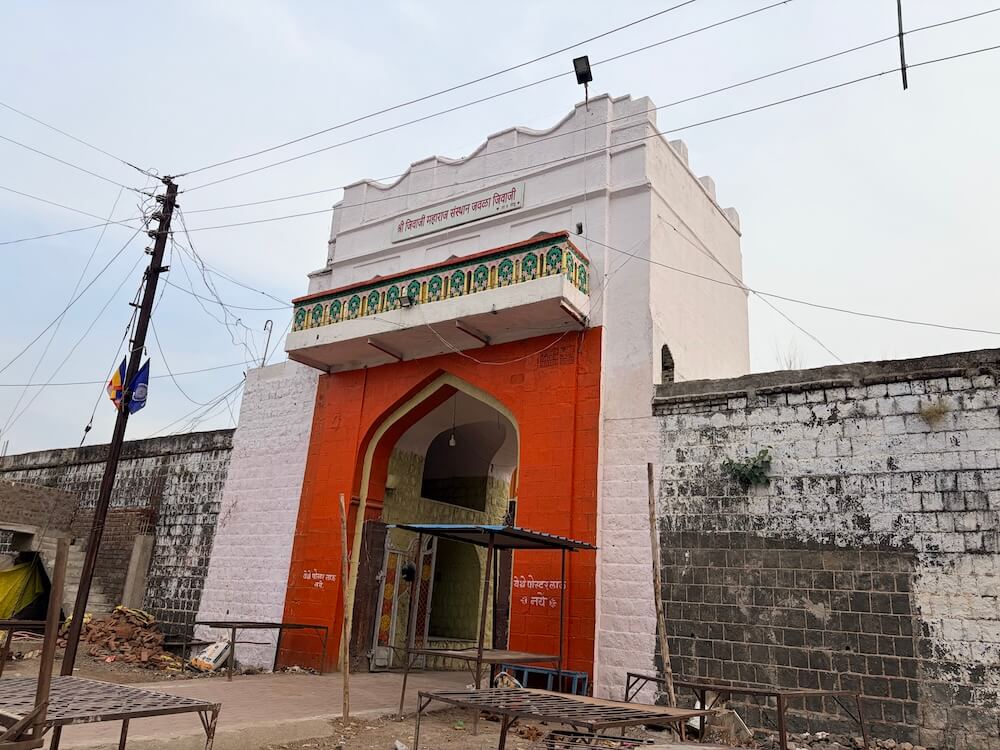
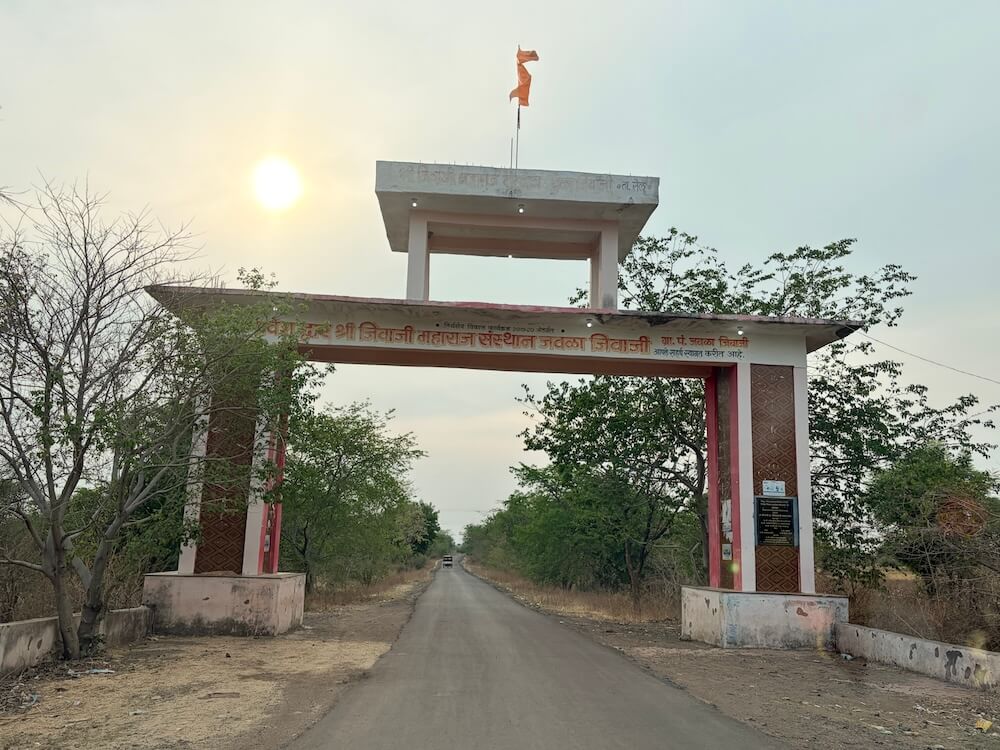
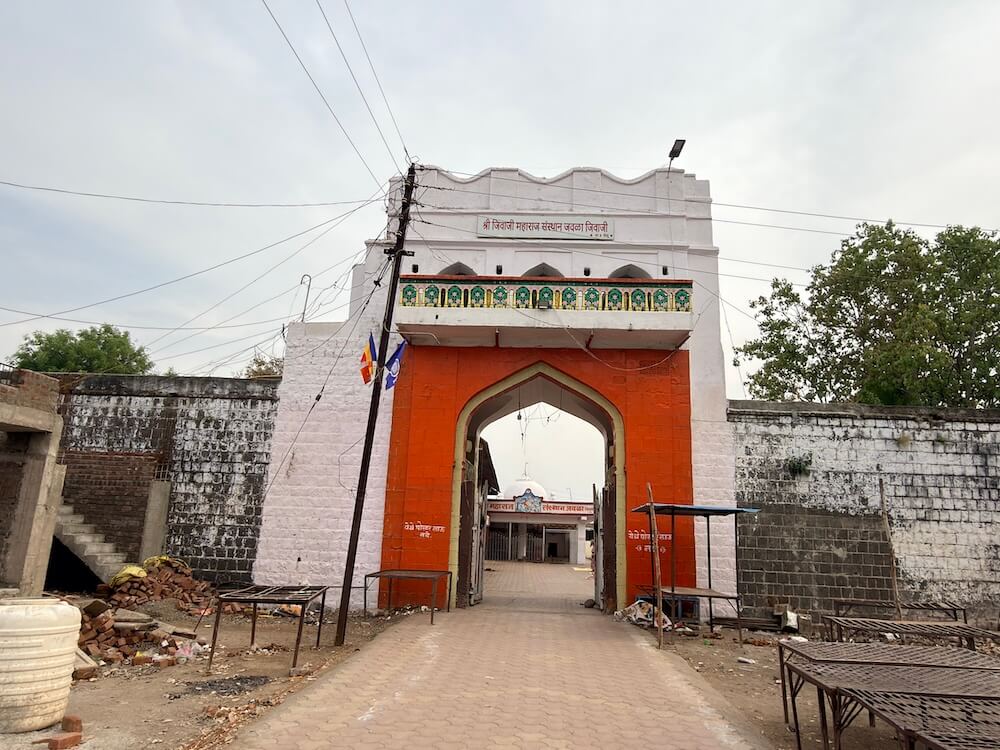
Shop Photo FramesThe Shri Jivaji Maharaj Sansthan is a renowned temple located in Jawala, in the Selu taluka of Parbhani district. It is because of this temple that the village is known as ‘Jawala Jivaji’. Two main lingas are consecrated in the inner sanctum of this temple as a symbol of the samadhi of Jivaji Maharaj, a devout follower of Lord Khandoba of Jejuri, and his wife. This shrine is considered a highly spiritually awakened place among devotees. The temple’s prominent architectural features include a tall main entrance (Mahadwar), strong fortifications, a Nagarkhana (drum house), and a main dome-shaped shikhara. The temple also houses four samadhi lingas of the descendants of Jivaji Maharaj. A grand annual fair is held here on Champashasthi. During this fair, the magnificent palanquin of Lord Khandoba is taken out amidst the chanting of “Yelkot Yelkot Jai Malhar” and the showering of yellow Bhandara (turmeric powder). The ritual of pulling the ‘navasachya gadya’ (votive carts) in the evening is considered a unique feature of this shrine.
An ancient legend is told in the region regarding the establishment of this temple and the life of Jivaji Maharaj. Many years ago, there lived a devout follower of Lord Khandoba named Jivaji Maharaj Devkar. Every night, he would walk barefoot to Jejuri for darshan. It is said that while traveling to and from Jejuri, the footwear he wore would wear out, but by the next morning, they would automatically become new again. Jivaji Maharaj’s wife could not understand where her husband went every night, so she decided to follow him one night. She followed him without his knowledge and reached Jejuri. While climbing the steps of the Jejuri fort, there was a sound behind him. Jivaji Maharaj turned around and saw his wife standing there. However, he did not say anything to her at that time. That very night, Lord Khandoba gave a direct vision (darshan) to Jivaji Maharaj. Khandoba kept Jivaji Maharaj with him that night and commanded him, “Do not come to Jejuri ever again.” Upon returning to the village the next day, Jivaji Maharaj took samadhi. Thinking that her husband took samadhi because she had doubted him, his wife also took samadhi. Two lingas have been installed in the main sanctum of this temple as a symbol of the samadhi of Jivaji Maharaj and his wife. Devotees can have darshan of both these lingas here.
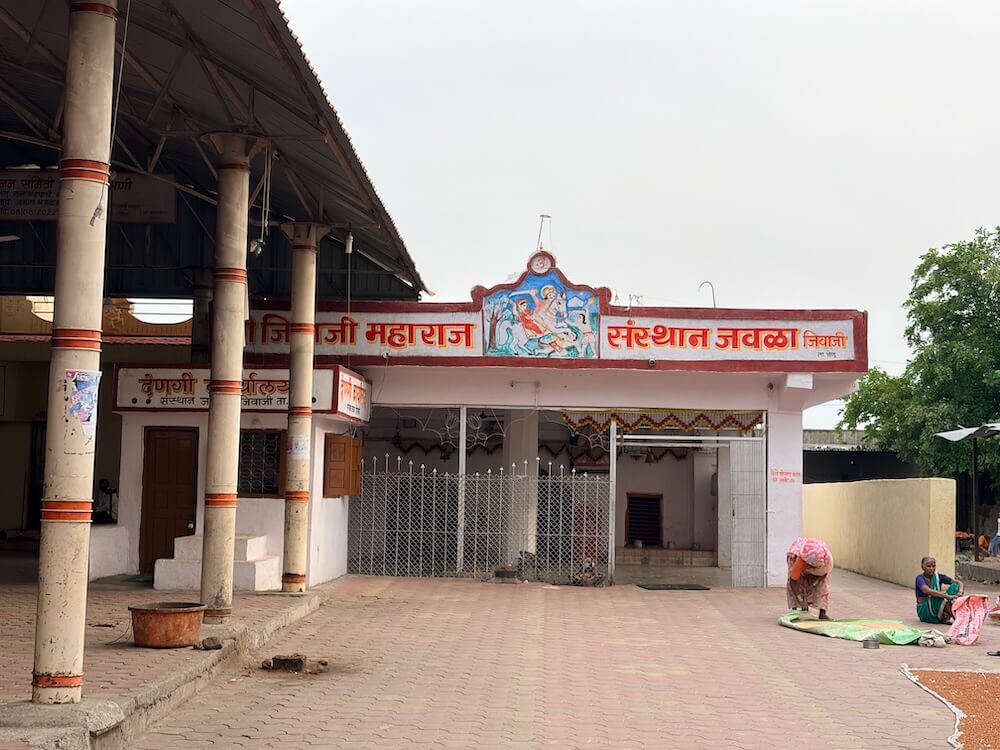
The main entrance of the temple, the Mahadwar, is grand. Adjacent to the Mahadwar are strong fortifications, with the Nagarkhana located in the upper section. Upon entering through the Mahadwar, one reaches a courtyard paved with paver blocks. The inner part of this courtyard is constructed with cloister-like structures on all four sides. The main temple is situated directly in front of this courtyard. Above the main entrance of the temple, in the center, a painting of Lord Khandoba is depicted.
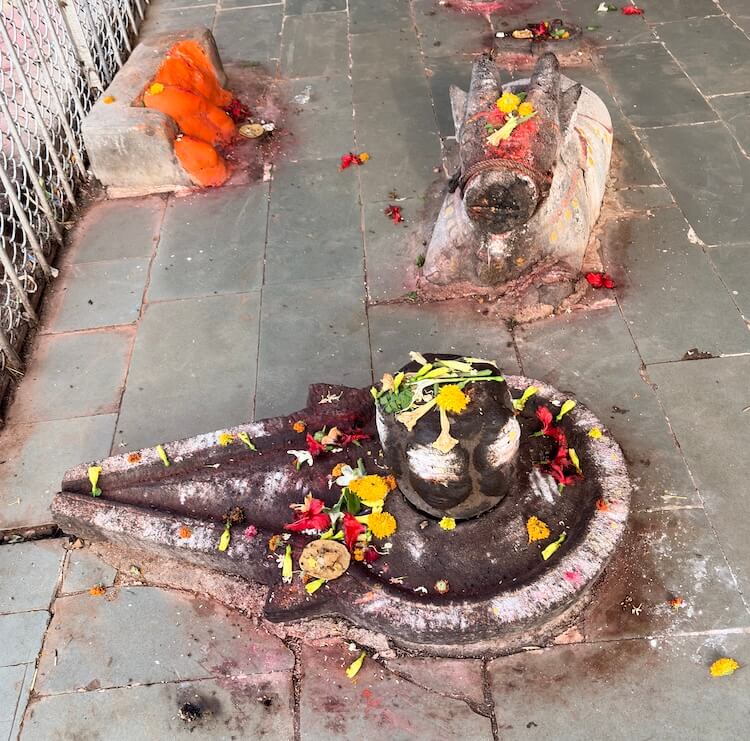
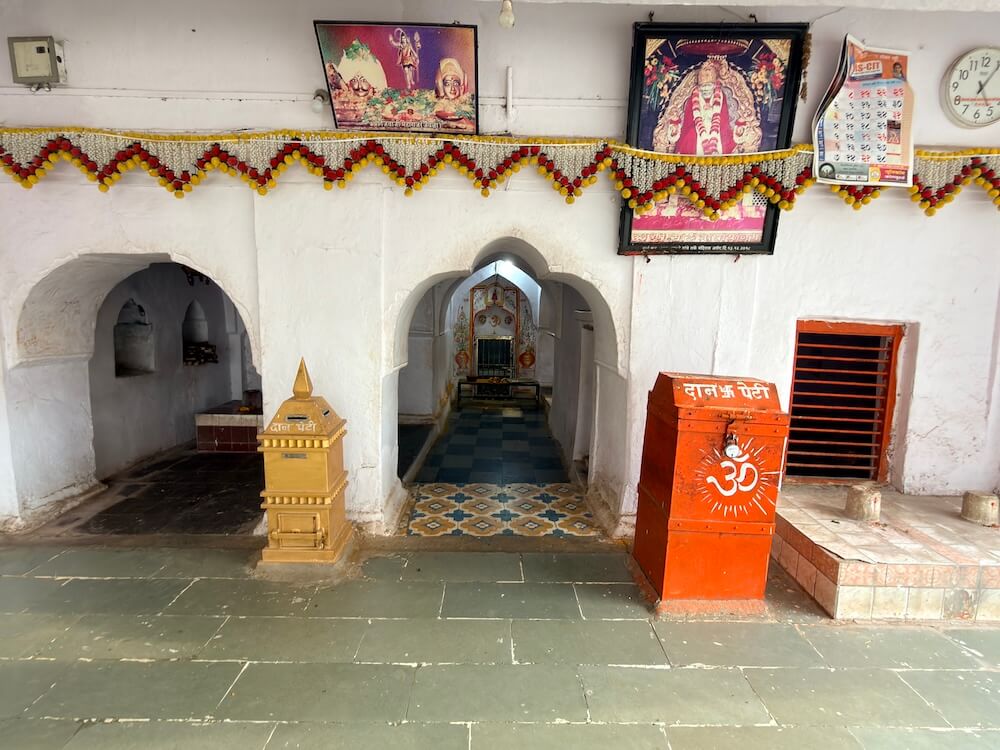
Upon entering the newly constructed mandap of the temple, devotees can see a linga and an idol of Nandi. Near these idols, three vermilion-smeared stones (tandale) are consecrated. From here, one passes through two arched entrances to reach the main assembly hall (sabhamandap). In the sabhamandap, two lingas are installed on a high pedestal. Devakoshthakas (niches for deities) have also been carved into the walls of this hall. Further ahead, on the right side, is the main sanctum. On a pedestal to the right of this sanctum, two more lingas are visible. It is said that all four of these lingas are the samadhis of the descendants of Jivaji Maharaj. The entrance to the main sanctum is small in size. On both sides of this entrance, images of sacred auspicious kalashas are painted, and the letter ‘Om’ is inscribed in the center. Inside the sanctum, on a pedestal, the two main lingas representing the samadhi of Jivaji Maharaj and his wife are seated. Metal masks are placed on both these lingas. The linga of Jivaji Maharaj is adorned with a turban (pheta), while a crown is placed on the samadhi of his wife. Above the sanctum is a dome-shaped shikhara. This shikhara features a two-tiered amalaka topped with a kalash. There are tall, minaret-like structures on all four sides of the shikhara.
Adjacent to the main temple structure, on the left side, is the donation office of the Sansthan. To the left of this office, a mandap with a roof has been erected. In front of it, the Sansthan has built a Bhakta Niwas (pilgrim accommodation) to provide lodging for devotees arriving from afar. A separate kitchen is also available for devotees within the temple premises.
Countless devotees with faith in Jivaji Maharaj come here for darshan. Especially on Sundays, the arrival of thousands of devotees gives the area the atmosphere of a fair. Champashasthi and Eknath Shashthi are the major festivals celebrated at this Sansthan. On the day of Eknath Shashthi, the palanquin of the Lord is taken out from the temple. This palanquin goes to the village’s Maruti temple, and after offering prayers there, it returns to the main temple. A large fair is held here on the day of Champashasthi. On the day of the fair, many devotees perform ‘lotangan’ (prostration) in the temple courtyard until they reach the main temple. Various religious programs are organized in the temple throughout the day.
On the evening of the fair, the old tradition of devotees pulling votive carts (navasachya gadya) is observed in the temple premises. People sit in these carts, and they are pulled with the help of ropes. On the night of Champashasthi, the palanquin of Lord Khandoba departs from the main temple.
Before this palanquin procession, the Sansthan sends halgi (traditional drums) and torches to bring the families of the village’s chief honoraries (mankaris) to the temple with respect. Thereafter, amidst the chanting of “Yelkot Yelkot Jai Malhar,” all the mankaris proceed toward the temple. Once all the mankaris gather at the temple, the festival idol of Khandoba is brought out from the main sanctum.
This festival idol is seated in a beautifully decorated palanquin. Following this, the palanquin is taken on a procession through the entire village with great enthusiasm. Devotees perform various traditional games in front of the palanquin. Thousands of devotees participate in this palanquin procession with devotion, showering Bhandara throughout the area. The temple is open for devotees from early morning until late at night every day.
This sacred temple stands as a testament to deep spiritual devotion, ancient architectural grandeur, and rich local cultural traditions.
The sanctum sanctorum houses the divine idol consecrated according to ancient Vedic traditions, surrounded by serene courtyards and traditional temple architecture.
Navratri, Maha Shivratri, Annual Temple Jatra & Deepotsav
Compare and book flights, secure top-rated local hotels near the temple, hire reliable guides, and rent cars instantly.
Extend your pilgrimage by visiting other highly sacred temples located nearby.


Add ₹999 more to unlock FREE SHIPPING!
Your sacred cart is currently empty.
Shop Photo FramesFill in your delivery details below to place your order.
Add comment