
Add ₹999 more to unlock FREE SHIPPING!
Your sacred cart is currently empty.
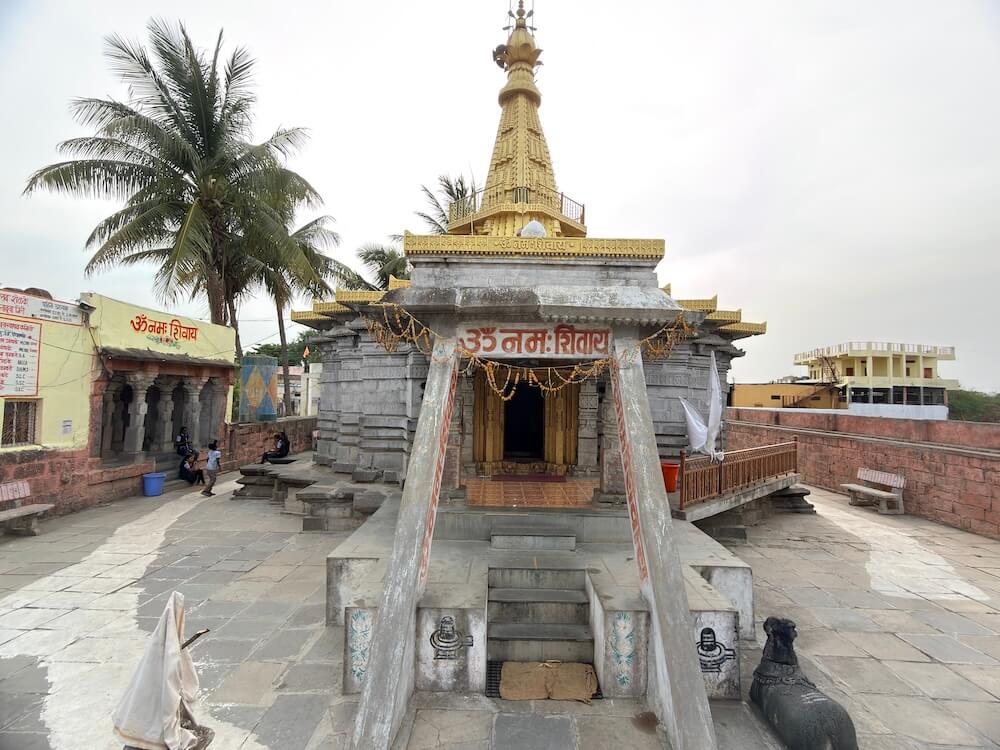
Shop Photo FramesThe Nagnath Mahadev Temple at Hatnur is a beautiful example of ancient architectural style. Built in the Bhumija style during the Later Chalukya period, an inscription carved on one of the pillars of this temple indicates that it was renovated during the Yadava period. The Shivalaya is designed in the tridala style, and Nagnath Mahadev’s Shivling is the presiding deity (gramadaivat) of Hatnur. Devotees have deep faith that He is a living, conscious presence (jagrut). During Uttarayana in the month of March, the first rays of the sun fall directly through the entrance of this east-facing temple onto the Shivling in the sanctum sanctorum. Hundreds of devotees gather here to witness this sun-ray festival (kiranotsav), which lasts for about three-quarters of an hour. A three-day fair is held here every year on the occasion of Maha Shivratri.
The Kotirudra Samhita of the Shiva Purana narrates the story of the origin of the twelve Jyotirlingas. According to this Samhita, in ancient times, a demon named Daruka and his wife Daruka lived in the Daruka forest. They began to persecute the local people and sages. These demons had imprisoned a devotee of Lord Shiva named Supriya and many others. Even in prison, Supriya continuously worshipped and chanted the name of Mahadeva. When the demon Daruka came to know of this, he rushed to kill Supriya. To protect His devotee, Mahadeva appeared there from an underground cave and destroyed the demons. At the request of His devotees, Mahadeva settled right there in the form of a Linga. This holy site came to be known as ‘Nagesh’ or ‘Nagnath’. Another reference to this name is connected to the form of Mahadeva. Since Mahadeva wears serpents on His body and around His neck, He is called the Lord of Serpents, i.e., ‘Nagnath’. The Shiva Purana contains the verse “Nagesham Darukavane”. The story of ‘Upamanyu Shivabhakta’ also mentions that Mahadeva granted fearlessness (abhaya) to the serpents of Nagaloka and their king.
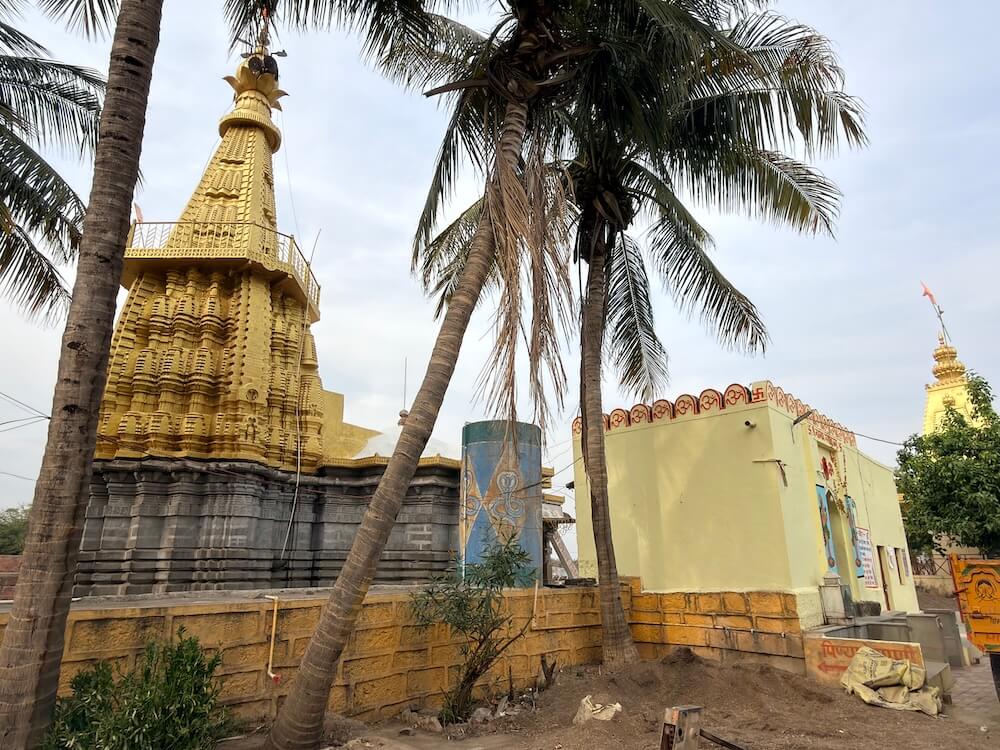
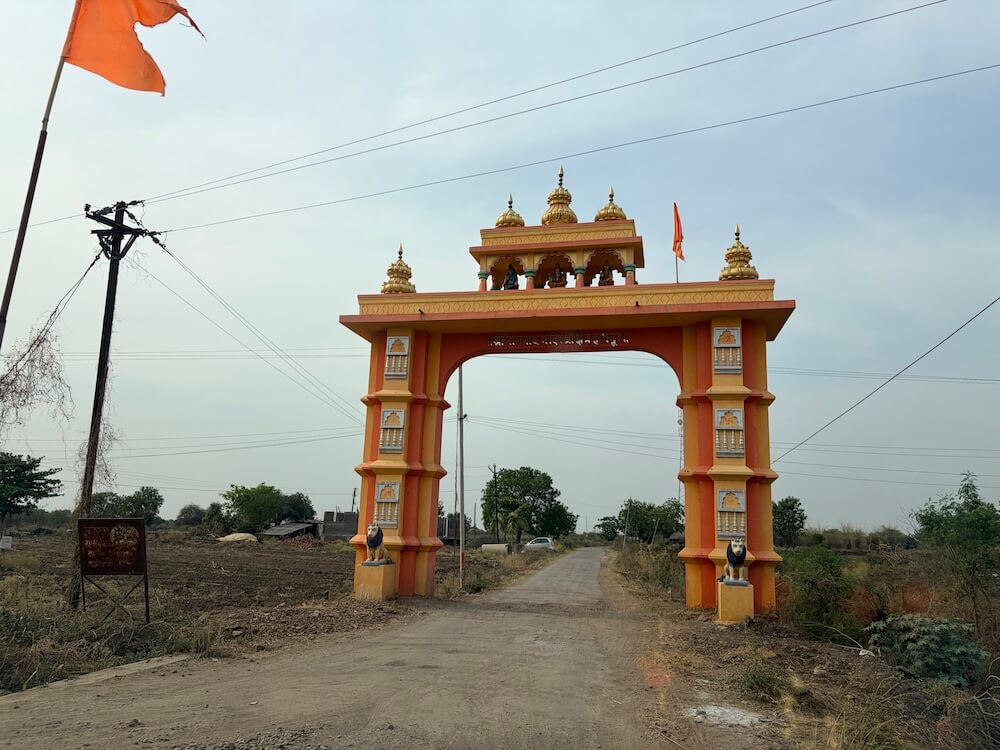
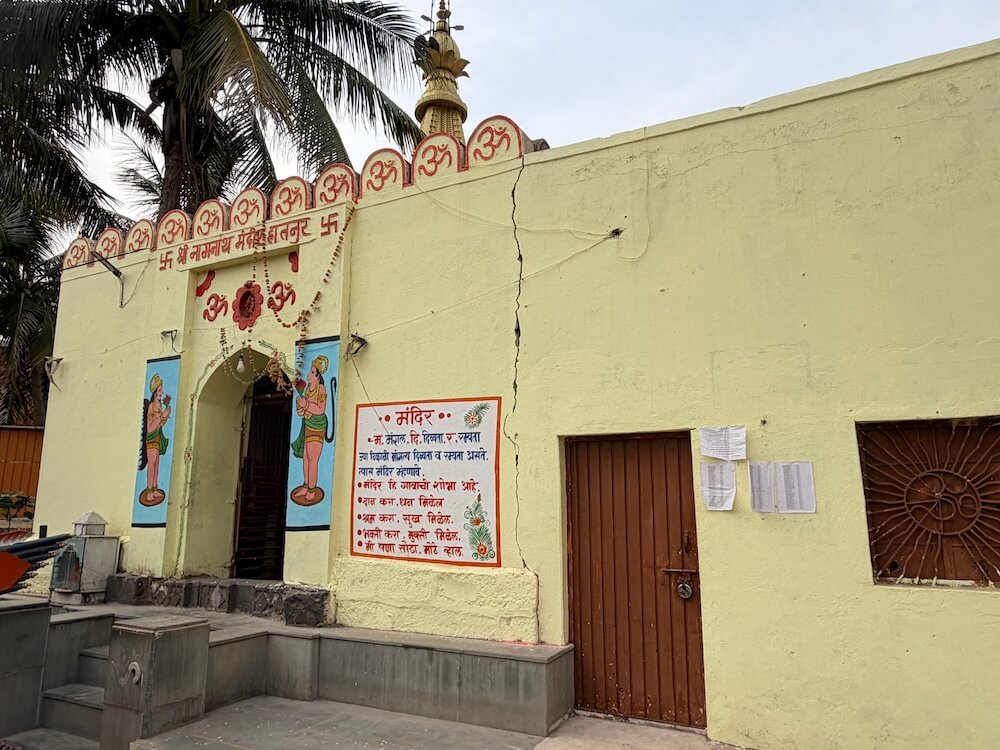
There are many temples in the village of Hatnur. Spanning an area of approximately two thousand five hundred square feet, the Nagnath Mahadev Temple is one of them. This temple is located a short distance from the village archway. To the left near the entrance of the temple is the abode of Lord Ganesha. Paintings of Lord Ganesha and other deities are painted on the walls of the entrance. There are paintings of guardian deities (dwarapalas) on both sides of the entrance. This stone entrance is surrounded by fortification walls on all four sides. Upon entering through the gateway, the temple of Nagnath Mahadev is visible right ahead in the courtyard.
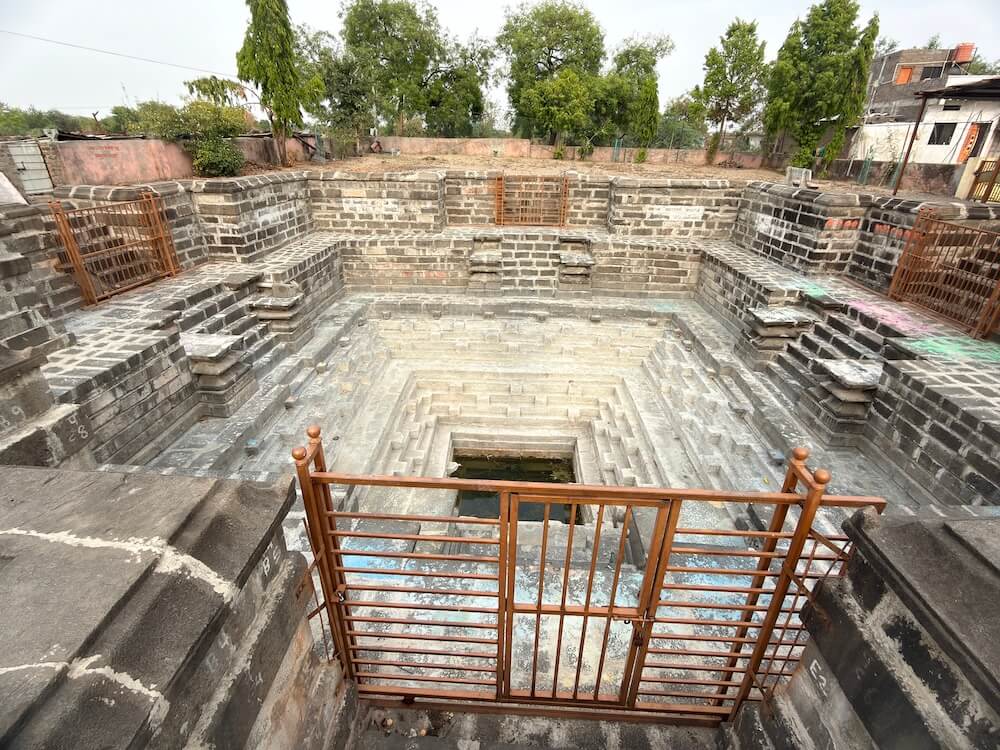
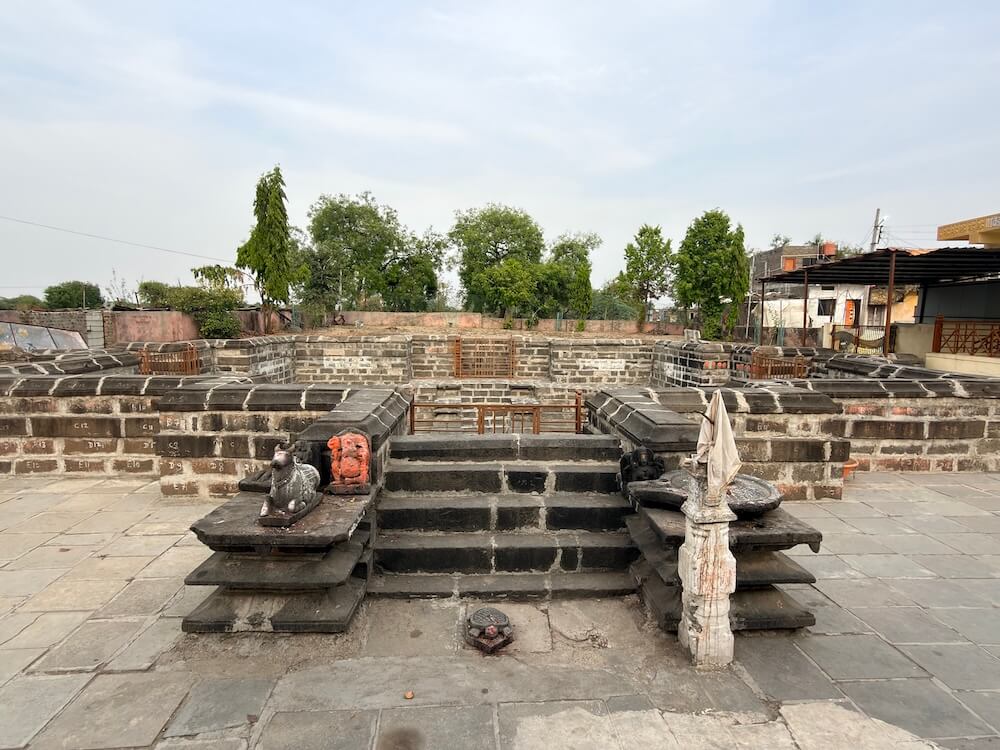
This temple is built on a high plinth. On the left side of the temple is an ancient idol of Nandi. The torso and head of this idol can be separated from each other, and water is always present inside it. There is also a sculpture of Nandi in front of the temple. One has to climb four to five steps to enter the temple. The structure of this temple consists of a front porch (mukhamandapa), a main assembly hall (sabhamandapa), two sub-sanctums, an intermediate space (antarala), and the main sanctum sanctorum (garbhagriha). Of the two pillars in front of the mukhamandapa, an inscription is carved on the right-hand (southern) pillar. From the information contained within it, we learn that this ancient temple was first renovated in the Shaka year 1223. The entrance to the sabhamandapa is five-fold (panchakhashiya) and features exquisite craftsmanship. In the center of the lintel of the gold-painted doorframe is a sculpture of Lord Ganesha. The windows, ventilation slits (jalavatayana), and the main entrance of the temple are designed in such a way as to allow continuous fresh air and light inside. There are twelve pillars in the sabhamandapa. Various shapes are carved on these pillars, which stand on pillar bases (stambhapadast). On the four chandeliers at the corners of the beams here, there are inverted serpents. In the middle of the four beams, there is a carved design resembling animal hooves. In the center of the ceiling is a square design with a lotus carved into it. Some wall niches (devakoshthakas) are carved on the walls of the sabhamandapa. The palanquin is kept in the sub-sanctum on the left. There is a Shivling in the sub-sanctum on the right. It is said that a secret passage from the sabhamandapa used to lead to Aundha Nagnath. There is also a subterranean cave beneath the temple where devotees used to meditate in the past. Paintings of Goddess Lakshmi and Gajanan Maharaj are painted on the walls of the antarala. In the central lintel (lalatabimba) above the entrance of the sanctum sanctorum is the place of Lord Ganesha. Inside the sanctum sanctorum, in a large shalunga, is the Shivling of Nagnath Mahadev, fitted with a metal mask made of five metals (panchadhatu). There are two empty wall niches in the sanctum sanctorum. In the month of March, during Uttarayana, the sun-ray festival (kiranotsav) takes place on the Shivling between 6:30 AM and 7:15 AM. Above the main sanctum sanctorum is a tall spire (shikhara) tapering towards the top, crowned with an amalaka and kalasha. This shikhara has been newly built. There is a dome-shaped shikhara over the sabhamandapa. Pradakshina (circumambulation) can be performed directly from the platform of the temple. The inscription carved on the pillar in the mukhamandapa was first read by Professor R. M. Bhusari in 1948. Later, researcher Sh. Go. Tulpule re-read this inscription. This eight-line inscription belongs to the Yadava period. Based on the mention of “Shaku 1223 Plava Samvatsare” in this inscription, the period of this inscription has been determined as 1301 CE. It states that a person named ‘Purushdev Pandit’ performed the meritorious act (dharma) of offering and restoring (renovating) Nagnath in the Shaka year 1223. It also mentions that this work was carried out by a carpenter named ‘Haridev’. The inscription concludes with a salutation (“Namastu”) to Nagnath. The gist of this inscription is that there was an original temple of Nagnath in this village, but since it had fallen into disrepair, Purushdev Pandit renovated this temple. Tulpule has expressed the possibility that the Purushdev Pandit mentioned herein may be the Chief Minister of ‘Ramdevray Yadav’ mentioned in the ‘Purushottampuri’ copper plate. An informational plaque in Marathi regarding this inscription has been erected in the temple premises. Right in front of this temple is an ancient stepped well (barav) covering an area of approximately six thousand square feet. As this stepwell had become dilapidated over time, the villagers recently renovated it through public contributions. A fine example of ancient architectural style, this stepwell has entrances on all four sides. There are steps to descend into the stepwell. There are some ancient idols on the edge of the stepwell. There is also a Vitthal temple in front of this temple.
The villagers of Hatnur have undertaken many works in the temple premises through public participation. The villagers contribute one percent of their income towards the development works here. It is from this fund that the local stepwell was renovated. The villagers have also built a community hall (mangal karyalaya) in the area. Through public contributions, the villagers also renovated an ancient temple located about one kilometer away from this temple.
Many devotees have deep faith in Lord Nagnath. Therefore, numerous devotees from the surrounding five villages come here for Darshan and to fulfill their vows. Maha Shivaratri is the main festival here. During this festival, a three-day grand fair is held. On the occasion of Maha Shivaratri, many men and women from the village observe a five-day fast. To mark this festival, an Akhand Harinam Saptah is organized here. Rudrabhishek is performed at the temple on Magha Vadya Trayodashi. On the afternoon of Maha Shivaratri, many devotees participate in the cart-pulling ceremony. In the evening, Mahaprasad is distributed to the devotees. At night, a Palkhi procession is taken out from the temple. The sacred mask of Lord Shiva is placed in the Palkhi. Wrestling competitions are also held here during this festival. On this occasion, a Dipotsav is celebrated around the stepwell in front of the temple. Dipotsav is also held on the occasions of Gudi Padwa and Diwali Padwa. There is also a temple of Sant Sewalal Maharaj in the temple premises. A fair is held here on Ram Navami. At that time, many devotees from the Banjara community of the surrounding five villages gather here. Devotees can have Darshan here every day from early morning until late at night.
This sacred temple stands as a testament to deep spiritual devotion, ancient architectural grandeur, and rich local cultural traditions.
The sanctum sanctorum houses the divine idol consecrated according to ancient Vedic traditions, surrounded by serene courtyards and traditional temple architecture.
Navratri, Maha Shivratri, Annual Temple Jatra & Deepotsav
Compare and book flights, secure top-rated local hotels near the temple, hire reliable guides, and rent cars instantly.
Extend your pilgrimage by visiting other highly sacred temples located nearby.


Add ₹999 more to unlock FREE SHIPPING!
Your sacred cart is currently empty.
Shop Photo FramesFill in your delivery details below to place your order.
Add comment