
Add ₹999 more to unlock FREE SHIPPING!
Your sacred cart is currently empty.
Shop Photo FramesThe temple of Keshavraj Babasaheb, the Guru of Shirdi Sai Baba, is located in the Selu taluka of Parbhani district. Keshavraj Babasaheb Maharaj nurtured Sai Baba, who taught the principles of ‘Shraddha and Saburi’ (Faith and Patience) and ‘Sab Ka Malik Ek’ (One God governs all), from the time Sai Baba was five years old. In this temple, one can behold the Swayambhu (self-manifested) idol of Shri Venkatesha, which appeared near the Ashvattha (Peepal) tree located close to Babasaheb’s Samadhi site. This temple holds a profound historical and religious significance. Keshavraj Maharaj is revered as the Gram-Daivat (presiding deity) of this village.
The original name of Selu village was ‘Shaluwadi’. The village derived this name because the crop of Shalu Jowar (sorghum) was grown in abundance in this region. Over time, the name underwent a linguistic shift to Seluwadi and eventually became known as Selu. This village is recognized as a land of saints. When Gopalrao arrived here in 1830 AD, he renovated the local fort (Garhi). To develop the village, he encouraged people from the surrounding areas to settle here. During that period, Marathwada was under the rule of the Nizam. Through his own merit and capability, Gopalrao had secured the Subedari (governorship) of the Jintur and Pathri regions.
Keshavraj Maharaj was born in Jamb Bavi, a village near Bhum in the Dharashiv (formerly Osmanabad) district. His mother’s name was Sushila and his father’s name was Keshavraj. A legend is famous regarding the birth of Babasaheb Maharaj. According to it, his parents were childless for many years. They performed rituals to please Shri Venkatesha and prayed for the boon of a son. At that time, Venkatesha granted them a boon, saying, “The Ramanand Swami of Kashi from a previous life will be born in your home, and he will become renowned as Gopalrao Babasaheb.” Born by the grace of Venkatesha, the child was named Gopalrao. Later, after his Upanayana (thread ceremony) and marriage, Gopalrao set out from his home to earn spiritual merit. While wandering, he arrived at Selu. He later built a fort at Umberkhed near Manda. It was in this fort that he imparted spiritual education to Sai Baba. Through his divine powers, he performed many miracles. During meditation and spiritual practice, he would receive the Saguna (manifest) vision of Lord Venkatesha. People respectfully called him ‘Babasaheb Maharaj’. Having nurtured Sai Baba from the age of five, he imparted to him complete knowledge of Dhoti-Poti, Khanda, and Samadhi Yoga. Sai Baba respectfully addressed him as ‘Venkusha’. He attained Samadhi on the day of Margashirsha Shuddha Ekadashi, which is Gita Jayanti, at the cremation ground in Selu. Before taking Samadhi, he instructed Sai Baba to head towards the west of Selu. He gave Sai Baba the promise, “Your fame will exceed mine.”
Das Ganu Maharaj, a close disciple of Sai Baba, has established in his work ‘Bhakta Leelamrut’ that Keshavraj Babasaheb Maharaj was indeed Sai Baba’s Guru. A special chapter on Sai Baba is also written in the 57th chapter of the ‘Sant Kathamrut’ composed by Das Ganu Maharaj. It is said that Das Ganu Maharaj wrote these two books at the behest of Sai Baba himself.
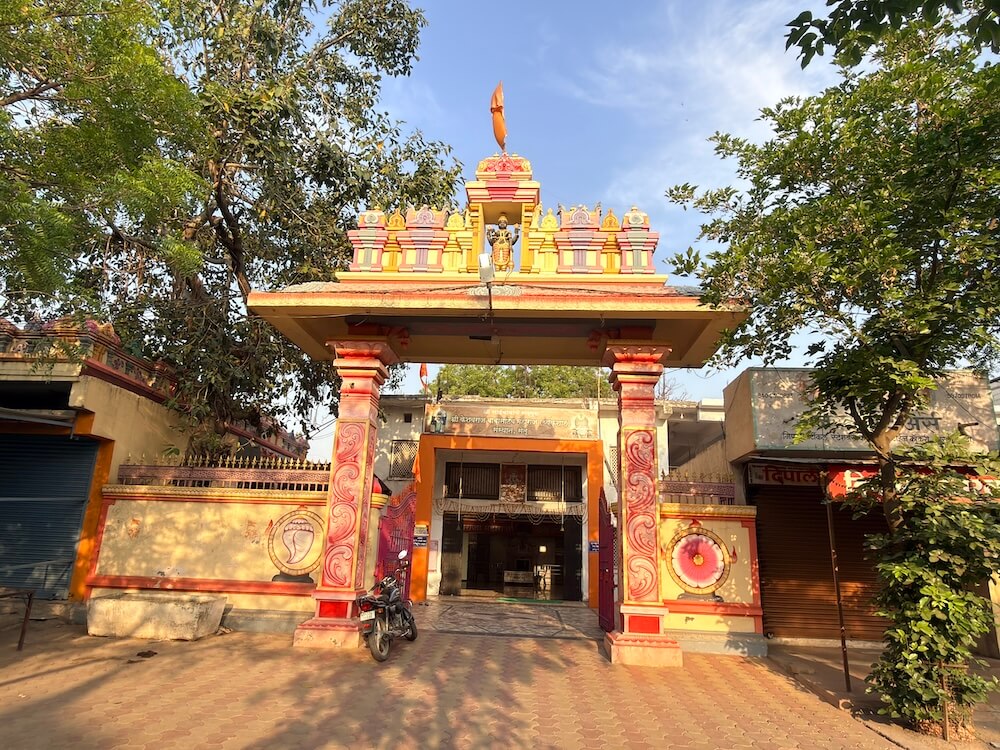
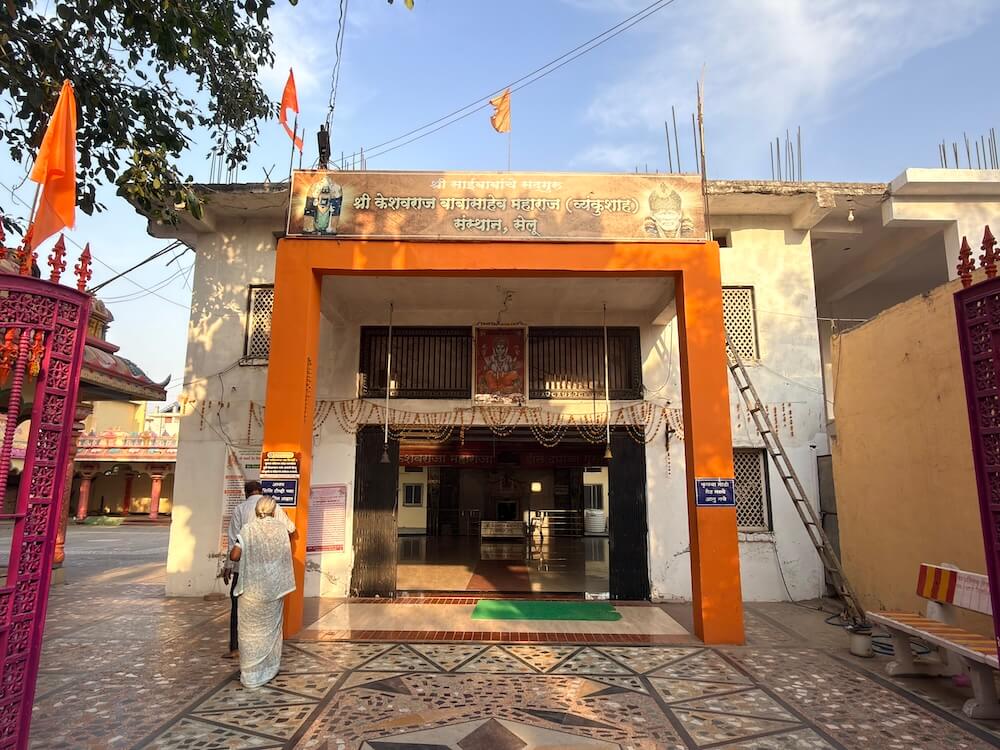
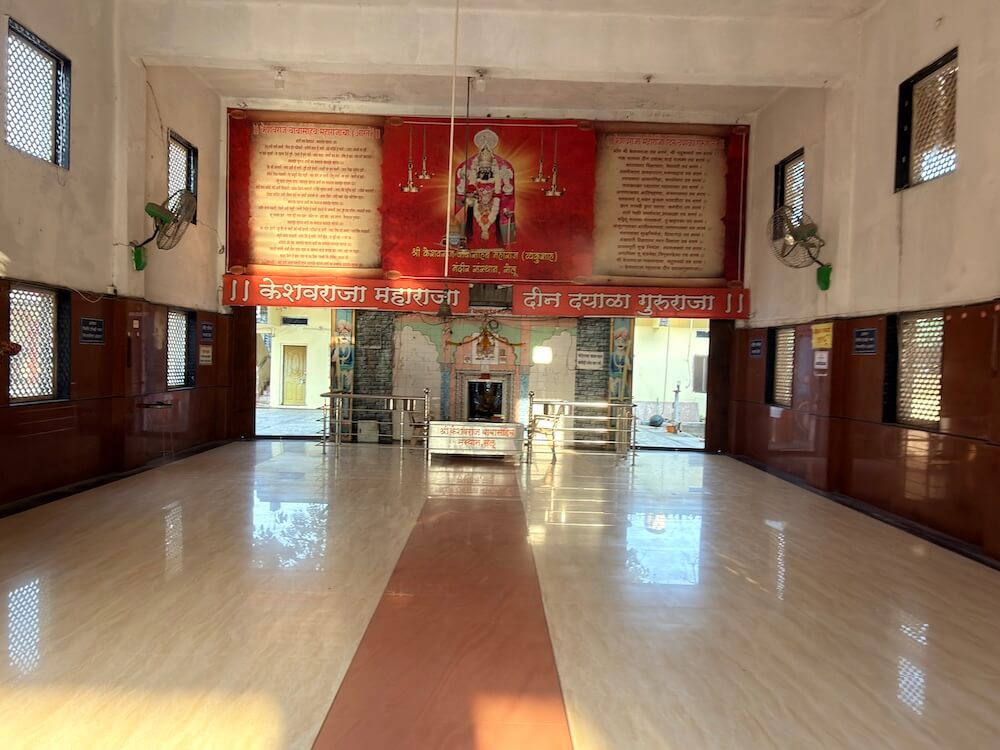
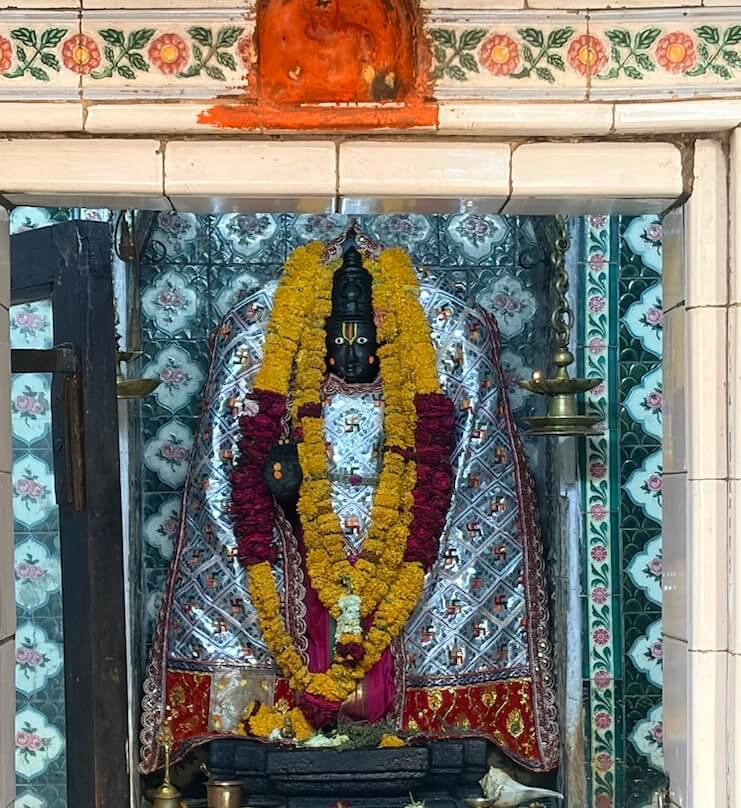
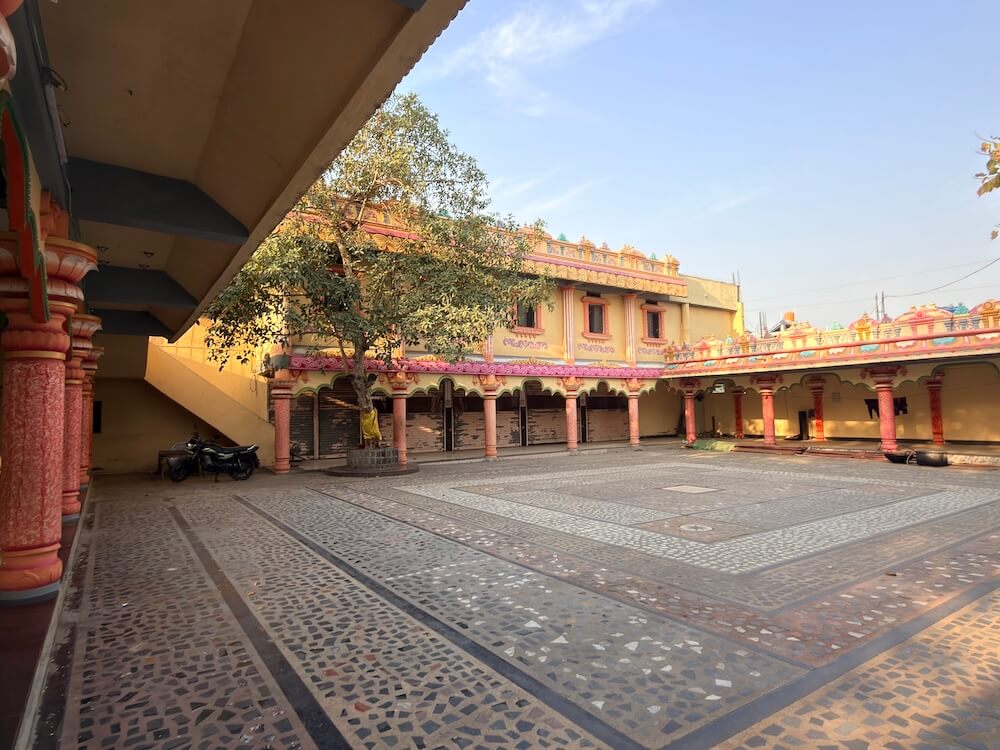
This temple is situated in the central area of Selu city. One enters the temple courtyard through an attractive gateway. The main temple structure stands directly ahead in the courtyard. The temple is designed with a Sabha Mandap (assembly hall) and a Garbhagriha (sanctum sanctorum). The entrance to the sanctum is small in size. There are statues of Dwarpalas (gatekeepers) on both sides of the entrance. The Swayambhu Chaturbhuj (four-armed) idol of Shri Venkatesha is consecrated in the sanctum. A unique feature of this black stone idol is that the Shankha (conch) and Chakra (discus) in its hands are in a reversed position. Venkatesha’s upper left hand is in the blessing posture (Ashirwad Mudra). To the right of this idol is a small metal idol of Sai Baba. The Palkhi (palanquin) of Keshavraj Babasaheb Maharaj is kept in the Sabha Mandap of the temple. There is a beautiful Shikhara (spire) over the sanctum. Paintings of various deities are depicted on the outer walls of the temple. To the east of the Maharaj’s Samadhi site, there are three temples: a Mahadev temple, a Ganpati temple, and a Vitthal-Rukmini temple. The idols of Vitthal-Rukmini here have been installed following the tradition of Pandharpur.
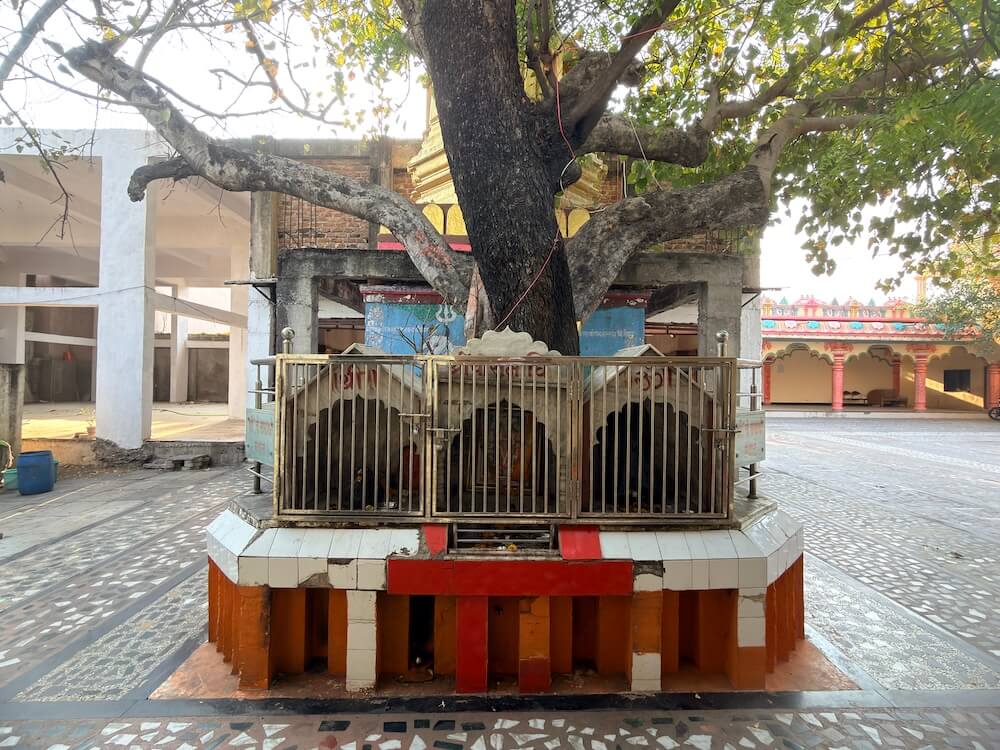
The Samadhi site of Keshavraj Babasaheb Maharaj is located near the Ashvattha tree and a Neem tree behind the main temple. The three branches of the Ashvattha tree here are considered symbols of Brahma, Vishnu, and Mahesh. In the three small shrines near the Samadhi site, a Shivling, Ganesh, an idol of Keshavraj, and a portrait are enshrined. Near the Audumbar tree on the left side of the temple is the Samadhi of Govind Mandlik, a disciple of Keshavraj Babasaheb Maharaj.
Aarti is performed in the temple daily at 12:00 PM and 7:00 PM. Every Thursday, a special Aarti of Shri Vitthal is performed in the temple. Various religious programs are organized here throughout the year. The annual Jatrotsav (fair) is held here from Margashirsha Shuddha Saptami to Margashirsha Krishna Pratipada. During the fair, the entire city of Selu is filled with an atmosphere of enthusiasm.
During the Jatrotsav, Laghurudra Abhishek is performed daily on the idol of Venkatesha in the temple. During this period, various programs such as Akhand Harinam Saptah, Vishnu Sahasranam Saptah, collective recitation of the poetic biography of Keshavraj Babasaheb Maharaj, Shrimad Bhagwat Katha narration, Haripath, Bhajan, Kirtan, Pravachan, Kakad Aarti, and Mahaprasad are organized. On Gita Jayanti, the main day of the pilgrimage, long queues of devotees form from the morning for Darshan. After the Maha Aarti in the temple in the afternoon, Mahaprasad is distributed to the devotees. The main attraction of this pilgrimage is the Rathotsav (chariot procession).
On the day of the Rathotsav, the chariot is decorated with attractive flowers and electric lights. This chariot is taken around the entire city, and devotees gather on both sides of the road to catch a glimpse of the chariot. During this procession, women’s and men’s Bhajan groups perform Abhangs, Gavlanis, and Bharuds. Devotees are given traditional Kangi Prasad, and this celebration continues until late at night.
The entire premises resound with the chants of “Mauli Dnyanba Tukaram” and “Keshavraj Babasaheb Maharaj Ki Jai.” The Palkhi (palanquin procession) is welcomed at various points along its route. Apart from this, devotees also gather in large numbers for darshan on occasions such as Dattajayanti, Rangpanchami, Padwa, Kartiki Ekadashi, Mahashivratri, Hanuman Jayanti, Akshaya Tritiya, and Shravani Somvar. Devotees can visit for darshan daily from 6:00 AM to 1:00 PM and from 4:00 PM to 10:00 PM.
This sacred temple stands as a testament to deep spiritual devotion, ancient architectural grandeur, and rich local cultural traditions.
The sanctum sanctorum houses the divine idol consecrated according to ancient Vedic traditions, surrounded by serene courtyards and traditional temple architecture.
Navratri, Maha Shivratri, Annual Temple Jatra & Deepotsav
Compare and book flights, secure top-rated local hotels near the temple, hire reliable guides, and rent cars instantly.
Extend your pilgrimage by visiting other highly sacred temples located nearby.


Add ₹999 more to unlock FREE SHIPPING!
Your sacred cart is currently empty.
Shop Photo FramesFill in your delivery details below to place your order.
Add comment