
Add ₹999 more to unlock FREE SHIPPING!
Your sacred cart is currently empty.
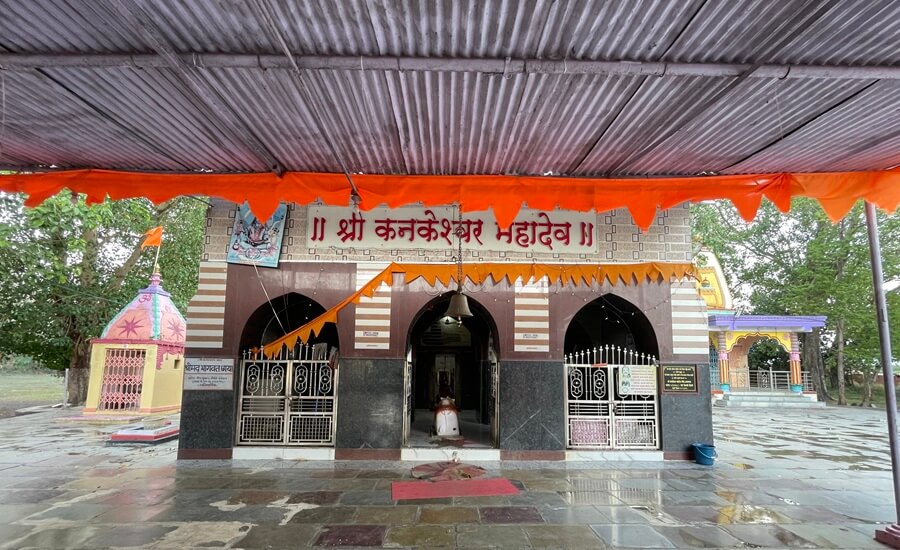
Shop Photo FramesTaloda, a village of great historical significance, is now a taluka headquarters. The fort (gadhi) built by Jagirdar Bhojraj Bargal in the year 1662, spanning six acres, remains intact to this day. The princely ruler Rana Mansingh had gifted the village of Taloda to Bhojraj Bargal as an inam (grant). The administration of this village remained with the Bargal family until the year 1952. Situated about one kilometer away from this historically renowned village, in the Amlad region, lies the ancient temple of Kankeshwar Mahadev.
According to mythology, in ancient times, there was a demon named Kanakasura. He performed extremely rigorous penance to please Mahadeva and expressed his desire to engage in a duel with Him. The innocent and compassionate Mahadeva granted his request; however, once the battle began, it became impossible for Mahadeva to subdue Kanakasura, and Kanakasura could not overcome Mahadeva. Finally, Mahadeva assumed his own name and Kanakasura expressed his desire to reside on Earth. Upon this, Mahadeva asked him to lie face down. When he agreed to this, Mahadeva performed a yajna on his back. In it, the demon Kanakasura was reduced to ashes. Keeping the word given to Kanakasura, Mahadeva assumed his name and resided there. Hence, one of Mahadeva’s names became Kanakeshwar.
Villagers estimate that this temple dates back approximately two hundred and fifty years. It is said that Maharani Punyashlok Ahilyabai Holkar provided assistance for the construction of this temple. She also had the well located within the temple premises built. There is a paved road leading from the city to the temple grounds. The temple’s boundary wall is adjacent to the parking area situated in front of the temple. There is seating arrangement for devotees in the paved courtyard.
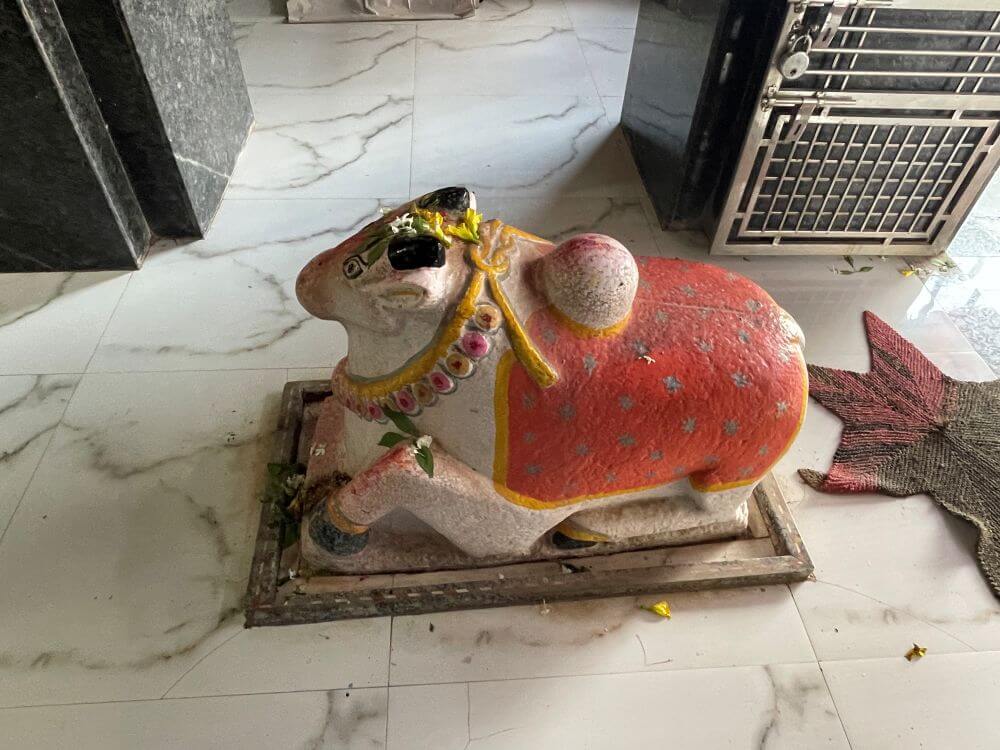
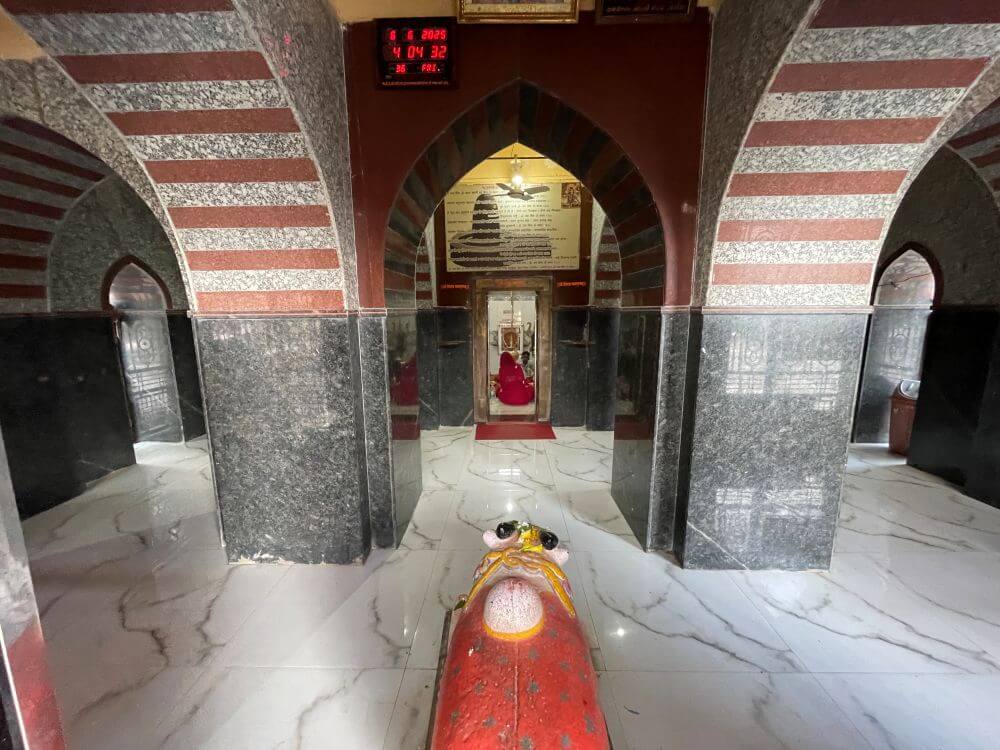
The temple structure consists of a Sabhamandapa (assembly hall) and a Garbhagriha (sanctum sanctorum). In the courtyard in front of the temple A mandap has been erected for the convenience of the devotees. In this mandap, there is a Shivlinga placed on a raised platform. The Sabha Mandap features an entrance with three arches supported by four pillars. Inside the Sabha Mandap, there are four rows of four pillars each. The outer pillars are embedded in the walls. All the pillars are connected to each other by crescent-shaped arches, and there is a dome above every set of four pillars. In the center of the Sabha Mandap, there is an idol of Nandi on a raised platform.
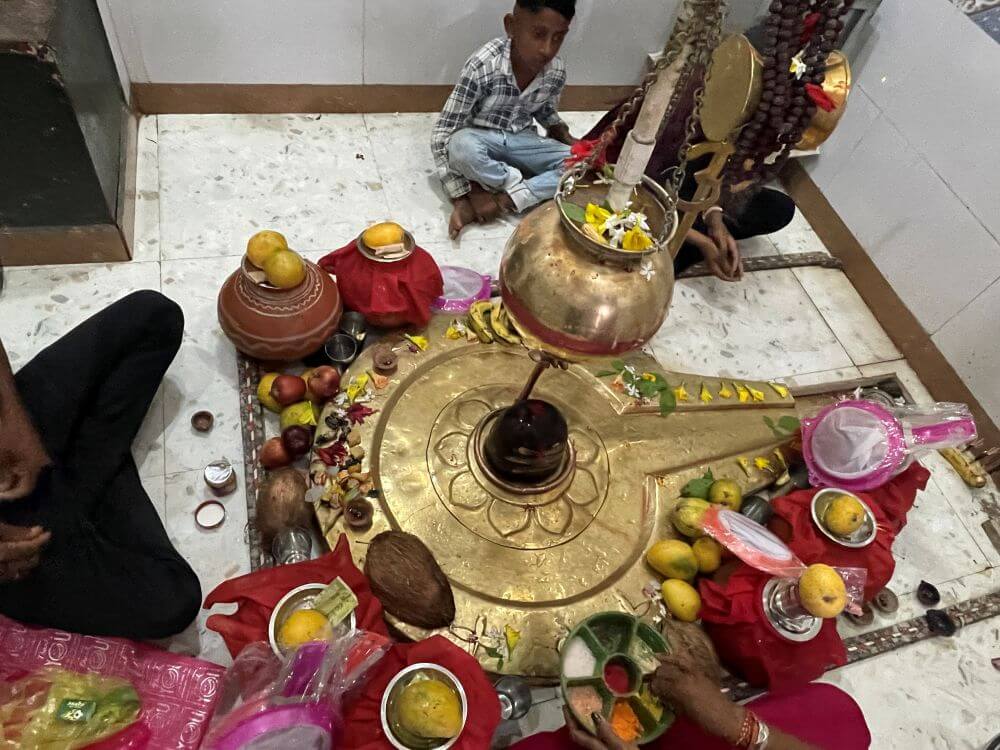
Further ahead, the door frames at the entrance of the sanctum sanctorum (Garbhagriha) are covered with brass plating. The sanctum sanctorum, situated at a higher level than the main hall (Sabhamandapa), houses the Shivlinga in the center. The base (Shalunka) of the Shivlinga is encased in brass plating adorned with lotus petal motifs. Above the stone Shivlinga on the base, there is a brass serpent (Naga) holding a canopy. Suspended over the Shivlinga is a brass vessel (Abhishekpatra) for the ritual pouring of water. To the side, there is a Trishula and a Damaru. In the niche on the back wall, there is an idol of Lord Ganesha.
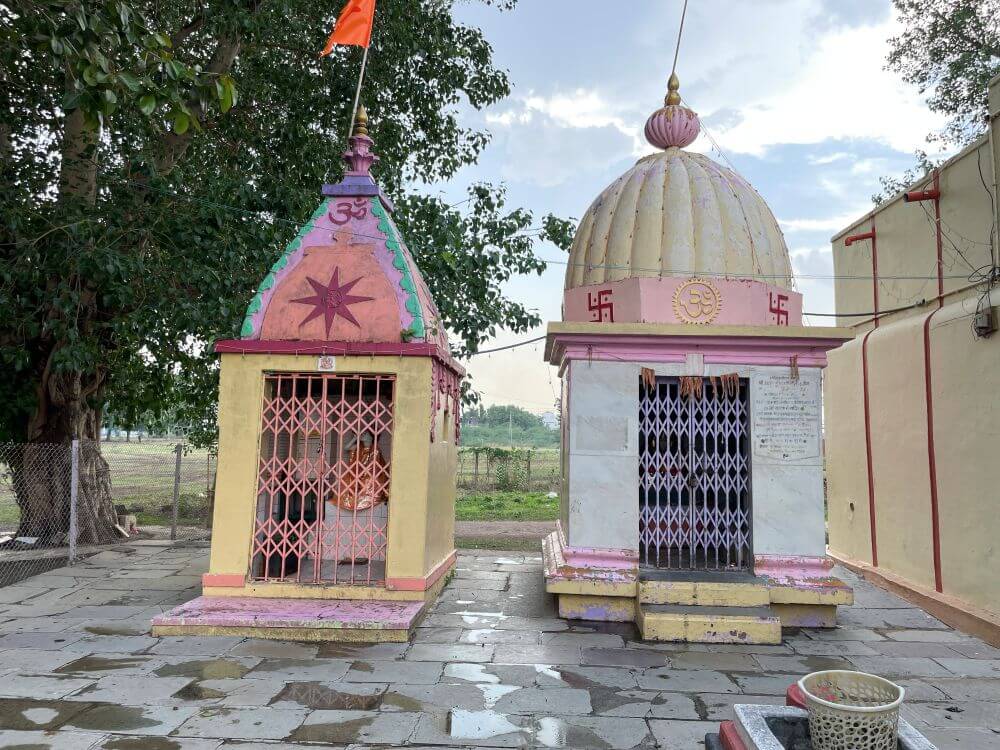
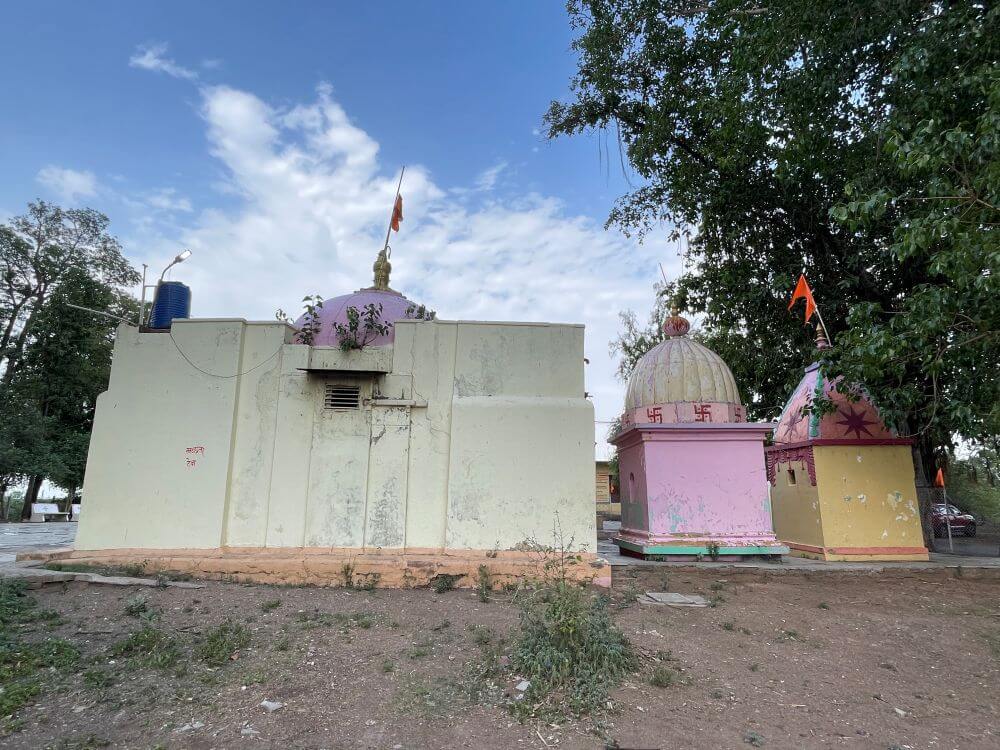
The sanctum sanctorum features a dome-shaped shikhara adorned with lotus flower carvings on the ceiling and There is a pinnacle (kalash) and a flag (dhwajapataka) on the stupika above it. There is a Vishwakarma temple in the temple courtyard. The temple, which has a structure consisting of a semi-open assembly hall (sabhamandap) and a sanctum sanctorum (garbhagriha), houses a four-armed marble idol of Lord Vishwakarma on a vajrapitha. The deity holds various tools in three hands and a kamandalu in the fourth. The idol is adorned with a crown on the head and fine garments and ornaments on the body. There is an amalaka and a kalash on the square-shaped shikhara located on the roof of the temple. Beside this temple, under a peepal tree, is a small temple of Dattatreya. It contains a marble idol of Dattatreya. In front of the idol are the padukas (footprints), and there are lamp niches (deepkoshtake) in the walls on both sides.
Beside this temple are separate shrines dedicated to Santoshi Mata and Sadguru Gajanan Maharaj. Further ahead is the west-facing temple of Maruti. The deity’s well-defined, vermilion-anointed idol is carved into an upright stone. Nearby is the temple of Ambika Devi. In front of the temple is the Yajna-kund, and in the sanctum sanctorum stands the eight-armed idol of the Goddess mounted on a tiger. In the temple courtyard, there are some ancient Nandi sculptures. The temple premises also feature an ancient freshwater well with steps and a Dharmashala.
Maha Shivratri is the main annual festival celebrated here with great devotion. On Maha Shivratri and every Monday of the holy month of Shravan, the day begins with Laghurudra and Maha-Abhishek performed on the Shiva Linga. Throughout the day, programs such as Bhajans, Kirtans, Pravachans, music, and Mahaprasad are organized in the temple. On these occasions, thousands of devotees from the surrounding areas come to seek the blessings of the Lord and to fulfill their vows. Consequently, the area takes on the atmosphere of a pilgrimage. Nestled in the lap of nature and adorned with lush greenery, the site also attracts a large number of tourists.
This sacred temple stands as a testament to deep spiritual devotion, ancient architectural grandeur, and rich local cultural traditions.
The sanctum sanctorum houses the divine idol consecrated according to ancient Vedic traditions, surrounded by serene courtyards and traditional temple architecture.
Navratri, Maha Shivratri, Annual Temple Jatra & Deepotsav
Compare and book flights, secure top-rated local hotels near the temple, hire reliable guides, and rent cars instantly.
Extend your pilgrimage by visiting other highly sacred temples located nearby.

Add ₹999 more to unlock FREE SHIPPING!
Your sacred cart is currently empty.
Shop Photo FramesFill in your delivery details below to place your order.
Add comment