
Add ₹999 more to unlock FREE SHIPPING!
Your sacred cart is currently empty.
Shop Photo FramesPrakasha is an ancient and renowned pilgrimage site situated at the confluence of the Gomati and Tapi rivers in the Shahada taluka of Nandurbar, a district with a large tribal population. Excavations conducted here in the year 1950 unearthed Chalcolithic-era remains, tracing the history of this village back 4,500 years. Known as the ‘Kashi of the South’, this place is particularly famous for its Hemadpanti-style temples, including Kedareshwar, Sangameshwar, Gautameshwar, Pushpadanteshwar, and the Mansapuri Devi temple. The fair held here once every twelve years during the Simhastha period is also highly celebrated.
In the ninth chapter of the ‘Tapi Mahatmya’, the information regarding Prakash is as follows – Shri Rudra Uvacha, Prakashakamidam Tirtham Sarvapapaprnashanam. Prakashatvam Gata Yatra Payoshyantargata Sarit. Sarva Devamidam Kshetram Durlabham Vatsa Bhutale. Ashesham Papa Dahanam Visheshadyottarayane. The meaning of this is – Mahadeva said that the pilgrimage site of Prakash is the destroyer of all sins. The Payoshni river, which had disappeared, reached Prakash has manifested. O child, it is extremely rare to attain such a sacred region on Earth. Especially, performing penance and bathing in this region during Uttarayana destroys all sins.
Regarding the name ‘Prakasha’ for this village, the legend goes that in ancient times, there was six months of night and six months of day on Earth. At that time, the work of building temples containing 108 Shiva Lingas for the permanent abode of Mahadeva was started in one night at Prakasha. However, by the time 107 Shiva Lingas were installed, the light of dawn appeared, and the work on this temple remained incomplete. Because of this, the village was named Prakasha, and this pilgrimage site came to be known as Dakshin Kashi. It is believed that for devotees undertaking a pilgrimage to Kashi, the merit of the pilgrimage is not attained without having darshan at Prakasha.
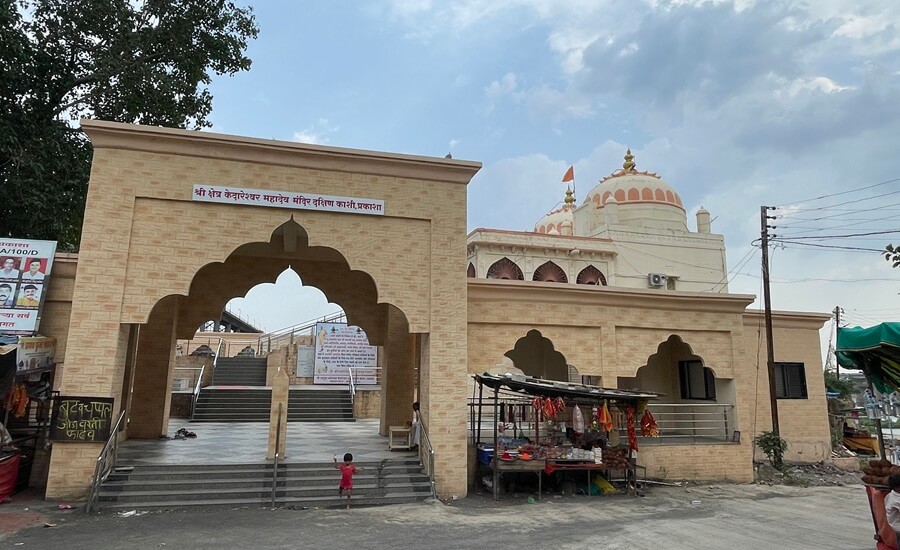
There is a paved road leading up to the embankment of this temple situated near the riverbank. At a short distance from the temple, there is a welcoming archway featuring two square pillars on either side of the road, with three ornate canopies (meghadambaris) on the balcony above, housing divine idols. In front of the temple entrance, there are many shops selling worship materials on both sides of the road. One enters the courtyard through the gateway in the fortification wall surrounding the temple. On both sides of the entrance, within the fortification, there are chambers with square pillars and roofs supported by beams. These chambers are used as a dharmashala (pilgrims’ rest house). All the pillars in the chambers are connected to each other by arched gateways.
In the temple courtyard, in front of the main shrine, stands an ancient, three-tiered circular Deepmala (lamp tower) set upon a large pedestal. There are steps to ascend this pedestal, with stainless steel safety railings on both sides. There is an entrance to go inside the Deepmala, featuring pillars on both sides supporting an arch. A spiral staircase leads to the top of the Deepmala. At the top, there is enough space for three to four people to sit at a time. From this vantage point, one can enjoy a panoramic view of Prakasha and the surrounding villages. On the outer side of the Deepmala, there are separate brackets for lighting the lamps.
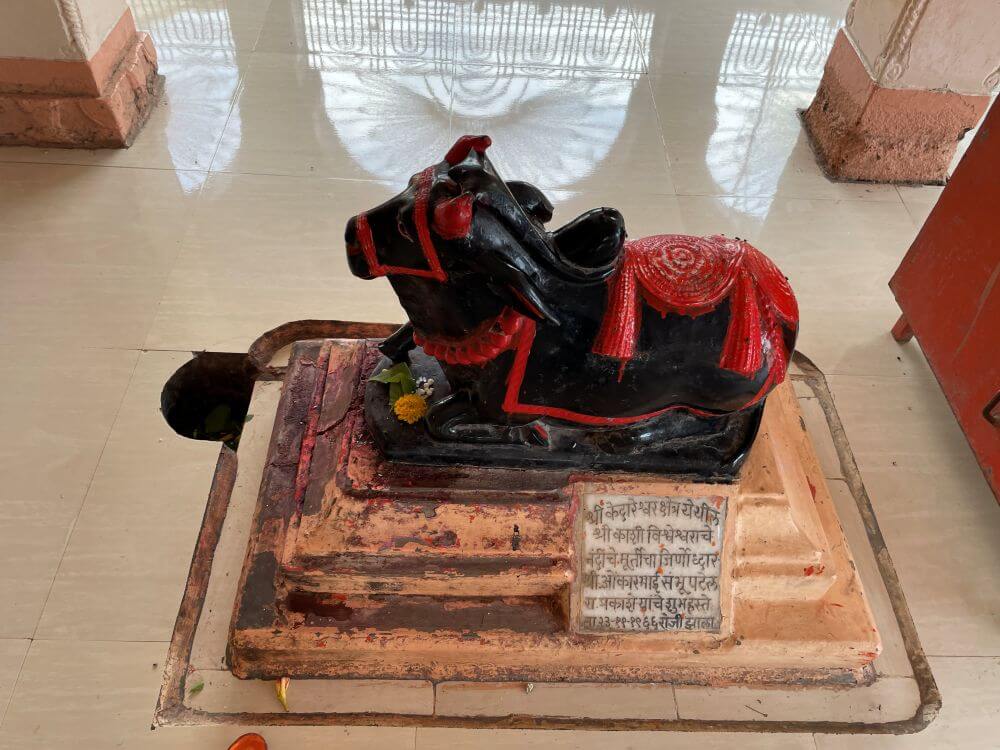
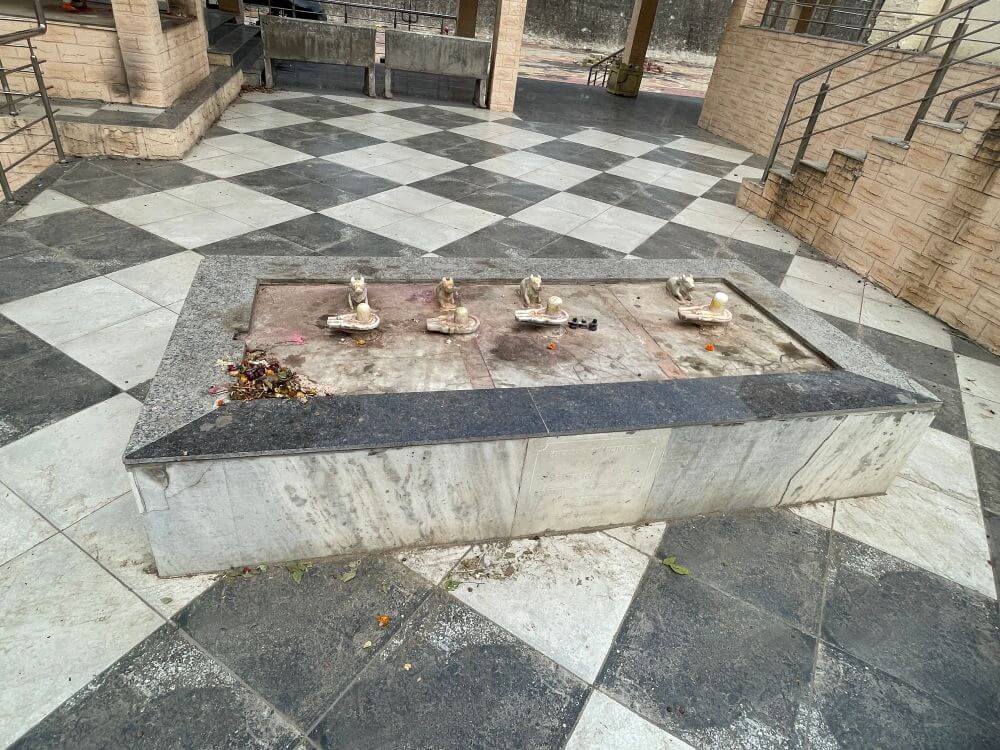
There are steps leading from the paver-blocked courtyard to the two-story temple. To the left of the stairway is the Shri Dattatreya Temple. Inside the temple, the idol of Dattatreya is placed in a niche in the back wall. After climbing about 15 steps from here, on the right side of the stairway, there is a platform featuring five Shiva Lingas with five Nandi statues facing them. Further ahead to the right is a small Maruti temple. In this temple, there is a standing idol of Maruti with folded hands. Climbing another 15 steps from here, one enters the Darshan Mandap of the temple. Seating arrangements are provided for devotees in the Darshan Mandap. Further ahead is the Sabha Mandap of the temple. The semi-open Sabha Mandap consists of eight rows of five square pillars each. The pillars feature a base at the bottom, a capital at the top, and crescent-shaped brackets above them. All the pillars are connected to each other by semi-circular arches. Various sculptures in relief style are carved onto some of the pillar shafts in the Sabhamandapa.
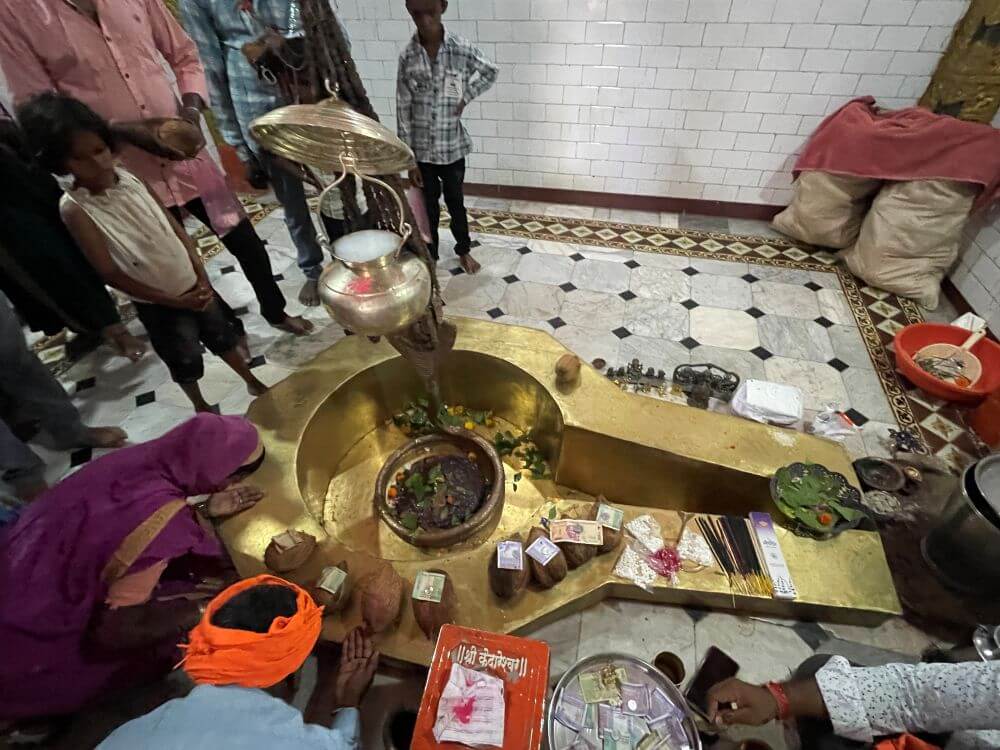
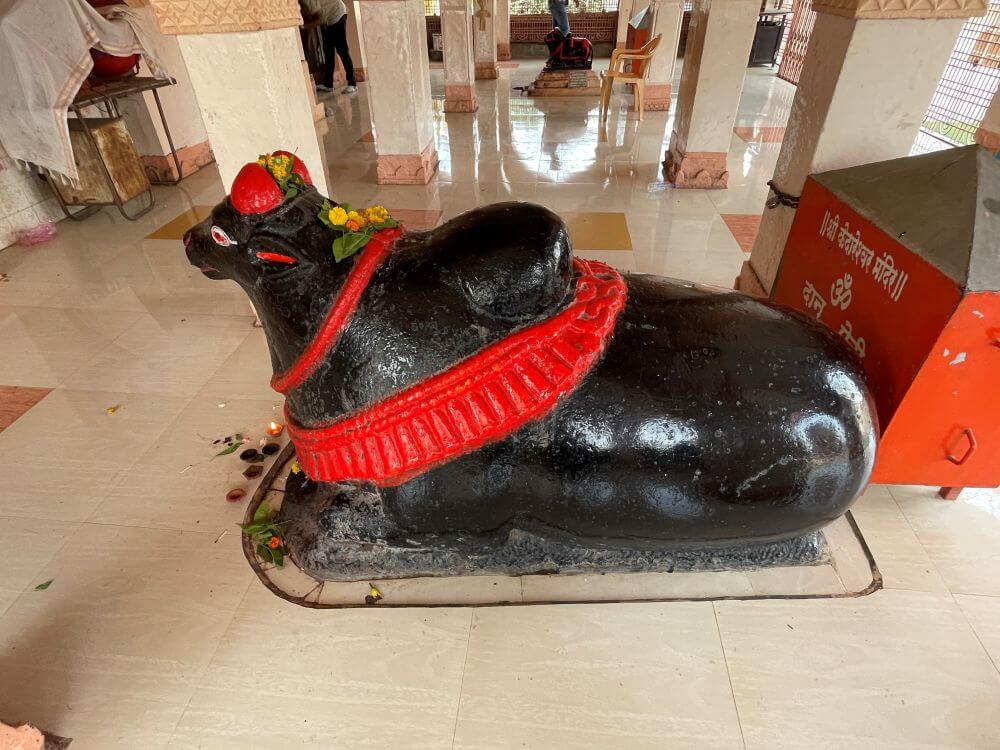
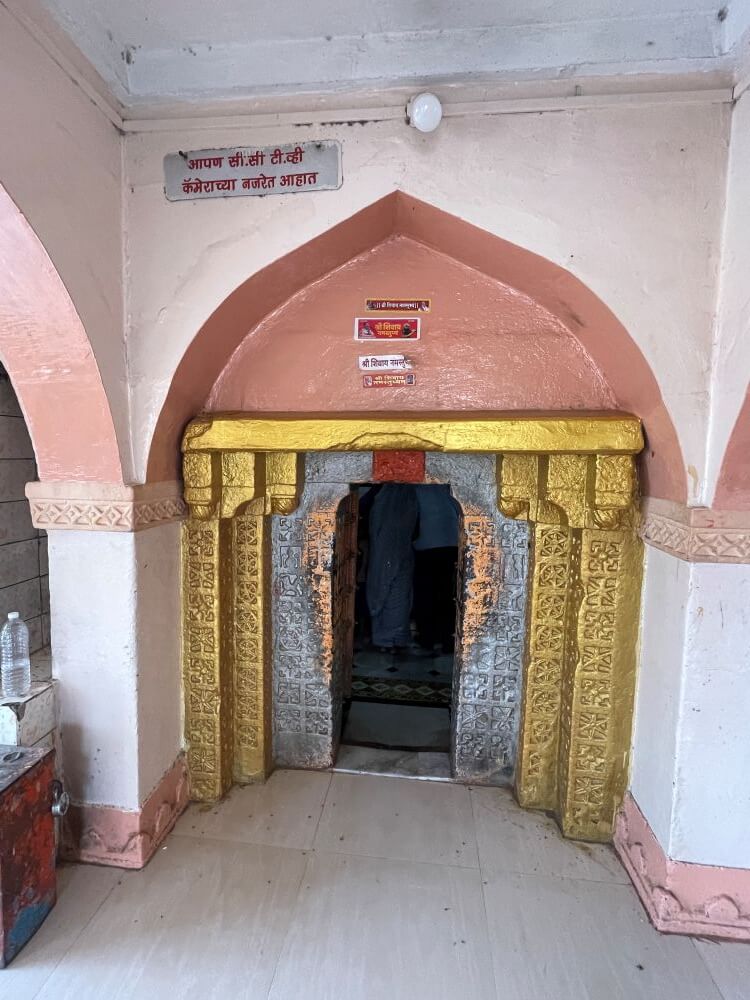
Since there are two twin temples here, Kedareswar and Kashi Vishweswar, the assembly halls (sabhamandaps) of both temples are joined together. On the left side of these assembly halls, there is an enclosed chamber with windows. In this enclosed chamber, there are idols of various deities placed within a makhar (ornamental canopy) on a vajrapitha (pedestal). In the assembly hall, there are two Nandi idols—one facing the sanctum sanctorum of the Kedareswar temple and the other facing the sanctum sanctorum of the Kashi Vishweswar temple. On all three doorjambs of the entrance to the Kedareswar temple’s sanctum sanctorum, there are lotus flower carvings, and a sculpture of Lord Ganapati is carved on the lalatbimba (lintel). The entrance has ornate wooden shutters adorned with brass lotus flower designs. On the left side of the entrance, in a devakoshta (niche) on the facade wall of the sanctum sanctorum, there is an idol of the Tapi River in the form of a goddess. In the center of the sanctum sanctorum, there is a Shiva Linga on the floor. The linga-stone within the shalunka (base) of this pind is embedded deep into the ground. There is a five-hooded brass serpent (Naga) shielding the Shiva Pindi, and a silver Abhishek vessel positioned to pour a continuous stream of water over the Shiva Pindi.
Adjacent to the Kedareshwar sanctum, on the right side, is the sanctum of Kashi Vishweshwar. The three doorjambs of the entrance are adorned with floral carvings, and an image of Lord Ganesha is carved on the lalatbimba (lintel). On both sides of the ornate torana (archway) above the entrance, there are stone chandeliers. Above the torana, in the center, is a relief sculpture of a Shivling, flanked by two elephants (gajaraj) worshipping it. There are lamp niches (deepkoshtakas) on both sides of the entrance. On the right side, in a niche on the front wall of the sanctum, is an idol of Lord Ganesha. The circular ceiling of the sanctum is decorated with intricate floral carvings. In the niche on the back wall of the sanctum, there is a brass mask of Kashi Vishweshwar Mahadev.
The sanctum sanctorum of both temples features a dome-shaped shikhara topped with a kalasha. Surrounding each of the two main shikharas on all four sides are four hexagonal sub-shikharas, each also crowned with a kalasha. A short distance in front of the temple, on the banks of the Tapi River, lies a spacious ghat. Steps lead down from there into the riverbed. Various Shanti and Shraddha rituals are performed here.
In this temple, the three-day Simhastha Jatrotsav is celebrated once every twelve years. During this time, thousands of devotees from across the country arrive to take a holy dip and seek the blessings of the deity. Pilgrims undertaking the Kashi Yatra often come to Prakasha to conclude their pilgrimage. The temple remains crowded with devotees performing Shradh and various Janan Shanti rituals. Special festivals are celebrated on Shravani Mondays and Mahashivratri.
This sacred temple stands as a testament to deep spiritual devotion, ancient architectural grandeur, and rich local cultural traditions.
The sanctum sanctorum houses the divine idol consecrated according to ancient Vedic traditions, surrounded by serene courtyards and traditional temple architecture.
Navratri, Maha Shivratri, Annual Temple Jatra & Deepotsav
Compare and book flights, secure top-rated local hotels near the temple, hire reliable guides, and rent cars instantly.
Extend your pilgrimage by visiting other highly sacred temples located nearby.

Add ₹999 more to unlock FREE SHIPPING!
Your sacred cart is currently empty.
Shop Photo FramesFill in your delivery details below to place your order.
Add comment