
Add ₹999 more to unlock FREE SHIPPING!
Your sacred cart is currently empty.
Shop Photo FramesShiva temples situated at the confluence of various rivers are particularly renowned. It is believed that because the waters of two or more rivers merge at a confluence, their medicinal properties increase, and the rejuvenating power of the water is enhanced. In this same tradition, the Sangameshwar Shiva Temple, located at the confluence of the Tapi, Gomati, and the hidden Pulanda rivers in Prakasha, Shahada taluka, and the Kartikeya Swami Temple, which opens only once a year, are famous. Known as the ‘Dakshin Kashi’, this village houses one hundred and seven Shiva Lingas installed across various temples.
Archaeological excavations conducted in the village of Prakasha have unearthed Chalcolithic artifacts dating back approximately 4,500 years. It is said that some of the earliest experiments in agriculture in human history took place at this site. However, the temples here, built in the Hemadpanti architectural style, are said to date back to the thirteenth to fourteenth centuries. Many of these temples were renovated, and some were established, by the revered Punyashlok Ahilyabai Holkar.
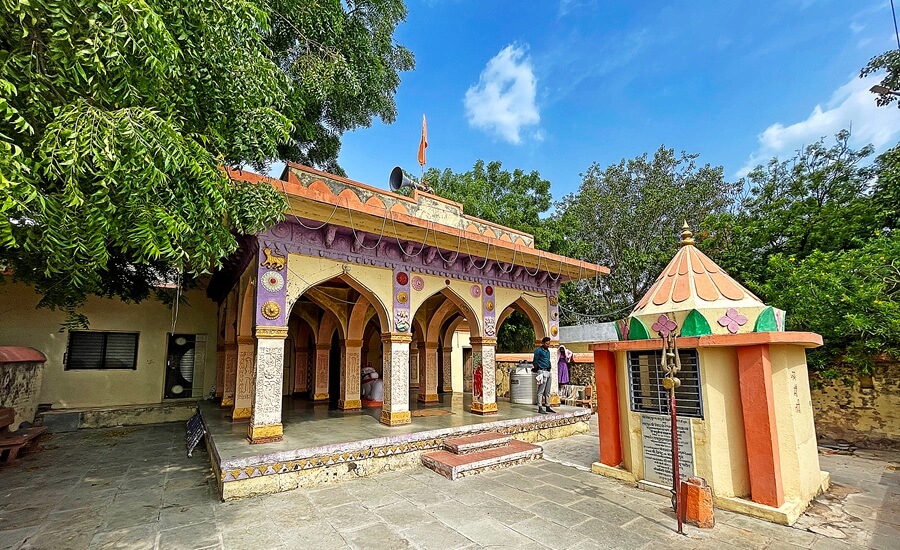
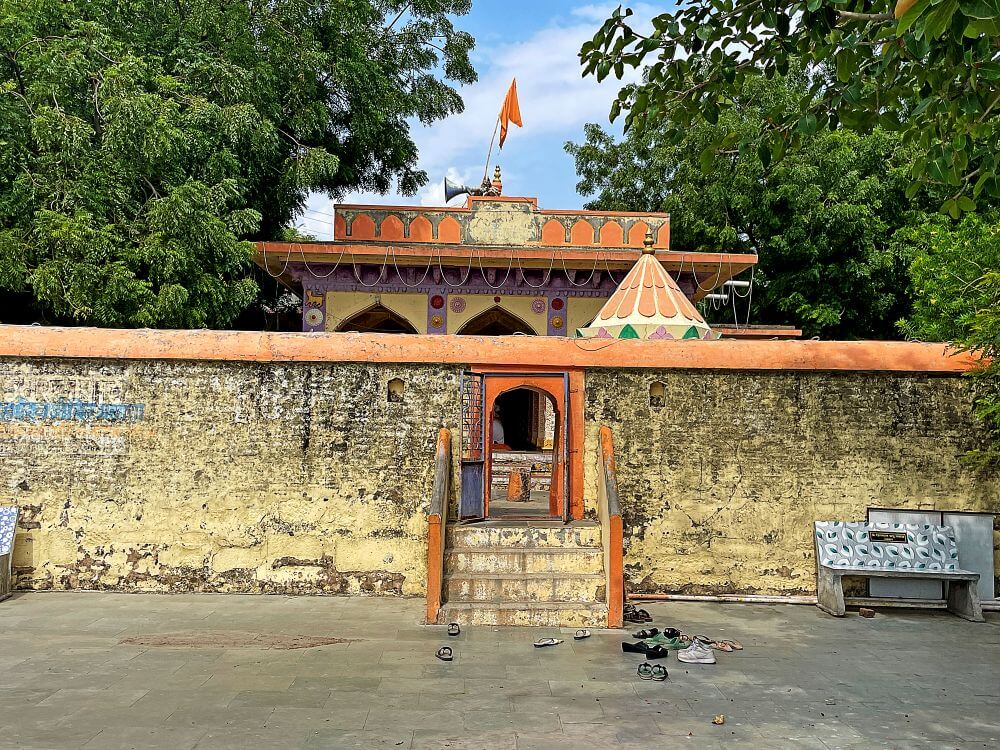
The Sangameshwar Temple is situated on the expansive river ghat. Seating arrangements have been provided on this ghat for the convenience of devotees. The temple is enclosed by a perimeter wall. One enters the temple courtyard through the gateway in this wall. On the inner side of the perimeter wall, paintings of various deities and sages are depicted. In the courtyard, there is a canopy structure atop a high plinth with steps. Within it resides the vermilion-anointed idol of Lord Maruti. In front of it are the Shiva Linga and a black stone idol of Nandi. Additionally, there is a small shrine in the courtyard containing portraits and padukas of Sadguru Bapuji Bhandari and his guru, Siddhayogi. The temple roof features an ornate standing spire topped with a kalash. It is said that after granting darshan to his disciple, Sadguru Siddhayogi attained samadhi here.
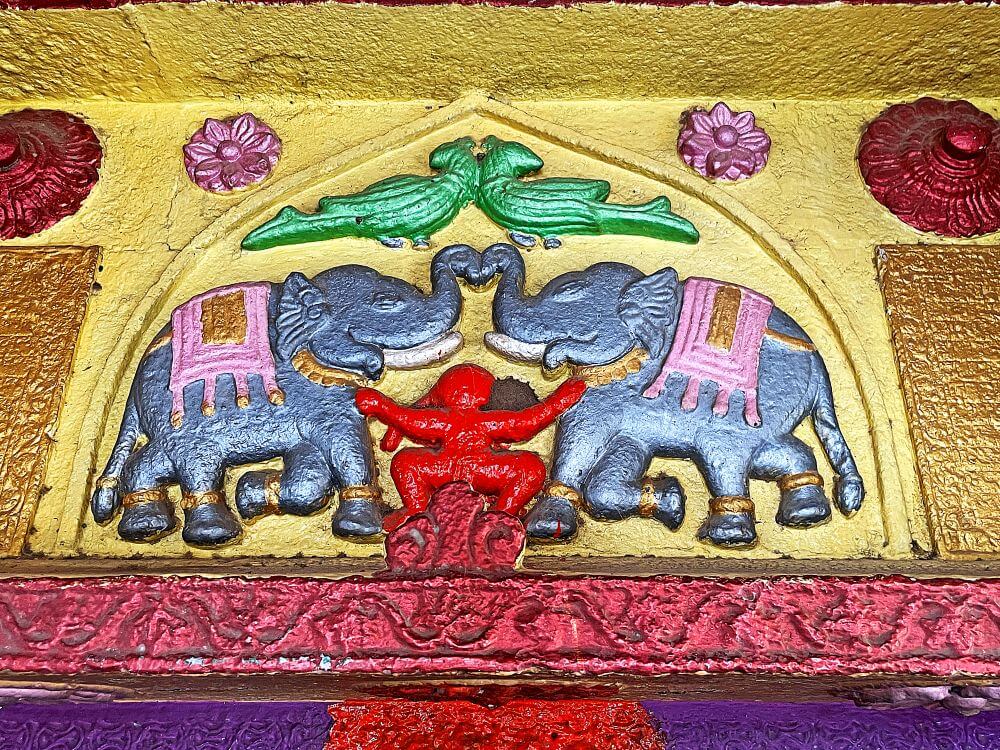
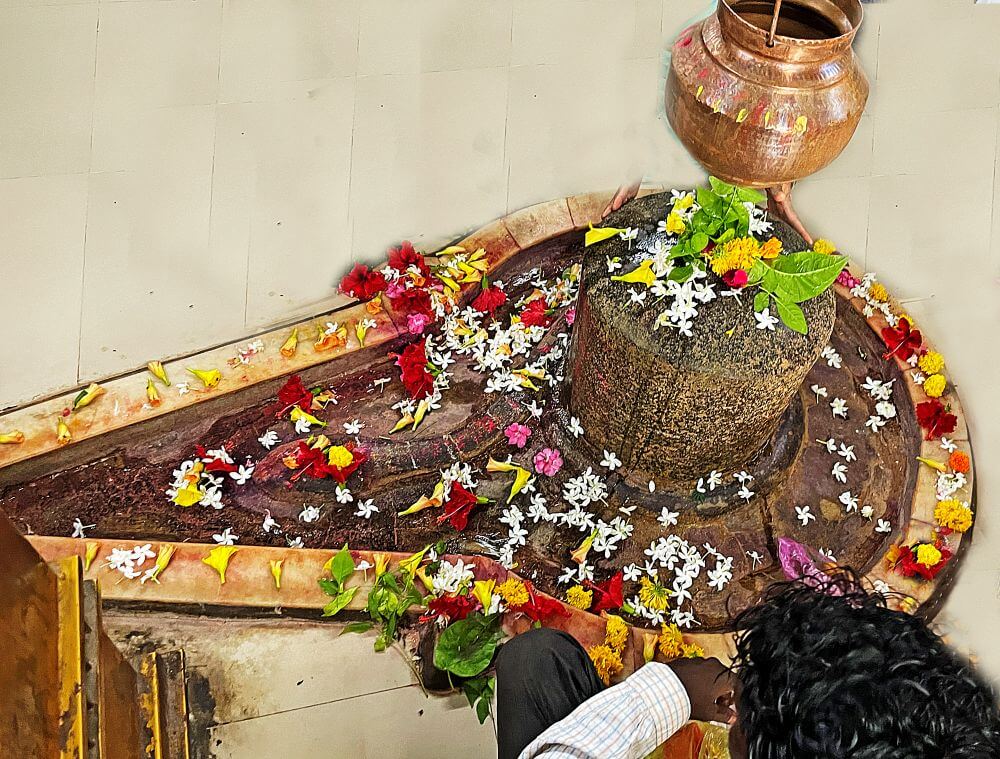
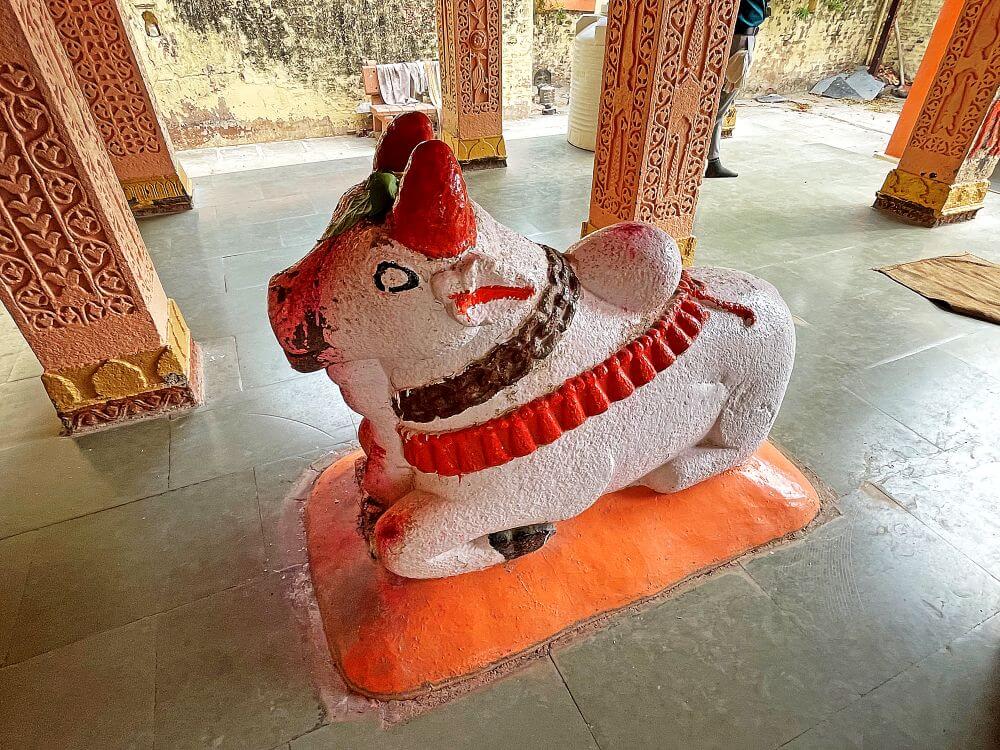
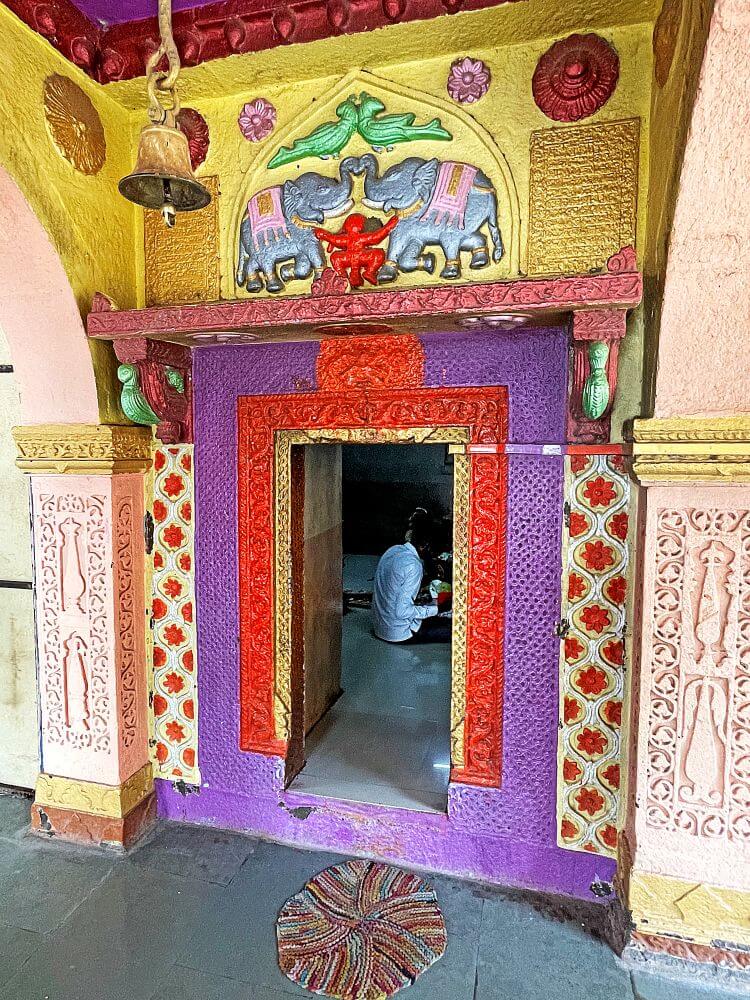
In front of the entrance to the assembly hall stands a brass Trishula and Damaru, approximately four feet in height. The assembly hall features four rows of four ornate square pillars each. The pillar bases and capitals are square, adorned with intricate floral and leaf carvings. All the pillars They are connected to each other by arches. The assembly hall is semi-open in nature. In the center, there is an idol of Nandi on a raised platform. In the assembly hall, on the left side, there is a marble idol of Ganapati in a niche on the front wall of the sanctum sanctorum, and below it, on a platform attached to the wall, is a vermilion-smeared stone idol of Ganapati. All four door frames of the sanctum sanctorum are adorned with vine and floral carvings. On the lintel, there is an idol of Ganapati, and on the architrave above the door, there are relief sculptures of Mahadeva in the center, two elephants on both sides, and two parrots above them. In the sanctum sanctorum, there is a Shiva Linga in the center on the floor. The roof of the temple has a safety railing on all sides, and there is a dome-shaped spire over the sanctum sanctorum.
Every Sunday, the Aarti of Mother Tapi is performed on the ghat in front of the temple. For this purpose, arrangements for decorative lighting, an Aarti platform, and a pavilion have been made at the ghat. A paid boat service is available from here to reach the Triveni Sangam. The fair held here once every twelve years during the Simhastha is particularly famous. At that time, lakhs of devotees, sages, and ascetics from all over the country come here for darshan. On Mahashivratri and every Monday of the Shravan month, thousands of devotees arrive to seek the blessings of the Lord and to fulfill their vows.
Near the Sangameshwar Temple is the Kartikeya Swami Temple. In front of this temple, there is a large pavilion with a corrugated metal roof. A statue of Nandi is placed on a platform in front of the temple entrance. The three doorframes of the sanctum sanctorum are adorned with floral carvings, and an image of Lord Ganesha is carved on the lintel. In the center of the sanctum floor lies the Shiva Linga, and against the back wall, on a pedestal, are the idols of Lord Ganesha and Kartikeya Swami, carved from a single stone. There are small windows in the enclosed sanctum to allow for ventilation. The temple roof features a dome-shaped spire, topped with an amalaka, a kalasha, and a flag. On all four sides of the dome-shaped spire, there are four smaller spires, each crowned with a kalasha.
The Kartikeya Swami Temple is opened only once a year on the full moon day of the month of Kartik. Consequently, a large crowd of devotees gathers here on this day to seek the darshan of Kartikeya Swami. On this occasion, devotees bring two peacock feathers with them. They offer one to the deity and keep the other, which has been touched to the deity, in their home shrine. It is believed that by doing so, Kartikeya Swami resides in their home. There is also an ancient Ganesha temple adjacent to the Kartikeya Swami Temple.
This sacred temple stands as a testament to deep spiritual devotion, ancient architectural grandeur, and rich local cultural traditions.
The sanctum sanctorum houses the divine idol consecrated according to ancient Vedic traditions, surrounded by serene courtyards and traditional temple architecture.
Navratri, Maha Shivratri, Annual Temple Jatra & Deepotsav
Compare and book flights, secure top-rated local hotels near the temple, hire reliable guides, and rent cars instantly.
Extend your pilgrimage by visiting other highly sacred temples located nearby.


Add ₹999 more to unlock FREE SHIPPING!
Your sacred cart is currently empty.
Shop Photo FramesFill in your delivery details below to place your order.
Add comment