
Add ₹999 more to unlock FREE SHIPPING!
Your sacred cart is currently empty.
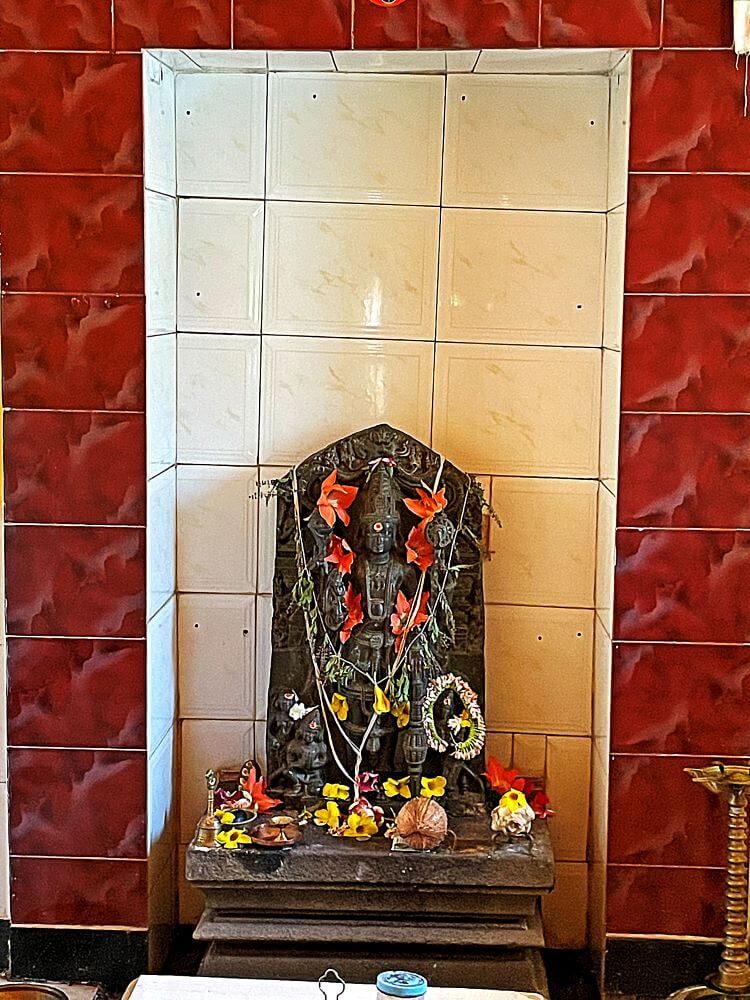
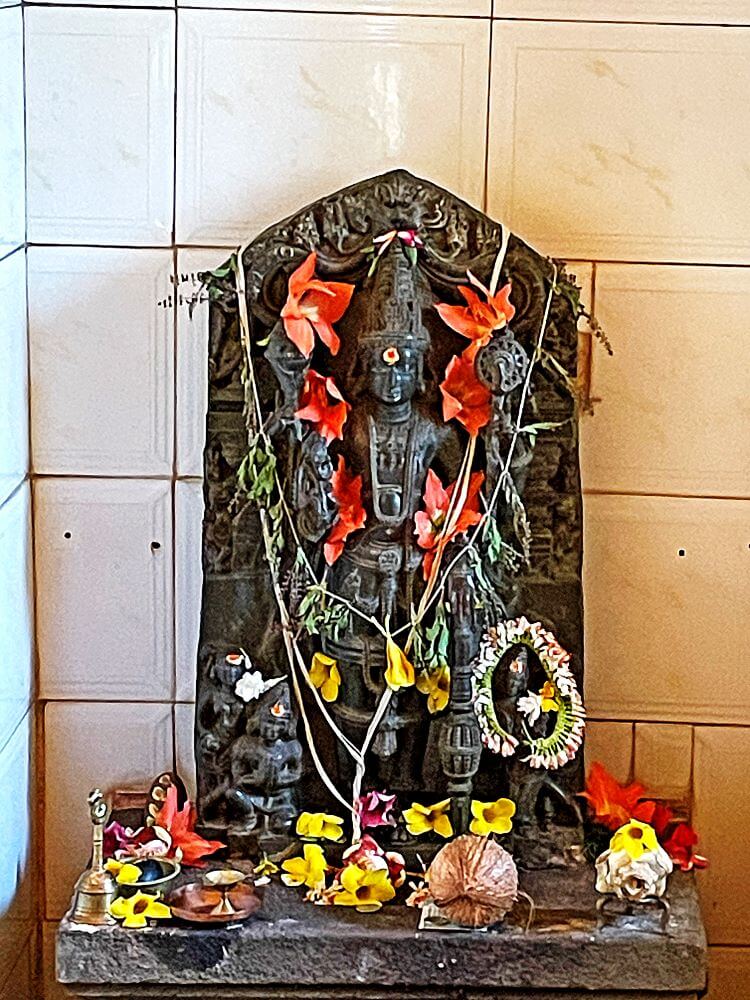
Shop Photo FramesAlong with nature-rich surroundings of beaches and lush green thickets, the Konkan region is also exceptionally rich in sculptural heritage. Here, one finds numerous distinctive and superior sculptures and rock-cut carvings at every step. Among them, the idols of Keshav and Lakshmikeshav are found in many temples here. Since the order of the attributes in the hands of the Vishnu idol is lotus-conch-disc-mace (padma-shankha-chakra-gada), these idols fall under the category of Keshav idols. One such extremely exquisite sculpture is the Lakshmikeshav of Bivali village near Chiplun.
Bivali can be reached via the Chiplun-Karambavane route. Following the efficient Peshwa-era jurist Nyaymurti Ramshastri Prabhune, Nilkanthshastri Thatte of Bivali became the judge. In ancient times, many foreign invasions used to take place by sea routes on this land. Therefore, to prevent idol vandalism, villagers would hide the idols here in wells and ponds. Sometimes they were also kept buried in the earth. One such Lakshmikeshav idol was found by the ancestors of Nilkanthshastri Thatte at Anjarle. There, they built a small temple and consecrated it. Later, these Thatte families established the village of Bivali. Afterwards, families such as Ketkar, Abhyankar, Gokhale, Sohoni, and others came to reside there. While coming, they also brought the idol of Lakshmikeshav along with them. Nilkanthshastri Thatte re-installed this ancient Vishnu idol by constructing a temple here at Bivali. According to sculpture experts, this idol dates back to the eleventh or twelfth century. During the Peshwa period, an annual grant (varshasan) of 36 rupees was initiated for this temple.
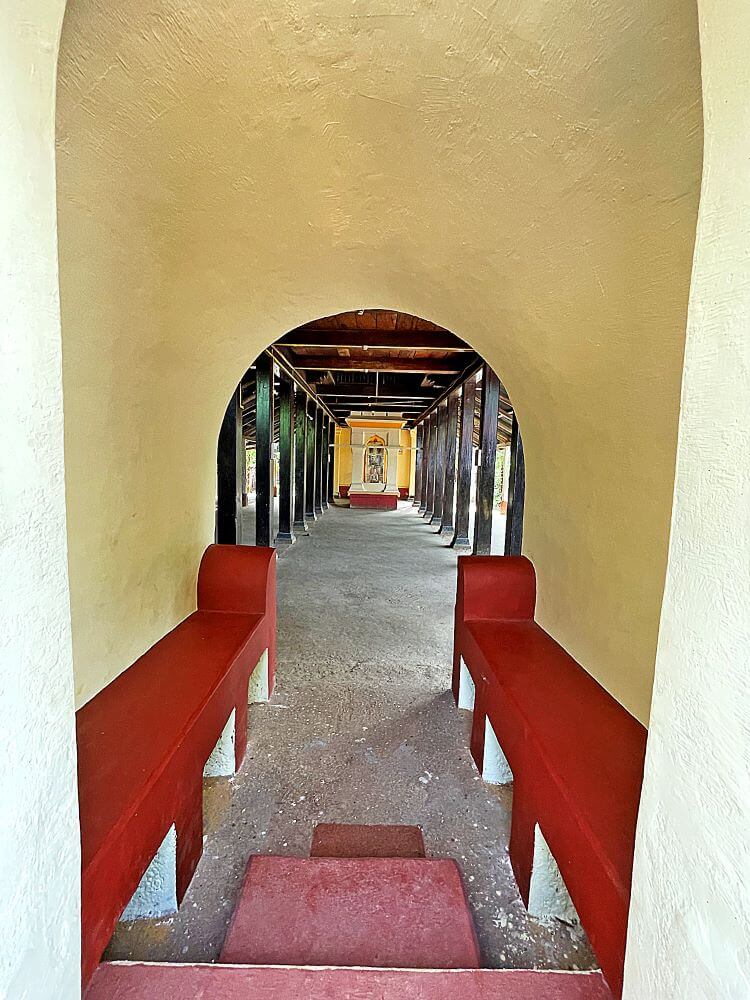
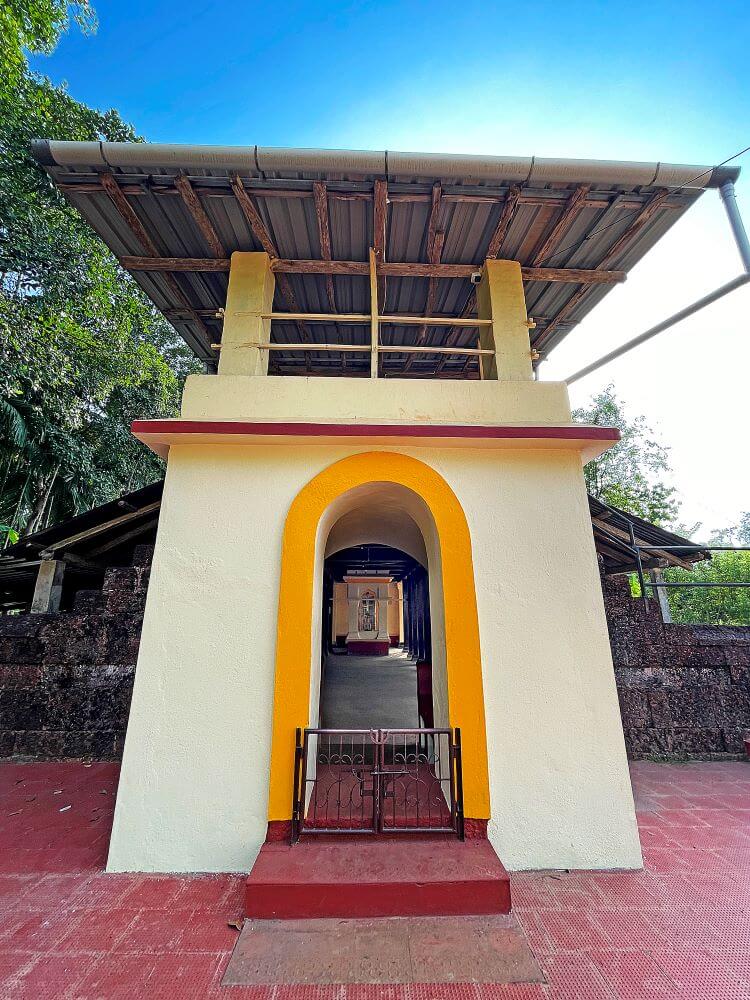
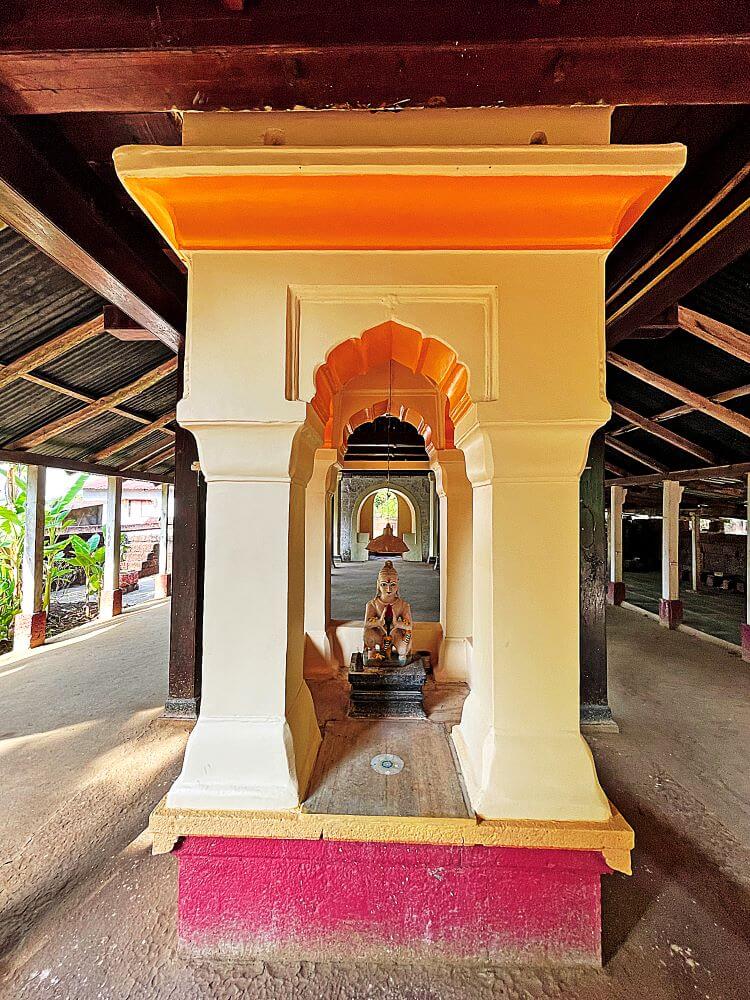
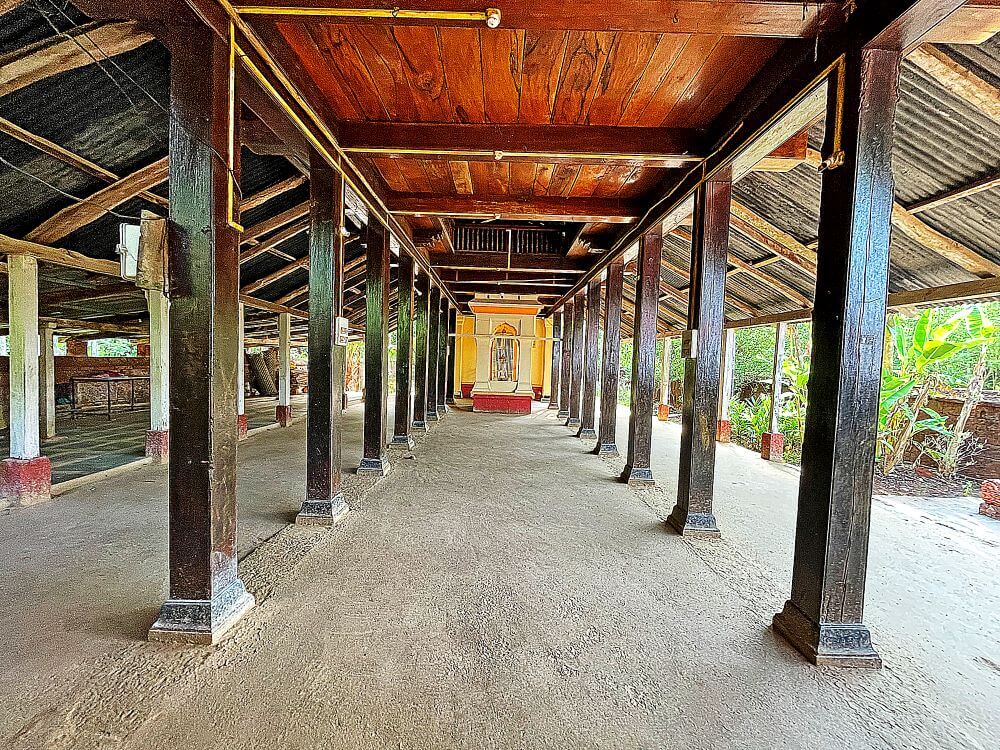
It is recorded that the temple was renovated in the year 1830 AD. The charming temple is situated in a picturesque environment. A perennial water stream flows near the temple The temple is surrounded by a fortification wall made of laterite stone. The architectural layout of the temple consists of a Darshan Mandap (viewing pavilion), an open Sabhamandap (assembly hall), a main Sabhamandap, and the Garbhagriha (sanctum sanctorum). Above the main arch-like gateway of the temple is the Nagarkhana (drum house). Ahead of the entrance is the Darshan Mandap, where stone benches are arranged for devotees to sit. Further ahead is a large open Sabhamandap. The entire work of the Sabhamandap is in wood. In this, there is an independent pavilion-like dome for Lord Garuda. Inside it is a marble idol of Garuda in a human bodily form with folded hands in reverence.
In the Garbhagriha, on a pedestal, stands the distinctively carved idol of Lord Vishnu with family deities in the prabhavali (arch). He wears an ornate crown on his head and a three-fold necklace (trivalyankita) symbolizing prosperity. Among the three necklaces around the neck, mangoes are carved in the pendant of one necklace. The stem and petals of the lotus held in the lower right hand of the idol are crafted in such a way that when viewed from one side, it does not look like a lotus but resembles the figure of a woman. Local people address her as Lakshmi itself, and therefore this deity is famous as Lakshmikeshav. Near the left foot of the idol is Shridevi and near the right foot is Garuda with folded hands in reverence. Beside them are female attendants waving chauris (whisks). The ornaments on the deity’s body appear to be carved in an extremely delicate and artistic manner. Rings are visible on all the fingers of the hands. Adorned with numerous ornaments, the idol of Lord Vishnu appears splendid and beautiful. In the temple, devotees can perform various types of Abhishek and Ekadashni rituals. (Contact: 8805497632, 9403145961)
Apart from the temple, the village of Bivali is famous for the ancient mango trees here known as ‘Gulabi’. Jayantrao Tilak, the grandson of Lokmanya Tilak, had his sasurwadi (wife’s parental home) in Bivali. Indutai Ketkar from here was his wife. The Ketkar family owns a mango tree of the ‘Gulabi’ variety, which is of exceptional taste and sweetness, and is about 250 years old. The mangoes from this tree used to be sent specially from here to the Peshwas in Pune. Every year, the Peshwa’s horsemen used to come from Pune to take mangoes from here.
Bivali and its surrounding area, possessing historical importance, are also significant from a tourism perspective. Two kilometers away from the temple, on the banks of the Vashishti River, lies the village of Maldoli. The major attraction here is the numerous crocodiles basking in the sun along the banks of the Vashishti. Just like a jungle safari, there is a crocodile safari for tourists at Maldoli. Tourists are taken on this safari by sitting in a motorized boat. It is convenient to go for the crocodile safari by checking the high and low tides. During low tide when the water level is low, the sightings of crocodiles are more frequent. Besides this, various birds can also be seen along the banks at this time. For the right timing of the crocodile safari and further information, contact: Sandesh Sansare, Mob. 9890816469, 8459354211.
This sacred temple stands as a testament to deep spiritual devotion, ancient architectural grandeur, and rich local cultural traditions.
The sanctum sanctorum houses the divine idol consecrated according to ancient Vedic traditions, surrounded by serene courtyards and traditional temple architecture.
Navratri, Maha Shivratri, Annual Temple Jatra & Deepotsav
Compare and book flights, secure top-rated local hotels near the temple, hire reliable guides, and rent cars instantly.
Extend your pilgrimage by visiting other highly sacred temples located nearby.


Add ₹999 more to unlock FREE SHIPPING!
Your sacred cart is currently empty.
Shop Photo FramesFill in your delivery details below to place your order.
Add comment