
Add ₹999 more to unlock FREE SHIPPING!
Your sacred cart is currently empty.
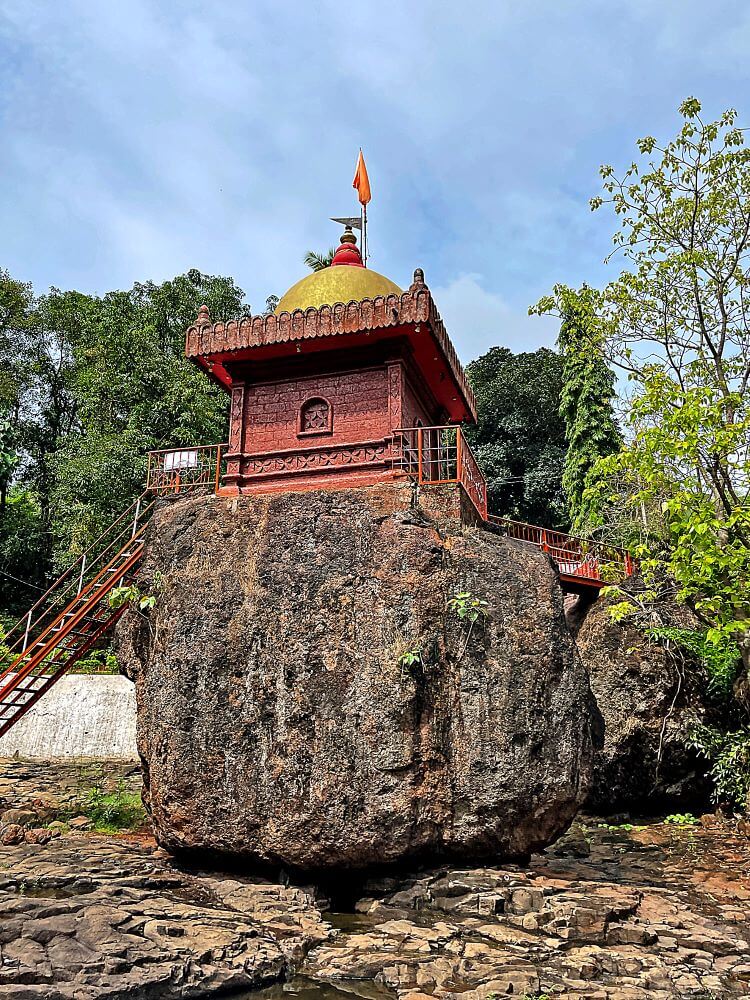
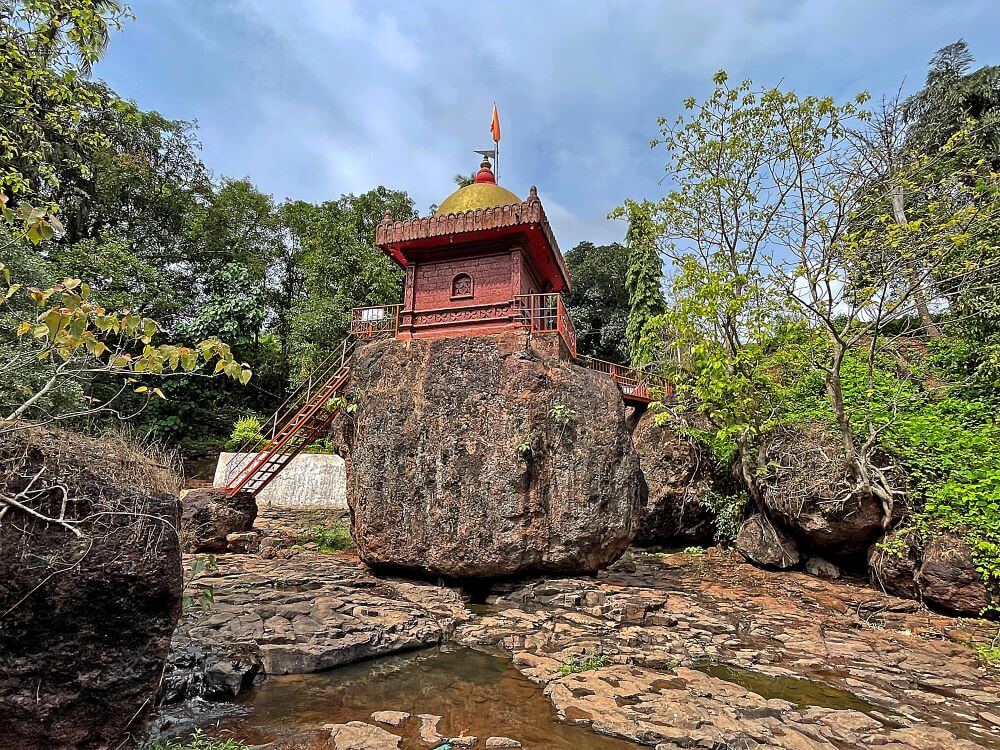
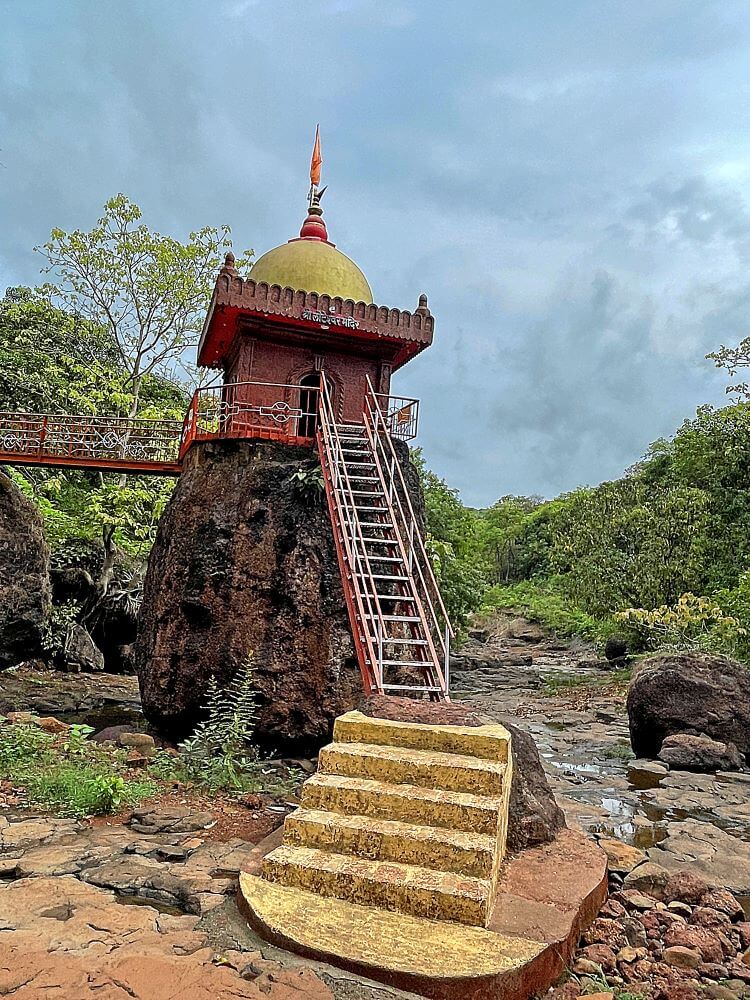
Shop Photo FramesWhen one thinks of a temple, a picture of a large courtyard, a spire (kalash), a lamp tower (deepmal), a assembly hall (sabhamandap), and a sanctum sanctorum (gabhaara) comes to mind. However, the Swayambhu Loteshwar Temple at Dugve in Ratnagiri district is an exception to this. This temple stands remarkably upon a large laterite rock within a stream. Hundreds of devotees visit here daily to witness this unique and rare temple standing upon just a single rock. Believed to be two hundred to two hundred and fifty years old, devotees have a firm faith that Lord Loteshwar in this temple is a living presence (jaagrit) and fulfills their wishes.
The legend of the temple is that a cowherd from the village used to bring the cows of a village Brahmin to graze in this area every day. One of those cows, eluding the cowherd’s notice, would stray from the herd and come near the stone where the temple stands today. A dense web of creepers had gathered around the stone located in the middle of the stream. Taking support from them, that cow would climb onto the stone, let down her milk upon it, and then return to join the herd. As the cow did not give milk when she returned home, the Brahmin suspected the cowherd. When the cowherd kept a watch on the cow, he came to know about this incident and told the Brahmin about it. Hearing this, the enraged Brahmin struck the creepers on this stone with a sickle, whereupon the web of creepers broke and the Swayambhu Linga beneath it became visible. Upon learning of what had happened, all the villagers gathered here and bowed before the Linga. The day this Linga was revealed was a Monday in the month of Paush. The scar caused to the Linga on this stone by the blow of the sickle can still be seen today.
Later, the villagers cleared the forest here and built a temple of Kembali (grass) on the stone by this stream. Devotees can have the darshan of the Shivalinga in this temple To make this possible, a makeshift ladder (nisan) made of bamboo (a type of bamboo) was constructed down to the rock. After this ancient temple was damaged in a severe storm in nineteen sixty, the villagers built a tiled temple there. Thereafter, the temple underwent continuous transformations from time to time. In twenty eighteen, the consecration (kalasharohan) and renovation ceremony of the temple was performed at the hands of the Shankaracharya of the Karveer Pith, following which the tiled temple was transformed into a domed temple, giving it its current appearance.
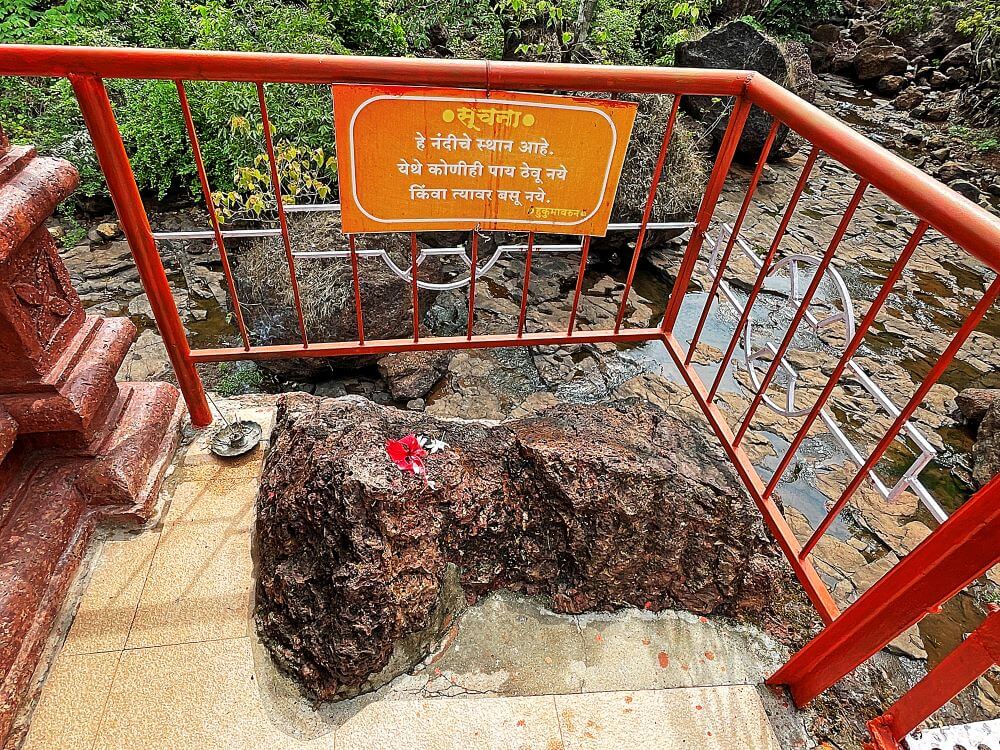
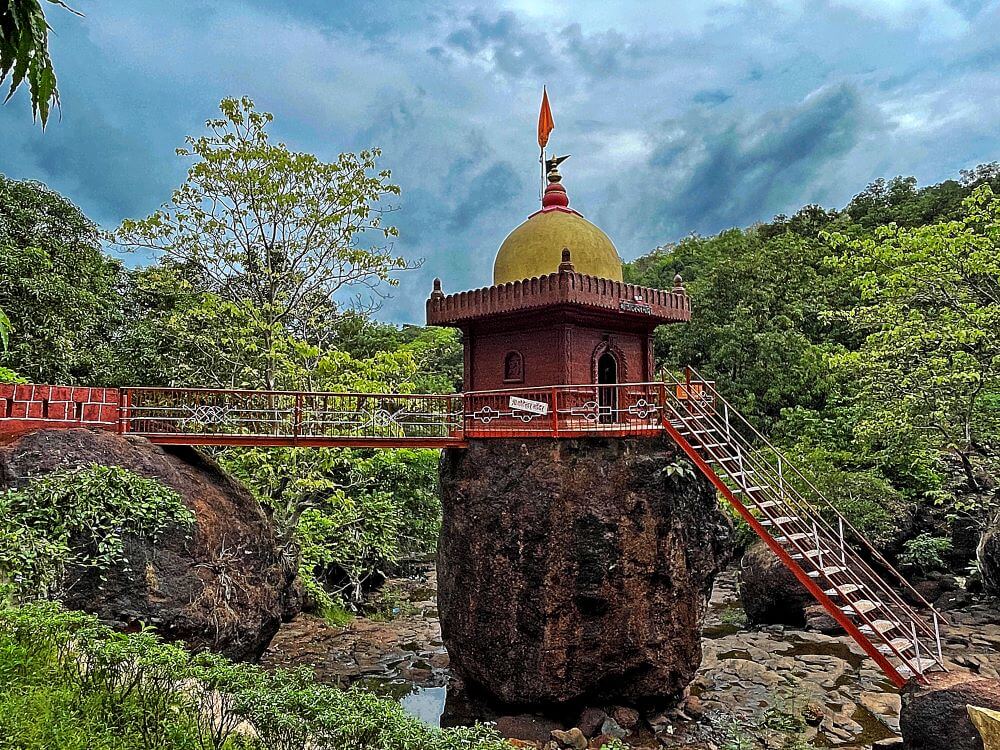
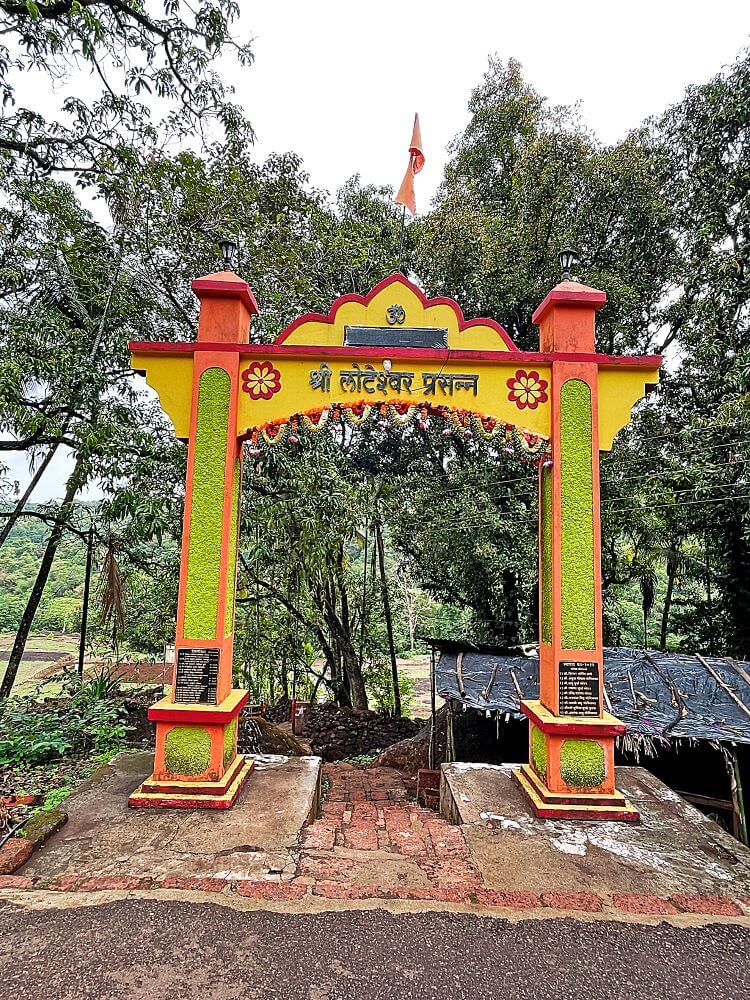
From the arch in Dugve village on the Ratnagiri-Kuratade route, one can reach the temple by walking down a path made of laterite stone steps. There are two ways to enter this temple, which stands upon a bedrock. An iron ladder has been placed through the stream, from where one can climb about twenty steps to reach the temple. However, during the monsoon season, this ladder goes underwater, making it impossible to access the temple that way. Apart from this, a small bridge has been built from the shore to the temple, from where one can visit the temple for darshan at any time. The temple is built on a foundation stone of the exact same size as the stone below it. The entire structure of the temple is made of laterite stone and features a dome. Intricate carvings are present on the temple entrance and outer walls. Outside the entrance, there is the sanctum for Nandi. The magnificent Shivpindi inside the temple is a part of the single uninterrupted bedrock below, and a rare and Swayambhu (self-manifested) Shivpindi made of laterite stone can be seen here. What makes this place unique is that the Baan (the central shaft) is situated in the middle of the Shalunga (yoni base) on this Shiva Linga, and the serpent’s form rests beside the Baan. Since a full circumambulation (pradakshina) cannot be performed around the sanctum sanctorum of Lord Shiva’s temple, a circumambulation path has been constructed along the three outer sides of this square temple.
The tall and magnificent rock on which this temple stands has been standing in the stream for years without any support. The villagers state that during the monsoon season, this stream flows brimming from bank to bank, yet it has not had the slightest effect on this rock. The Swayambhu Loteshwar manifested in the month of Paush, and a cowherd had his first vision of Him. Ever since then, on the second Monday of the month of Paush, an offering is prepared for the deity as a meal for the cowherd. At this time, Mahaprasad is distributed to the devotees who come here. All the devotees partake of this offering on the leaves of a tree situated in front of the temple, which is known as the “Chandyache Pan”. A grand festival is celebrated in the temple premises on Mahashivratri. Besides this, crowds of devotees gather for the darshan of Loteshwar on Shravani Mondays as well. Devotees can visit the temple and have darshan from ٧ in the morning to ٧ in the evening.
This sacred temple stands as a testament to deep spiritual devotion, ancient architectural grandeur, and rich local cultural traditions.
The sanctum sanctorum houses the divine idol consecrated according to ancient Vedic traditions, surrounded by serene courtyards and traditional temple architecture.
Navratri, Maha Shivratri, Annual Temple Jatra & Deepotsav
Compare and book flights, secure top-rated local hotels near the temple, hire reliable guides, and rent cars instantly.
Extend your pilgrimage by visiting other highly sacred temples located nearby.


Add ₹999 more to unlock FREE SHIPPING!
Your sacred cart is currently empty.
Shop Photo FramesFill in your delivery details below to place your order.
Add comment