
Add ₹999 more to unlock FREE SHIPPING!
Your sacred cart is currently empty.
Shop Photo FramesThe Marathwada region is blessed with a rich historical and cultural tradition. This region is also known as ‘Santbhumi’ (the land of saints). Many great saints have walked this soil. One such saint was Sant Motiram Maharaj Kakani. His Samadhi Mandir is situated near the banks of the Godavari River in Phala, in the Palam Taluka of Parbhani district. Maharaj took up the banner of the Warkari Sampradaya and, along with spirituality, taught society the values of humanity and compassion for all living beings. Because of this, he has many followers in the Marathwada and Vidarbha regions. Thousands of devotees come here every Ekadashi to seek blessings at his Samadhi in Phala. During the various programs organized on the occasion of Maharaj’s birth and death anniversaries, the entire area is filled with the presence of Warkaris.
Parbhani district has been home to many saints and great personalities to date. These include Sant Janabai, Bhaskarbhatt Borikar, Ranganathswami Mogrikar, Ranganath Maharaj Parbhani-kar, Nivruttibuwa Thakur, Tukaram Maharaj (Yelegaonkar), Yoganand Swami Maharaj, Shrikrishnaji Maharaj, Sakharam Maharaj, Shukanand Maharaj, and Shirdi’s Saibaba, among others. Sant Motiram Maharaj, one of the figures in this great saintly tradition, was born into a Marwari family on Chaitra Shuddha Panchami in the year 1779 (Shaka era), which corresponds to 9 April 1867. His father’s name was Daulatrao and his mother’s name was Saraswati. A few days after Motiram Maharaj’s birth, his family migrated to Gangakhed. However, shortly thereafter, he lost the protective shade of his parents. He then went to live with his sister in the village of Phala. There, he began working in his brother-in-law’s grocery shop. Many customers who came to the shop would take goods on credit. To recover these debts, Motiram Maharaj’s brother-in-law would use harsh words and, at times, physical force. Having a saintly nature since childhood, Motiram Maharaj did not like this at all. Therefore, he left Phala village and returned to Gangakhed. He began living with his elder brother in Gangakhed, but his heart did not find peace there for long either.
A few days later, he went to Pandharpur. There, he bathed in the Chandrabhaga river and had the darshan of Lord Vitthal. Afterward, he went to the Math of Thakurbuwa Lohgaonkar to listen to the kirtan of Nivruttibuwa Thakur. Nivruttibuwa Thakur advised him to go to Lohgaon to meet Thakurbuwa Lohgaonkar. Following this advice, he went to Lohgaon. There, Thakurbuwa Lohgaonkar gave him mantra diksha. From that moment on, he took up the banner of the Warkari Sampradaya and dedicated himself to the mission of public awakening. He traveled on foot through many regions to promote and propagate the Warkari tradition. He also raised public awareness through discourses and kirtans in various places. In his kirtans, while striking out against social evils like caste discrimination, hypocrisy, and superstition, he taught the lessons of humanity and compassion. He practiced these ideals himself. Once, his foot had a wound that had become infested with maggots. He would clean the wound with pure water and remove the maggots. After cleaning the wound, he would place the maggots back into his own wound. The context behind this action was Maharaj’s belief that the food for those maggots was the flesh of his body, and if they were removed, they would die of hunger. Without caring for his own pain, he did this out of compassion, wanting those small creatures to get their food and satisfy their hunger. The story of his extreme compassion and kindness, where he would let the maggots feed on his own body, is told with reverence by devotees.
Striving for addiction-free living in society, Motiram Maharaj brought many onto the righteous path. In Marathwada and Vidarbha, he built many temples with the help of local villagers. He also regularly performed the Wari to Pandharpur and Alandi. He has countless followers in Marathwada and Vidarbha. A few years before his nirvana, he resided in Phala. Realizing that his work was coming to an end, 15 days before his passing, he called some of his followers and announced that he would soon take Samadhi. Upon receiving this news, followers from various places arrived in Phala. On 27 August 1964, which was Shravan Vadya Panchami, he left his mortal body in the presence of countless followers while chanting the name of the Lord. In time, his Samadhi Mandir was built in Phala.
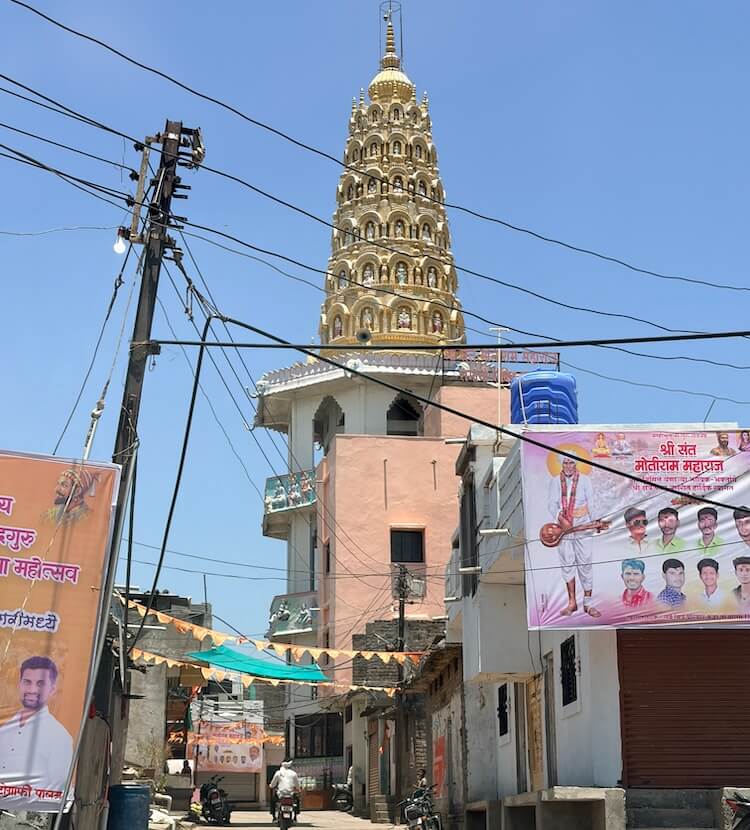
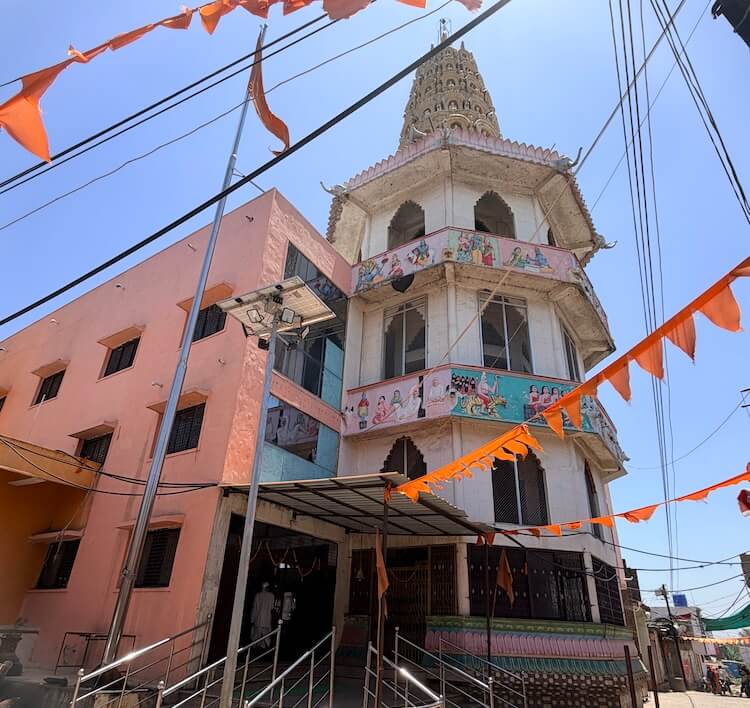
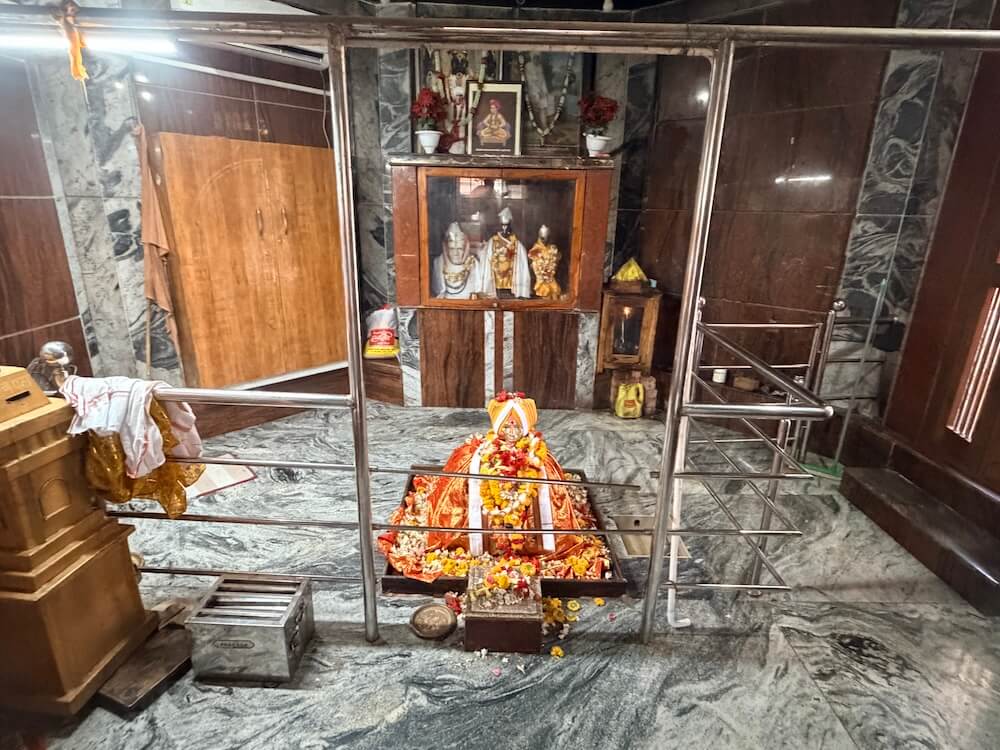
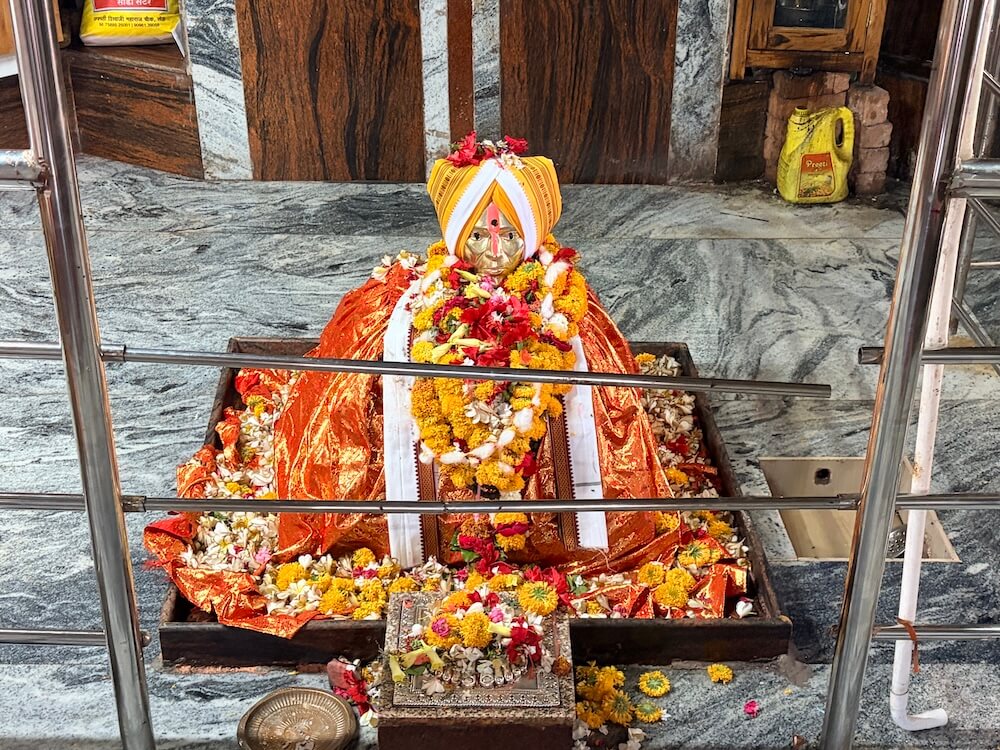
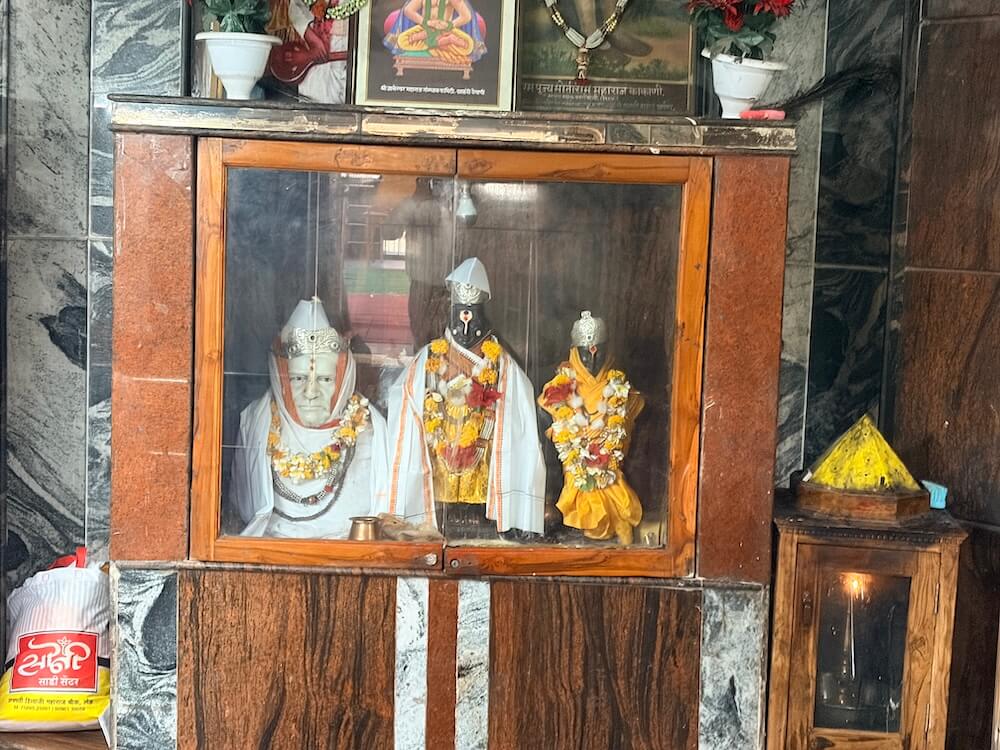
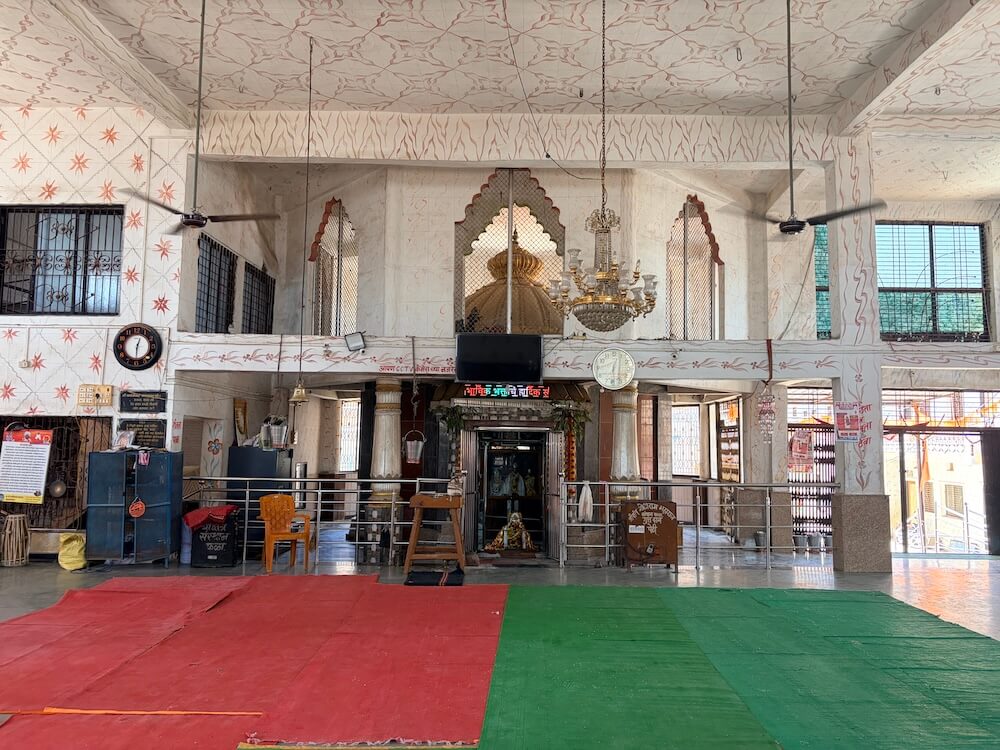
This temple is located at a short distance from the village entrance arch. The Samadhi Mandir structure is three stories high. Beautiful paintings of various deities are depicted on this structure. The temple consists of a assembly hall (sabhamandap) and a sanctum sanctorum (garbhagriha). In the center of the sanctum sanctorum lies the Samadhi of Sant Motiram Maharaj. A mask (mukhawata) of the saint is placed on the Samadhi. Behind the Samadhi, against the wall, are the idols of Vitthal-Rukmini. To the left of these idols, another idol of Maharaj is installed. A Bhakta Niwas (pilgrim lodging) has been built on the temple premises for the convenience of followers coming from afar. The Godavari riverbed is just a few steps away from the temple.
Countless followers come every day to seek the darshan of Sant Motiram Maharaj’s Samadhi. Various programs are organized here throughout the year. On every Ekadashi, thousands of devotees from the surrounding areas stand in disciplined queues to have darshan. Iron railings have been installed in the space outside the temple and in the assembly hall to manage the queues of devotees properly. The organization also makes arrangements for light refreshments (faral) for the devotees coming for darshan. On the day of Ekadashi, a procession (palkhi) of Motiram Maharaj’s mask is taken out. On Ashadhi and Kartiki Ekadashi, the Maharaj’s Palkhi also travels from Phala to Alandi. Many programs are organized here on the occasion of Motiram Maharaj’s birth anniversary on Chaitra Shuddha Panchami and his death anniversary on Shravan Vadya Panchami. These include bhajans, kirtans, and discourses. With the aim of promoting and propagating the Warkari tradition, the Shri Sant Motiram Maharaj Warkari Shikshan Sanstha has also been established in Phala. In this institution, students are taught Sanskrit, Gita recitation, bhajans, kirtans, classical and traditional mridangam playing, and other religious education. Devotees are allowed darshan here daily from 6:00 AM to 9:00 PM.
This sacred temple stands as a testament to deep spiritual devotion, ancient architectural grandeur, and rich local cultural traditions.
The sanctum sanctorum houses the divine idol consecrated according to ancient Vedic traditions, surrounded by serene courtyards and traditional temple architecture.
Navratri, Maha Shivratri, Annual Temple Jatra & Deepotsav
Compare and book flights, secure top-rated local hotels near the temple, hire reliable guides, and rent cars instantly.
Extend your pilgrimage by visiting other highly sacred temples located nearby.


Add ₹999 more to unlock FREE SHIPPING!
Your sacred cart is currently empty.
Shop Photo FramesFill in your delivery details below to place your order.
Add comment