
Add ₹999 more to unlock FREE SHIPPING!
Your sacred cart is currently empty.
Shop Photo FramesThe ancient temple of Nilkantheshwar Mahadev is situated near the village of Pangri, which is nestled at the foothills of the Balaghat mountain ranges and is known as the gateway to Marathwada. The Mahadev here is named Nilkantheshwar because the temple is located on the banks of the Nilkantha River, which originates in the Balaghat mountains. There is a legend that the Shivalinga in this temple was installed by Lord Shri Rama. Devotees believe that the Shivalinga here is ‘Jagrut’ (awakened) and that one’s heartfelt desires are fulfilled by having its darshan. For this reason, there is a constant stream of devotees visiting the temple for darshan every Monday, and especially on the Mondays of the holy month of Shravan.
The legend of the temple states that during the Ramayana era, this entire region was a part of Dandakaranya. Lord Shriram, Sita, and Lakshman had arrived in Dandakaranya during their period of exile. Shriram was a devotee of Shiva. He would never consume food without worshipping Lord Shankar every morning. Wherever he could not find a Shivalinga, he would create one and worship it. He established Shivalingas in many places. While traveling through the Balaghat mountain ranges, he rested at this site, located two kilometers from Pangri and half a kilometer from Chincholi village. As he was preparing for the worship of Lord Shankar here, a Shivalinga suddenly appeared from the ground. Shriram consecrated it here with his own hands.
Adorned by a lush green mountain and situated in the serene environment beside the flowing Nilkantha River, this Shivalinga is worshipped as Nilkantheshwara. Outside this temple lies the Dashashwamedha Kund. Around this sacred pond It is also said that Lord Brahma performed ten Ashwamedha Yagnas. The abode of Nilkantheshwara here is extremely ancient.
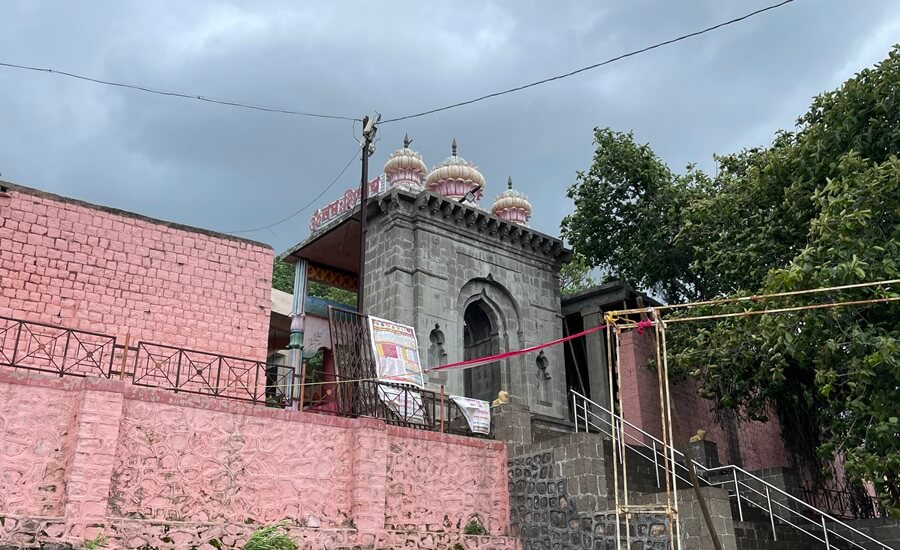
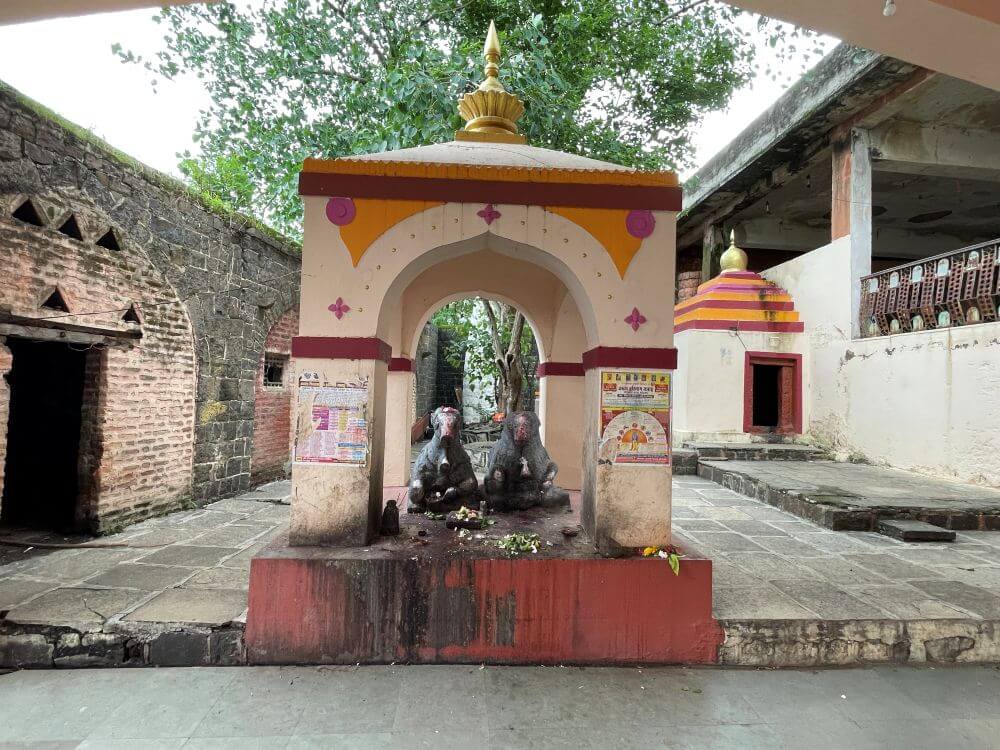
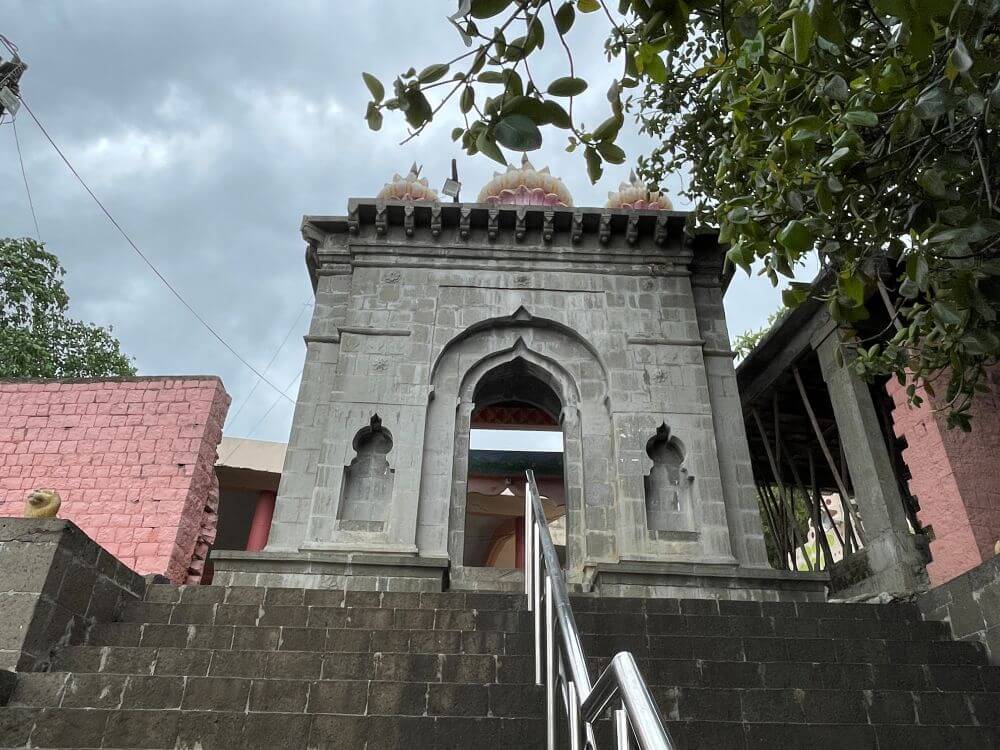
The Nilkantheshwar Temple, built in the Hemadpanti architectural style and located in Pangari village on the border of Solapur and Osmanabad districts, underwent renovation fifty years ago. To reach this temple, which is enclosed by a perimeter wall on all four sides, one must ascend a few steps. In this wall, on the southern side, stands an entrance gate that resembles a fortress. There are niches for deities in the walls on both sides of this stone entrance. Above this entrance, there is a lintel, followed by a beam, and then a roof. This roof is adorned with three dome-shaped spires, with the central one being the largest. Entering through this gate leads into the temple courtyard. This courtyard is home to many trees, including an ancient Umbar tree, which makes the temple appear as though it is nestled within the greenery. Upon entering the courtyard, one beholds the Nandi Mandapa. While Shiva temples typically house a single Nandi, this Nandi Mandapa features two Nandi statues, with a tortoise idol positioned before them. is.
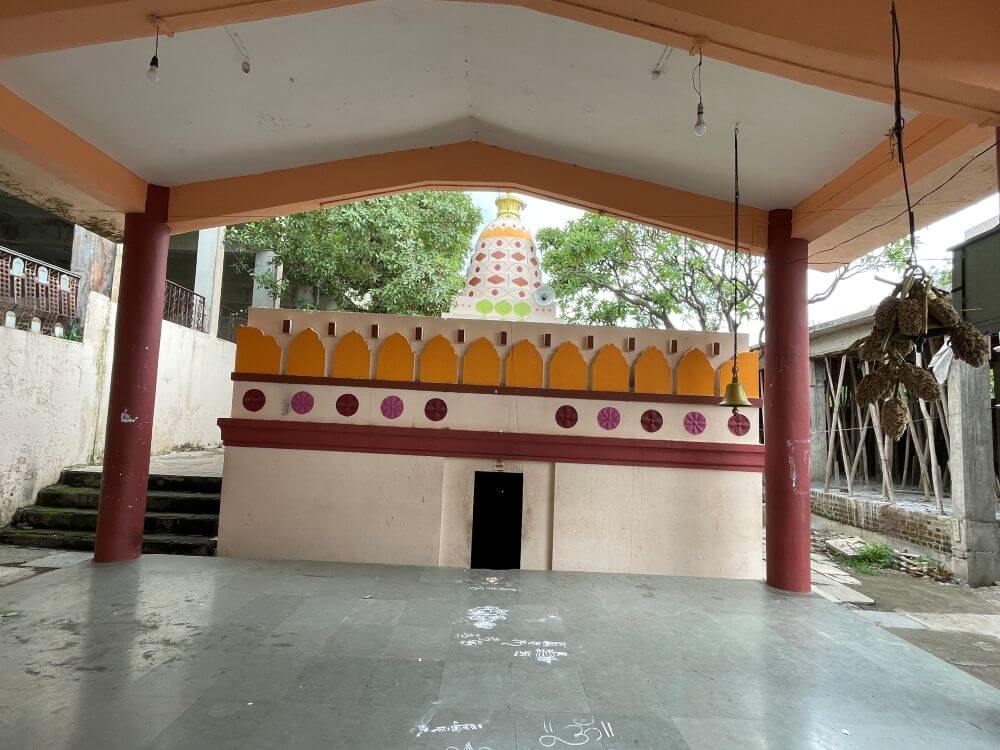
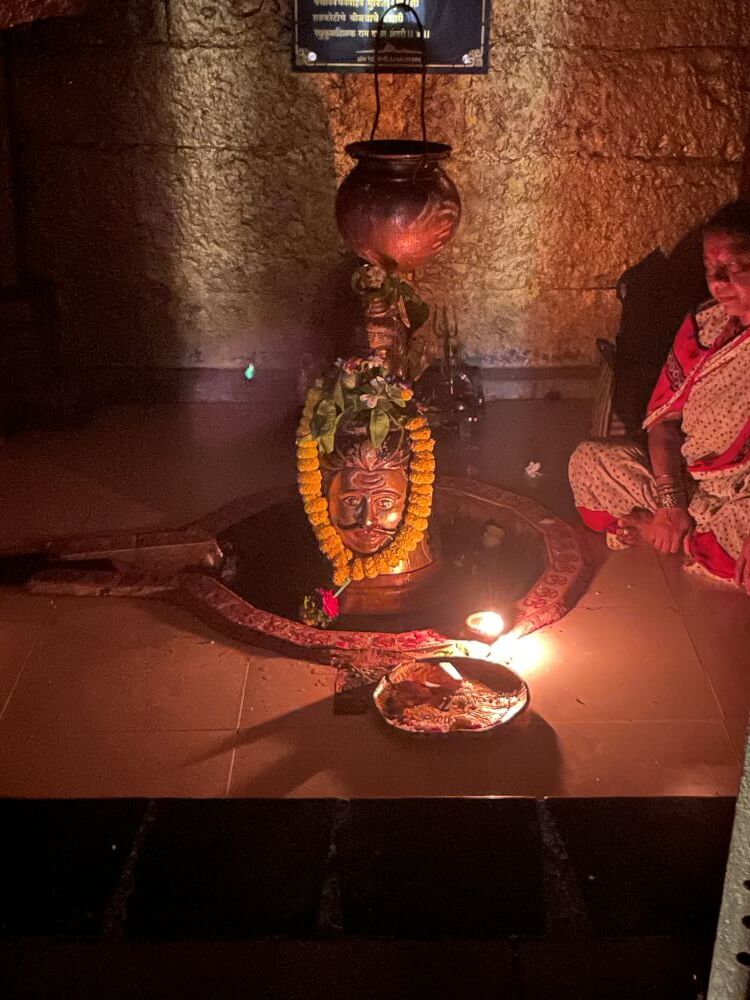
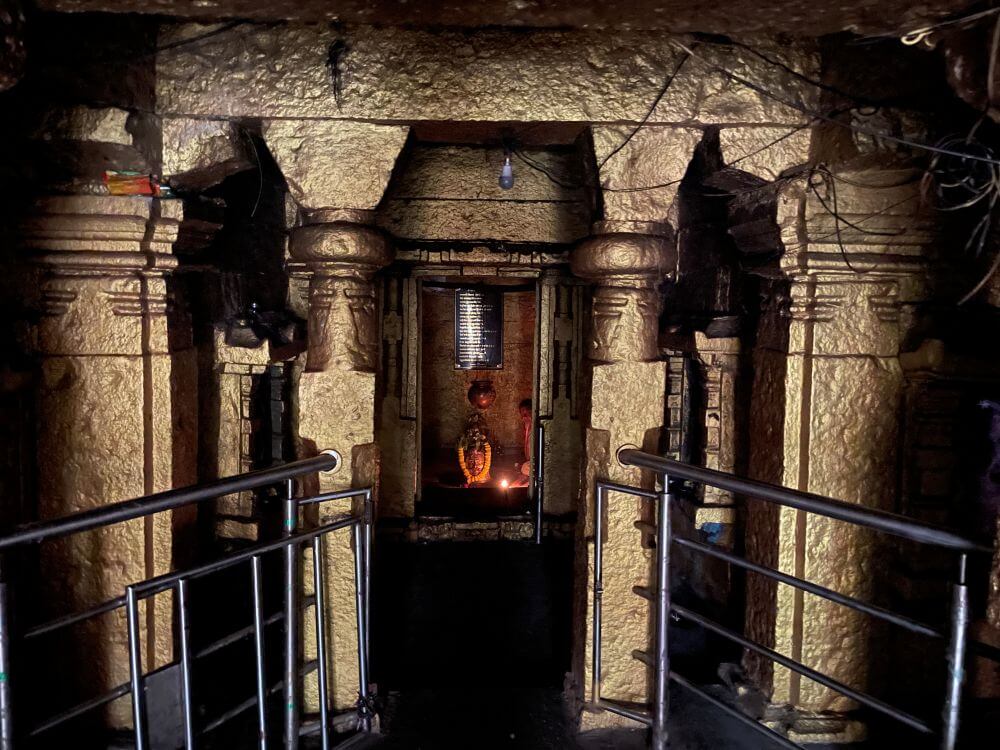
A mandapa appears to have been constructed in front of the main temple at a later period. Built using monolithic stones, the temple structure consists of a sabhamandapa (assembly hall), antarala (vestibule), and garbhagriha (sanctum sanctorum). One enters the sabhamandapa through a small entrance. In this sabhamandapa, arrangements for a queue for darshan have been made for the convenience of devotees. The sabhamandapa of this temple, built in the Hemadpanti style, features stone pillars. From here, one enters the antarala and then the garbhagriha. In the garbhagriha, a brass mask is placed over the linga of Neelakanteshwara, which is set within a large shalunka. It is said that this is a swayambhu (self-manifested) Shiva pindi. The Ganga flows continuously from this pindi. It is pointed out that impressions of a crescent moon and cow hooves are visible on the stone pindi beside the mask. On the wall in front, there is an image of Shiva in a meditative posture.
This temple features a towering spire with multiple tiers rising from the ground to the pinnacle. Each of these tiers is adorned with intricate carvings and beautiful paintings. On the spire’s At the front, there is a brass Amalaka topped with a Kalasha. In this temple, Aarti is performed daily at six in the morning and seven in the evening. Devotees can have Darshan of Lord Nilkantheshwar Mahadev here every day between 5:30 in the morning and 9 at night.
Approximately two hundred meters from this temple, there is a sacred water tank shaped like a Shiva Linga. It is said that the water from this tank has been used for all ritual worship since ancient times. A unique feature of this tank is that its water level never fluctuates, regardless of whether it is the rainy season or the peak of summer. Over the hundreds of years that have passed, this region has often faced drought-like conditions. During those times, the local villagers relied on this very water, yet even then, the water level in the tank remained constant. Furthermore, in addition to the Nandi statue situated in front of the temple, there is another Nandi statue located on the mountain cliff above the temple. Devotees firmly believe that this Nandi idol moves forward by the size of a grain of wheat every year.
Being a spiritually awakened site, hundreds of devotees visit here for darshan every day. A yatra is held here on the day of Gudi Padwa. The unique feature of this yatra is that a child born after making a vow to Neelkantheshwar is dropped from the temple spire on the day of the yatra and is caught below. Hundreds of couples come here on this day to fulfill such vows. Throughout the entire month of Shravan, various religious programs are organized here. Every Monday in Shravan, the premises resonate with Mahapuja, Abhishekam, and the chanting of mantras starting from four o’clock in the morning. A grand seven-day festival is held here on Mahashivratri. At that time too, the entire area takes on the appearance of a yatra.
This sacred temple stands as a testament to deep spiritual devotion, ancient architectural grandeur, and rich local cultural traditions.
The sanctum sanctorum houses the divine idol consecrated according to ancient Vedic traditions, surrounded by serene courtyards and traditional temple architecture.
Navratri, Maha Shivratri, Annual Temple Jatra & Deepotsav
Compare and book flights, secure top-rated local hotels near the temple, hire reliable guides, and rent cars instantly.
Extend your pilgrimage by visiting other highly sacred temples located nearby.


Add ₹999 more to unlock FREE SHIPPING!
Your sacred cart is currently empty.
Shop Photo FramesFill in your delivery details below to place your order.
Add comment