
Add ₹999 more to unlock FREE SHIPPING!
Your sacred cart is currently empty.
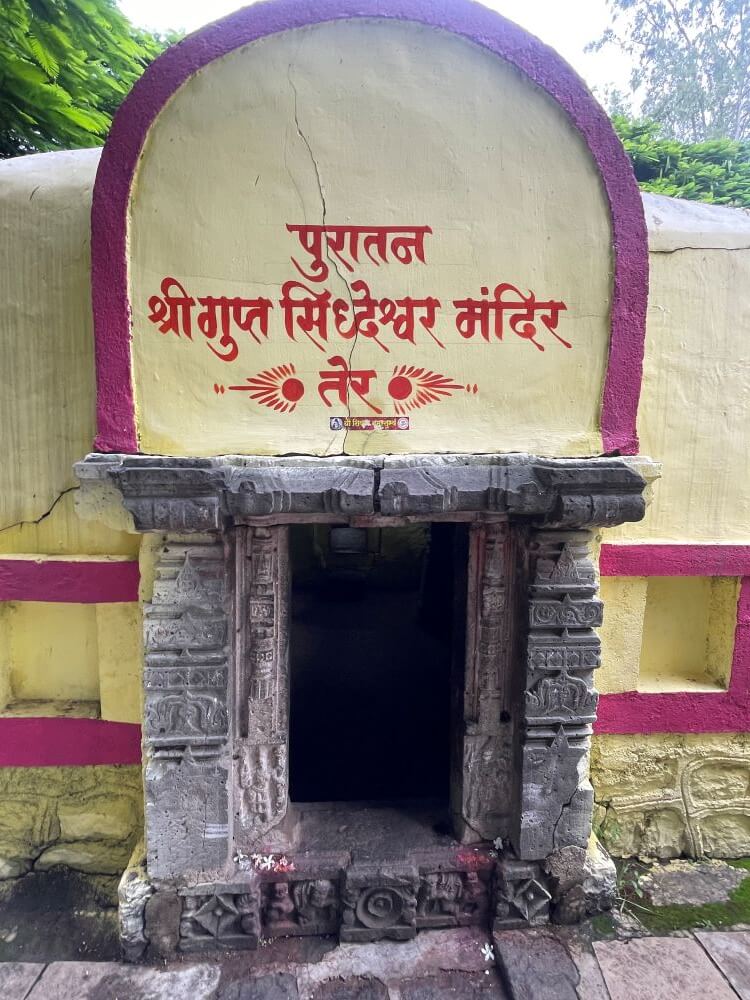
Shop Photo FramesTer, a village in Dharashiv taluka famous for the Samadhi of Saint Gora Kumbhar, was the economic capital of the Satavahanas two thousand years ago. At that time, Paithan was the capital of the Satavahanas. In this context, historian Dr. Ra. Shri. Morwanchikar described Ter village by stating, “If Paithan is the Kashi of the South, then Tagar (Ter) is the Mathura of the South.” The ancient and famous Gupta Siddheshwar temple is located in this very village. Devotees believe that the awakened deity here grants their prayers.
It is said that this temple was built between the sixth and seventh centuries. However, it appears that the temple’s assembly hall (Sabhamandapa) was built at a later period or was renovated subsequently. Since both black carved stone and kiln-fired bricks were used in the construction, it is estimated that the temple was built across different eras. As the temple is associated with the Lingayat community, some scholars believe it dates back to the twelfth century.
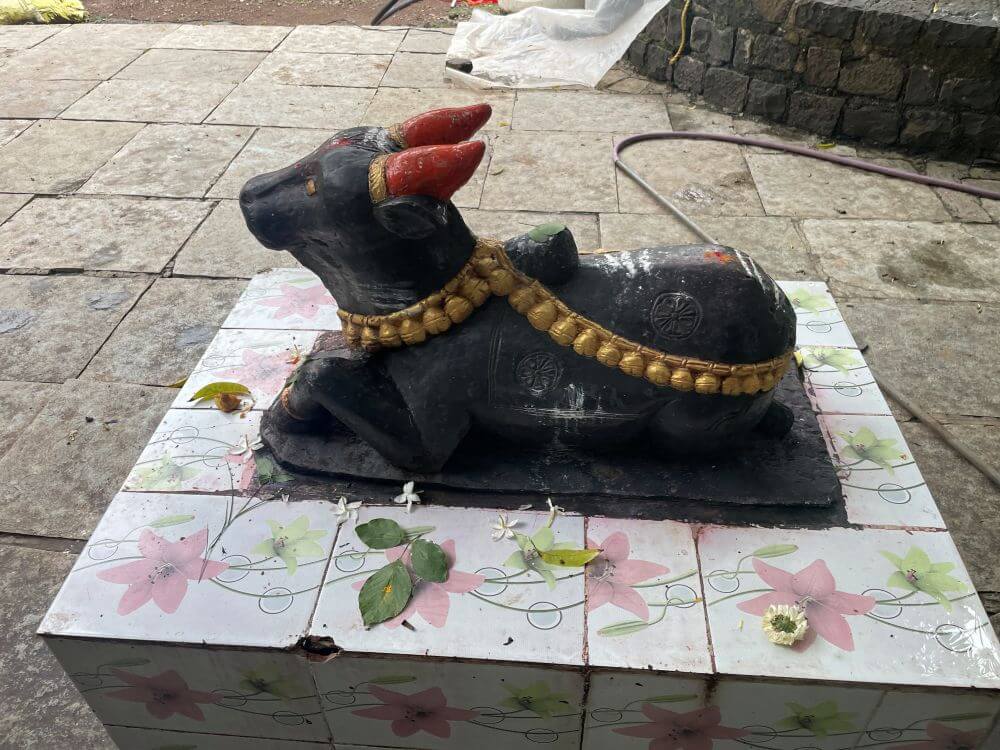
The temple is situated on a hill at a short distance from the village. In the temple courtyard, there is an ancient well built of carved stone. It is said that the water in this well never dries up. On a platform beside the well, there is an idol of Ganapati and an idol of a local deity nearby. Both idols are smeared with vermilion, are ancient, and somewhat weathered. In front of the entrance to the Sabhamandapa—which consists of an assembly hall, an antarala (vestibule), and a sanctum sanctorum—there is a black stone idol of Nandi on a platform in the courtyard. On both sides of the entrance, there are niches (devakoshthakas) in the front wall of the assembly hall. On the doorjambs of the assembly hall, there are sculptures of four-armed Bhairava gatekeepers at the bottom and pillar carvings at the top. On the lintel (lalatabimba) is an idol of Ganapati, and on the moonstone (chandrashila) at the threshold, there is a circular floral design. On both sides of the moonstone are carvings of elephants, vyalas (mythical beasts), and square floral motifs. On both sides of the entrance are square ornamental pillars and archways with spire sculptures above them.
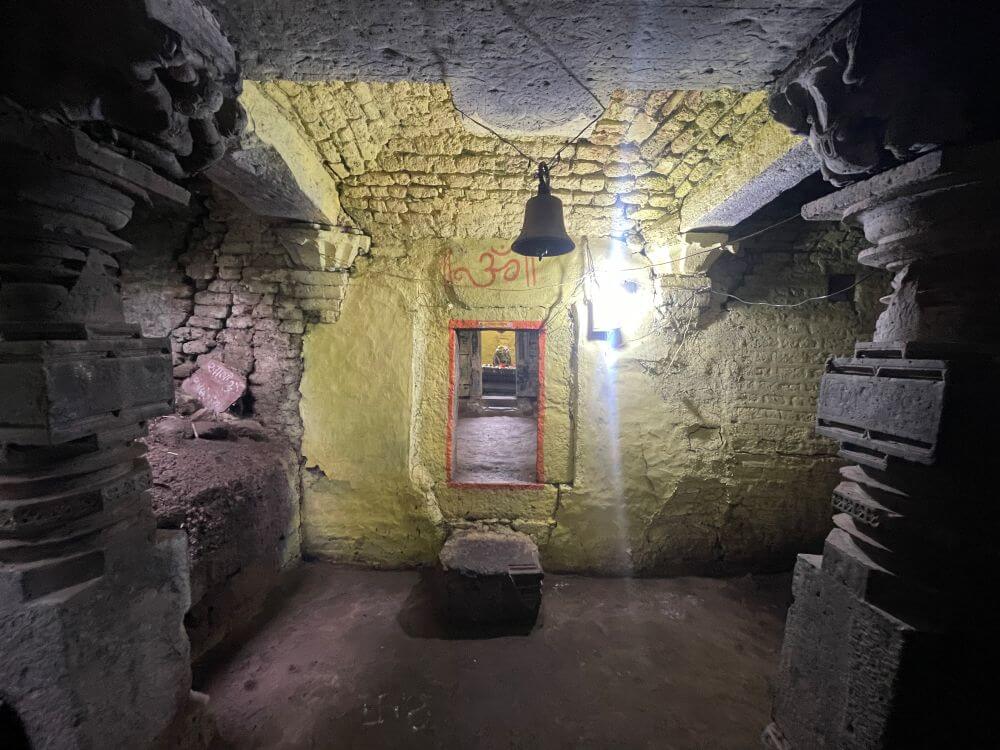
The enclosed assembly hall has four ornamental pillars in the center. The lower part of the pillars is square, while the upper parts feature various geometric shapes such as hexagons, octagons, dodecagons, and circles. The pillars are adorned with intricate carvings. At the top of the pillars are brackets (kani) and above the brackets are corbels (hasta). On the corbels are four-armed Yaksha sculptures. It appears that the two Yakshas on the northern pillars have their front two hands resting on their knees, while their back two hands support the weight of the ceiling. The sculptures on the southern pillars depict Yakshas engaged in animal combat while supporting the weight of the ceiling. The pillars, brackets, corbels, and beams feature diverse carvings. The octagonal ceiling features a circular design with a chandelier in the center. The walls of the assembly hall are built using ancient fired bricks. Looking at the overall structure of the assembly hall, it is evident that it was repaired in later times.
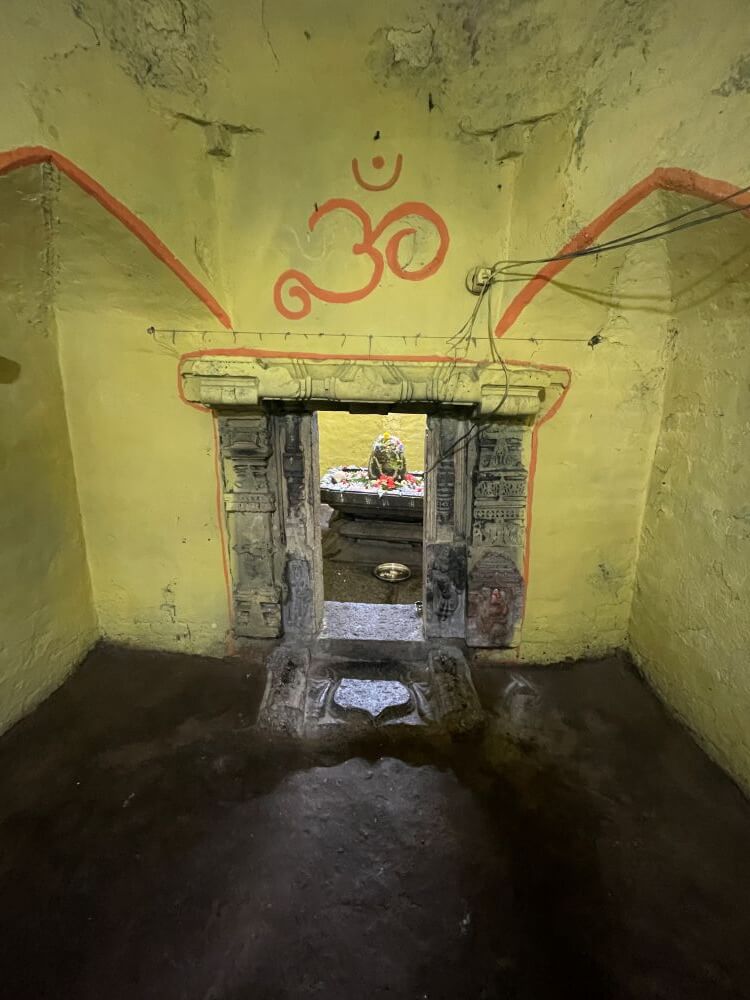
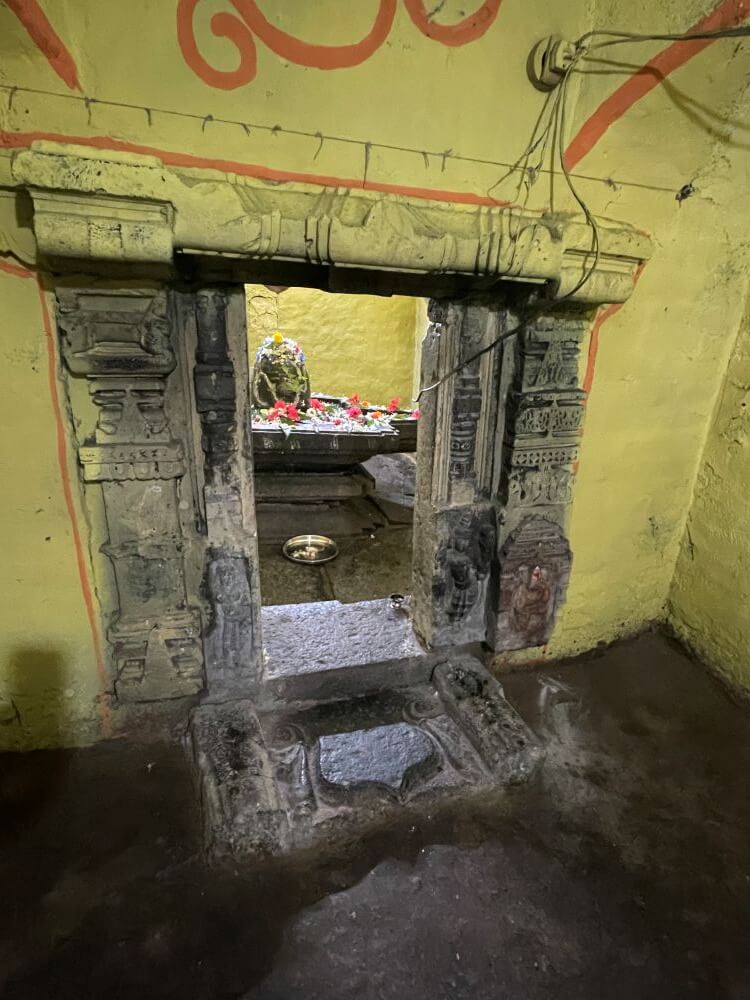
Since it is at a higher level than the assembly hall, there is a step at the entrance of the vestibule (antarala). The doorjambs of the vestibule are flat and simple, decorated with oil-painted designs. On the entrance of the sanctum sanctorum, there is a sculpture of a fly-whisk bearer (chamar-dharini) and a vyala on one side, and a four-armed gatekeeper and a Ganesha sculpture on the other. The presence of a Ganesha image next to the gatekeeper or different gatekeepers on either side is a unique feature. The doorjambs feature pillar carvings, and there is a Ganesha idol on the lintel.
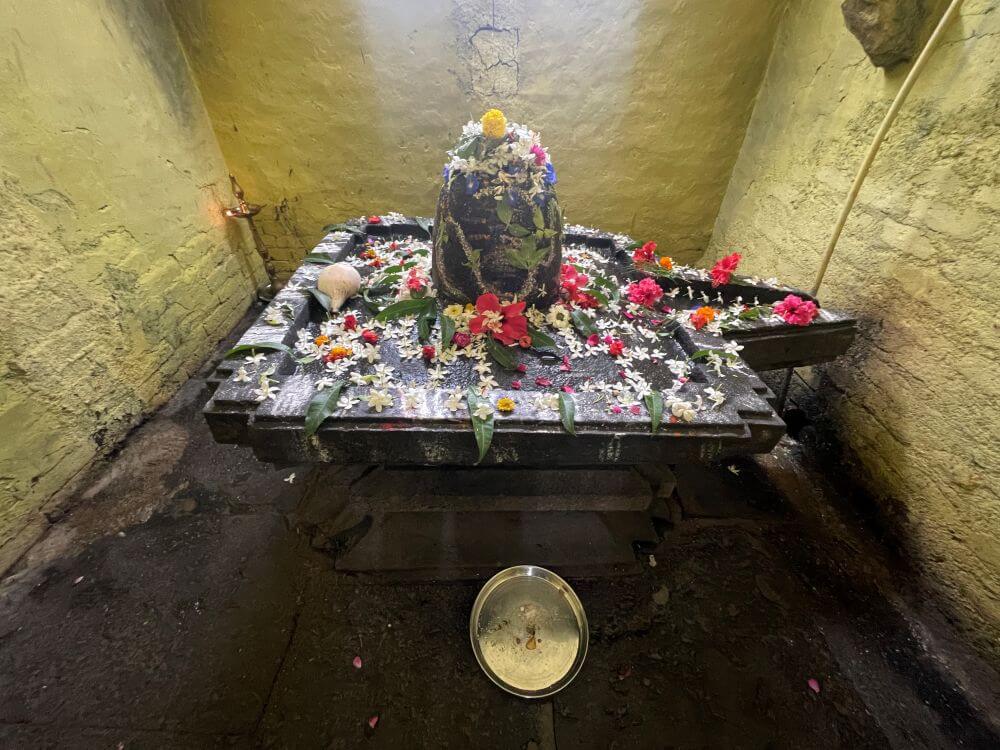
Inside the sanctum sanctorum, there is a large Shiva Linga in the center of the floor. A vessel for performing Abhishekam (ritual bathing) is hung from the ceiling to drip water onto the Shiva Linga. The base (shalunka) of the Shiva Linga is square. The ceiling of the sanctum features circular designs. Maha Shivaratri is the main annual festival celebrated here with great enthusiasm. During this time, thousands of devotees from the surrounding areas come for the darshan of the deity. Programs such as Maha-Abhishekam, Bhajans, and Maha-Prasad are organized in the temple during Maha Shivaratri and the month of Shravan. There is a higher influx of devotees on Mondays, full moon days (Purnima), and new moon days (Amavasya). Many scholars visit the temple to study its architecture and sculpture.
This sacred temple stands as a testament to deep spiritual devotion, ancient architectural grandeur, and rich local cultural traditions.
The sanctum sanctorum houses the divine idol consecrated according to ancient Vedic traditions, surrounded by serene courtyards and traditional temple architecture.
Navratri, Maha Shivratri, Annual Temple Jatra & Deepotsav
Compare and book flights, secure top-rated local hotels near the temple, hire reliable guides, and rent cars instantly.
Extend your pilgrimage by visiting other highly sacred temples located nearby.


Add ₹999 more to unlock FREE SHIPPING!
Your sacred cart is currently empty.
Shop Photo FramesFill in your delivery details below to place your order.
Add comment