
Add ₹999 more to unlock FREE SHIPPING!
Your sacred cart is currently empty.
Shop Photo FramesHanuman is worshipped as the deity of strength. Hanuman had obtained a boon from Shani Deva that “my devotees shall not be tormented.” Therefore, Hanuman is worshipped to ward off misfortune. The propagation and spread of Hanuman worship truly took place during the era of Samarth Ramdas Swami. Samarth Ramdas Swami established Hanuman temples in villages far and wide. It is said that the Hanuman temple located in the village of Hanimnal in Gadhinglaj taluka is one of them. Devotees believe that this Swayambhu Hanuman, who grants wishes, removes suffering and ailments. The temple fair held on Phalguna Shuddha Panchami is famous as the ‘Coconut Shower Fair’.
The legend of this temple is that about 350 years ago, a milch cow belonging to a farmer in Hanimnal village suddenly stopped giving milk. When the farmer investigated the cause, he learned that the cow would release its milk at a specific spot while grazing in the forest. Samarth Ramdas Swami then asked the villagers to dig at that spot. Following the advice of Samarth, when they dug there, a Swayambhu stone idol of Hanuman manifested from the earth. While digging, a pickaxe accidentally struck the stone, causing blood to flow from it. The village priest then begged for forgiveness and observed a waterless fast as penance. On the third day of the fast, the bleeding stopped and the wound healed. Devotees believe that observing a fast for this Hanuman removes mental and physical pain and ailments. The royal family of Gwalior had immense faith in the feet of this Maruti. They had built a dharmashala (pilgrims’ rest house) for the temple.
Due to the unique architectural style of the temple and the Nagarkhana (drum house), on the day of Hanuman Jayanti, the morning sun rays fall directly from the Nagarkhana onto the idol of Hanuman in the sanctum sanctorum. Thousands of devotees gather at the temple on this day to witness this unique miracle of nature.
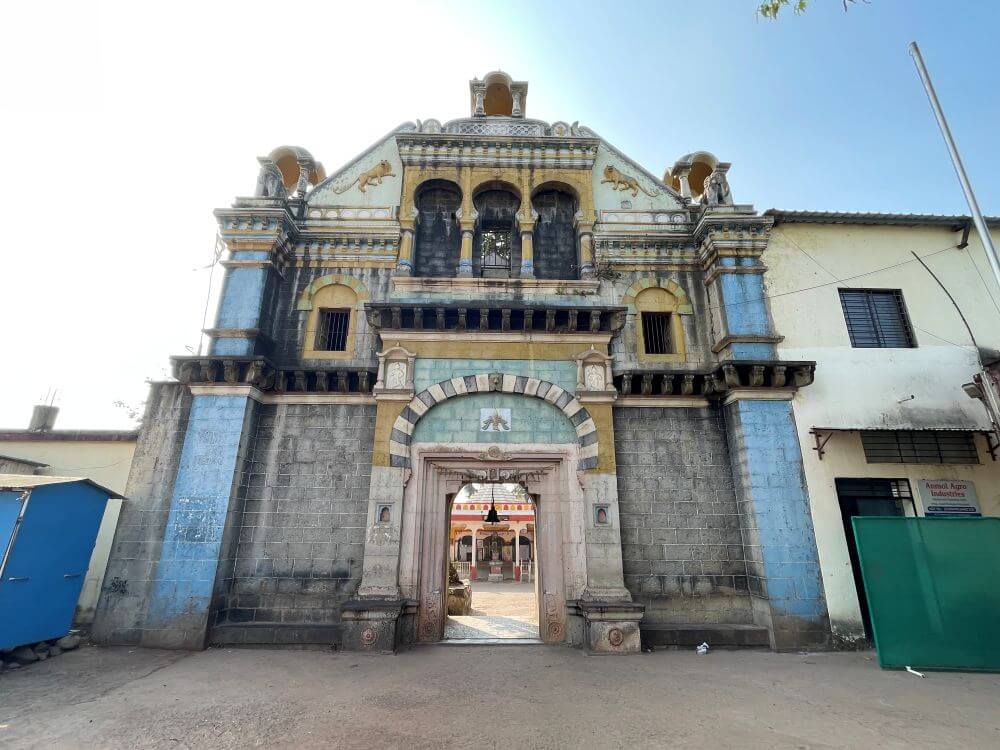
The two-storied stone entrance of the temple resembles the gateway of a fort. The ornate door frames of the entrance, built of black stone, are made of red laterite stone. There is an idol of Ganesha on the lintel of the entrance and chakras on both sides. There are lamp niches in the pillars on both sides of the entrance. In the semi-circular stone arch on the pillars, a lion’s face is carved in the center. Below the arch, in the center, is a relief sculpture of a banana flower, a symbol of auspiciousness. On both sides of the arch, there are armed gatekeepers in the niches. Above this entrance is the Nagarkhana. There are lion sculptures on the triangular walls on both sides of the Nagarkhana. There are three pavilions, two on the pillars beside the lion sculptures and one on the roof of the Nagarkhana. Through this entrance, one enters the spacious courtyard of the temple.
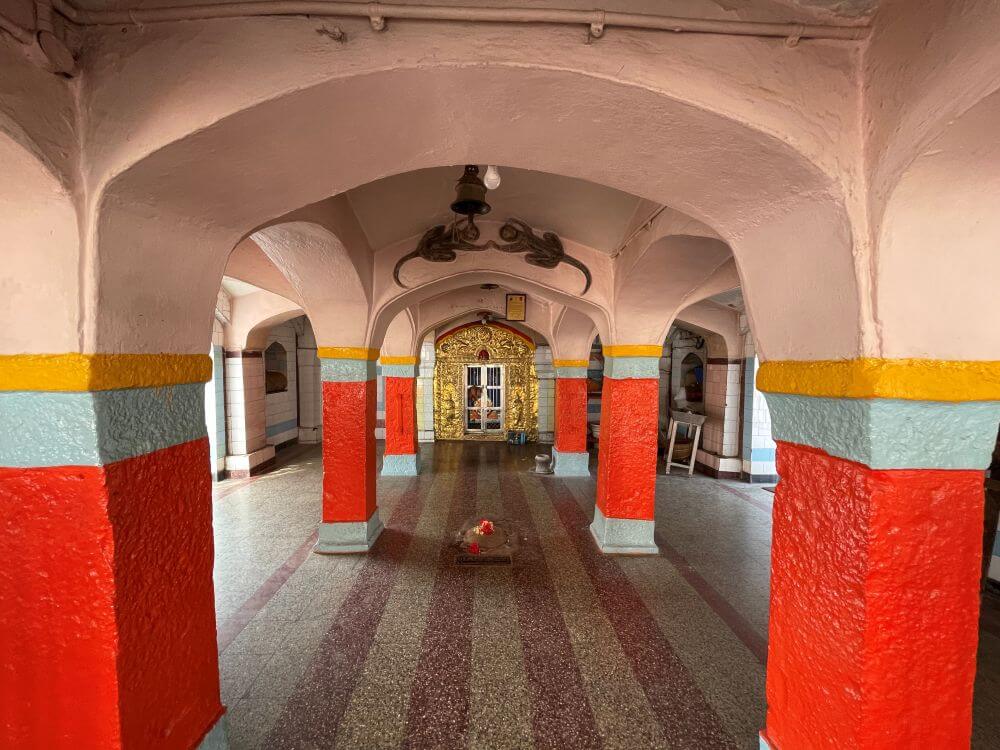
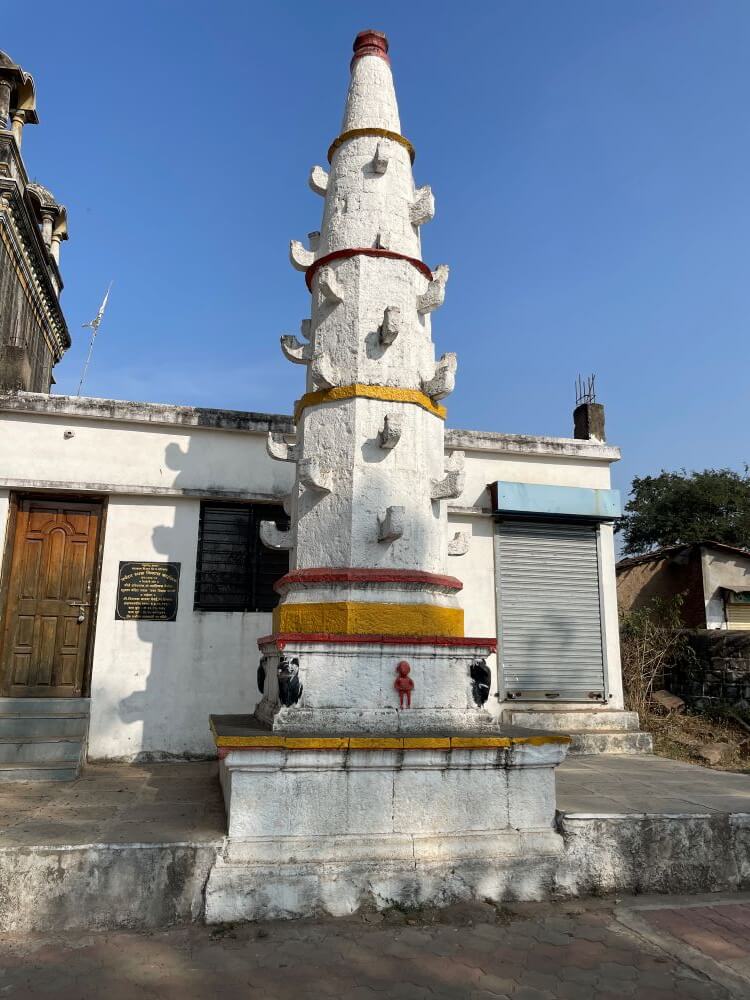
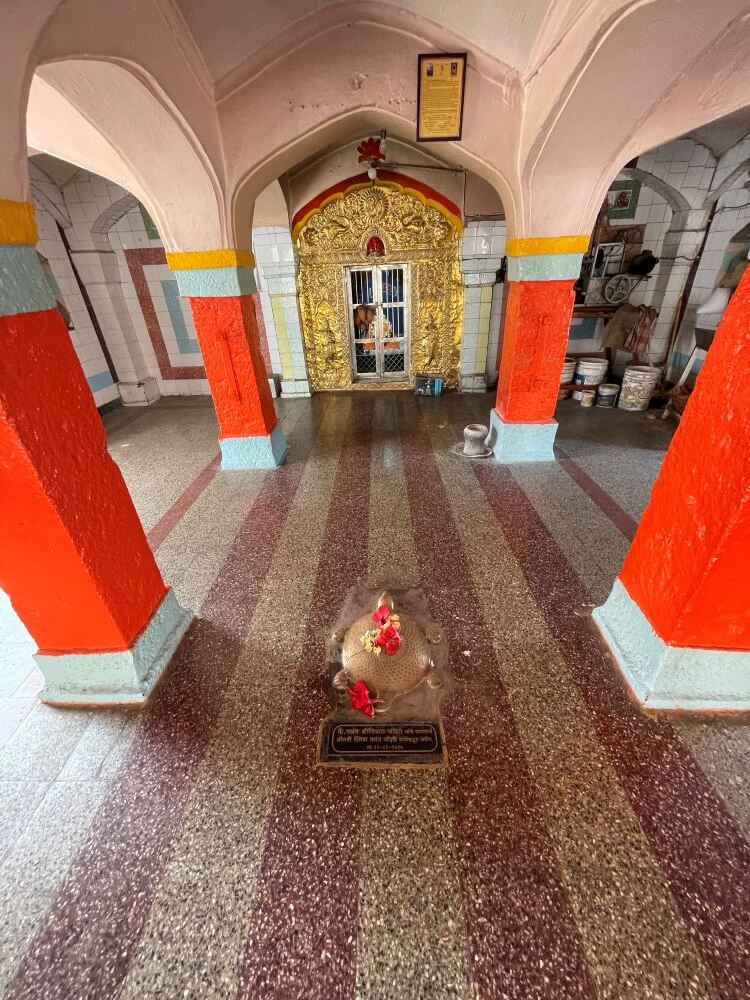
In front of the main temple, on a large stone platform, stands an ancient octagonal lamp tower with five tiers. The lower tier of the lamp tower is wider and it tapers towards the top. The topmost tier is circular. Beside this lamp tower, there are stone stairs to go to the Nagarkhana on the second floor of the entrance. The Nagarkhana has safety railings. Standing in the Nagarkhana, one can get a panoramic view of the temple premises and the village. The main temple structure consists of a Sabhamandapa (assembly hall), Antarala (vestibule), and Garbhagriha (sanctum sanctorum). The ten square pillars in the open Sabhamandapa are connected by arched gateways. From the Sabhamandapa, one enters the enclosed Antarala. In the center of the Antarala is a tortoise idol.
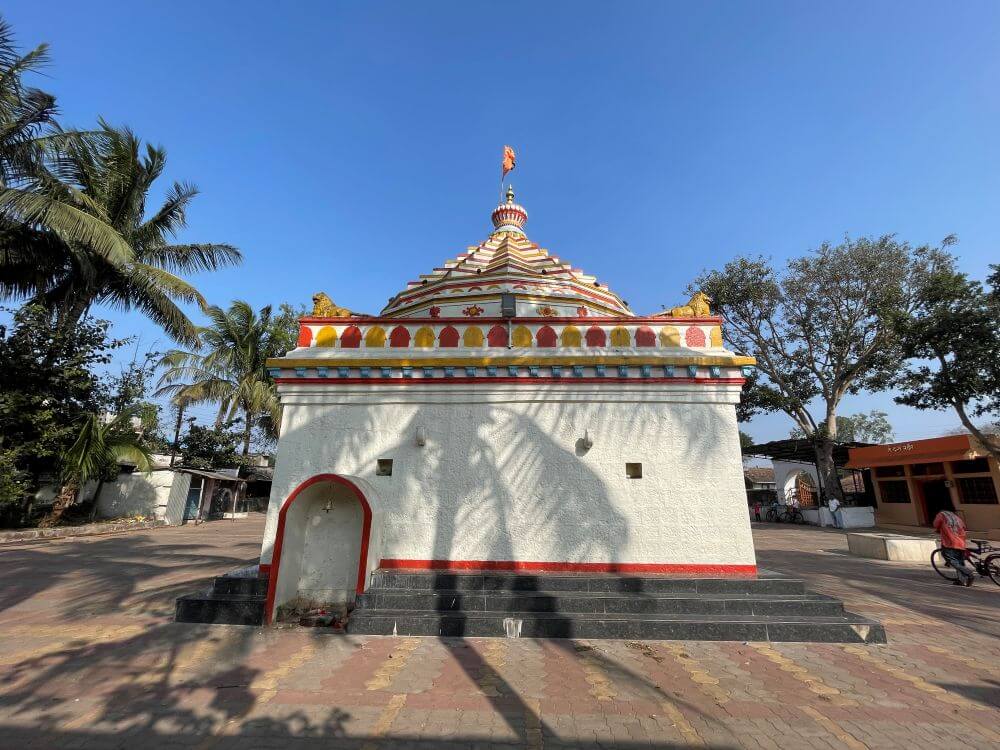
The entrance to the Garbhagriha is covered with golden metal plating. The door frames here feature gatekeepers and floral carvings. There is an idol of Ganesha on the lintel and elephants on both sides of the idol. In the area above, images of the moon and sun are carved. In the Garbhagriha, there is a vermilion-smeared stone idol of Swayambhu Hanuman. The roof of the temple has a parapet with niche-like structures on the outside. There are four lion sculptures on the parapet. The temple spire is a twelve-sided dome with ten tiers. It tapers towards the top. The Amalaka on top is unique. It has vertical ribbed carvings, and above it is the pinnacle and a flag.
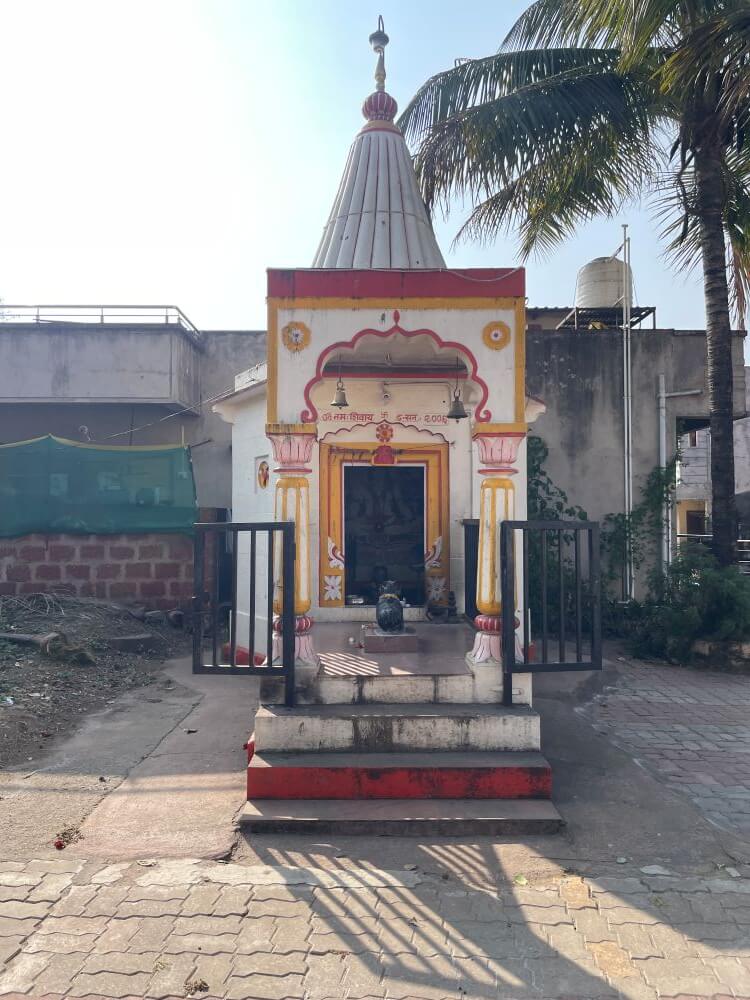
In the temple courtyard, on the left side, there is a fresh water well built of dressed black stone. In the courtyard, there is a Dattatreya temple and on the other side, a Mahadeva temple. The annual fair of Phalguna Shuddha Panchami is celebrated with great enthusiasm in the temple. On this day, the deity’s palanquin procession takes place. Palanquins of many local village deities come here to visit Swayambhu Hanuman. Millions of devotees gathered for the fair shower coconuts as part of their vows. Because of this unique tradition, this fair is known as the ‘Coconut Shower Fair’.
This sacred temple stands as a testament to deep spiritual devotion, ancient architectural grandeur, and rich local cultural traditions.
The sanctum sanctorum houses the divine idol consecrated according to ancient Vedic traditions, surrounded by serene courtyards and traditional temple architecture.
Navratri, Maha Shivratri, Annual Temple Jatra & Deepotsav
Compare and book flights, secure top-rated local hotels near the temple, hire reliable guides, and rent cars instantly.
Extend your pilgrimage by visiting other highly sacred temples located nearby.


Add ₹999 more to unlock FREE SHIPPING!
Your sacred cart is currently empty.
Shop Photo FramesFill in your delivery details below to place your order.
Add comment