
Add ₹999 more to unlock FREE SHIPPING!
Your sacred cart is currently empty.
Shop Photo FramesThe tradition of Shaiva worship is ancient in India. Bhairav is a manifestation of Lord Shiva; the chief of the eight Bhairavas is known as Ashtabhairav, and the chief of the Ashtabhairavas is addressed as Kalbhairav. The word ‘Bhairav’, derived from the words ‘Bhay’ (fear) and ‘Rav’ (sound/destruction), signifies the one who protects from fear. There are many temples of Kalbhairav across Maharashtra. Among these, the Kalbhairav temple located in the mountain crevices of Badyachi Wadi in Gadhinglaj taluka is particularly famous in the district. Devotees believe that this temple is ‘Jagrut’ (spiritually awakened) and grants the wishes of those who pray with devotion. The fair held for this deity is known as the ‘Gondyachi Jatra’.
While there is no definitive information regarding how ancient this temple in Badyachi Wadi is, experts estimate it to be 700 to 800 years old based on its architectural style. There are records of various visits and donations made to this temple 400 years ago. The legend of this temple states that in ancient times, a king came to the spot where the temple currently stands for hunting. At that time, he saw the idol of Kalbhairav at this very place. The king built a temple here and consecrated the idol. Since then, many legends are told about how this Kalbhairav rushes to answer the calls of his devotees.
This temple is situated at the foothills of a mountain, some distance away from the border of Badyachi Wadi village, in the area below the road. The entrance gate, built in red basalt stone, is distinctive. On both sides of the road, there are rectangular pillars about six feet long and two feet wide, and adjacent to them on the plinth are two circular ornate pillars each. In the center of this entrance, at the top, is an idol of Lord Ganesha, topped by three kalashas. From here, there is a staircase leading to the temple. On one of the plinths along these stairs, there is a beautiful meditative idol of Lord Shiva. Moving further up the stairs, there is a two-story entrance gate made of stone masonry. The upper floor of this entrance houses the Nagarkhana (drum house).
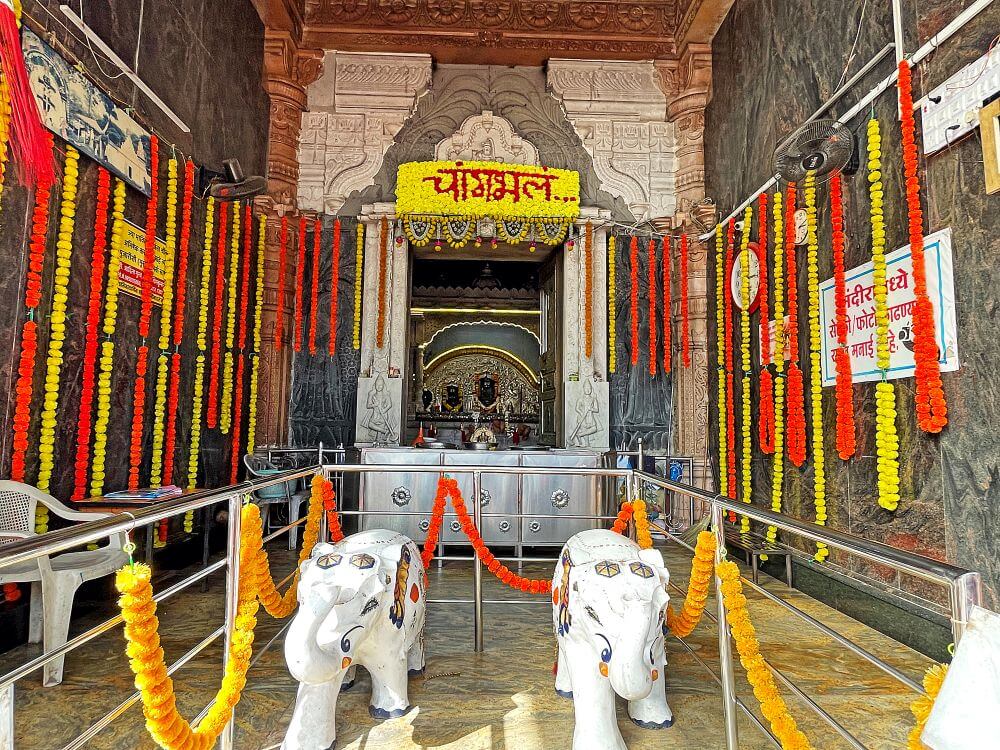
Looking down from here, the grand temple of Kalbhairav comes into view. The temple structure consists of a Sabhamandap (assembly hall), a Garbhagriha (sanctum sanctorum), and a towering Shikhara (spire). Adjacent to the main temple is a newly built two-story Darshan-rang mandap (viewing queue hall). There is seating arrangement for devotees in this hall. The two ornate pillars at the entrance of the main temple’s assembly hall are connected to each other by an arched gateway. Near the entrance of the assembly hall, there is a tortoise and two marble elephants. The assembly hall has four ornate pillars in the four corners, topped with brackets and capitals. Stone beams rest on these capitals. The ceiling features lotus flower carvings. The Garbhagriha is located in front of the compact assembly hall.
Above the entrance of the Garbhagriha, there is a relief sculpture of two Nandis and Lord Shiva. Behind the sculpture, on the prabhavali (halo) and the wall, there are beautiful floral carvings. On a high pedestal inside the Garbhagriha are three idols made of black stone: Kalbhairav, Jogeshwari Devi, and Nageshwar. The idol of Jogeshwari Devi is to the right of Kalbhairav. It is said that since this is the power (Shakti) won by the deity in battle, Jogeshwari’s place is always to the right of Kalbhairav. Both Kalbhairav and Jogeshwari Devi hold a sword in their left hand and a vessel of nectar in their right hand. Above both idols are Kirtimukh sculptures. These three idols are housed in a marble arch and topped by a modak-shaped spire.
The square Shikhara of the temple is of the Urushringa type. This main Shikhara has 16 smaller shikharas and kalashas on top. On all four sides of the main Shikhara are niches containing idols of various deities. Above the niches are Sharabha sculptures. Mythical birds or animals are referred to as Sharabha. On the neck of the Shikhara is the pot-shaped part of the spire, topped by the main kalasha. The entire Shikhara and the temple feature highly distinctive carvings.
In the niche at the back of the main temple, there is a four-armed idol of Goddess Mahakali made of black stone. In the two right hands, the idol holds a staff and a sword, and in the left hands, a severed head and a fire vessel. The Goddess stands with her feet on the body of a demon. The Goddess is adorned with fine garments and jewelry, and wears a garland of skulls around her neck. Above the idol of the Goddess is a Kirtimukh.
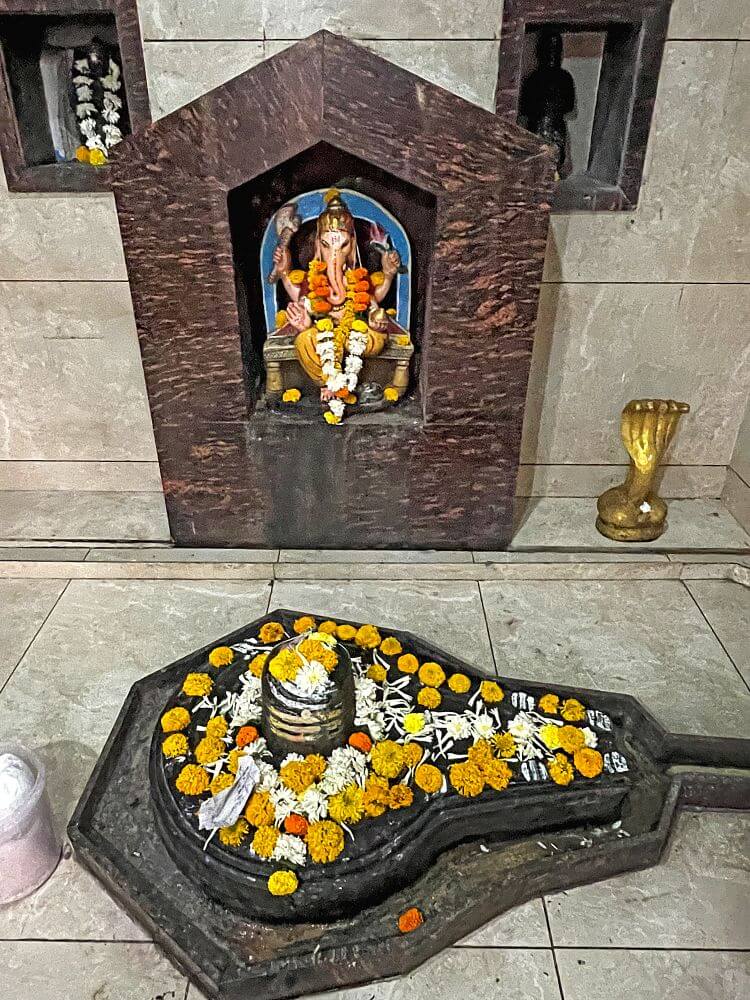
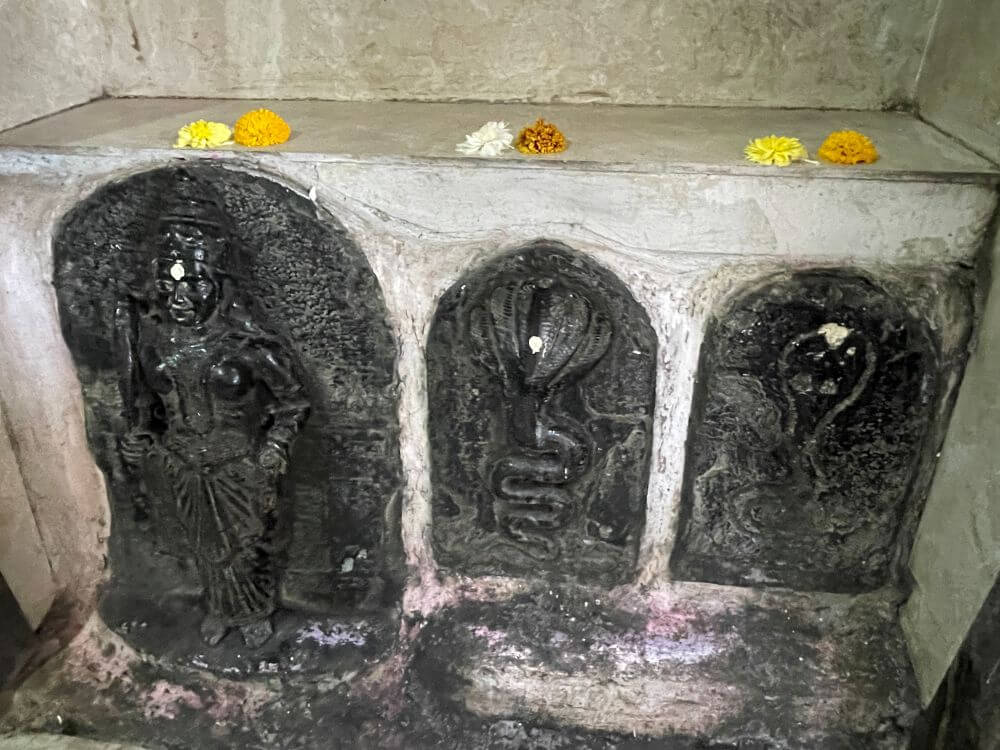
On the right side of the temple premises is a Mahadev temple. A unique feature of the massive stone Nandi idol in this temple is that the garland on its back is made of Kirtimukhas. There are also Dattatreya and Balbhairav temples here. These temples contain small, ancient relief sculptures of Lord Hanuman. Beside the temples is a water tank. Some unique Naga (serpent) images can also be seen here.
The Jatra festival of Lord Kalbhairav is celebrated on Magh Krishna Dwitiya. Lakhs of devotees from Maharashtra and Karnataka attend this fair. On this day, early in the morning, the deity is bathed with a Maha-abhishek and worshipped. The palanquin of Kalbhairav is brought to the temple from Murgud village. After the worship of the Utsav Murti (processional idol), the deity is placed in the palanquin and taken for a procession through the village. Kalbhairav visits every shrine on the procession route. During the palanquin procession, devotees tie ‘Gonde’ (tassels) to the deity’s ‘Sasankathi’ (ceremonial staff). Because of this tradition of tying these sky-lantern-shaped tassels to the Sasankathi, this fair is known as the ‘Gondyachi Jatra’. As the palanquin heads towards the temple, the large tassels on the Sasankathi are tied near the entrance, while the smaller tassels are carried along with the Sasankathi up to the temple.
The ‘Nadgi Ladoo’ and ‘Kardand’ (a prasad made from dry fruits and jaggery) available at the fair are special attractions. Annual festivals like Mahashivratri, Dussehra, Diwali, and Tripur Purnima are celebrated in the temple with great enthusiasm.
This sacred temple stands as a testament to deep spiritual devotion, ancient architectural grandeur, and rich local cultural traditions.
The sanctum sanctorum houses the divine idol consecrated according to ancient Vedic traditions, surrounded by serene courtyards and traditional temple architecture.


Navratri, Maha Shivratri, Annual Temple Jatra & Deepotsav
Compare and book flights, secure top-rated local hotels near the temple, hire reliable guides, and rent cars instantly.
Extend your pilgrimage by visiting other highly sacred temples located nearby.


Add ₹999 more to unlock FREE SHIPPING!
Your sacred cart is currently empty.
Shop Photo FramesFill in your delivery details below to place your order.
Add comment