
Add ₹999 more to unlock FREE SHIPPING!
Your sacred cart is currently empty.
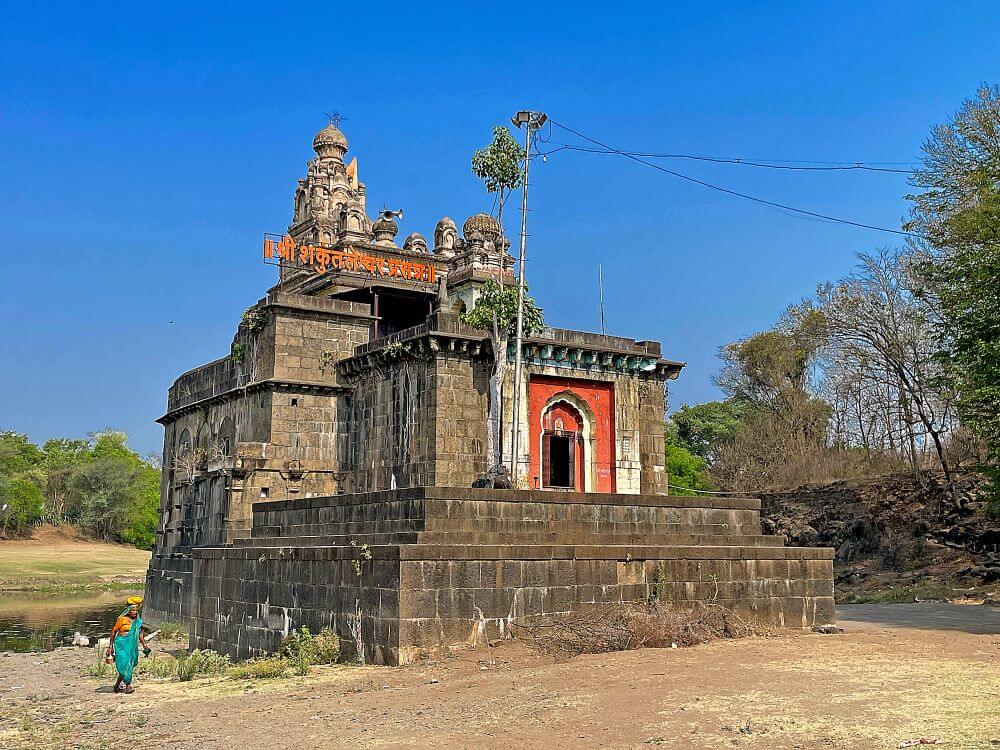
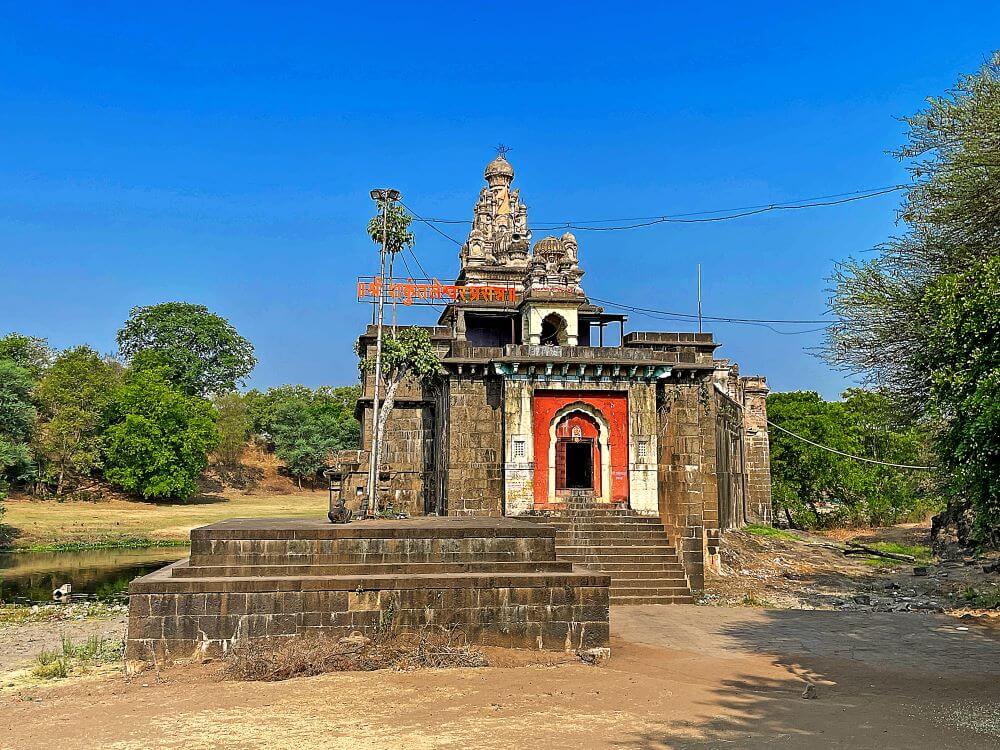
Shop Photo FramesWhile traveling from Pune to Satara to accept the robes of the Peshwai from Chhatrapati Shahu Maharaj, the third Peshwa, Balaji Bajirao, stayed at Vaduth. At that time, following a divine vision from Lord Mahadeva, he constructed the sanctum sanctorum of this temple within six days, from May 24 to 30, 1758, before proceeding to appear before Chhatrapati Shahu to accept the robes. On his return journey, he visited the temple again to seek the blessings of Shakuntaleshwar and issued orders for the completion of the temple before moving on. This two-storied temple at Vaduth is considered unique among all structures built in the Maratha architectural style.
The legend of the temple states that in ancient times, the ashram of Sage Nichul was situated on the banks of the Krishna River here. The sage was renowned for never sending anyone away empty-handed. When Lord Indra learned of this, he decided to test the sage. He assumed the form of a vulture and approached the ashram, demanding human flesh. The sage called his children and told them of the vulture’s demand, but they refused to offer their flesh. Enraged, the sage cursed his children to be born in the form of birds.
To uphold his reputation, the sage prepared to offer his own flesh to the vulture. At that moment, Indra revealed himself and admitted to testing the sage. The sage was angered by Indra’s actions and cursed him, saying that he too would live here as a Shakunta (bird). Repentant, Indra begged for forgiveness. The sage told him that he would be liberated when he met Sage Agastya. Many years later, Sage Agastya met Indra in his bird form. Agastya instructed him to consume the water of the Krishna River and chant the name of Shiva. As Indra chanted, Lord Shankara was pleased and blessed him, declaring that this sacred site would become famous as Shakuntesh and that He would reside there. Since then, this pilgrimage site has been known as Shakuntaleshwar.
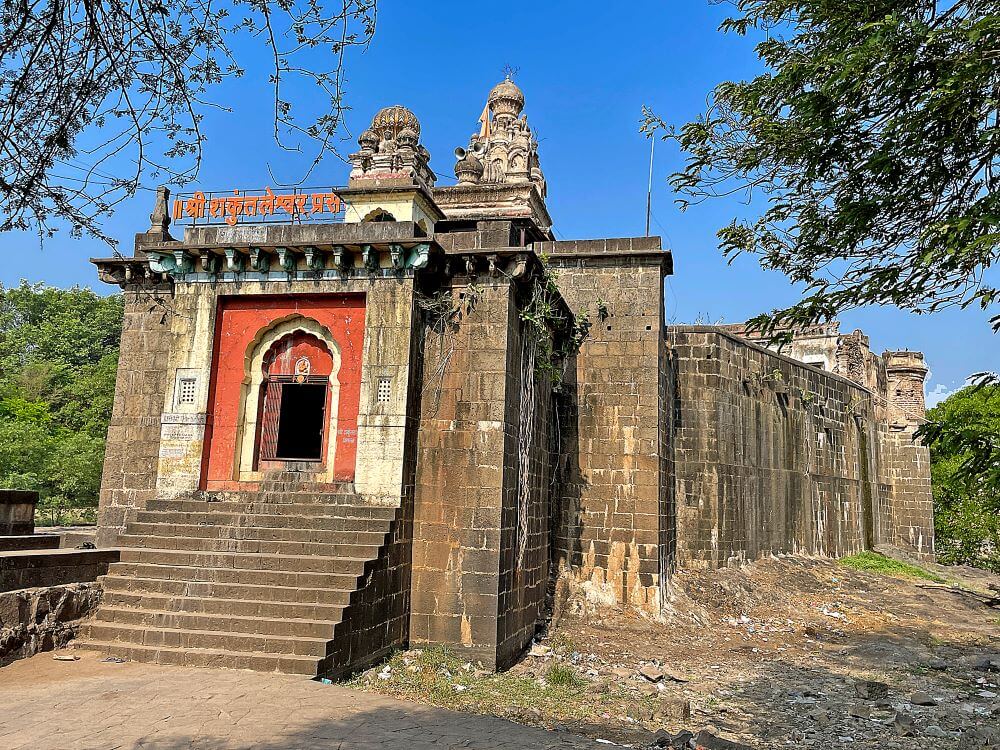
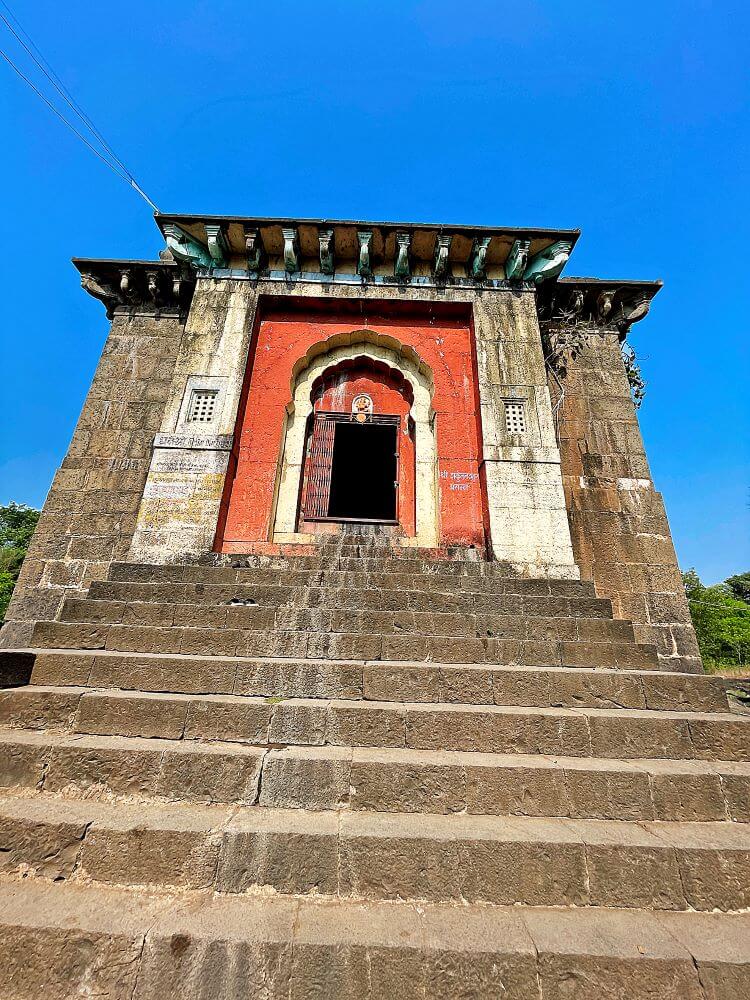
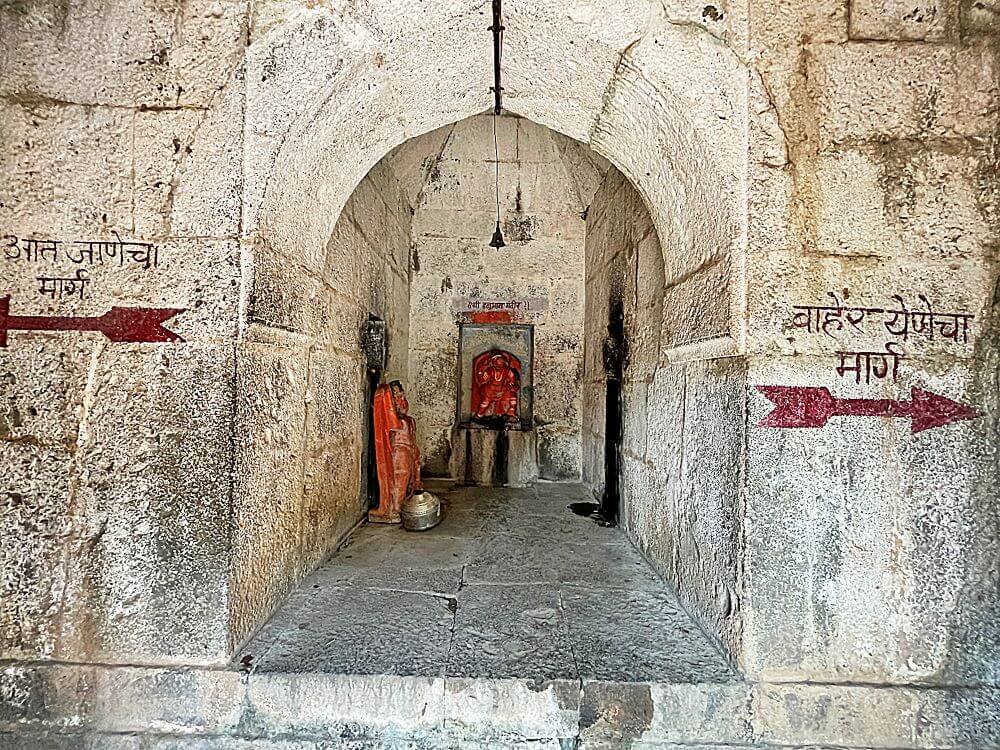
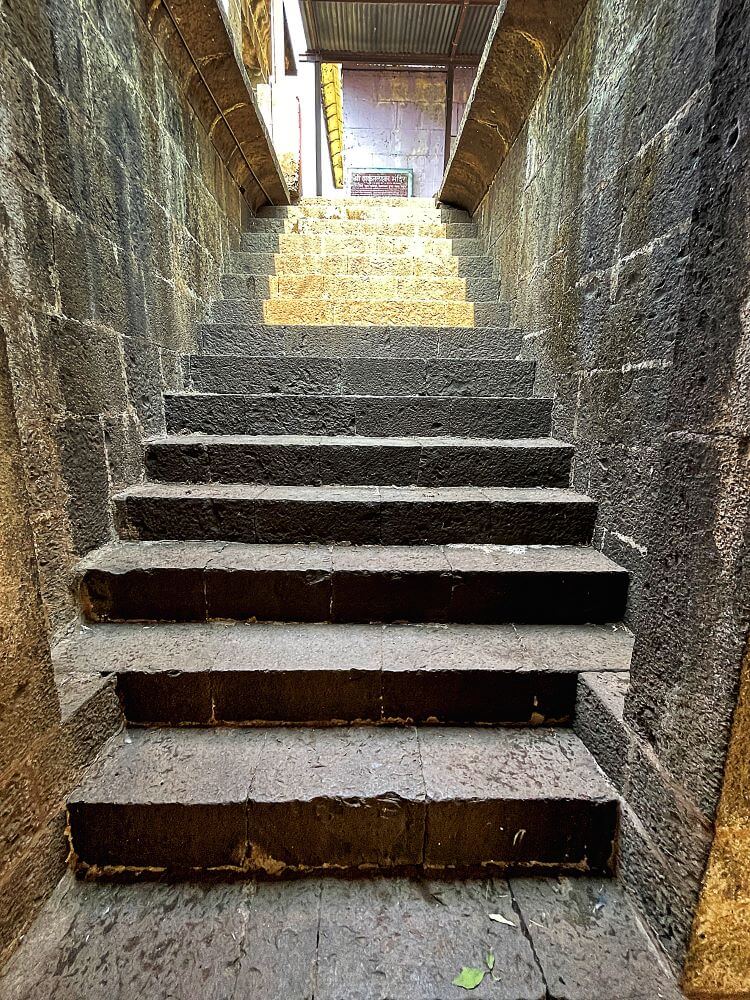
Vaduth village is located on the Satara-Lonand road. The Shakuntaleshwar Temple, situated on the banks of the Krishna River, appears like a fortress from a distance. The temple is surrounded by a sturdy fortification wall, 25 to 30 feet high, with bastions on all four sides. One can reach the first floor of the temple by climbing about 14 to 15 steps from the riverbed. Upon entering through the gateway of the grand fortification, one sees a Maruti temple directly ahead, housing an idol of Maruti smeared with vermilion. To the right and left of the Maruti temple, there are 16 steps leading up to the Shakuntaleshwar Temple on the upper floor. This stone-built temple, designed in the Hemadpanti style, consists of a Nandi Mandapa, a Sabha Mandapa, and a Garbhagriha (sanctum sanctorum). The Nandi Mandapa stands on a three-foot-high plinth and contains a carved Nandi idol made from a single stone. The spire above this Nandi Mandapa is also uniquely designed.
In the Sabha Mandapa of the main temple, in front of the Nandi Mandapa, there are ancient idols of Shri Ganesha and Mother Parvati on both sides of the sanctum. Additionally, the ceiling of the Sabha Mandapa features delicate floral carvings, similar to those found on the walls of Nana Fadnavis’s Wada in Menavali. The sanctum sanctorum is situated at a slightly lower level and houses a Shiva Linga made of solid black stone. It is said that the impression of a cow’s hoof is imprinted on this Shiva Linga.
On the circumambulation path of the temple, there are shrines dedicated to Shri Ganesha, Shri Vishnu, and Garuda. Furthermore, there are several idols in the niches of the outer walls and the fortification, including notable carvings of a figure on horseback, and idols of Vishnu, Lakshmi, and Ganga. There is a staircase at the back of the temple to climb onto the fortification. From there, one can view the nature-rich surroundings of the Krishna riverbank, the Krishna Mai temple, and the Jarandeshwar hill. There are many sculptures on the temple spire, and even after 350 years, the precision of these carvings remains evident.
A unique feature here is a small Vrindavan located in the Krishna riverbed next to the temple, which can be seen from the fortification. This Vrindavan contains a Shiva Linga that can be removed, yet it is never washed away, no matter how severe the floods are. Grand festivals are celebrated at this temple during Shravan and on Mahashivratri, during which large-scale Abhishek rituals are performed.
This sacred temple stands as a testament to deep spiritual devotion, ancient architectural grandeur, and rich local cultural traditions.
The sanctum sanctorum houses the divine idol consecrated according to ancient Vedic traditions, surrounded by serene courtyards and traditional temple architecture.
Navratri, Maha Shivratri, Annual Temple Jatra & Deepotsav
Compare and book flights, secure top-rated local hotels near the temple, hire reliable guides, and rent cars instantly.
Extend your pilgrimage by visiting other highly sacred temples located nearby.


Add ₹999 more to unlock FREE SHIPPING!
Your sacred cart is currently empty.
Shop Photo FramesFill in your delivery details below to place your order.
Add comment