
Add ₹999 more to unlock FREE SHIPPING!
Your sacred cart is currently empty.
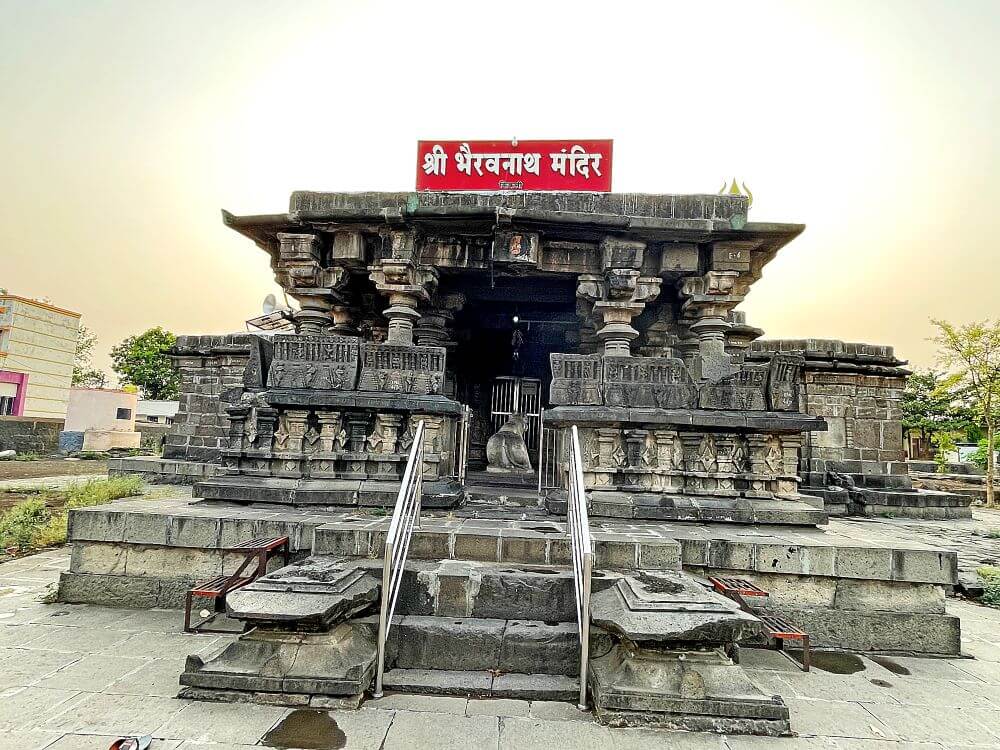
Shop Photo FramesThe Bhairavnath Temple in Kikali village, nestled between the two historic and rich heritage forts of Chandan and Vandan in Wai Taluka, is renowned. Compared to other temples in Satara district, this temple’s architecture, construction, and sculptural artistry are distinctive. A grand yatra is held here in the month of Ashwin. A unique feature here is that the yatra is organised by the twelve Balutedars of the village, and during this time, vermillion, coconut, and pedhas are showered upon the deity’s palanquin. This is the only yatra in the district where pedhas are showered.
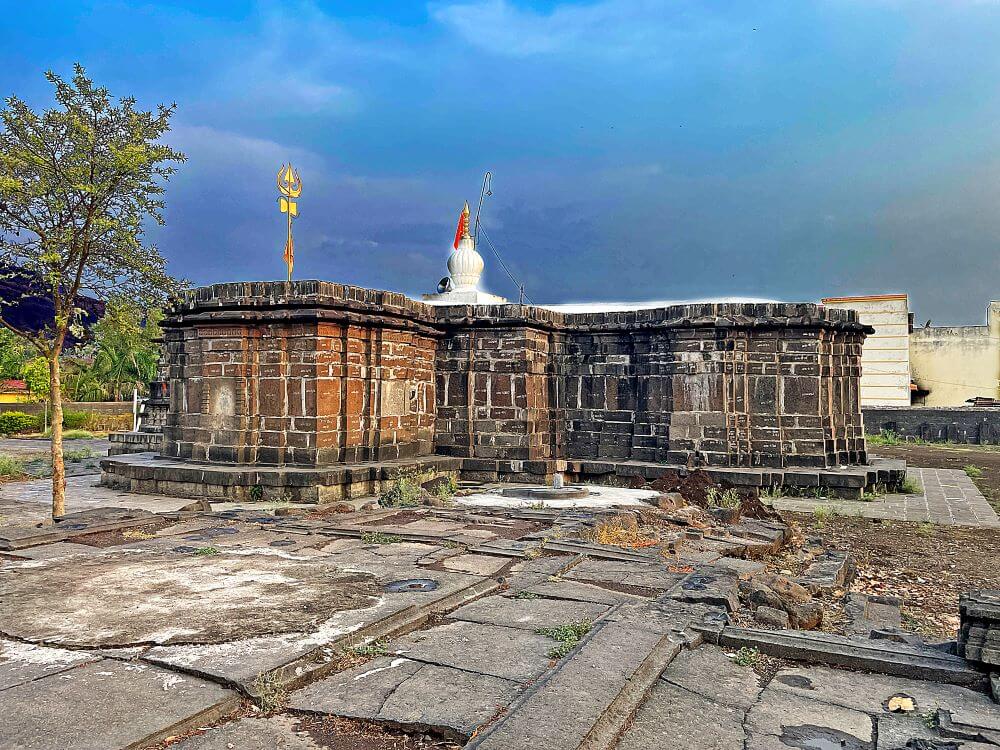
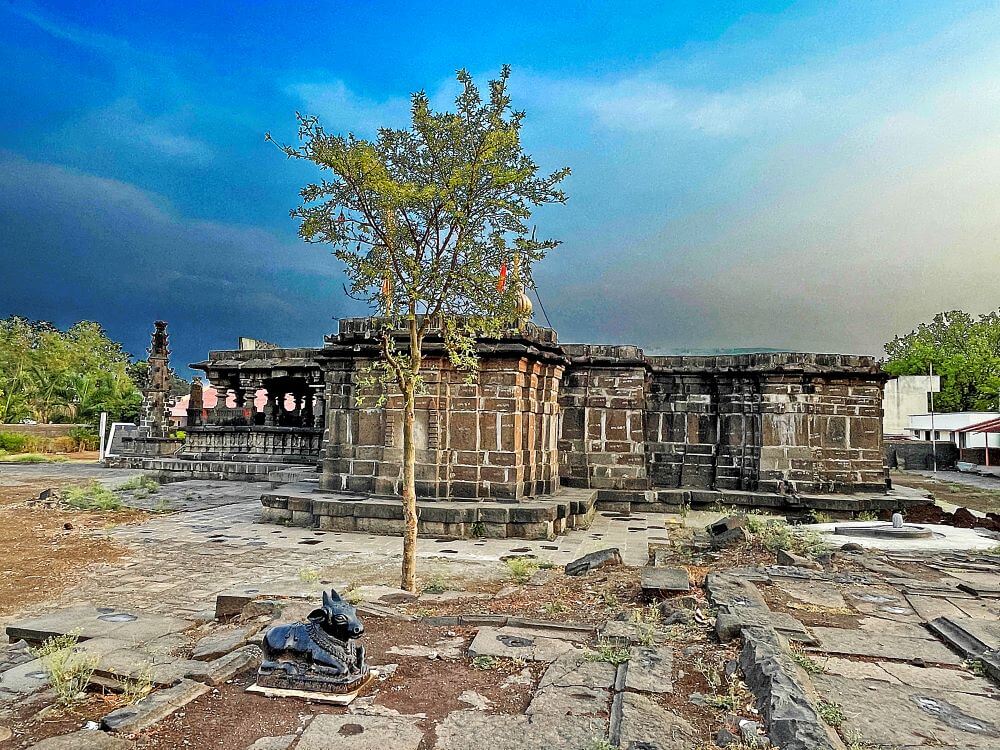
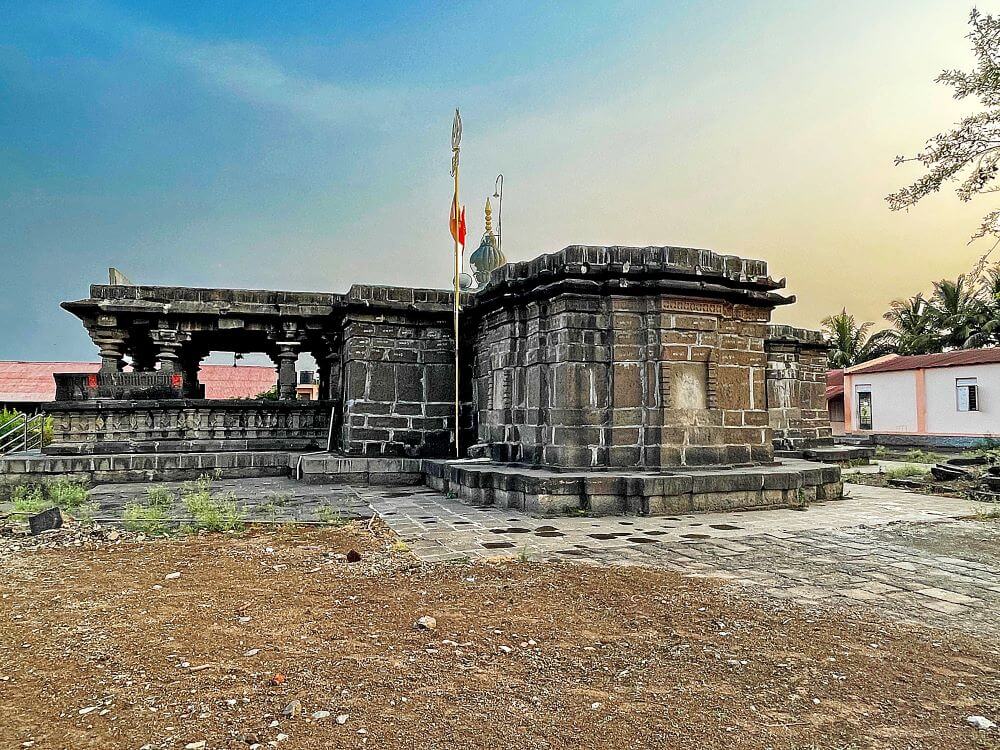
Upon entering Kikali village, the entrance to the Bhairavnath Temple is visible on the right side of the road. Based on its architectural style, the temple is said to belong to the Yadava period of the twelfth century. In front of the temple stands a tall stone Deepmala (lamp tower), and beside it is the Ganeshvandana pillar. This east-facing temple is designed in the Tridal (having three sanctums) style. It features a Mukh-mandapa with Kakshasana (stone benches for sitting along the walls). On the left and right walls of the Mukh-mandapa are various Vyala sculptures with faces of a ram, horse, bull, donkey, lion, boar, and tiger. Additionally, there are erotic sculptures and depictions of musicians playing various instruments. Chandeliers are carved on the ceiling of the Mukh-mandapa.
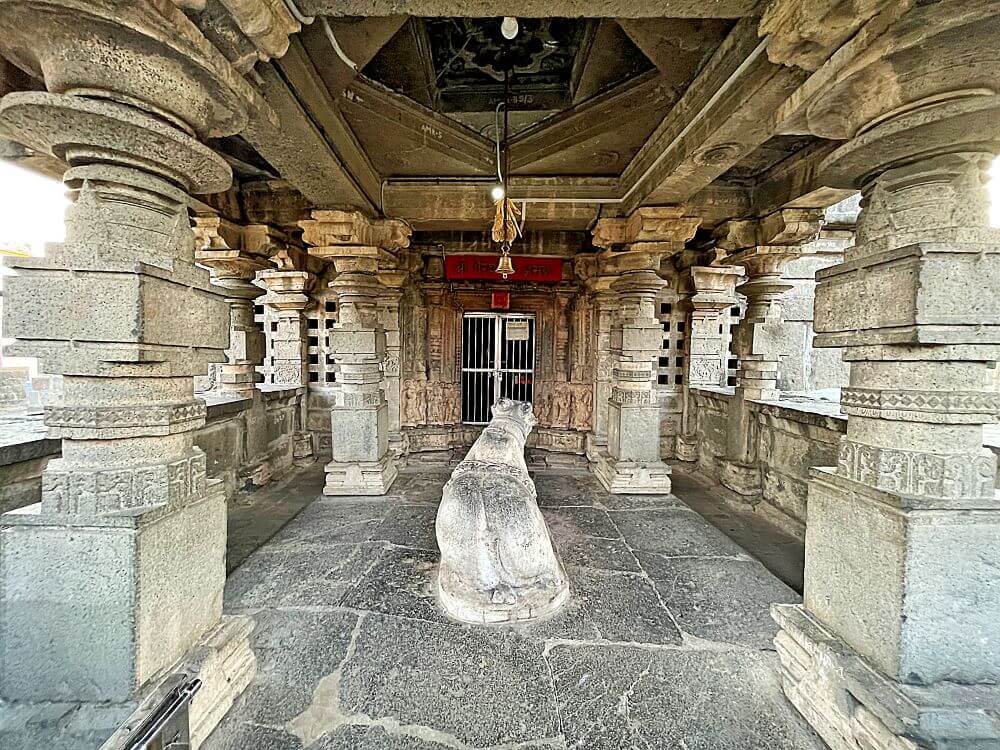
As one proceeds from the Mukh-mandapa to the Sabha-mandapa, doorkeepers, attendants, and other sculptures are visible at the entrance. The Sabha-mandapa features full and half pillars with distinctive carvings. On the rectangular flat surfaces in the middle of these pillars, various scenes from the Ramayana are carved. These include the slaying of the demon Maricha who took the form of a golden deer, the battle between Vali and Sugriva, the slaying of Vali by Shri Rama, the meeting of Shri Rama and Hanuman, Hanuman’s destruction of Ashokavana, demons threatening Sita in Ashokavana, and the slaying of Kumbhakarna and Ravana. Besides these, the pillars also bear sculptures of Trivikrama, Shiva Tandava, Vamanavatar, Harihara, dancers, and Darpanasundari. This Sabha-mandapa is adorned with all these distinctive sculptures, and within it rests a monolithic idol of Nandi.
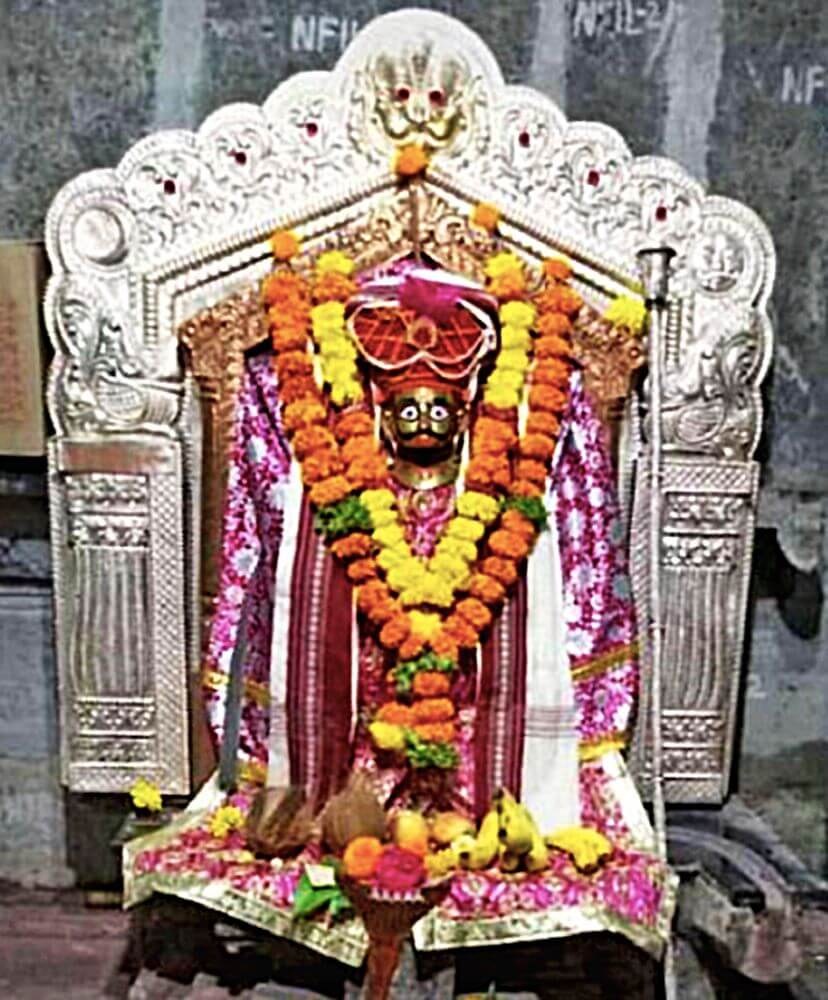
In the Antarala (vestibule) beyond the Sabha-mandapa, there are two small shrines. One houses black stone idols of Shankar and Parvati, while the other contains an idol of Machhindranath. In front of the Sabha-mandapa, to the right and left, are three sanctums. The main and southern sanctums house Shiva Lingams, while the northern sanctum contains an idol of Bhairavnath. The Nandi in the Sabha-mandapa does not face the sanctums with the Shiva Lingams but appears to be inclined towards the Bhairavnath sanctum. The Antarala in front of the Bhairavnath sanctum is comparatively more ornate than the other two Antaralas.
At the rear of the temple, there is a small spire, while the rest of the surface is flat. This spire area also features various sculptures. In the temple courtyard, to the right, a small temple houses an idol of Dattatreya. Additionally, there is a dilapidated temple containing a Shiva Lingam. Many hero stones (Viragals) found in Kikali village and its surroundings have been preserved here. It is said that there was a group of three ancient temples here. In the year १६४९, when Afzal Khan received the Subhedari of Wai province, he demolished two of these temples and used their stones for the construction of his palace.
A grand yatra of Bhairavnath is held on the third Saturday and Sunday of the Ashwin month. For many years, this yatra has been organised by the twelve Balutedars of the village and surrounding areas. On Saturday, a Mahapuja of the deity is performed. At midnight, the meeting of Bhairavnath and Chilai Devi from the nearby village of Jamb is an important ritual. Thousands of devotees come here for this yatra. On Sunday, the next day, in the afternoon, a procession (Chhabina) of Bhairavnath takes place. As Bhairavnath is known to grant wishes, devotees, in fulfillment of their vows, shower pedhas, coconut, and vermillion during this Chhabina. The showering of pedhas is a practice not seen anywhere else.
Regarding this temple, it is said that on the first night of the yatra, ३६५ lamps are lit in the temple. At that time, a person from the Parit community of the village becomes possessed and jumps over these lamps, then strikes their head against a stone pillar in front of Bhairavnath’s sanctum. This act is performed three times in front of hundreds of devotees, yet the person sustains no injury.
Considering the temple’s architecture, archaeological, and historical significance, the Government of Maharashtra declared it a State Protected Monument in June २०००.
This sacred temple stands as a testament to deep spiritual devotion, ancient architectural grandeur, and rich local cultural traditions.
The sanctum sanctorum houses the divine idol consecrated according to ancient Vedic traditions, surrounded by serene courtyards and traditional temple architecture.
Navratri, Maha Shivratri, Annual Temple Jatra & Deepotsav
Compare and book flights, secure top-rated local hotels near the temple, hire reliable guides, and rent cars instantly.
Extend your pilgrimage by visiting other highly sacred temples located nearby.


Add ₹999 more to unlock FREE SHIPPING!
Your sacred cart is currently empty.
Shop Photo FramesFill in your delivery details below to place your order.
Add comment